Personality and Personality Traits
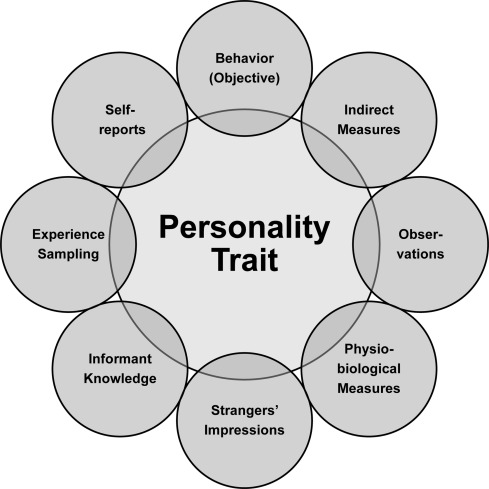
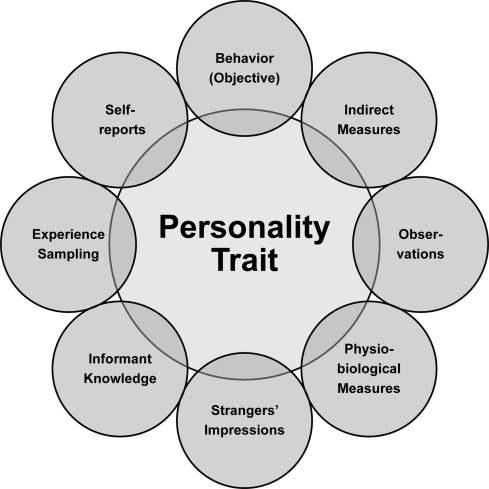
Human Personality: Characteristics, Theories, and Traits 1. Introduction & Concept Every individual has their own characteristic way of behaving, responding to emotions, perceiving things, and looking at the world. No two individuals are exactly similar. For example, while you might enjoy going out for parties, a friend might prefer staying back at home reading a favorite book. Etymology: The word “Personality” is derived from the Latin word Persona, referring to the theatrical masks worn by Roman actors to project a specific role. Upbringing & Background: What an individual experiences in their childhood and growing years forms their personality. A person with a troubled, restricted childhood might not open up easily or may harbor inner fears, while an individual who never faced major life problems might naturally develop into an extrovert. Influence: Personality dictates what we think, our beliefs, values, and expectations, as well as how we view others. Definitions of Personality Personality can be defined through multiple psychological and behavioral lenses: The personal qualities and characteristics of an individual. The sum of characteristics that make an individual unique and different from others. The total of ways in which an individual reacts and interacts with others. A pattern of stable states and characteristics that influences an individual’s behavior toward goal achievement. Gordon Allport (1937): “Personality is the dynamic organization within the individual of those psychophysical systems that determine his unique adjustments to his environment.” 2. Determinants of Personality Human personality is shaped by a complex interplay of forces. These factors determine how one’s personality develops over time: 1. Heredity (Biological) Factors determined once an individual is born. An individual’s physique, attractiveness, body type, complexion, and body weight heavily depend on their parents’ biological makeup. 2. Environment The environment an individual is subjected to during their growing years. This includes the varied cultures we are brought up in and our family backgrounds, both of which play a crucial role in shaping personalities. 3. Situation An individual’s personality changes with current circumstances. For instance, an individual might behave very differently when they have enough savings compared to when they are completely bankrupt. 3. Broad Theoretical Approaches To understand the complexity of human behavior, psychologists rely on four main theoretical frameworks: Trait Theory: Focuses on measuring and describing individual differences in continuous traits. Psychodynamic Theory: Focuses on unconscious drives and childhood conflicts (e.g., Sigmund Freud). Humanistic Theory: Focuses on self-actualization, inherent goodness, and personal growth (e.g., Carl Rogers, Abraham Maslow). Integrative Approach: Combines biological, psychological, and social factors into a unified model. 4. Type Theories of Personality Type theories attempt to categorize people into specific, non-overlapping categories. A. Type A vs. Type B Personalities Developed by cardiologists linking personality behavior to health risks. Type A Personality Type B Personality Always moving, walking, and eating rapidly. Never suffer from a sense of time urgency or impatience. Feel impatient with the rate at which most events take place. Feel no need to display or discuss their achievements. Strive to think or do two or more things at once. Play for fun and relaxation, rather than to exhibit superiority at any cost. Cannot cope with leisure time. Can relax without feeling any guilt. Obsessed with numbers; measuring success by how much they acquire. Focus on the quality of life over the quantity of accomplishments. B. The Myers-Briggs Type Indicator (MBTI) A personality test that taps into four characteristics and classifies people into 1 of 16 personality types based on how they gather information and make decisions. Energy Focus Extroversion (E) vs. Introversion (I) Extraverts: “Outward-turning.” Action-oriented, enjoy frequent social interaction, feel energized after spending time with other people. Introverts: “Inward-turning.” Thought-oriented, enjoy deep/meaningful interactions, feel recharged after spending time alone. Information Gathering Sensing (S) vs. Intuition (N) Sensing: Pay great attention to reality and what they learn from their own senses. Focus on facts, details, and hands-on experience. Intuition: Pay more attention to patterns, impressions, abstract theories, and imagining future possibilities. Decision Making Thinking (T) vs. Feeling (F) Thinking: Emphasize facts and objective data. Tend to be consistent, logical, and impersonal when deciding. Feeling: Consider people and their emotions heavily when arriving at a conclusion. Lifestyle Judging (J) vs. Perceiving (P) Judging: Prefer structure, planning, and firm decisions. Perceiving: Prefer to be more open, flexible, and adaptable to change. 5. Trait Theories of Personality A personality trait is a characteristic that endures over time and across different situations. Trait theories focus on measuring, identifying, and describing individual differences based on what makes them different—not what makes them the same. Traits can be used to accurately predict behavior. A. Raymond Cattell’s 16 Personality Traits Through extensive research, 16 primary traits were identified as the building blocks of human personality: Trait Category Spectrum (Low vs. High) 1. Abstractedness Practical vs. Imaginative 2. Apprehension Confident vs. Worried 3. Dominance Submissive vs. Forceful 4. Emotional Stability High-strung vs. Calm 5. Liveliness Restrained vs. Spontaneous 6. Openness to Change Attached to familiar vs. Flexible 7. Perfectionism Undisciplined vs. Controlled 8. Privateness Open vs. Discreet 9. Reasoning Concrete vs. Abstract 10. Rule-Consciousness Non-conforming vs. Conforming 11. Self-Reliance Dependent vs. Self-sufficient 12. Sensitivity Tough-minded vs. Tender-hearted 13. Social Boldness Shy vs. Uninhibited 14. Tension Relaxed vs. Impatient 15. Vigilance Trusting vs. Suspicious 16. Warmth Reserved vs. Outgoing B. The Big Five Model (O.C.E.A.N.) The most widely accepted dimensional model mapping five core traits: O Openness to Experience Features characteristics such as imagination, insight, artistic sensitivity, and intellectualism. High scorers are curious and enjoy challenges. C Conscientiousness High levels of thoughtfulness, good impulse control, and goal-directed behavior. They are responsible, dependable, reliable, persistent, and highly organized. E Extroversion Includes characteristics such as excitability, sociability, talkativeness, assertiveness, and high amounts of emotional expressiveness. They love excitement and are cheerful. A Agreeableness Includes attributes like trust, altruism, kindness, affection, and pro-social behaviors. They are good-natured, cooperative, warm, generous, and selfless. N Emotional Stability (Neuroticism) Individuals with low stability (high neuroticism) tend to experience anxiety, moodiness, irritability, sadness, and insecurity. High stability individuals are calm, self-confident, and