homeostasis physiology

Homeostasis Physiology

Homeostasis: Maintaining the Internal Balance

Homeostasis

Imagine you're driving a car, aiming to maintain a constant speed of 60 mph. You press the gas going uphill and ease off going downhill. Your goal is to keep that speed constant despite external changes. That's essentially what your body does, constantly, for hundreds of variables.

Homeostasis (from Greek "homoios" meaning "similar" and "stasis" meaning "standing still") is the ability of an organism to maintain a relatively stable internal environment despite continuous changes in the external environment. It's not a static state, but a dynamic equilibrium where conditions fluctuate within narrow, acceptable limits around a set point.

Many physiologists translate this into the saying, “constantly changing to stay the same.” The ability of the human body to quickly adapt to any changes and to re-establish stability is the essence of homeostasis.
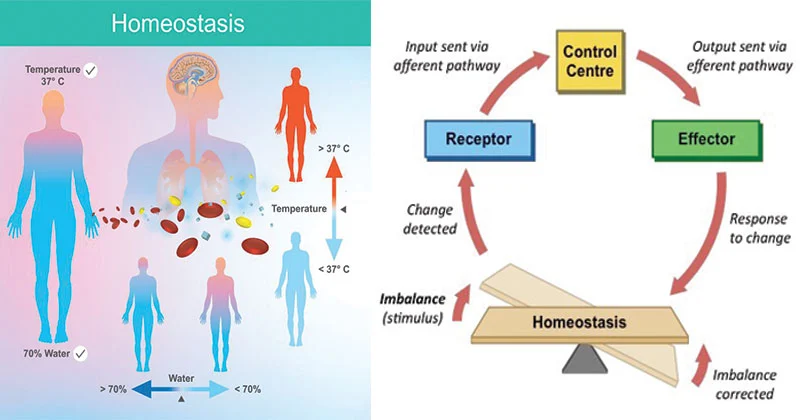
The Importance of Homeostasis

Survival itself depends on the body's ability to maintain this internal balance. Deviations outside the normal range can impair cell function, leading to disease or death.

Enzyme and Protein Function

Almost all biochemical reactions are catalyzed by enzymes (proteins), which are highly sensitive to their environment.

Impact of Imbalance: Deviations in temperature or pH can denature enzymes, altering their 3D shape and halting vital metabolic pathways.

Cellular Integrity and Volume

The cell membrane's selective permeability and active transport mechanisms are critical for maintaining appropriate solute concentrations.

Impact of Imbalance: Changes in extracellular fluid osmolarity can cause cells to swell and burst (lysis) or shrink and die (crenation). Disrupted ion gradients incapacitate nerve and muscle function.

Efficient Communication Systems

The nervous and endocrine systems require specific conditions to transmit signals effectively.

Impact of Imbalance: Improper electrolyte balance (Na⁺, K⁺, Ca²⁺) can lead to severe nerve and muscle dysfunction, including seizures, paralysis, and cardiac arrhythmias.

Energy Production (ATP)

Cells require a continuous supply of oxygen and nutrients, and efficient removal of waste, to produce ATP.

Impact of Imbalance: Oxygen deprivation (hypoxia) leads to a cellular energy crisis and buildup of lactic acid. Accumulation of wastes like CO₂ can become toxic and alter pH, leading to organ failure.

Immune System Function

Immune cells and proteins need stable conditions to effectively fight off pathogens without harming healthy tissues.

Impact of Imbalance: Uncontrolled fever can become detrimental to immune cells themselves. Chronic stress and elevated cortisol can suppress the immune system.

Examples of Homeostatically Regulated Variables

The body tightly regulates hundreds of variables to maintain this dynamic equilibrium. Key examples include:

  • Body temperature
  • Blood pressure
  • Blood glucose levels
  • Blood pH
  • Oxygen and carbon dioxide levels
  • Water balance
  • Ion concentrations (Na⁺, K⁺, Ca²⁺)

Homeostasis is Maintained by Feedback Loops

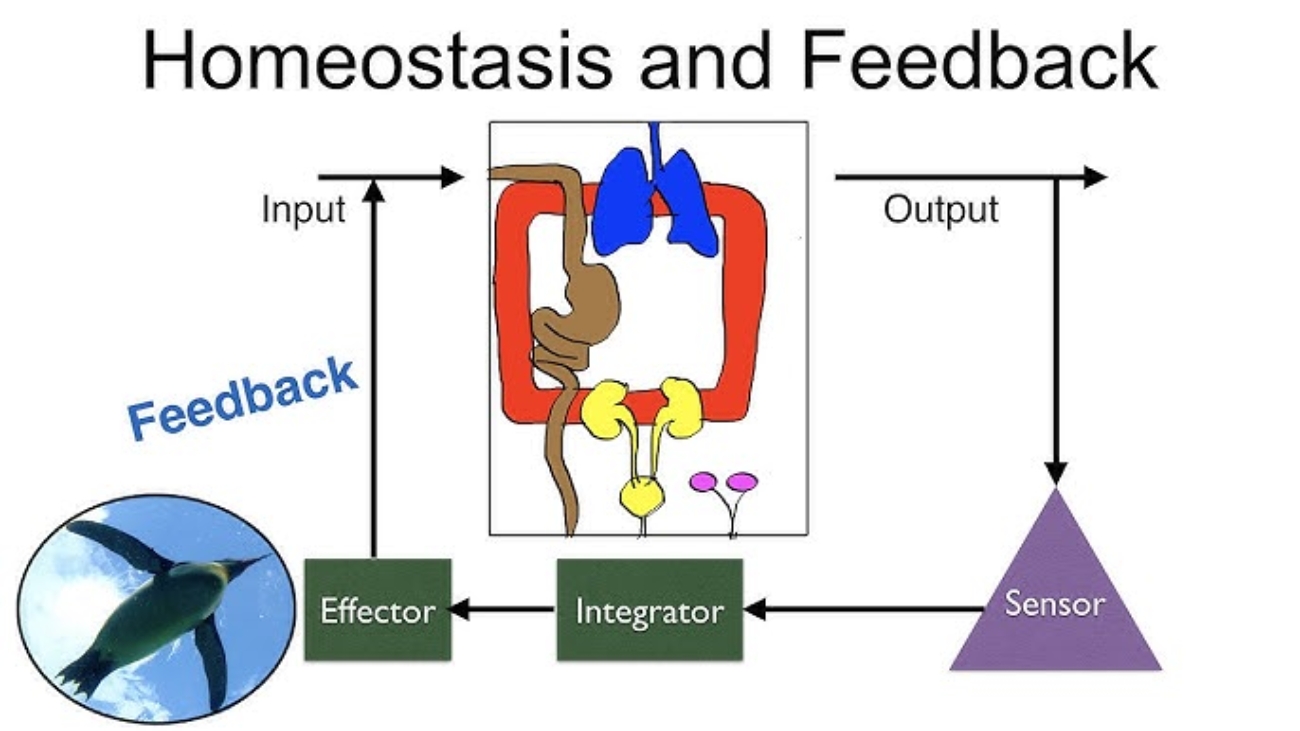
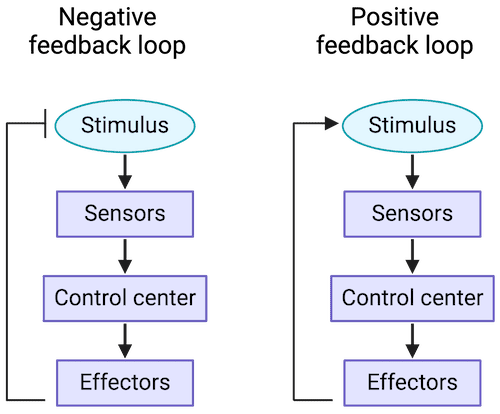
The primary way the human body maintains homeostasis is with the use of feedback loops. A feedback loop is a mechanism that allows for continual assessment of the body’s physiology and a way to correct various elements if they should go out of balance. There are two types of feedback loops: negative and positive.
Negative Feedback Loop

The response opposes (or negates) the original stimulus. This is by far the most common type in the human body.

Positive Feedback Loop

The response augments (or intensifies) the original stimulus. The cycle repeats until it is broken. This type is very rare but critically important.

Parameters and Set Points

For any feedback loop, there is a parameter that is being monitored, and it has a set point, or a ‘normal range’ in which it exists when the body is in balance. The stimulus that starts the feedback loop is a change in that parameter that pushes it above or below its normal set point range.

Table 1.1: Examples of Blood Parameters and Their Set Points
Osmolarity of Blood295-310 mOsM
pH of Blood7.35-7.45
Arterial PCO₂35-46 mmHg
Arterial PO₂80-100 mmHg
Glucose (fasting)70-100 mg/dL
Sodium (Na⁺)135-145 mM
Potassium (K⁺)3-5 mM

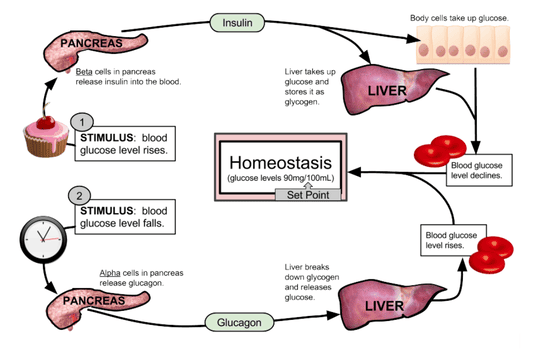
Example: Blood Glucose Regulation (Between Meals)

A person’s blood glucose (parameter) has a normal range (set point) of 70 to 100 mg/dL. If a person has not eaten in a while, their blood glucose decreases. If it goes below 70 mg/dL, the person will have hypoglycemia (low blood sugar). This decrease is the stimulus.

This decrease is detected by receptors in the pancreas, which responds by releasing the hormone glucagon into the bloodstream. Glucagon travels to the liver and stimulates hepatocytes (liver cells) to break down their glycogen stores and release glucose molecules into the blood. This increases blood glucose levels, opposing the original stimulus. Once glucose is restored to its normal range, the signal for glucagon release dissipates. This "off switch" is a key element of negative feedback.

The Nitty Gritty of the Feedback Loop

To describe feedback loops with consistent terms, we can identify seven general components that create the loop.

1. Stimulus: The change (above or below the set point) that starts the loop.
2. Receptor: The element or structure that detects this change.
3. Afferent Pathway: The incoming pathway used to convey information about this change.
4. Integration Center: The site where an evaluation is made about what to do.
5. Efferent Pathway: The outgoing pathway used to signal a tissue how to respond.
6. Effector Tissue: The structures acted upon to respond to the stimulus.
7. Response: The change created by the effector tissue in response to the original stimulus.

Homeostatic Control Mechanisms (The "Feedback Loops")

To maintain homeostasis, the body uses control systems, most of which involve feedback loops. These loops constantly monitor conditions, detect changes, and initiate responses to bring variables back to their set point.
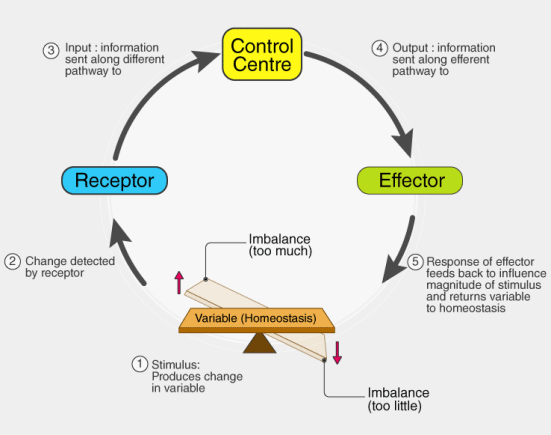
Every feedback loop has three basic components:

1. Receptor (Sensor)

Function: Monitors the environment and responds to changes (stimuli). It detects the deviation from the set point.

Action: Sends information (input) along an afferent pathway (e.g., nerve impulses) to the control center.

Example: Thermoreceptors in the skin and hypothalamus detect changes in body temperature.

2. Control Center (Integrator)

Function: Receives and analyzes the input from the receptor. It compares the input to the set point (the ideal value) and determines the appropriate response.

Action: Sends commands (output) along an efferent pathway (e.g., nerve impulses, hormones) to the effector.

Example: The hypothalamus in the brain acts as the body's thermostat, comparing current body temperature to the set point of ~37°C (98.6°F).

3. Effector

Function: Carries out the control center's response. It provides the means for the control center's output to affect the stimulus.

Action: Its action either reduces the stimulus (negative feedback) or enhances it (positive feedback).

Example: Sweat glands, blood vessels in the skin, and skeletal muscles (shivering) are effectors that help regulate body temperature.

The Communication Pathway

RECEPTOR

Afferent Pathway

CONTROL CENTER

Efferent Pathway

EFFECTOR
Types of Feedback Loops

Negative Feedback Loops

(Most Common and Essential for Homeostasis)

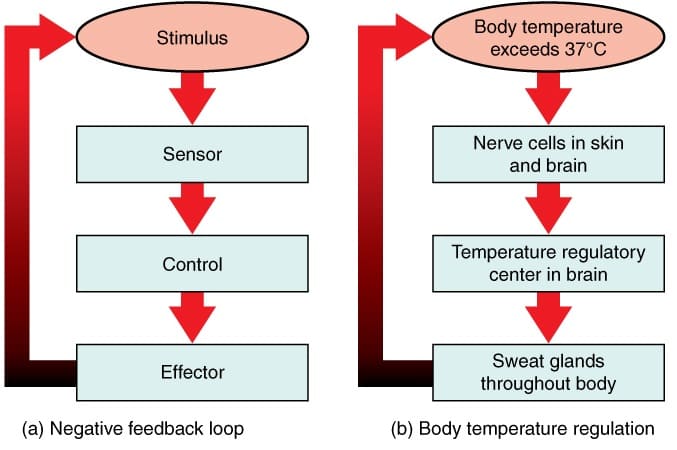
Mechanism: The output of the system shuts off or reduces the intensity of the original stimulus, bringing the variable back toward the set point. It works to counteract the change.

Goal: To prevent severe changes and maintain stability.

Analogy: A thermostat controlling a furnace. When the temperature drops, the furnace turns on. Once the temperature reaches the set point, the furnace turns off (negative feedback).

Specific Example: Increased Body Temperature

If a person has been digging in the garden on a hot day, their body temperature rises above its set point of about 98.6°F. This is the stimulus. Thermoreceptors in the skin detect this change and send afferent information to the hypothalamus (the integration center). The hypothalamus then sends efferent signals to the effector tissues: sweat glands and cutaneous blood vessels. The response is diaphoresis (sweating) and cutaneous vasodilation (widening of blood vessels in the skin). Evaporation of sweat and increased blood flow to the skin dissipate heat, causing body temperature to decrease back to its set point.

Other Physiological Examples:

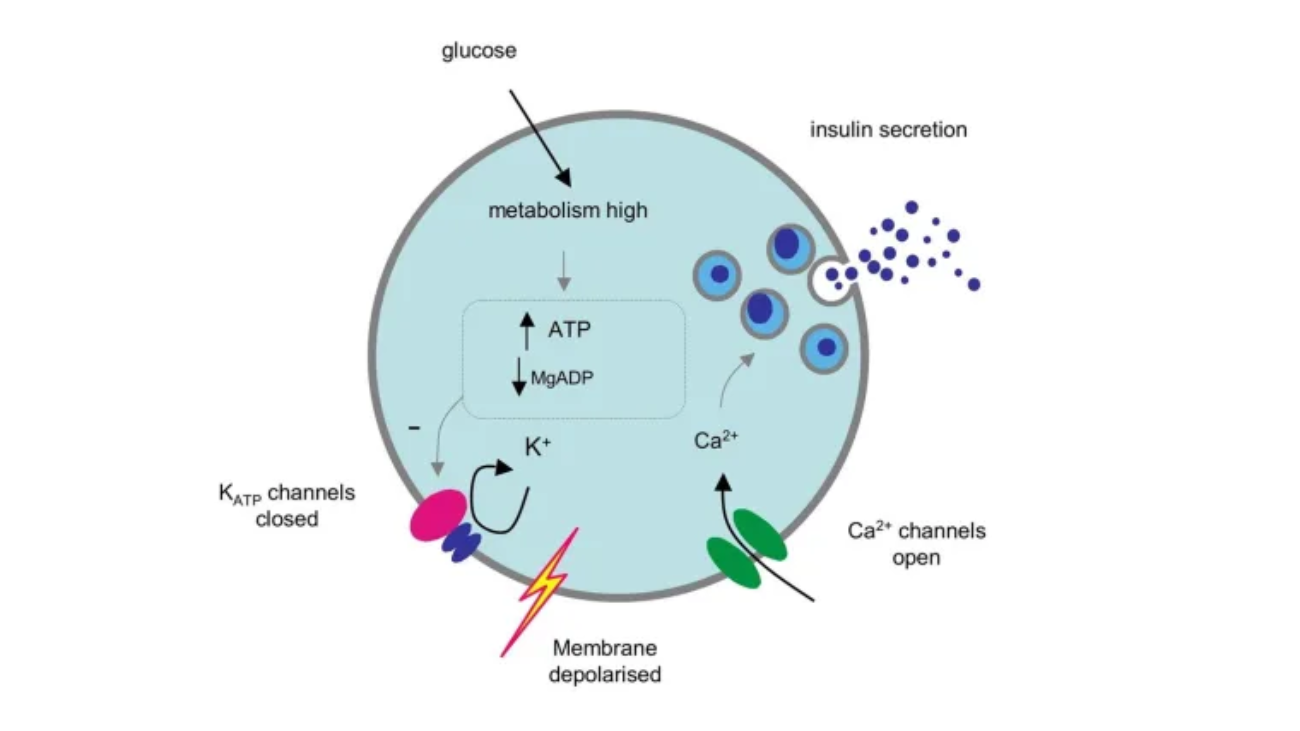
  • Blood Glucose Regulation: After a meal, high blood glucose stimulates the pancreas to release insulin. Insulin causes cells to take up glucose, lowering blood glucose levels.
  • Blood Pressure Regulation: Baroreceptors detect high blood pressure, signal the brain, which then slows heart rate and dilates blood vessels to lower pressure.

Positive Feedback Loops

(Rare, but Important for Specific Events)

Mechanism: The output of the system enhances or exaggerates the original stimulus, driving the variable further away from the initial set point. This is often part of a process that needs to be completed quickly.

Goal: To amplify a process until a specific event is completed.

Analogy: A microphone picking up sound, which is amplified and fed back into the microphone, creating a loop of increasing volume.

Specific Example: Childbirth

When a baby is ready to be born, its head pushes down upon the cervix, increasing pressure. This stretch (the stimulus) is detected by mechanoreceptors, which send an afferent signal to the brain. The brain (integration center) signals the posterior pituitary to release the hormone oxytocin. Oxytocin (efferent pathway) travels in the blood to the uterus (effector tissue), causing its smooth muscle to contract more forcefully. This pushes the baby’s head harder against the cervix, intensifying the original stimulus and triggering more oxytocin release. This cycle repeats, with contractions becoming stronger and more frequent, until the baby is born, which breaks the loop.

Other Physiological Examples:

  • Blood Clotting: Platelets at an injury site release chemicals that attract more platelets, rapidly forming a plug.
  • Generation of an Action Potential: An initial depolarization opens some Na⁺ channels, causing more Na⁺ to enter, which opens even more Na⁺ channels, leading to a rapid, all-or-nothing spike.
Diseases from Homeostatic Imbalance

The failure of homeostatic control mechanisms to maintain the body's stable internal environment leads directly to disease. Here are several examples:

Diabetes Mellitus

Imbalance: Chronic hyperglycemia (high blood glucose).

Mechanism: Insufficient insulin production (Type 1) or cellular resistance to insulin's effects (Type 2).

Consequences: Widespread damage to blood vessels, leading to heart attack, stroke, kidney failure, blindness, and nerve damage.

Hypo- and Hyperthyroidism

Imbalance: Disruption of thyroid hormone levels, which regulate metabolism.

Mechanism: Underproduction (Hypothyroidism) or overproduction (Hyperthyroidism) of thyroid hormones.

Consequences: Hypothyroidism leads to slowed metabolism, weight gain, and fatigue. Hyperthyroidism leads to accelerated metabolism, weight loss, anxiety, and rapid heart rate.

Kidney Failure (Renal Failure)

Imbalance: Inability to regulate fluid volume, electrolytes, pH, and excrete metabolic wastes.

Consequences: Fluid overload (edema), fatal cardiac arrhythmias from high potassium (hyperkalemia), toxic accumulation of urea (uremia), and dangerous drops in blood pH (acidosis).

Hypertension (High Blood Pressure)

Imbalance: Chronic elevation of systemic arterial blood pressure.

Mechanism: Multifactorial, often involving dysfunction in the nervous or endocrine systems' regulatory mechanisms (e.g., renin-angiotensin-aldosterone system).

Consequences: Increased risk of heart attack, stroke, kidney disease, and heart failure.

Dehydration and Overhydration

Imbalance: Disruption of fluid and electrolyte balance.

Consequences: Dehydration leads to low blood volume and pressure. Overhydration can dilute electrolytes (especially sodium), leading to brain cell swelling, seizures, and death (hyponatremia).

Sepsis

Imbalance: A life-threatening, dysregulated systemic response to infection.

Mechanism: The body's own immune response becomes overactive, leading to widespread inflammation and organ damage.

Consequences: Septic shock, multi-organ failure, and death.

Summary of Homeostasis

ConceptDescription
DefinitionMaintenance of a relatively stable internal environment (dynamic equilibrium).
ImportanceEssential for cell survival, optimal enzyme function, and overall health.
Control Loop ComponentsReceptor (detects change), Control Center (determines response), Effector (carries out response).
Negative FeedbackMost common. Output reduces/counteracts the original stimulus to restore the set point. Goal is stability. (e.g., Temperature, Blood Glucose).
Positive FeedbackRare. Output enhances/exaggerates the original stimulus to complete an event. Goal is amplification. (e.g., Childbirth, Blood Clotting).
Homeostatic ImbalanceOccurs when control mechanisms fail, leading to disease.

Test Your Knowledge

A quiz on the principles of Homeostasis.

1. Which of the following best defines homeostasis?

  • The process of responding to external stimuli.
  • The body's ability to maintain a relatively stable internal environment despite external changes.
  • The process by which an organism grows and develops.
  • The irreversible cessation of bodily functions.

Correct (b): This is the classic and most accurate definition of homeostasis. It emphasizes the "relatively stable" nature, acknowledging minor fluctuations.

Incorrect (a): Responding to stimuli is a broader biological characteristic, not exclusively homeostasis.

Incorrect (c): Growth and development are separate biological processes.

Incorrect (d): This describes death, the opposite of maintaining life.

2. A shivering response to cold, which raises body temperature, is an example of what feedback mechanism?

  • Positive feedback
  • Negative feedback
  • Feedforward control
  • Adaptation

Correct (b): The shivering response reverses the initial change (cold temperature) by generating heat. This counteraction is the hallmark of negative feedback.

Incorrect (a): Positive feedback would amplify the cold, making the body colder.

Incorrect (c): Feedforward control anticipates changes before they happen.

Incorrect (d): Adaptation refers to long-term adjustments, not acute responses.

3. Which component of a feedback loop detects changes in a regulated variable?

  • Effector
  • Control center
  • Receptor (sensor)
  • Set point

Correct (c): Receptors are specialized structures that detect changes (stimuli) in the environment.

Incorrect (a): The effector carries out the response.

Incorrect (b): The control center processes information.

Incorrect (d): The set point is the desired value, not a detection component.

4. In a negative feedback loop, the response of the effector:

  • Amplifies the original stimulus.
  • Counteracts or reverses the original stimulus.
  • Has no effect on the original stimulus.
  • Creates a new stimulus.

Correct (b): The defining characteristic of negative feedback is that the system's response works against the initial change to bring the variable back to its set point.

Incorrect (a): This describes positive feedback.

5. Childbirth labor contractions, which amplify in a cycle, are an example of what type of feedback?

  • Negative feedback
  • Positive feedback
  • Homeostatic imbalance
  • Allosteric regulation

Correct (b): The contractions stimulate more oxytocin, which causes even stronger contractions, creating a self-amplifying cycle. This amplification is characteristic of positive feedback.

Incorrect (a): Negative feedback would reduce contractions.

6. The "set point" in a homeostatic control system refers to the:

  • Actual value of the variable at any given moment.
  • Desired or ideal value around which the variable is maintained.
  • Range within which the variable is allowed to fluctuate.
  • Output generated by the effector.

Correct (b): The set point is the reference value for a regulated variable (e.g., 37°C for body temperature).

Incorrect (a): The actual value fluctuates around the set point.

Incorrect (c): This describes the "normal range" or "dynamic equilibrium."

7. Which of the following is typically regulated by negative feedback loops to maintain homeostasis?

  • Blood clotting
  • Blood glucose levels
  • Ovulation
  • Action potential generation

Correct (b): Blood glucose is tightly regulated by insulin and glucagon in a negative feedback loop.

Incorrect (a, c, d): Blood clotting, ovulation, and action potentials are all examples of processes involving positive feedback.

8. When homeostatic mechanisms are overwhelmed or fail, what condition can result?

  • Adaptation
  • Positive feedback
  • Homeostatic imbalance
  • Physiological resilience

Correct (c): When homeostatic mechanisms fail, the body enters a state of homeostatic imbalance, which can lead to disease.

9. What is the primary role of the control center in a homeostatic feedback loop?

  • To carry out the response.
  • To detect the stimulus.
  • To receive input, compare it to the set point, and send commands.
  • To amplify the deviation from the set point.

Correct (c): The control center (e.g., the brain) is the integration point that processes information and determines the response.

Incorrect (a): This is the role of the effector.

Incorrect (b): This is the role of the receptor.

10. A change in the external environment that causes a deviation from the set point is called a:

  • Response
  • Effector
  • Stimulus
  • Feedback

Correct (c): A stimulus is any detectable change in the internal or external environment that can initiate a response.

11. Which statement about positive feedback loops is generally TRUE?

  • They are more common than negative feedback loops.
  • They amplify the initial stimulus to complete a specific event.
  • They work to bring a variable back to its set point.
  • They are primarily involved in regulating body temperature.

Correct (b): Positive feedback loops are characterized by amplification, driving a process to a swift conclusion, such as childbirth or blood clotting.

Incorrect (a): Negative feedback is far more common for daily regulation.

Incorrect (c): Bringing a variable back to its set point is negative feedback.

12. The range of normal values around a set point is often referred to as:

  • Set point itself
  • Dynamic equilibrium
  • Control limit
  • Regulatory threshold

Correct (b): Homeostasis maintains a "dynamic equilibrium" because variables constantly fluctuate slightly around the set point, not held rigidly at a single value.

13. Maintaining internal body temperature within a narrow range is an example of:

  • Allostasis
  • Positive feedback
  • Homeostasis
  • Non-equilibrium thermodynamics

Correct (c): Maintaining a stable internal temperature is a classic example of homeostatic regulation.

Incorrect (a): Allostasis refers to achieving stability through change, a more complex adaptive process.

Incorrect (b): Positive feedback would lead to runaway heating or cooling.

14. Which body system is NOT considered a major regulator of homeostatic functions?

  • Nervous system
  • Endocrine system
  • Integumentary system
  • Respiratory system

Correct (c): While the skin (integumentary system) is a crucial effector in temperature regulation, it is not a primary regulatory system with control centers like the nervous and endocrine systems.

15. If blood pressure drops, the response of increased heart rate is primarily initiated by the:

  • Effector
  • Control center
  • Stimulus
  • Receptor

Correct (b): Receptors detect the drop, send info to the control center (brain), which then sends commands to the effectors (heart, vessels) to initiate the response.

16. A system that maintains a dynamic constancy of internal conditions is said to be in _________.

Rationale: This directly defines the term homeostasis as the dynamic maintenance of internal stability.

17. In a feedback loop, the component that receives commands and produces a change is the _________.

Rationale: The effector (e.g., a muscle or gland) is the part of the system that carries out the response dictated by the control center.

18. A negative feedback mechanism will act to _________ a deviation from the set point.

Rationale: The fundamental purpose of negative feedback is to oppose or counteract the initial change, bringing the variable back towards the set point.

19. The regulation of blood glucose by insulin and glucagon is a classic example of a _________ feedback loop.

Rationale: Both hormones work to counteract deviations from the blood glucose set point: insulin lowers high glucose, and glucagon raises low glucose.

20. A physiological state where conditions fluctuate within a narrow, healthy range is known as _________.

Rationale: This term emphasizes that homeostatic conditions are not rigidly fixed but are instead constantly adjusting within a tight, healthy range.
Physiology and Cell Physiology

Physiology and Cell Physiology

Physiology Intro: Cell Physio and Transport

Introduction to Basic Physiology & The Cell

Physiology is the science of studying the functional activities and its mechanisms in the biological body. For example: why can the heart automatically beat? Physiology derived from two Greek words - physis = nature; logos = study.

Physiology Involves Process and Function

Words, names and terms are very important in any discipline because most often they carry precise meaning in them. Knowing and understanding the relationships of the meanings of these words will help tremendously in remembering and comprehending the information in a much deeper way. This information will also stay with you long after the course is over, and you will recognize important elements in other disciplines when you connect to the deeper meanings.

Physiology

The etymology (word origin) of the term Physiology comes from the 1560’s French which comes directly from Latin physiologia, meaning “The study and description of natural objects, natural philosophy". This is derived from ‘physios’ meaning "nature, natural, physical"; and ‘logia’ meaning "study". This gives us the fuller meaning of Physiology as the "Science of the normal function of living things". When studying physiology, it is imperative that we also understand the basic anatomy involved, as anatomy (structure) and physiology (function) go hand in hand.

Anatomy

The etymology (word origin) of the term Anatomy comes from the Late 1300’s terms in both Latin, anatomia and Greek, anatome. These words are derived from ana which means "up"; and tomos (or temnein) which means "to cut". Together this gives "a cutting up", which is clearly involved in dissection! In general, anatomy is considered the “Study or knowledge of the structure (form) and function of the human body“. Courses and textbooks for anatomy and physiology are different, but are inextricably connected to each other.

Etymology for the Language of Physiology

Another useful concept related to the importance of words in physiology (and anatomy) is knowing the etymology (origin of the word) of the vast array of scientific terms used in the health care field. Since many of these words are derived from Latin and Greek, it is incredibly helpful to know the origins and ‘translations’ of these terms. Becoming aware of the origins of words will greatly help students to: 1) understand what the term means; and 2) assist you in predicting what a brand new term means when you first encounter it.

Here are two examples:

  • The solution is hypertonic. Hyper means above normal and tonic means strength. The solution is strong or concentrated.
  • The person has hypoglycemia. Hypo is the opposite of hyper and means below normal. The glyc portion means glucose (a type of sugar), and emia means blood. Therefore, this statement means the person has low blood sugar.

One more example:

  • A runner has hyponatremia. Hypo still means below normal. The natr portion means natrium which is the Latin word for sodium (hence why the chemical symbol for sodium is Na), and emia still means blood. Therefore, this statement means the person has low sodium levels in their blood.

Along the way in this physiology course we will encounter many of these terms that, once we know the origin and meaning of, will help us figure out newer terms with ease and familiarity. Anyone who has taken a medical terminology course will know the value of understanding the meaning of roots, prefixes, and suffixes.

Now you do this one:

There is a diagnosis of pancytopenia. (Hint: there are 3 terms here: pan, cyto and penia).

Please feel free to use any reference resource available to you, and remember there is a Glossary of Anatomy and Physiology Etymology terms provided in this text (page 649) to help find out what this diagnosis literally means.

Compare Function and Process in Human Physiology

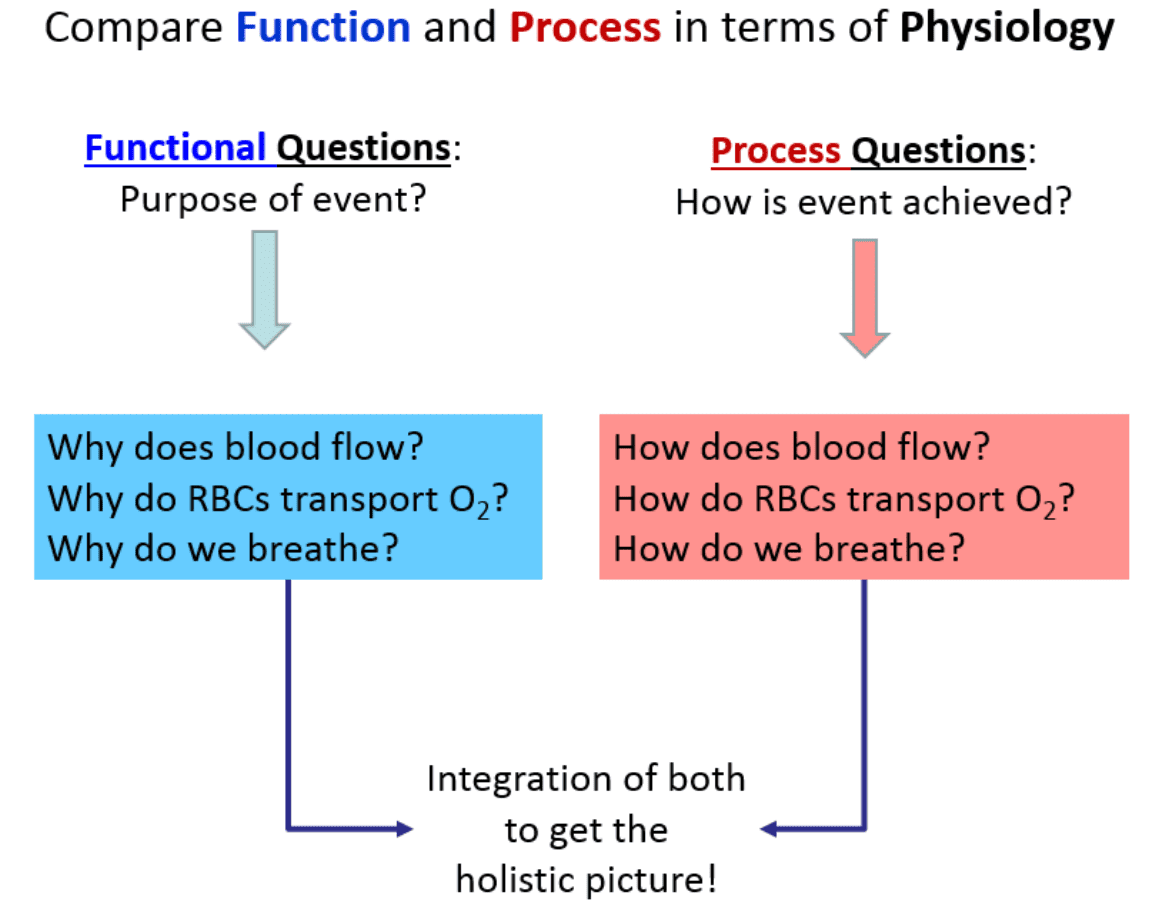
As we look to understand the central themes of physiology, an important concept is how to ask questions about what’s occurring in the human body. In general, there are two basic approaches to physiology: 1) We can ask Functional Questions; and 2) We can ask Process Questions.

1. Functional Questions (Why)

These are related to Why something occurs. For example, what is the purpose of the heart beating? These can often be answered without much detail.

Q: Why does blood flow?

A: To transport nutrients, wastes and gases around the body.

Q: Why do RBCs transport O₂?

A: To deliver O₂ to the body tissue that need it.

Q: Why do we breathe?

A: To extract the oxygen (O₂) from inhaling atmosphere air and also to release carbon dioxide (CO₂) when exhaling air back out of the body.

2. Process Questions (How)

These are related to How something occurs. For example, how does the heart actually beat? Often these issues are answered in a detailed step-by-step manner.

Q: How does blood flow?

A: The tissue fluid pressures and the ventricles of the heart act in coordination to generate a pressure gradient down which blood flows throughout the body.

Q: How do RBCs transport O₂?

A: Inside the red blood cells (RBCs) the heme portion of the molecule hemoglobin has a high affinity for O₂ when the partial pressure of the surroundings for O₂ is high, and a low affinity for O₂ when the surrounding partial pressure for O₂ is low.

Q: How do we breathe?

A: Changes can be made in the volume of the thoracic cavity by the contraction and relaxation of the skeletal muscles of respiration. This causes inverse changes in the pressure of the thoracic cavity, causing air to move down its pressure gradient.

Things to notice about Function and Process

Notice the How part (process) requires more details and also involves a sort of ‘pathway’ approach. It is more like story telling compared to the less detailed functional aspects. The more arduous component of physiology is the detailed processes. This is the reason we need to take our time and fully understand the fundamentals before we delve into intricate details.

What most students recognize about physiology is that it is more conceptual than anatomy because there is often a process to describe in a step by step manner. There are usually two sides to the functions discussed in physiology. This is because at the center of the human body is balance, which provides the equilibrium necessary to function properly. When we explain the mechanism of how we breathe in, we must also explain how we breathe out. Often once you master one side of the story, the other side falls into place more easily.

Basic Functions of a Complex Organism

Holistically, we will examine Human Physiology as it relates the foundational basics of how a multi-system living organism functions as a single coordinated entity. The basic functions are listed below:

  • Differentiation
  • Responsiveness
  • Metabolism
  • Growth and Repair
  • Movement
  • Excretion
  • Reproduction

What we will find is that all of the systems we will study in this course will contain many if not all of these functions embedded in them.

Levels of Organization & Body Systems

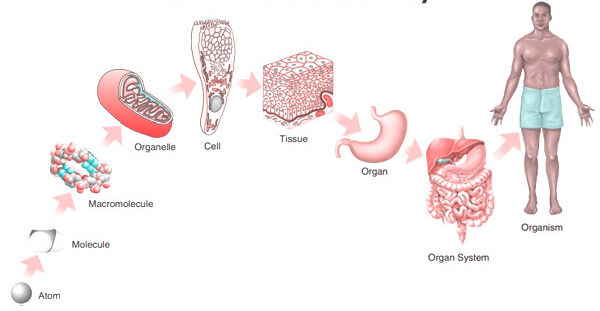
A body system (also called an organ system) is an integrated collection of organs in the body that work together to perform a specific vital function. The truth is that all systems are intimately connected, but it is useful to study them separately, even though they are not separate at all. With all of our body systems operating constantly, it is necessary to have a system in place to maintain stability and equilibrium across the integrated systems. This unifying element in physiology is called homeostasis.

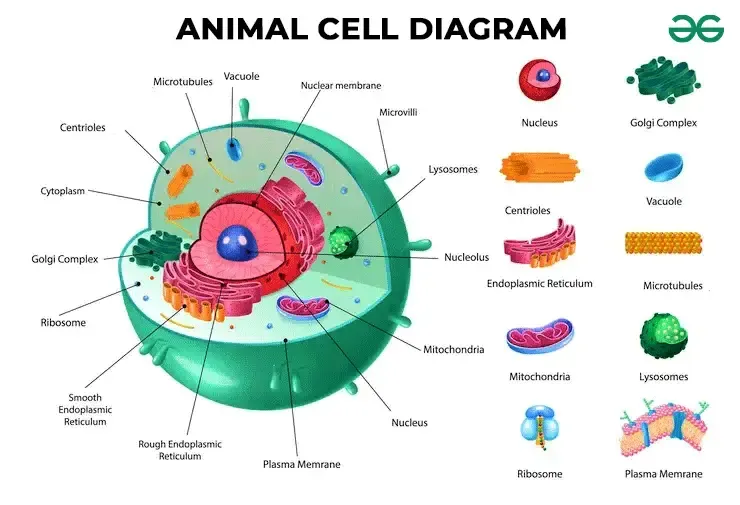
The Cell: The Fundamental Unit of Life

A. The Outer Boundary: The City Wall and Gates


The Cell (Plasma) Membrane

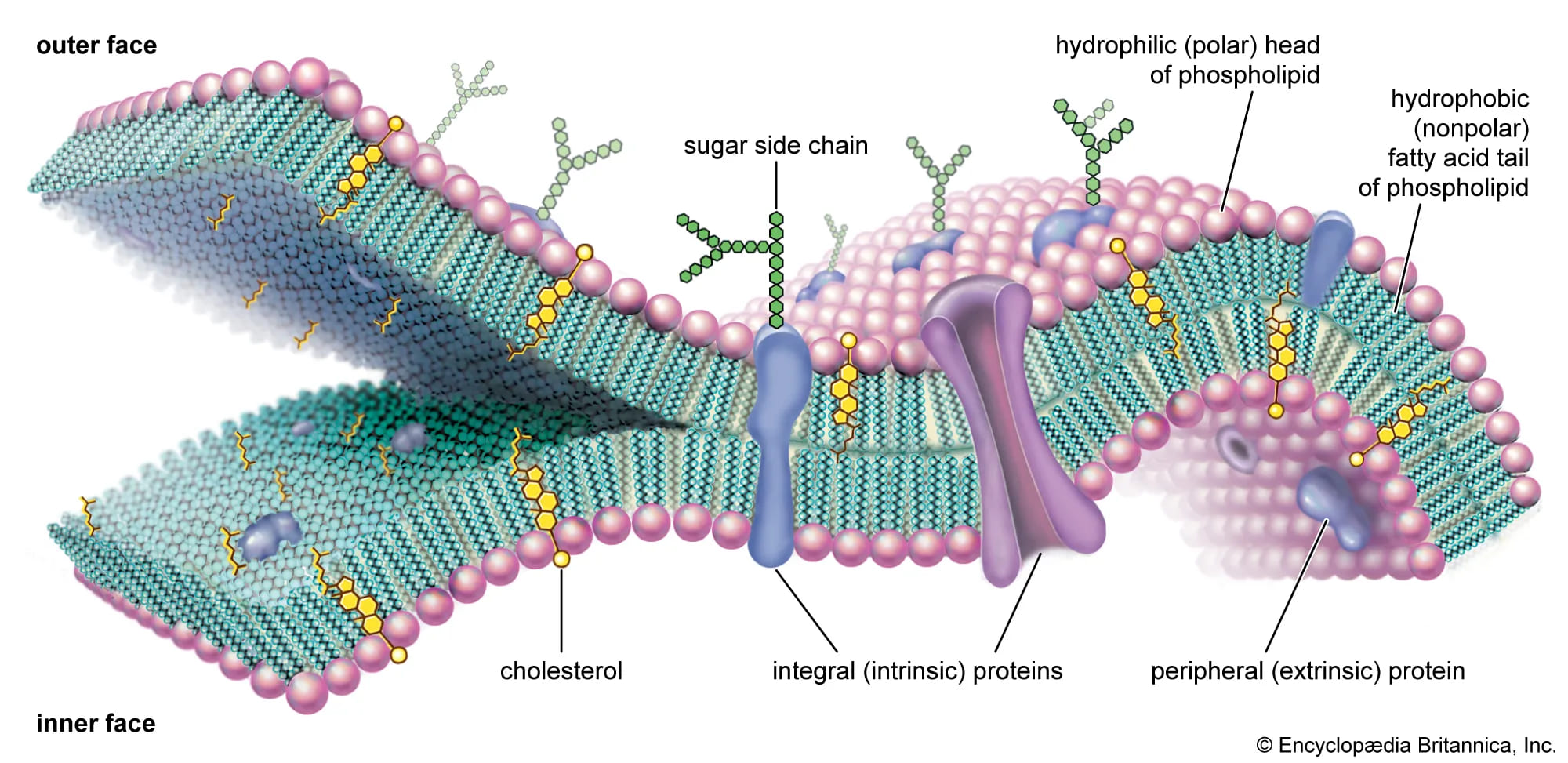
This is the outer boundary of the cell, a thin, flexible, and selectively permeable (or semipermeable) barrier. It's primarily composed of a phospholipid bilayer, with embedded proteins, carbohydrates, and cholesterol.

  • Phospholipid Bilayer: Two layers of phospholipids. Each has a hydrophilic ("water-loving") head facing the watery environments inside and outside the cell, and two hydrophobic ("water-fearing") tails facing inward, forming the core of the membrane.
  • Proteins: These are crucial for function. Integral (transmembrane) proteins span the entire membrane, forming channels and receptors. Peripheral proteins are loosely attached to the surface, often involved in signaling or anchoring.
  • Cholesterol: Found within the hydrophobic core, it helps stabilize the membrane's fluidity.
  • Glycocalyx (Carbohydrates): Chains of carbohydrates attached to proteins (glycoproteins) or lipids (glycolipids) on the outer surface, forming a unique "sugar coat" or cellular "ID tag."

Physiological Functions of the Cell Membrane:

  • Selective Permeability: Controls what enters and leaves the cell, maintaining homeostasis. (The city's border control).
  • Cell Recognition: The glycocalyx allows cells to recognize each other.
  • Communication/Signaling: Receptor proteins bind to chemical messengers like hormones.
  • Cell Adhesion: Proteins allow cells to stick together to form tissues.
  • Protection: Provides a physical barrier.
Mnemonic: "People Call Me Protector" for Phospholipids, Cholesterol, Membrane Proteins.

B. The Cell's Internal Environment: The City Hall and Workers

Cytoplasm

The cytoplasm is everything inside the cell membrane but outside the nucleus. It consists of:

  • Cytosol: The jelly-like, semi-fluid portion where organelles are suspended. It's mostly water with dissolved solutes (ions, glucose, amino acids, ATP, etc.).
  • Organelles: The "little organs" with specific functions (discussed next).
  • Inclusions: Temporary storage bodies, such as glycogen granules, lipid droplets, and pigment granules.

Physiological Functions of the Cytoplasm:

  • Site of Many Metabolic Reactions: Key pathways like glycolysis (the first step of glucose breakdown) occur in the cytosol.
  • Suspension of Organelles: Provides the medium for all organelles to exist and function.

C. The Control Center: The City Hall/Mayor's Office


The Nucleus

Usually the largest organelle, the nucleus is enclosed by a double membrane (the nuclear envelope) with pores. Inside, it contains:

  • Chromatin: The relaxed, uncondensed form of DNA (our genetic material) wrapped around proteins. When the cell divides, chromatin condenses into visible chromosomes.
  • Nucleolus: A dense, spherical body within the nucleus that is the primary site of ribosome synthesis.

Physiological Functions of the Nucleus:

  • Genetic Control: Contains the cell's genetic blueprint (DNA), directing all cell activities by controlling protein synthesis. (The "master plan" for the city).
  • DNA Replication & Transcription: Where DNA copies itself before cell division and where DNA's genetic code is transcribed into messenger RNA (mRNA).
  • Ribosome Production: The nucleolus synthesizes and assembles ribosomal subunits.

D. Protein Synthesis and Processing: The Factories and Delivery Services

Ribosomes

Tiny, granular organelles made of ribosomal RNA (rRNA) and protein. They are the "protein factories" of the cell, reading the mRNA code to assemble amino acids into proteins (a process called translation). They can be free ribosomes (making proteins for use within the cell) or bound ribosomes (attached to the ER, making proteins for export or for other organelles).

Mnemonic: "Ribosomes Read RNA to make Really good pRotein."

Endoplasmic Reticulum (ER)

An extensive network of interconnected membranes that extends throughout the cytoplasm, continuous with the nuclear envelope.

Rough Endoplasmic Reticulum (RER)

Studded with ribosomes. Its function is to synthesize proteins destined for secretion or insertion into membranes, and to fold and modify them (e.g., glycosylation).

Smooth Endoplasmic Reticulum (SER)

Lacks ribosomes. Its functions include lipid and steroid hormone synthesis, detoxification of drugs (abundant in the liver), and calcium storage (crucial for muscle contraction).

Mnemonic: "Rough ER is Rough on Ribosomes & Really helps Really good pRotein; Smooth ER is Smoothly Synthesizing Steroids & Storing Salcium (calcium) and Speedily Solving Substance Spoilage (detox)."

Golgi Apparatus (Golgi Complex)

A stack of flattened membranous sacs (cisternae). It acts as the "Post Office" or "Packaging and Shipping Center" of the cell.

Physiological Functions of the Golgi Apparatus:

  • Modification, Sorting, and Packaging: Further processes and packages proteins and lipids received from the ER into vesicles.
  • Vesicle Formation: Forms various types of vesicles, including secretory vesicles (for exocytosis), lysosomes, and vesicles that deliver new components to the plasma membrane.
Mnemonic: "Golgi Gathers, Grades, and Gets rid of Garbage (or packages good stuff!)."

E. Energy Production: The Power Plant


Mitochondria

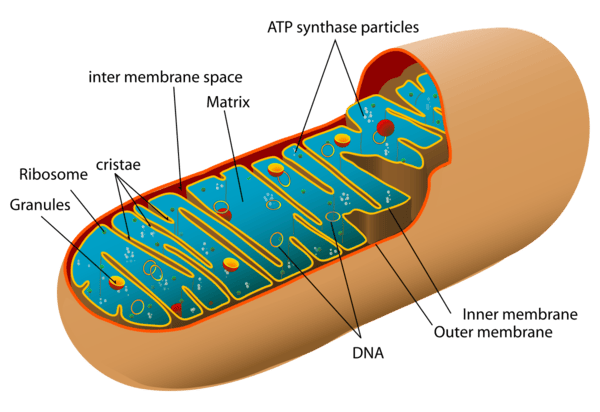
Oval-shaped organelles enclosed by a double membrane: a smooth outer membrane and an inner membrane highly folded into cristae to increase surface area. The fluid-filled space within is the matrix.

Physiological Function (The "Powerhouses of the Cell"):

The primary site of aerobic cellular respiration, converting fuel molecules like glucose into ATP (adenosine triphosphate), the main energy currency of the cell.

Mnemonic: "Mighty Mitochondria Make Much More Money (ATP)."

F. Waste Management and Recycling: The Cleaning Crew

Lysosomes

Spherical sacs containing powerful hydrolytic (digestive) enzymes. They act as the "Recycling Centers," breaking down ingested substances, worn-out organelles (autophagy), and cellular debris.

Mnemonic: "Lyso-some = "Lysol" – they lyse (break down) stuff."

Peroxisomes

Smaller sacs containing oxidative enzymes like catalase. They act as the "Detoxification Squad," neutralizing harmful free radicals and alcohol, and also break down fatty acids.

Mnemonic: "Peroxisomes Produce Peroxide to Purify."

G. The Cell's Internal Support and Movement: The Infrastructure

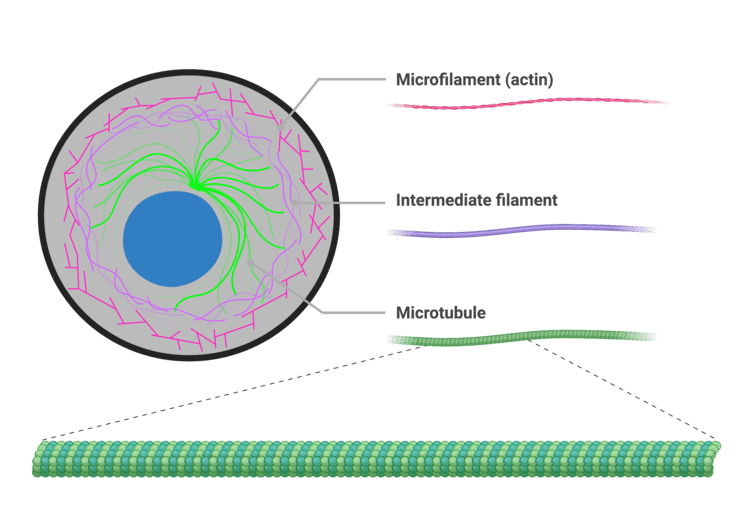
The Cytoskeleton

An intricate network of protein filaments extending throughout the cytoplasm, providing shape, support, and pathways for transport. It consists of three main types:

  • Microfilaments (Actin): Thinnest; involved in cell movement, shape changes, and muscle contraction.
  • Intermediate Filaments: Provide structural stability and resist mechanical stress.
  • Microtubules: Largest, hollow tubes; form tracks for organelle movement and are the structural core of cilia, flagella, and the mitotic spindle.
Mnemonic: "Cytoskeleton Supports the Cell Shape and Ships things Swiftly."

Centrosomes, Cilia, and Flagella

  • Centrosomes and Centrioles: Located near the nucleus, the centrosome contains two centrioles. It acts as the main Microtubule-Organizing Center (MTOC), organizing the mitotic spindle during cell division.
  • Cilia and Flagella: Hair-like projections made of microtubules. Cilia are short and numerous, moving substances across the cell surface (e.g., mucus). Flagella are long and singular, propelling the entire cell (e.g., sperm).
Mnemonic: "Centrosomes and Centrioles Control Cell Civision Carefully."

Summary Table of Organelles

OrganelleKey Functions
Plasma MembraneSelective barrier, cell recognition, communication
NucleusGenetic control, DNA replication, transcription
RibosomesProtein synthesis (translation)
Rough ER (RER)Synthesis & modification of proteins for export/membranes
Smooth ER (SER)Lipid synthesis, detoxification, Ca²⁺ storage
Golgi ApparatusModifies, sorts, and packages proteins and lipids
MitochondriaCellular respiration, ATP synthesis (powerhouse)
LysosomesIntracellular digestion, waste removal
PeroxisomesDetoxification (free radicals), fatty acid breakdown
CytoskeletonCell shape, support, intracellular transport, motility
CentrosomesOrganize mitotic spindle during cell division
Cilia / FlagellaMove substances across cell surface or propel the cell

Biological Membranes

Biological membranes are dynamic, fluid structures that define the boundaries of cells (plasma membrane) and organelles. They are essential for maintaining cellular integrity, regulating transport, facilitating communication, and housing vital enzymatic reactions. The most widely accepted model describing membrane structure is the Fluid Mosaic Model.

The Fluid Mosaic Model

Proposed by Singer and Nicolson in 1972, this model describes the cell membrane as a fluid lipid bilayer where proteins are embedded or attached, much like a mosaic.

  • "Fluid": Refers to the constant movement of individual phospholipid molecules and proteins within the plane of the membrane. Lipids and many proteins can drift laterally, rotate, and flex.
  • "Mosaic": Refers to the diverse "patchwork" of proteins and other molecules (like cholesterol and carbohydrates) embedded within the lipid bilayer.

A. Lipids of the Cell Membrane

The central, structural framework of the membrane is a fluid lipid bilayer, predominantly made of phospholipids and cholesterol.

1. Phospholipids

Phospholipids are the most abundant lipids in the membrane. They are amphipathic, meaning they have a hydrophilic (water-loving) polar head and two hydrophobic (water-fearing) non-polar fatty acid tails. In water, they spontaneously form a bilayer where the hydrophobic tails face inward, away from the water, and the hydrophilic heads face the watery environments inside and outside the cell.

2. Cholesterol

Cholesterol molecules are rigid, ring-shaped lipids inserted between the phospholipids. They act as a membrane buffer, regulating fluidity. At body temperature, cholesterol reduces fluidity, making the membrane stronger. At low temperatures, it increases fluidity by preventing phospholipids from packing too tightly and solidifying.

Lipid Functions in the Cell Membrane:

  • Forms the fundamental bilayer structure.
  • Provides a selectively permeable barrier, primarily allowing fat-soluble substances (O₂, CO₂, steroids) to pass through directly.
  • Acts as a barrier for water-soluble substances (glucose, ions), which require assistance from proteins to cross.

B. Membrane Proteins

Proteins are the workhorses of the membrane, performing most of its specific functions.

1. Integral (Transmembrane) Proteins

Tightly bound proteins that span the entire membrane. They can only be removed by disrupting the bilayer. They function as channels, carriers, pumps, receptors, and enzymes.

2. Peripheral Proteins

Loosely bound to the membrane's surface (either inside or outside). They do not penetrate the core and are easily detached. They often function as enzymes or cytoskeletal anchors.

Functions of Membrane Proteins:

  • Transport: Facilitating the movement of specific substances (channels, carriers, pumps).
  • Enzymatic Activity: Catalyzing metabolic reactions.
  • Signal Transduction: Acting as receptors for chemical messengers.
  • Cell-Cell Recognition: Acting as identification tags (glycoproteins).
  • Intercellular Joining: Forming junctions between cells.
  • Attachment to Cytoskeleton & ECM: Providing structural stability.

C. Carbohydrates of the Cell Membrane

Carbohydrates are always found on the external surface of the plasma membrane. They are attached to lipids (forming glycolipids) or proteins (forming glycoproteins). This entire "sugar coat" is called the glycocalyx, which serves as a unique molecular signature for each cell type.

Functions of Membrane Carbohydrates (Glycocalyx):

  • Cell-Cell Recognition: Crucial for distinguishing "self" from "non-self" (e.g., immune responses, blood types).
  • Cell Adhesion: Helps cells bind to one another.
  • Receptors: Can act as receptors for hormones or toxins.
  • Protection: Provides a protective barrier against damage.

Properties of the Cell Membrane

The composition and arrangement of lipids, proteins, and carbohydrates give the cell membrane its essential properties:

1. Selectively Permeable (or Semi-permeable)

This is the most important property. The membrane precisely regulates which substances can enter or leave the cell. The hydrophobic core acts as the primary barrier. Small, nonpolar molecules (O₂, CO₂) and lipid-soluble molecules pass directly, while ions and large polar molecules (glucose) require specific transport proteins.

2. Fluidity

The membrane is not rigid; its components are in constant motion. Fluidity is influenced by temperature, cholesterol (which acts as a buffer), and the saturation of fatty acid tails. This property is essential for membrane fusion, cell division, and protein function.

3. Asymmetry

The two faces (inner and outer leaflets) of the plasma membrane are structurally and functionally different. For example, carbohydrates are only on the outer surface (glycocalyx), and specific lipids and proteins are oriented in a particular direction. This is vital for directional signaling and cell recognition.

4. Self-Sealing Capability

Due to hydrophobic interactions, if the membrane is punctured, it has a natural tendency to re-seal itself, preventing leakage of cytoplasmic contents. This is crucial for maintaining cell integrity.

Functions of the Cell Membrane

Summary of Key Membrane Functions:

  • Protective Barrier: Encloses the cell's contents, separating the intracellular from the extracellular environment.
  • Selective Transport: Regulates the passage of substances into and out of the cell.
  • Cell-Cell Communication: Contains receptors for hormones and neurotransmitters.
  • Cell Recognition & Adhesion: Facilitates cell identification and the formation of tissues.
  • Enzymatic Activity: Houses enzymes that catalyze specific biochemical reactions.
  • Maintenance of Cell Shape: Provides structural support in conjunction with the cytoskeleton.
  • Generates Membrane Potential: Crucial for nerve and muscle cell function.
  • Endocytosis & Exocytosis: Manages bulk transport into and out of the cell.

Membrane Potential: The Electrical Voltage Across the Membrane

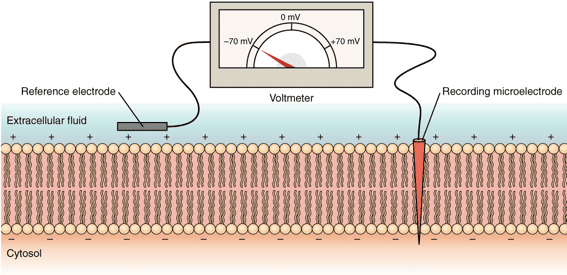
Before looking at how things move across the membrane, it's essential to understand that there's an electrical difference, or voltage, across the cell membrane. This is called the membrane potential.

Membrane Potential is the difference in electrical charge (or potential energy) between the inside and outside of a cell. By convention, the inside of the cell is measured as being negative relative to the outside.

How is the Membrane Potential Established?

1. Unequal Distribution of Ions

There are different concentrations of ions (charged particles) inside and outside the cell.

  • Outside the cell (ECF): High concentration of Na⁺ (sodium) and Cl⁻ (chloride).
  • Inside the cell (ICF): High concentration of K⁺ (potassium) and negatively charged proteins/phosphates (which are too large to leave the cell).

2. Selective Permeability of the Membrane

The cell membrane is not equally permeable to all ions. At rest, it is much more permeable to K⁺ than to Na⁺, allowing K⁺ to leak out down its concentration gradient, which makes the inside of the cell more negative.

3. Sodium-Potassium Pump (Na⁺/K⁺ ATPase)

This active transport pump constantly ejects 3 Na⁺ ions out of the cell for every 2 K⁺ ions it pumps in. Since it pumps out more positive charge than it brings in, this pump is electrogenic and contributes directly to the negative charge inside the cell.

Resting Membrane Potential

In a resting (non-stimulated) neuron or muscle cell, the steady-state potential established by these factors is called the Resting Membrane Potential. It is typically around -70 mV (millivolts).

Physiological Significance

The resting membrane potential is not just a passive state; it's a form of stored energy crucial for:

  • Excitability: It allows excitable cells (like neurons and muscle cells) to generate rapid electrical signals (action potentials) for communication and contraction.
  • Secondary Active Transport: The energy stored in the Na⁺ and K⁺ ion gradients can be harnessed to power the transport of other substances across the membrane.

Membrane Transport

Membrane transport is a fundamental physiological process that governs the movement of substances across biological membranes. It's essential for maintaining cellular homeostasis, acquiring nutrients, expelling waste products, and facilitating cell-to-cell communication. Substances cross the membrane via two general mechanisms: Passive Transport and Active Transport.

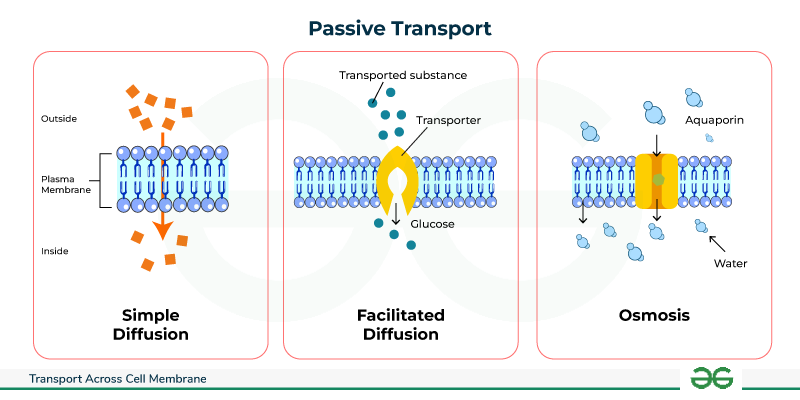
1. Passive Transport: Moving Downhill

Passive transport is the movement of substances across a cell membrane without the direct expenditure of cellular metabolic energy (ATP). This movement is always down the electrochemical gradient of the substance. The energy for this movement comes from the inherent kinetic energy of the molecules and the potential energy stored in the concentration gradient.

1.1. Simple Diffusion: Through the Lipid Bilayer

In simple diffusion, substances move directly through the lipid bilayer without the help of membrane proteins.

  • Highly Permeable: Small, nonpolar (lipophilic) molecules like O₂, CO₂, and steroid hormones readily dissolve in the hydrophobic core and pass through.
  • Moderately Permeable: Small, uncharged polar molecules like water and ethanol can pass to a limited degree.
  • Impermeable: Large polar molecules (glucose) and all charged ions (Na⁺, K⁺) cannot pass through on their own.

The driving force is the concentration gradient. Random molecular motion (kinetic energy) results in a net movement from an area of higher concentration to an area of lower concentration until equilibrium is reached.

Key Characteristics of Simple Diffusion:
  • No membrane proteins are involved.
  • Does not exhibit saturation kinetics: The rate increases linearly with the concentration gradient and does not have a maximum transport rate (Vmax).
  • The rate is directly proportional to the gradient magnitude, lipid solubility, and surface area, and inversely proportional to molecular size and membrane thickness.

1.2. Facilitated Diffusion: Protein-Assisted Passage

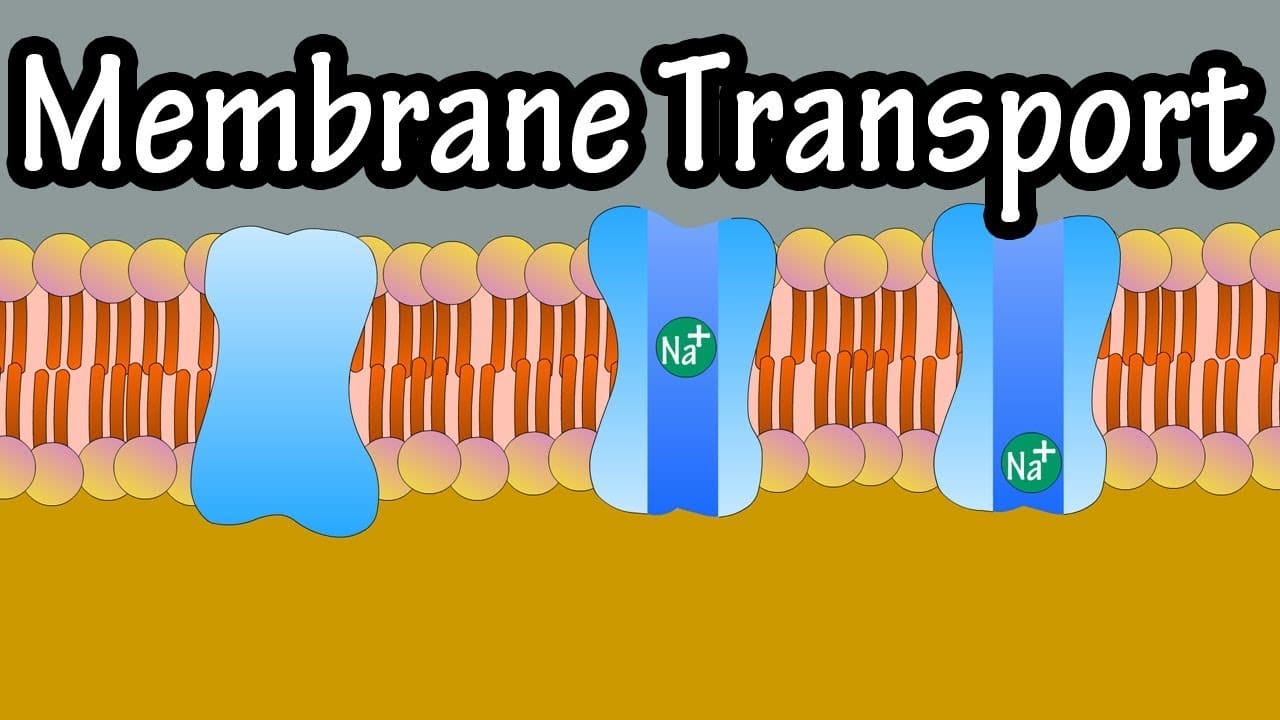
This process uses integral membrane proteins (channels or carriers) to facilitate the movement of specific substances down their electrochemical gradient. It is still passive as no ATP is directly consumed.

A. Channel Proteins (Pores)

These proteins form a water-filled pore across the membrane, allowing incredibly rapid passage of specific ions or water. Most channels are gated, meaning they open or close in response to specific stimuli:

  • Voltage-Gated Channels: Respond to changes in membrane potential (e.g., Na⁺/K⁺ channels in neurons).
  • Ligand-Gated Channels: Respond to the binding of a chemical messenger (e.g., neurotransmitter receptors).
  • Mechanically-Gated Channels: Respond to physical deformation (e.g., touch receptors).
  • Leak Channels: Are generally always open and contribute to the resting membrane potential.

Examples include ion channels (Na⁺, K⁺, Cl⁻, Ca²⁺) and aquaporins, which are specialized water channels.

B. Carrier Proteins (Transporters)

These proteins bind to a specific molecule, undergo a conformational (shape) change, and release the molecule on the other side. This process is much slower than channel-mediated transport.

  • Saturation Kinetics: Because there are a finite number of carriers, the transport rate has a maximum (Vmax) when all carriers are occupied.
  • Specificity: Carriers are highly specific for the molecule(s) they transport.
  • Competition: Structurally similar molecules can compete for the same binding site.

Examples include Glucose Transporters (GLUT proteins) and amino acid transporters.

Key Characteristics of Facilitated Diffusion:
  • Involves specific membrane proteins (channels or carriers).
  • Exhibits saturation kinetics (Vmax) due to the limited number of transporters.
  • Can be subject to competition.
  • Can be regulated by the cell (e.g., by gating channels or inserting/removing carriers from the membrane).

1.3. Osmosis: The Grand Movement of Water

Osmosis is the net movement of water across a selectively permeable membrane, from an area of higher water concentration (lower solute concentration) to an area of lower water concentration (higher solute concentration). The driving force is the water potential gradient, determined by the difference in solute concentration.

Osmotic pressure is the "pulling" force a solution with a higher solute concentration exerts on water. Tonicity refers to the effect of a solution on cell volume:

  • Isotonic: No net water movement; cell volume remains normal.
  • Hypotonic: Water moves into the cell, causing it to swell and potentially burst (lysis).
  • Hypertonic: Water moves out of the cell, causing it to shrink (crenation).

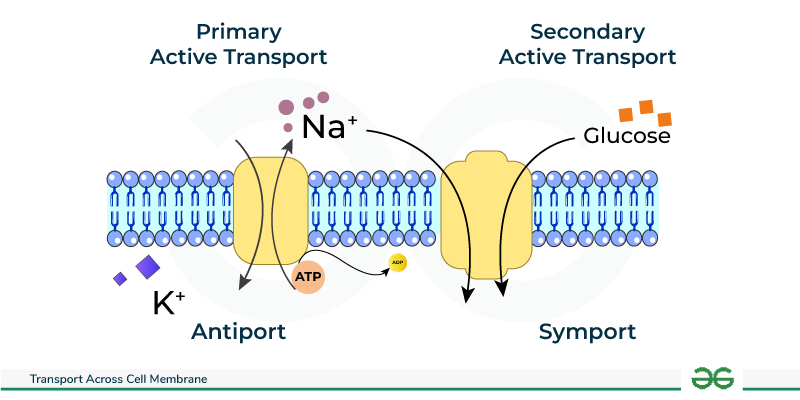
2. Active Transport: Against the Current, with Energy

Active transport is the process of moving substances across a cell membrane against their electrochemical gradient (i.e., from a region of lower concentration to a region of higher concentration). This "uphill" movement necessitates the direct or indirect expenditure of cellular metabolic energy, almost invariably derived from the hydrolysis of ATP.

2.1. Primary Active Transport: Direct ATP Expenditure

Primary active transporters are integral membrane proteins that function as ATPases, directly binding and hydrolyzing ATP to power the movement of solutes. These transporters are often called "pumps."

Na⁺/K⁺ ATPase (Sodium-Potassium Pump)

Found in virtually all animal cells, this vital pump moves 3 Na⁺ ions out of the cell and 2 K⁺ ions into the cell for every ATP hydrolyzed. It is electrogenic (creates a charge imbalance) and is fundamental for maintaining Na⁺/K⁺ gradients, establishing the resting membrane potential, regulating cell volume, and driving secondary active transport.

Ca²⁺ ATPases (e.g., SERCA, PMCA)

These pumps maintain the extremely low intracellular Ca²⁺ concentration. SERCA pumps Ca²⁺ into the sarcoplasmic/endoplasmic reticulum for storage (crucial for muscle relaxation), while PMCA pumps Ca²⁺ directly out of the cell.

H⁺/K⁺ ATPase (Gastric Proton Pump)

Located in the parietal cells of the stomach, this pump secretes H⁺ into the stomach lumen, creating the highly acidic environment (pH 1-2) necessary for digestion. It is the target of Proton Pump Inhibitor (PPI) drugs.

ABC Transporters (ATP-Binding Cassette)

A huge superfamily of transporters that move a vast array of substrates. Examples include MDR1 (P-glycoprotein), which causes multidrug resistance in cancer cells by pumping out chemotherapy drugs, and the CFTR protein, a Cl⁻ channel whose mutation causes Cystic Fibrosis.

2.2. Secondary Active Transport (Co-transport)

Secondary active transport does not directly hydrolyze ATP. Instead, it uses the potential energy stored in an existing electrochemical gradient (typically the Na⁺ gradient created by the Na⁺/K⁺ pump) to drive the transport of a second substance against its own gradient.

1. Symporters (Cotransporters)

Both the driving ion (e.g., Na⁺) and the transported solute move in the same direction. Examples include the Na⁺-Glucose Symporter (SGLT) in the intestine and kidneys, which absorbs glucose against its gradient.

2. Antiporters (Exchangers)

The driving ion and the transported solute move in opposite directions. Examples include the Na⁺-Ca²⁺ Exchanger (NCX), crucial for removing Ca²⁺ from cardiac muscle cells, and the Na⁺-H⁺ Exchanger (NHE) for regulating intracellular pH.

3. Vesicular Transport (Bulk Transport): For the Heavy Lifting

Vesicular transport is used for moving large molecules, macromolecules, and particulate matter into or out of the cell. It involves the formation and fusion of membrane-bound sacs called vesicles and always requires energy (ATP).

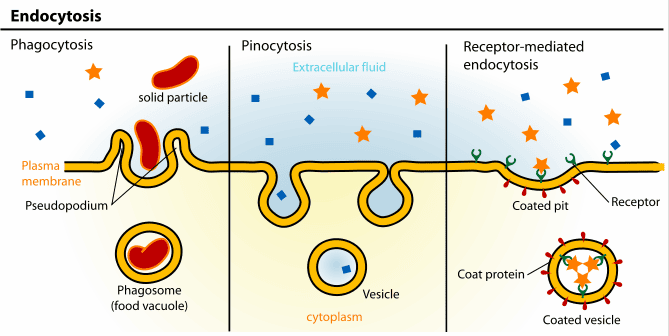
3.1. Endocytosis: Bringing the Outside In

Endocytosis is the process by which cells internalize substances. The plasma membrane invaginates and pinches off to form an intracellular vesicle.

  • Phagocytosis ("Cell Eating"): The ingestion of large particles like bacteria or cellular debris by specialized immune cells (e.g., macrophages). The cell extends pseudopods to engulf the target, forming a phagosome.
  • Pinocytosis ("Cell Drinking"): The non-specific uptake of extracellular fluid and dissolved solutes.
  • Receptor-Mediated Endocytosis: A highly specific process where extracellular ligands (e.g., LDL-cholesterol, iron) bind to complementary receptors, which then cluster in clathrin-coated pits and are brought into the cell in a vesicle.

3.2. Exocytosis: Releasing to the Outside

Exocytosis is the process by which cells release substances. Intracellular vesicles fuse with the plasma membrane, releasing their contents to the outside.

  • Constitutive Secretion: A continuous, unregulated process that delivers new lipids/proteins to the plasma membrane and secretes components of the extracellular matrix.
  • Regulated Secretion: Occurs only in specialized secretory cells (e.g., neurons, endocrine cells). Secretory vesicles containing products like neurotransmitters or hormones are stored and only released in response to a specific signal (often a rise in intracellular Ca²⁺).

The "Why": Importance and Functions of Membrane Transport

The precise control over what enters and exits a cell underlies virtually every physiological process.

  • Maintenance of Cellular Homeostasis: Strict ion gradients (e.g., low intracellular Na⁺, high K⁺) and pH are maintained at great energy cost to prevent cell death and ensure proper enzyme function.
  • Nutrient Acquisition: Transport systems enable cells to efficiently scavenge and concentrate essential molecules like glucose and amino acids.
  • Waste Removal: Active transporters expel harmful metabolic waste products, preventing their toxic accumulation.
  • Generation of Electrical Signals: In neurons and muscle cells, the controlled movement of ions through channels generates action potentials, the basis of thought and movement.
  • Cell-to-Cell Communication: Exocytosis releases neurotransmitters and hormones, while endocytosis regulates receptor sensitivity.
  • Regulation of Cell Volume: Ion pumps, especially the Na⁺/K⁺ ATPase, control intracellular osmolarity, preventing cells from swelling or shrinking.
  • Absorption and Reabsorption: Coordinated transport processes in the GI tract and kidneys are essential for absorbing nutrients and regulating the body's water, electrolyte, and acid-base balance.

Summary of Membrane Transport Mechanisms

Process Energy Req. Gradient Transporter Req. What Moves? Examples/Notes
Passive Processes
Simple Diffusion No Down No Small, lipid-soluble molecules O₂, CO₂, steroids
Facilitated Diffusion No Down Yes (Channel/Carrier) Ions, glucose, amino acids Glucose transporters, ion channels
Osmosis No Down (Aquaporins) Water Red blood cells in different tonic solutions
Active Processes
Primary Active Tpt. Yes (ATP) Up Yes (Pump) Ions Na⁺/K⁺ pump, Ca²⁺ pump
Secondary Active Tpt. No (uses ion gradient) Up Yes (Co-transporter) Ions, glucose, amino acids Na⁺-glucose co-transporter
Vesicular Transport Yes (ATP) N/A No Large particles, macromolecules, fluids Phagocytosis, exocytosis, transcytosis

Test Your Knowledge

A quiz on Cell Physiology and Membrane Transport.

1. Which characteristic best distinguishes facilitated diffusion from simple diffusion?

  • Requires direct expenditure of ATP.
  • Moves substances against their concentration gradient.
  • Exhibits saturation kinetics due to limited transporter proteins.
  • Is non-specific and allows any small molecule to pass.

Correct (c): Facilitated diffusion relies on a finite number of carrier proteins. Once all transporters are occupied, the transport rate cannot increase further, a phenomenon known as saturation kinetics.

Incorrect (a): It is a passive process and does not use ATP.

Incorrect (b): It moves substances down their concentration gradient.

Incorrect (d): It is highly specific due to the nature of the protein transporters.

2. A cell placed in a solution swells and eventually lyses. This solution is most likely:

  • Isotonic
  • Hypertonic
  • Hypotonic
  • Isosmotic

Correct (c): A hypotonic solution has a lower solute concentration than the cell, causing water to rush in, leading to swelling and lysis.

Incorrect (a): An isotonic solution has the same solute concentration, causing no net water movement.

Incorrect (b): A hypertonic solution has a higher solute concentration, causing water to leave the cell and the cell to shrink.

3. Which of the following is an example of an electrogenic pump that directly contributes to the resting membrane potential?

  • Na+-Glucose Symporter (SGLT)
  • Ca2+ ATPase (SERCA)
  • Na+/K+ ATPase
  • Aquaporin

Correct (c): The Na+/K+ ATPase pumps 3 Na+ ions out for every 2 K+ ions in, creating a net outward movement of positive charge, which directly contributes to the negative resting membrane potential.

Incorrect (a, b): While these transporters move ions, they are not the primary electrogenic force establishing the resting potential.

Incorrect (d): Aquaporins transport water, an uncharged molecule.

4. A drug inhibits dynamin. Which cellular process would be most directly impaired?

  • Exocytosis
  • Simple diffusion
  • Receptor-mediated endocytosis
  • Facilitated diffusion via ion channels

Correct (c): Dynamin is a GTPase that "pinches off" clathrin-coated vesicles from the plasma membrane during receptor-mediated endocytosis. Inhibiting it would halt this process.

Incorrect (a, b, d): Exocytosis, simple diffusion, and facilitated diffusion do not involve vesicle formation with dynamin.

5. Which transport uses energy from an ion gradient to move a second solute against its gradient?

  • Primary active transport
  • Secondary active transport
  • Passive transport
  • Receptor-mediated endocytosis

Correct (b): Secondary active transport (co-transport) uses the potential energy stored in an ion gradient (like Na+) to power the "uphill" movement of another substance, without directly using ATP.

Incorrect (a): Primary active transport directly hydrolyzes ATP.

Incorrect (c): Passive transport moves substances down their gradient.

6. The ability of glucose to enter intestinal epithelial cells against its concentration gradient is primarily mediated by:

  • Glucose uniporters (GLUT)
  • Na+-Glucose Symporters (SGLT)
  • Simple diffusion across the lipid bilayer
  • Pinocytosis

Correct (b): SGLT proteins use the steep Na+ gradient to actively transport glucose into the cell against its gradient.

Incorrect (a): GLUT transporters facilitate glucose transport down its concentration gradient.

Incorrect (c, d): Glucose is too large and polar for simple diffusion, and pinocytosis is non-specific bulk uptake.
7. Which statement about ion channels is TRUE?

  • They transport ions against their electrochemical gradient.
  • They exhibit saturation kinetics similar to carrier proteins.
  • They are typically slower than carrier proteins.
  • Many are gated, opening or closing in response to stimuli.

Correct (d): Most ion channels have "gates" that open or close in response to stimuli like voltage changes or ligand binding, allowing precise control of ion flow.

Incorrect (a): They facilitate passive transport down the gradient.

Incorrect (c): They are much faster than carrier proteins.

8. The process of a cell engulfing large particles like bacteria is known as:

  • Pinocytosis
  • Exocytosis
  • Receptor-mediated endocytosis
  • Phagocytosis

Correct (d): Phagocytosis is specifically "cell eating," where a cell engulfs large particles like microorganisms or cellular debris.

Incorrect (a): Pinocytosis is "cell drinking," the non-specific uptake of extracellular fluid.

Incorrect (b): Exocytosis is the process of releasing substances from the cell.

9. Which organelle's acidification is primarily driven by V-type H+ ATPases?

  • Mitochondria
  • Nucleus
  • Golgi apparatus
  • Lysosomes

Correct (d): Lysosomes require an acidic environment (pH ~4.5-5.0) for their digestive enzymes to function. V-type H+ ATPases actively pump protons into the lysosome to maintain this acidity.

10. The blood-brain barrier's ability to limit drug entry is often attributed to which transporters?

  • Aquaporins
  • SGLT proteins
  • ABC transporters (e.g., MDR1)
  • Voltage-gated ion channels

Correct (c): ABC transporters, like MDR1 (P-glycoprotein), function as efflux pumps that actively transport many drugs back into the bloodstream, limiting their penetration into the brain.

11. Which process requires a specific ligand binding to a receptor on the cell surface to initiate uptake?

  • Pinocytosis
  • Simple diffusion
  • Phagocytosis of cellular debris
  • Receptor-mediated endocytosis

Correct (d): Receptor-mediated endocytosis is defined by its specificity, requiring extracellular ligands to bind to specific receptors to trigger the formation of clathrin-coated vesicles.

12. The rapid repolarization phase of a neuron's action potential is primarily due to the efflux of which ion?

  • Na+
  • K+
  • Ca2+
  • Cl-

Correct (b): During repolarization, voltage-gated K+ channels open, allowing K+ ions to flow out of the cell (efflux), making the inside of the membrane more negative and returning it to rest.

Incorrect (a): Influx of Na+ causes depolarization (the rising phase).

13. Which statement accurately describes the function of SNARE proteins?

  • They act as channels for ion movement.
  • They facilitate the uncoating of clathrin-coated vesicles.
  • They mediate the fusion of vesicles with target membranes.
  • They directly hydrolyze ATP to drive active transport.

Correct (c): SNARE proteins (v-SNAREs on vesicles and t-SNAREs on target membranes) form a complex that pulls the two membranes together, mediating the fusion process during exocytosis.

14. A defect in the CFTR protein, an ABC transporter, leads to Cystic Fibrosis. This protein primarily functions as a:

  • Glucose symporter
  • Na+/K+ ATPase
  • Cl- channel
  • Ca2+ pump

Correct (c): Although structurally an ABC transporter, CFTR's primary function is to act as an ATP-gated channel for chloride ions (Cl-).

15. Which of the following is NOT a direct consequence of Na+/K+ ATPase activity?

  • Generation of a resting membrane potential.
  • Maintenance of low intracellular Na+ concentration.
  • Providing energy for secondary active transport.
  • Direct synthesis of ATP from ADP and Pi.

Correct (d): The Na+/K+ ATPase consumes ATP to power its pump activity; it does not synthesize ATP.

Incorrect (a, b, c): The pump's activity directly generates the resting potential, maintains the Na+ gradient, and provides the energy for secondary active transport.

16. The primary driving force for water movement across a selectively permeable membrane is the _________ gradient.

Rationale: The net movement of water in osmosis is always from a region of higher water potential (lower solute concentration) to one of lower water potential (higher solute concentration).

17. Channel proteins are characterized by a much _________ transport rate compared to carrier proteins.

Rationale: Channels form open pores, allowing rapid ion flow, while carriers must bind, change shape, and release, which is a slower process.

18. The process by which cells release neurotransmitters into the synaptic cleft is a specific example of regulated _________.

Rationale: Neurotransmitters are released from vesicles that fuse with the presynaptic membrane, a process triggered by a specific signal (Ca2+ influx).

19. Epithelial cells use the Na+/K+ ATPase and a secondary active transporter like a _________ to absorb nutrients.

Rationale: The Na+ gradient established by the pump is exploited by symporters (like SGLT) to move nutrients like glucose into the cell against their gradient.

20. If a cell is in a hypertonic solution, water will move _________ the cell, causing it to shrink.

Rationale: In a hypertonic solution (higher external solute concentration), water moves by osmosis out of the cell, causing the cell to lose volume and shrink (crenate).
anatomy lecture doctors revision

Anatomy & Physiology 2023 Paper

Final Examination Paper

Anatomy & Physiology

Bachelors in Nursing • Semester 2, 2023

3 Hours

Duration

100 Marks

Total Marks

3 Sections

A, B, C

Instructions to Candidates

  • Answer ALL questions in Section A (Objectives & Fill-ins).
  • Answer any THREE questions from Section B.
  • Answer any TWO questions from Section C.
  • Write clearly and legibly.
  • Do not write anything in the margins.

SECTION A

40 Marks

Part I: Objectives (20 Marks)
Answer ALL questions in this part. Choose the most appropriate answer.

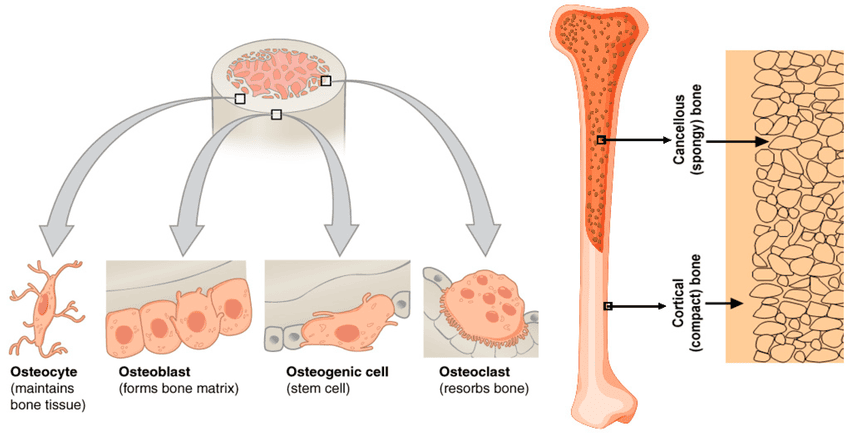
1. Which bone cell is responsible for resorbing (breaking down) bone matrix?

A. OsteocyteB. OsteoblastC. OsteoclastD. Osteogenic cell

2. The "Waiter's Tip" position is a classic sign of injury to which part of the brachial plexus?

A. Lower Trunk (C8, T1)B. Upper Trunk (C5, C6)C. Medial CordD. Posterior Cord

3. All muscles of facial expression are innervated by which cranial nerve?

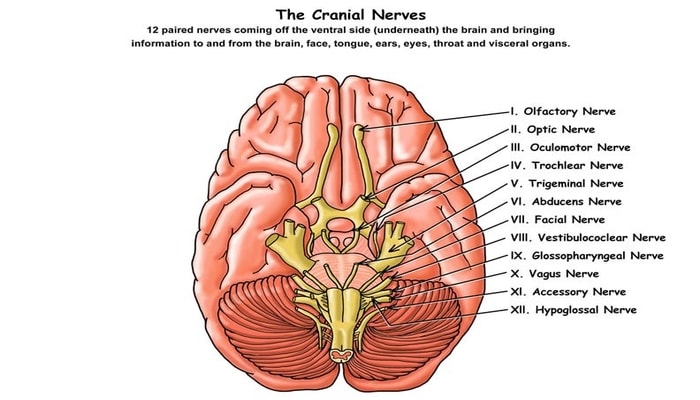
A. Trigeminal Nerve (CN V)B. Facial Nerve (CN VII)C. Accessory Nerve (CN XI)D. Hypoglossal Nerve (CN XII)

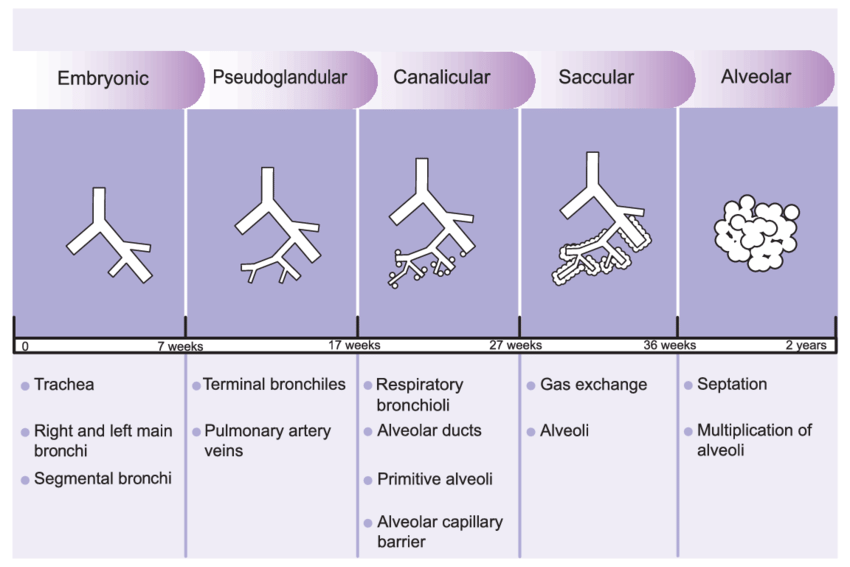
4. During which stage of lung maturation does surfactant production begin?

A. Pseudoglandular StageB. Canalicular StageC. Saccular StageD. Alveolar Stage

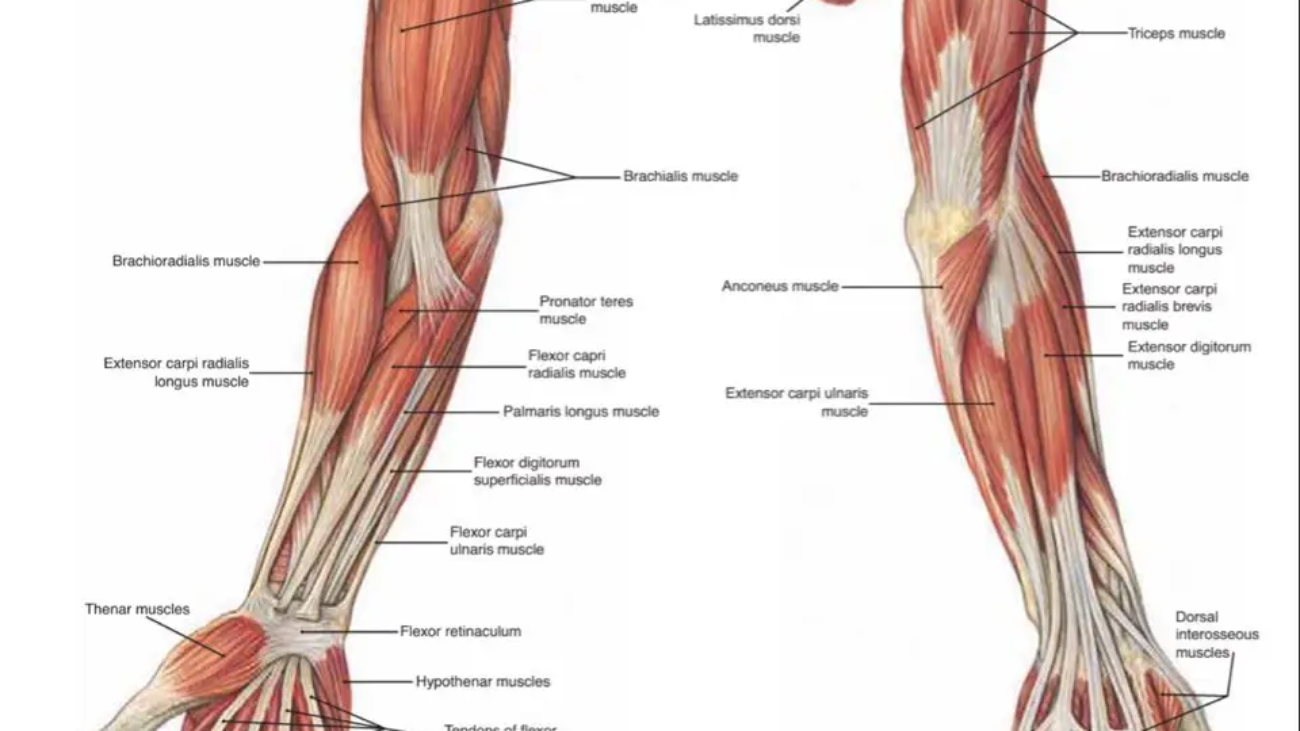
5. Which muscle is the primary flexor of the forearm at the elbow?

A. Biceps BrachiiB. BrachialisC. Triceps BrachiiD. Brachioradialis

6. The sella turcica, which houses the pituitary gland, is a feature of which cranial bone?

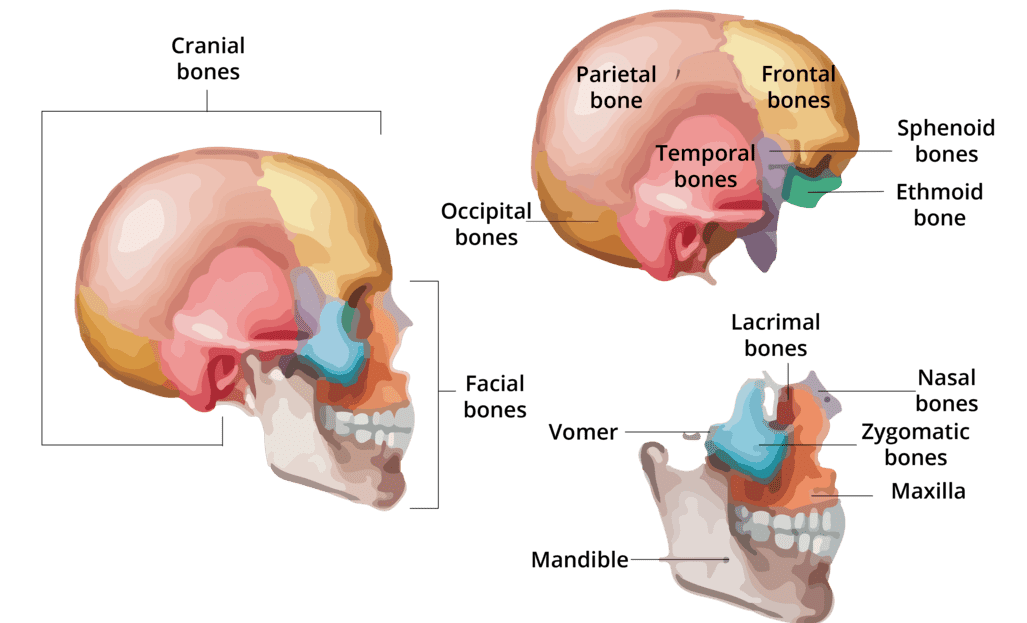
A. Frontal BoneB. Ethmoid BoneC. Occipital BoneD. Sphenoid Bone

7. In oogenesis, meiosis I is completed just before ovulation, resulting in:

A. One ovum and three polar bodiesB. Four functional ovaC. Two secondary oocytesD. One secondary oocyte and one polar body

8. Which muscle is NOT part of the rotator cuff (SITS) group?

A. SupraspinatusB. Teres MajorC. InfraspinatusD. Subscapularis

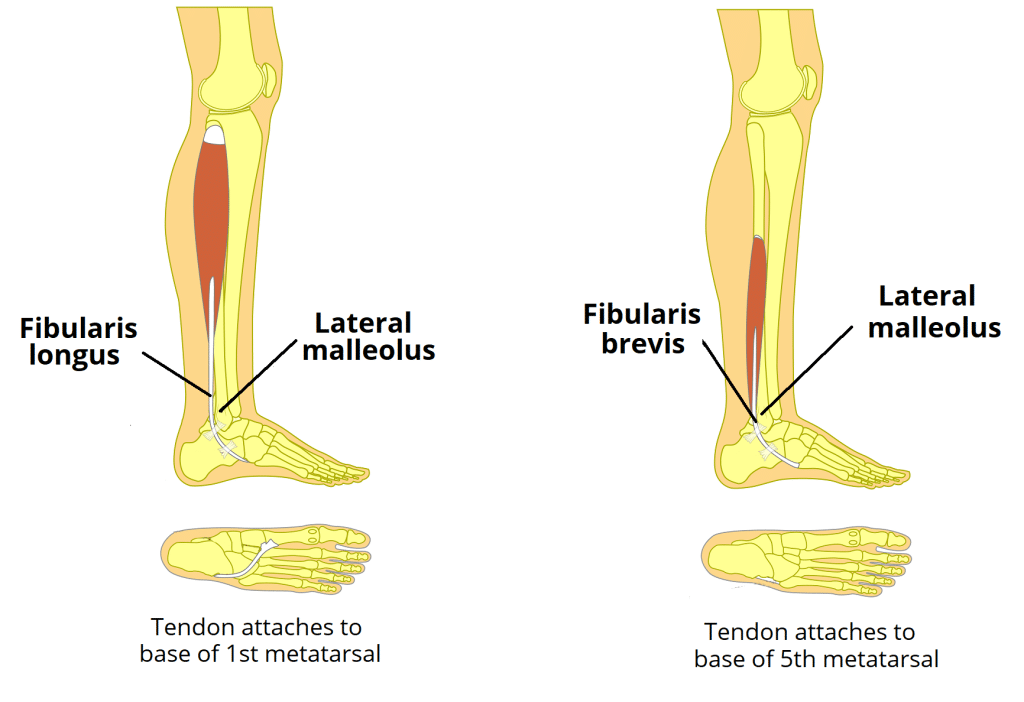
9. The primary action of the muscles in the lateral compartment of the leg (Fibularis Longus and Brevis) is:

A. DorsiflexionB. InversionC. EversionD. Plantarflexion

10. An inability to abduct the thigh and a pelvic drop on the unsupported side (Trendelenburg sign) indicates damage to which nerve?

A. Femoral NerveB. Obturator NerveC. Inferior Gluteal NerveD. Superior Gluteal Nerve

11. The olecranon process is a prominent feature of which bone?

A. RadiusB. HumerusC. UlnaD. Scapula

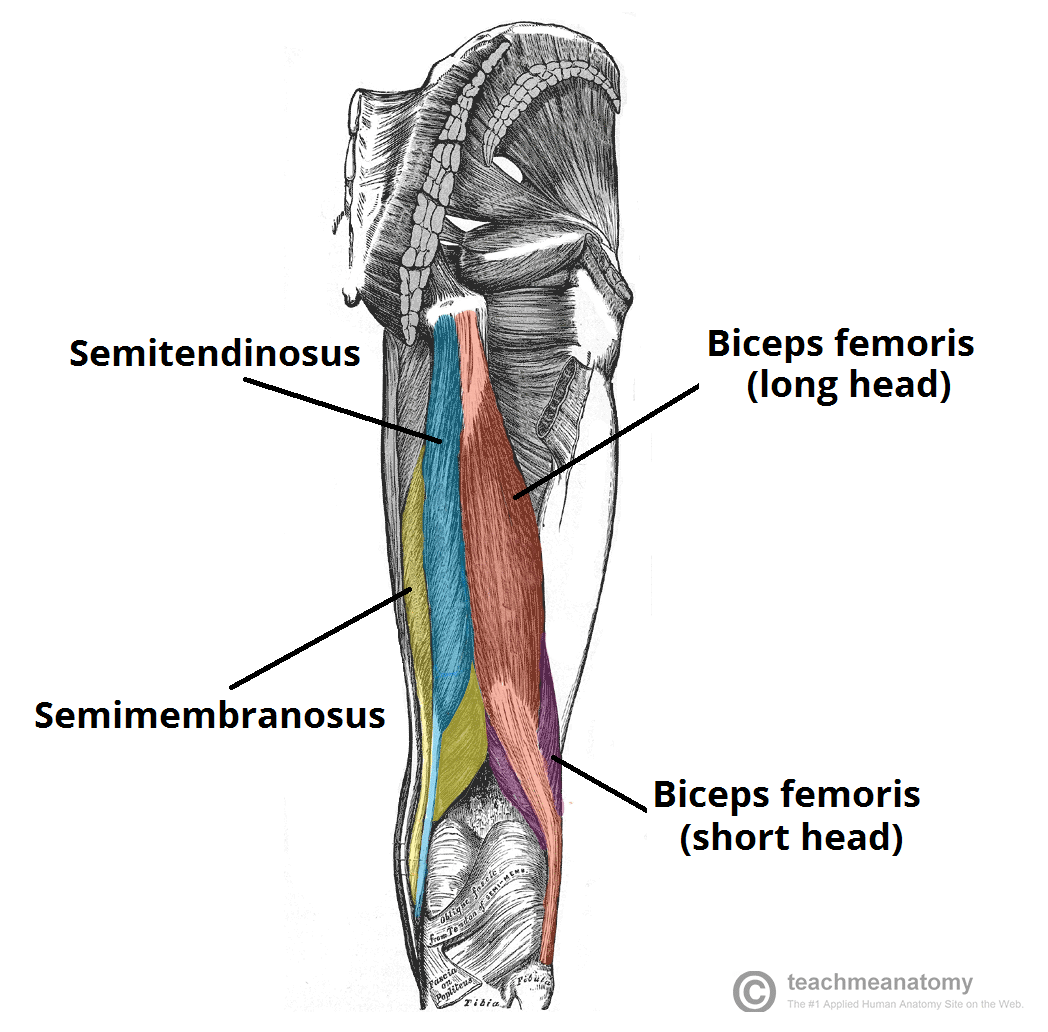
12. All hamstring muscles are innervated by the tibial portion of the sciatic nerve EXCEPT:

A. Long head of Biceps FemorisB. Short head of Biceps FemorisC. SemitendinosusD. Semimembranosus

13. Which of the following is NOT part of the axial skeleton?

A. SternumB. RibsC. ClavicleD. Vertebrae

14. The "anatomical snuffbox" is formed by the tendons of all the following muscles EXCEPT:

A. Abductor Pollicis LongusB. Extensor Pollicis BrevisC. Abductor Pollicis BrevisD. Extensor Pollicis Longus

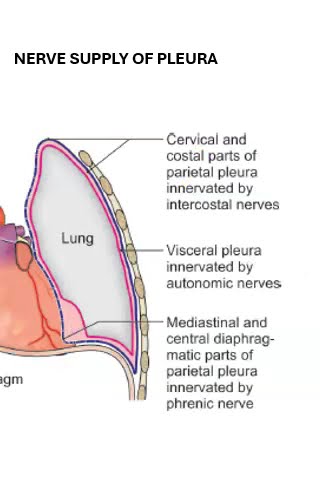
15. Referred pain to the shoulder tip is often a sign of irritation to the diaphragmatic pleura, carried by which nerve?

A. Vagus NerveB. Phrenic NerveC. Intercostal NerveD. Long Thoracic Nerve

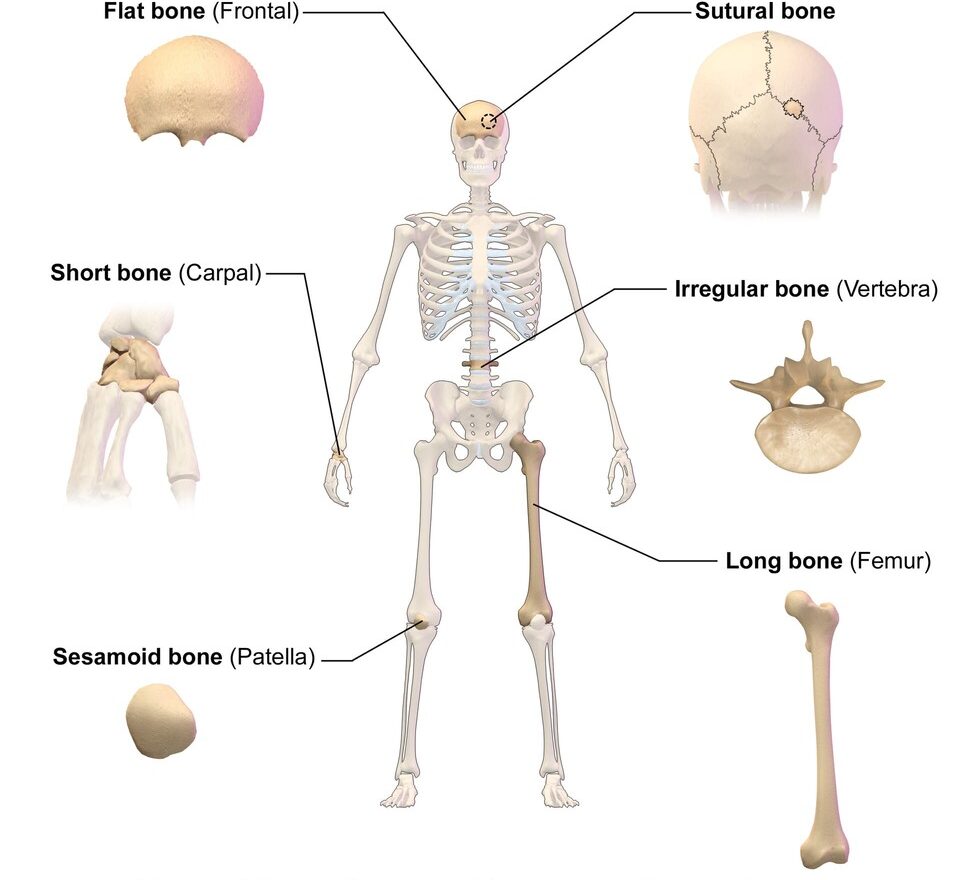
16. The patella is classified as which type of bone?

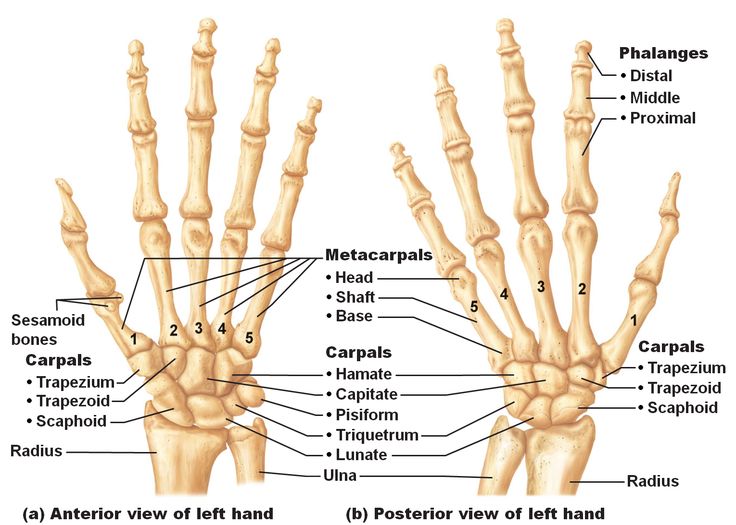
A. Long BoneB. Irregular BoneC. Flat BoneD. Sesamoid Bone

17. Which muscle is responsible for the first 15 degrees of arm abduction?

A. DeltoidB. Pectoralis MajorC. SupraspinatusD. Latissimus Dorsi

18. The Adductor Pollicis muscle in the hand is innervated by the:

A. Median NerveB. Radial NerveC. Musculocutaneous NerveD. Ulnar Nerve

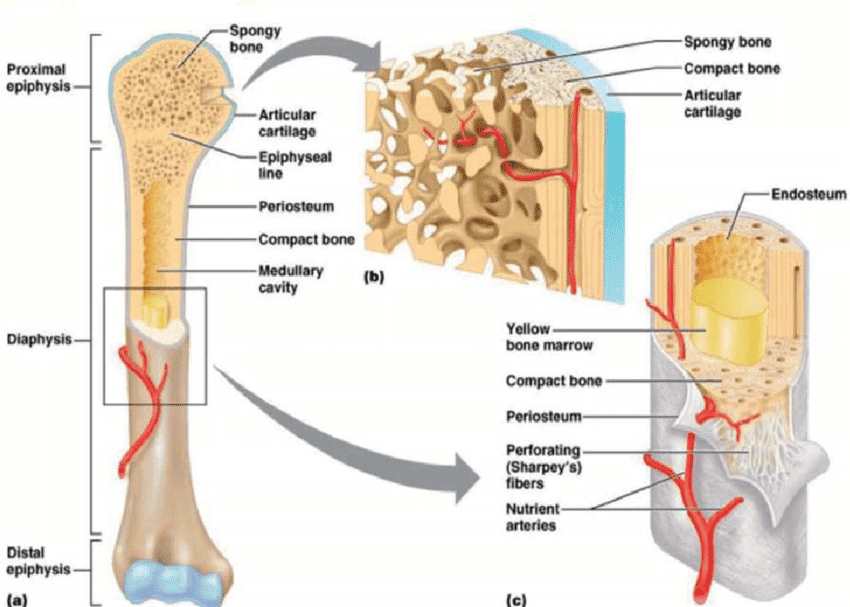
19. The microscopic, cylindrical unit of compact bone is called a(n):

A. TrabeculaB. LamellaC. OsteonD. Canaliculus

20. The "sit bones" are technically known as the:

A. Iliac CrestsB. Pubic TuberclesC. Ischial TuberositiesD. Sacral Promontory

Part II: Fill in the Blanks (20 Marks)
Answer ALL questions in this part.

21. The primary muscle of respiration that separates the thoracic and abdominal cavities is the [Click to reveal].

22. The nerve that innervates the muscles of facial expression is the [Click to reveal].

23. The final maturation stage where a round spermatid is remodeled into a spermatozoon is called [Click to reveal].

24. The mnemonic "PAD" helps to remember that the Palmar Interossei muscles [Click to reveal] the fingers.

25. The C1 vertebra is known as the [Click to reveal], while the C2 vertebra is the [Click to reveal].

26. The three muscles that insert at the pes anserinus on the medial side of the tibia are the Sartorius, Gracilis, and [Click to reveal].

27. "Winging of the scapula" is caused by paralysis of the Serratus Anterior muscle due to injury to the [Click to reveal].

28. The inorganic component that gives bone its hardness and resistance to compression is primarily [Click to reveal].

29. In a female, a secondary oocyte is arrested in [Click to reveal] of meiosis until fertilization occurs.

30. The longest muscle in the human body is the [Click to reveal].

SECTION B

30 Marks

Answer any THREE questions from this section.

1. Describe the structure of a long bone, identifying the diaphysis, epiphyses, metaphysis, periosteum, and medullary cavity.

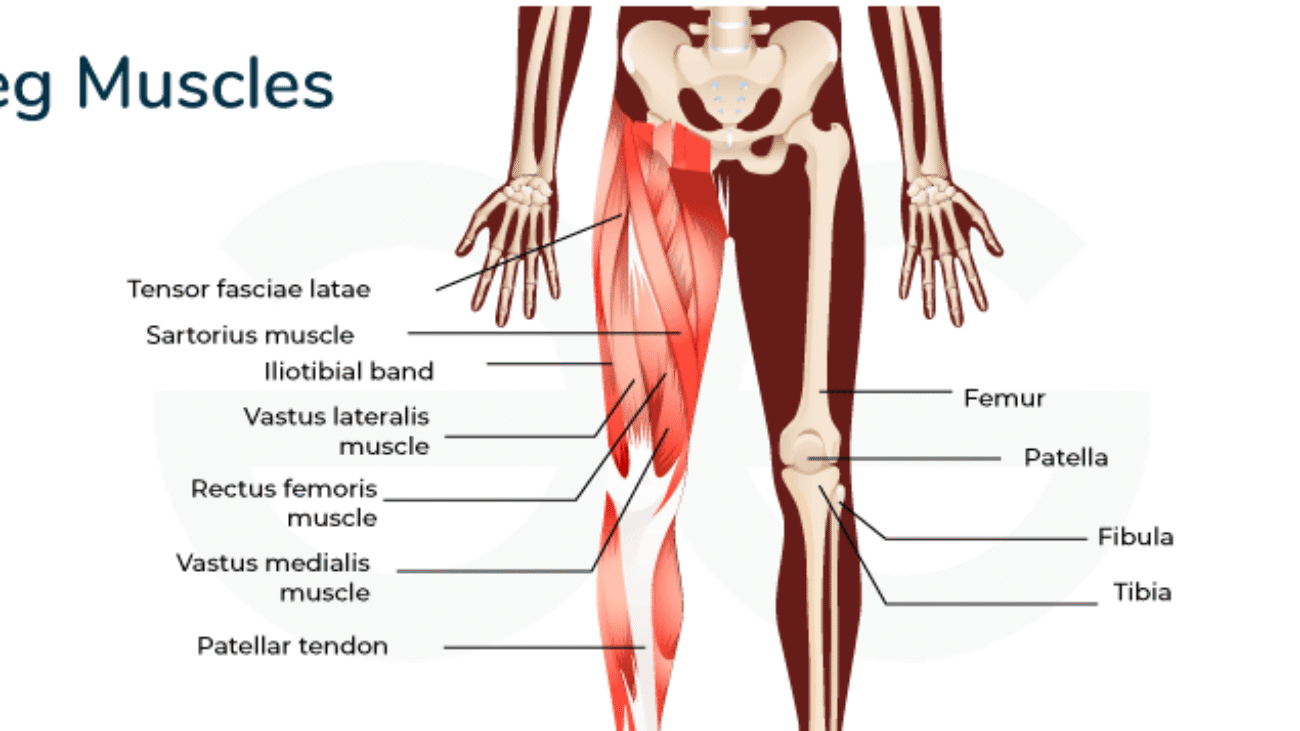
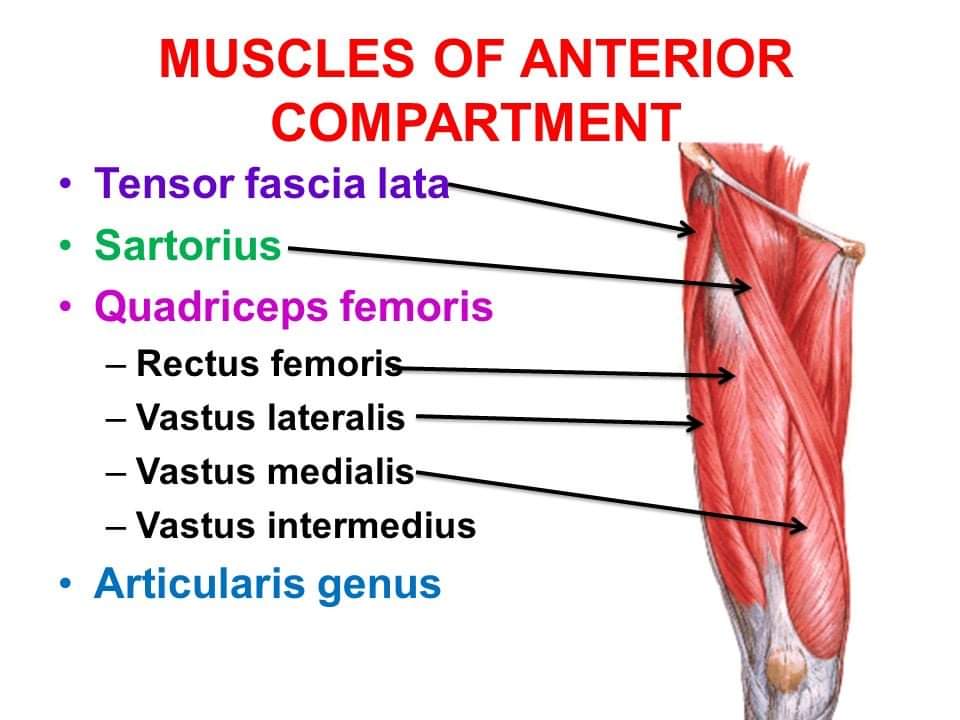
2. List the four muscles of the Quadriceps Femoris group and state their common insertion and primary action.

3. Explain the clinical significance of the Long Thoracic Nerve, including the muscle it innervates and the resulting deficit if it is injured.

4. Differentiate between the visceral and parietal pleura in terms of location and nerve supply.

5. List the five major terminal nerves of the brachial plexus and state the primary motor compartment each one supplies.

SECTION C

30 Marks

Answer any TWO questions from this section.

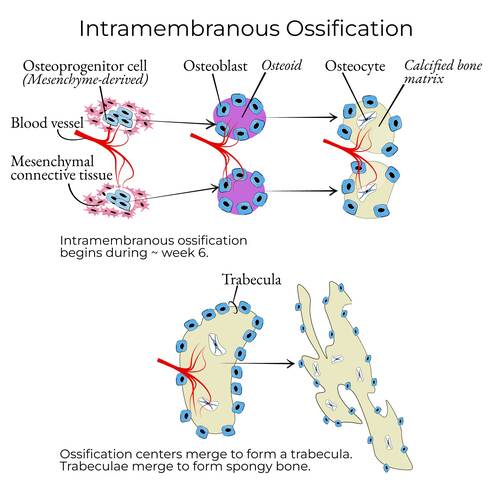
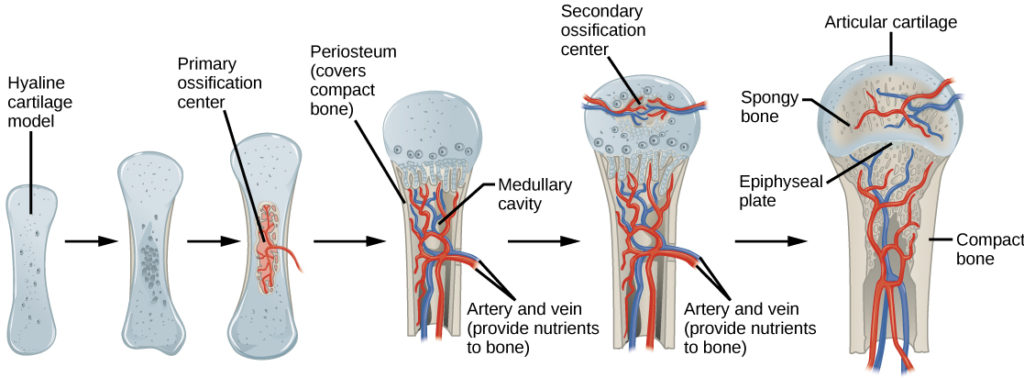
1. Describe the five stages of endochondral ossification, from the formation of a hyaline cartilage model to the appearance of secondary ossification centers.

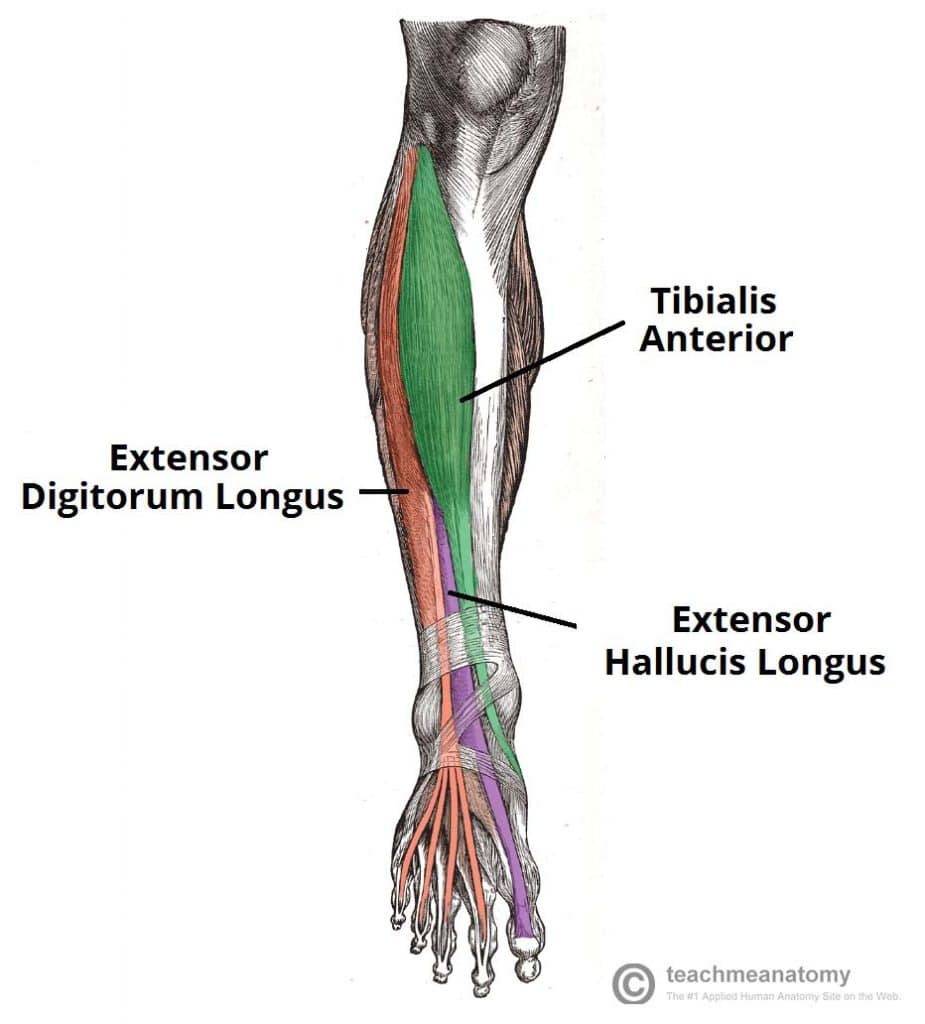
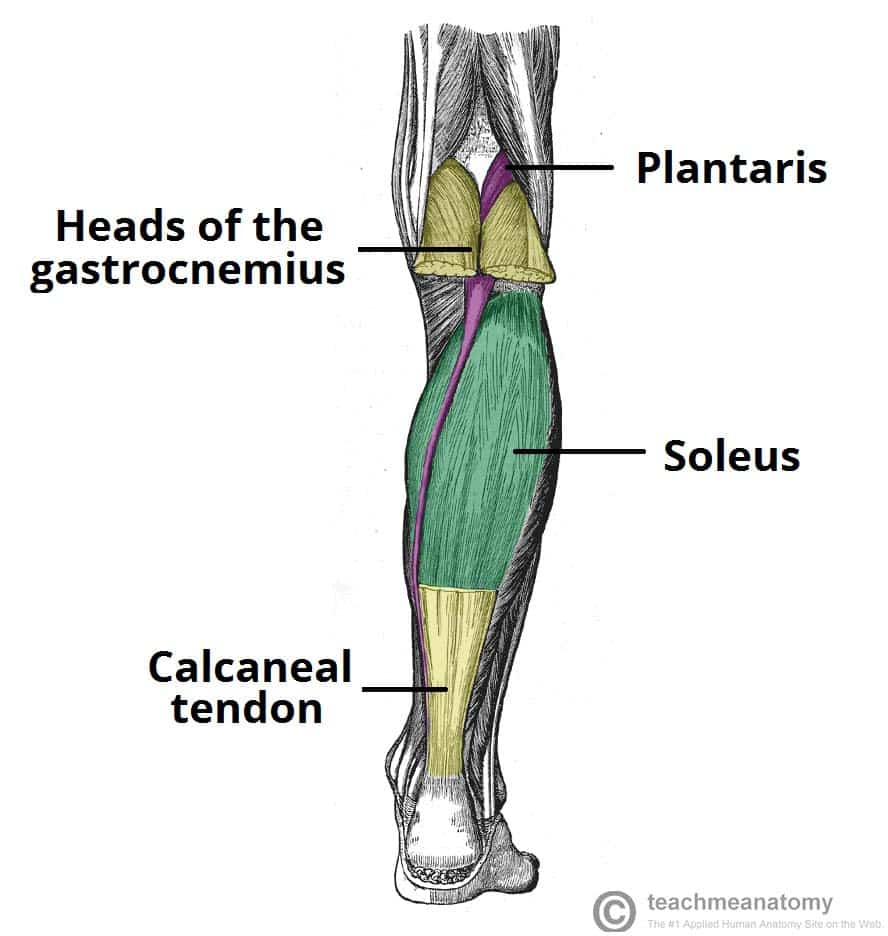
2. Compare and contrast the muscles of the anterior and posterior compartments of the leg. For each compartment, state the general innervation, primary actions, and list at least two major muscles.

3. Describe the anatomy of the skull. List the 8 bones of the cranium and the 14 bones of the face.
Leg-Muscles

Muscles of the Lower Limb

Muscles of the Lower Limb: From Pelvis to Toe.
Anatomy of the Lower Extremities


The Hip Joint

The hip joint is one of the most important joints in the body for movement, like walking or dancing.

Part 1: The Bony Pelvis & The Hip Bone

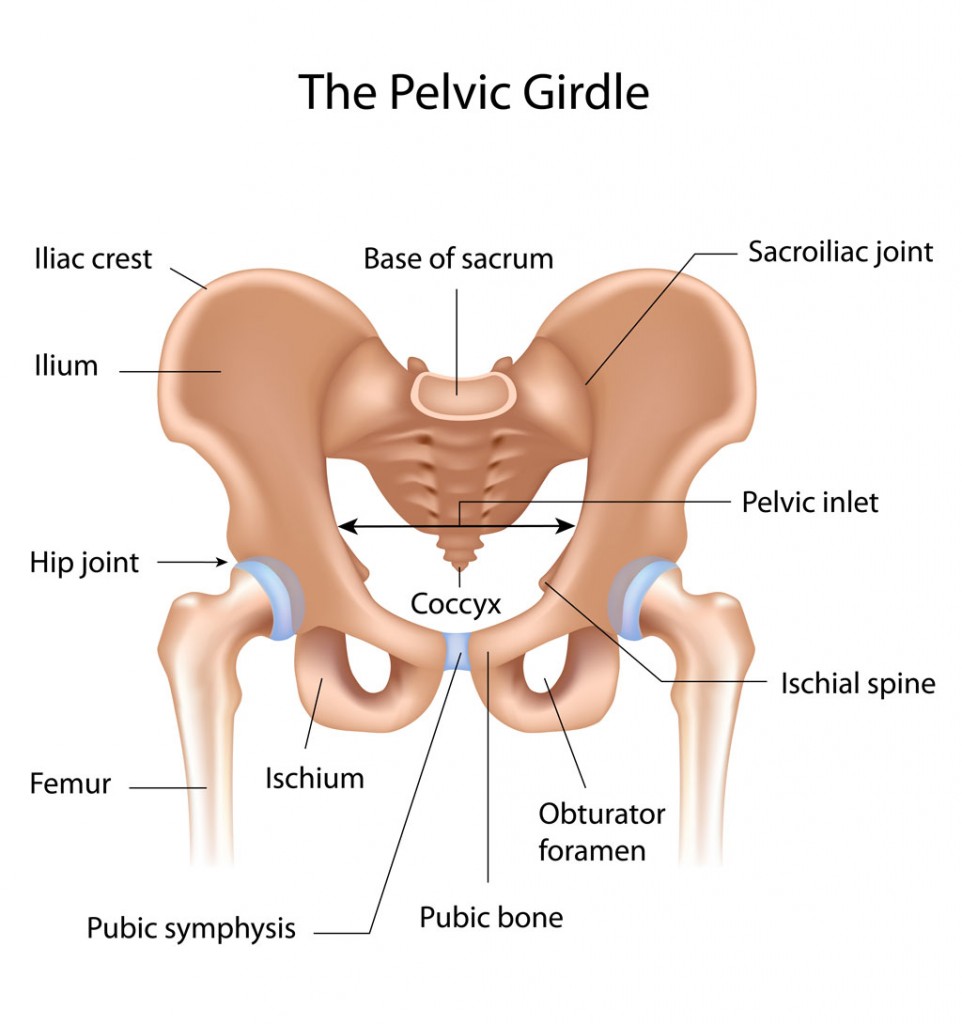
The bony pelvis is a basin-shaped ring of bones connecting the vertebral column to the femurs, formed by the sacrum, coccyx, and the two hip bones (Os coxae).

The Hip Bone (Os Coxa)

Each large, irregularly shaped hip bone is a fusion of three primary bones that completes by the end of puberty:

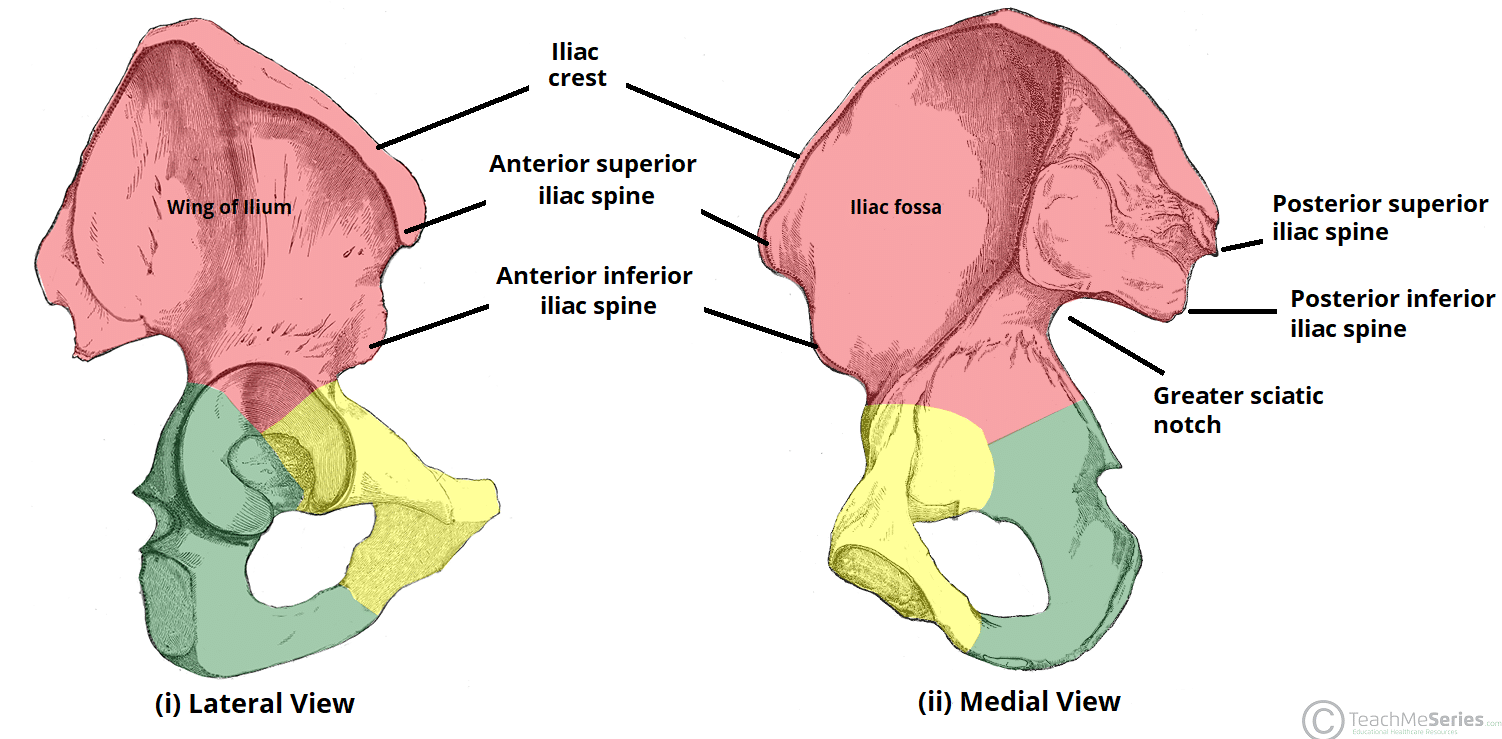
  • Ilium: The largest, most superior part, forming the prominent "wings" of the pelvis.
  • Ischium: Forms the posteroinferior (lower-back) part of the hip bone.
  • Pubic Bone (Pubis): Forms the anterior part of the hip bone.

The Acetabulum

The deep, cup-shaped socket on the lateral surface of the hip bone, formed by the union of all three bones. It articulates with the head of the femur. Key features include the crescent-shaped Lunate Surface (articular), the central Acetabular Fossa, and the fibrocartilaginous Acetabular Labrum that deepens the socket for increased stability.

Detailed Anatomy of the Hip Bone

  • Ilium:
    • Iliac Crest: The palpable superior border, terminating anteriorly as the Anterior Superior Iliac Spine (ASIS) and posteriorly as the Posterior Superior Iliac Spine (PSIS).
    • Other Spines: Anterior Inferior Iliac Spine (AIIS) and Posterior Inferior Iliac Spine (PIIS).
    • Surfaces: The large, concave internal Iliac Fossa; the rough outer Gluteal Surface for gluteal muscle attachment; and the medial Auricular Surface for articulation with the sacrum.
    • Notches: The Greater Sciatic Notch, a large indentation for passage of the sciatic nerve.
  • Ischium:
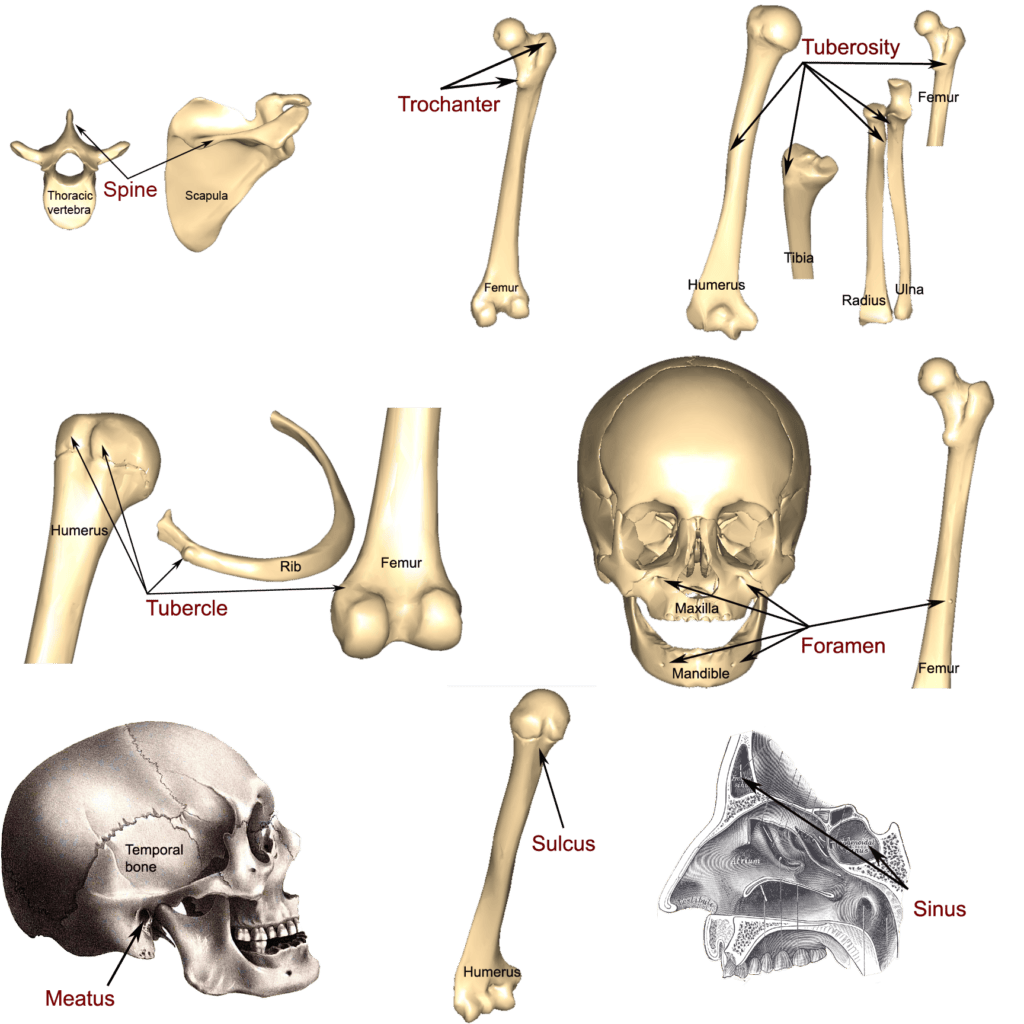
    • Ischial Tuberosity: The large, roughened "sitting bone" that supports body weight when seated.
    • Ischial Spine: A pointed projection posterior to the acetabulum, separating the Greater and Lesser Sciatic Notches.
    • Ramus of the Ischium: Projects forward to join with the pubis.
  • Pubis:
    • Body of Pubis: The central part that meets the other pubic bone at the Pubic Symphysis.
    • Superior & Inferior Rami: Bars of bone that help form the acetabulum and obturator foramen.
    • Key Markings: Includes the Pubic Tubercle and Obturator Crest for ligament and muscle attachments.

Obturator Foramen

The large opening created by the ischium and pubis. It is mostly closed by the obturator membrane but allows the obturator nerve and vessels to pass through the obturator canal into the thigh.

The Femur (Thigh Bone)

The femur is the longest, strongest, and heaviest bone in the body, transmitting weight from the hip to the tibia.

Key Features of the Femur:

  • Proximal End: Features the spherical Head (with its Fovea Capitis for the ligament of the head of the femur), the constricted Neck (a common fracture site), and the large Greater and Lesser Trochanters for muscle attachment. The Intertrochanteric Line (anterior) and Crest (posterior) connect the trochanters.
  • Shaft: Includes the prominent posterior ridge, the Linea Aspera, for attachment of many thigh muscles. Proximally, it gives rise to the Pectineal Line and Gluteal Tuberosity.
  • Distal End: Forms the knee joint with the large Medial and Lateral Condyles. The deep posterior notch between them is the Intercondylar Fossa. It also features the Medial and Lateral Epicondyles for ligament attachment and the anterior Patellar Surface.

Key Ligaments of the Hip Joint

  • Iliofemoral Ligament (Y-ligament of Bigelow): The strongest ligament in the body, located anteriorly. It prevents hyperextension of the hip.
  • Pubofemoral Ligament: Located anteroinferiorly, it limits excessive abduction and extension.
  • Ischiofemoral Ligament: Located posteriorly, it limits internal rotation and adduction.
  • Ligament of the Head of the Femur (Ligamentum Teres): Located inside the joint, connecting the fovea capitis to the acetabulum.
  • Transverse Acetabular Ligament: Bridges the acetabular notch, completing the socket.

Muscles of the Lower Limb

The powerful muscles of the lower limb are designed for stability, locomotion, and maintaining an upright posture. We will cover them regionally, starting with the hip and gluteal region.

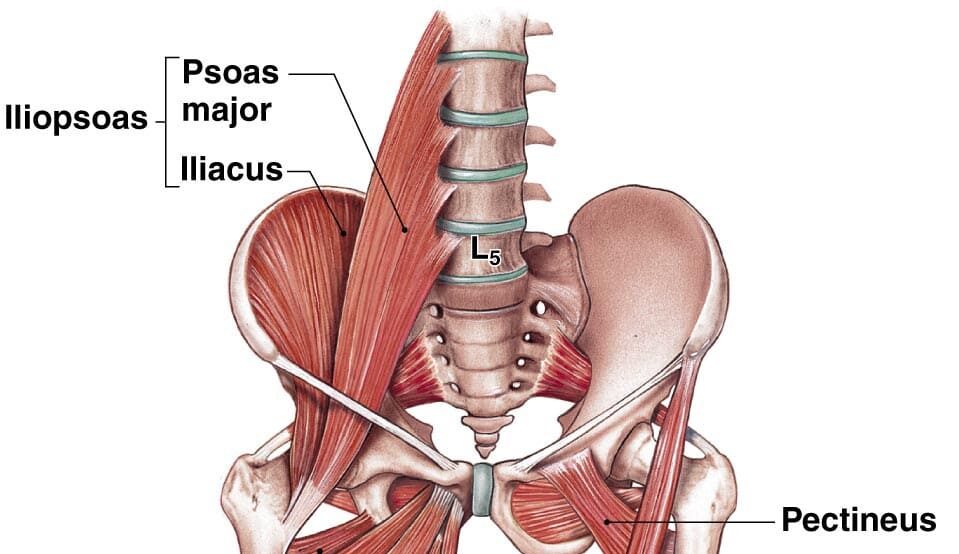
Hip Muscles: The Iliopsoas Group

The Iliopsoas is the strongest hip flexor in the body. It's a composite muscle formed by the Psoas Major and Iliacus, which merge to insert on the lesser trochanter of the femur.

  • Psoas Major: Originates from the lumbar vertebrae.
  • Iliacus: Originates from the iliac fossa.
  • Main Actions: As the main flexor of the hip, it is essential for walking, running, and lifting the leg.

1. Muscles of the Gluteal Region (Buttocks)

These muscles are essential for hip movement, stability, and posture, divided into superficial and deep layers.

Superficial Gluteal Muscles

Gluteus Maximus

The largest and most superficial gluteal muscle. It is the main extensor of the thigh (crucial for climbing stairs or standing up) and a lateral rotator.

Gluteus Medius

Lies deep to Gluteus Maximus. It is the main abductor and a medial rotator of the thigh. It is crucial for stabilizing the pelvis during walking to prevent the hip from dropping on the unsupported side (Trendelenburg sign).

Gluteus Minimus

The smallest and deepest gluteal muscle. It works with the Gluteus Medius to abduct and medially rotate the thigh and stabilize the pelvis.

Tensor Fasciae Latae (TFL)

A small anterolateral muscle that flexes, abducts, and medially rotates the thigh. It tenses the iliotibial (IT) tract, which helps to stabilize the knee in extension.

Deep Gluteal Muscles (Short External Rotators)

This group of six smaller muscles lies deep to the gluteus maximus. They collectively function as powerful lateral rotators of the thigh and help stabilize the head of the femur in the acetabulum.

Piriformis

  • Origin: Anterior surface of sacrum.
  • Insertion: Superior border of greater trochanter.
  • Innervation: Nerve to Piriformis (S1, S2).
  • Actions: Laterally rotates, abducts (when hip is flexed), and extends the thigh.

Superior Gemellus

  • Origin: Ischial spine.
  • Insertion: Medial surface of greater trochanter (with Obturator Internus tendon).
  • Innervation: Nerve to Obturator Internus (L5, S1).
  • Actions: Laterally rotates and abducts the thigh.

Obturator Internus

  • Origin: Pelvic surface of obturator membrane.
  • Insertion: Medial surface of greater trochanter.
  • Innervation: Nerve to Obturator Internus (L5, S1).
  • Actions: Laterally rotates and abducts the thigh.

Inferior Gemellus

  • Origin: Ischial tuberosity.
  • Insertion: Medial surface of greater trochanter (with Obturator Internus tendon).
  • Innervation: Nerve to Quadratus Femoris (L4, L5, S1).
  • Actions: Laterally rotates and abducts the thigh.

Obturator Externus

  • Origin: External surface of obturator membrane.
  • Insertion: Trochanteric fossa of femur.
  • Innervation: Obturator Nerve (L3, L4).
  • Actions: Laterally rotates and adducts the thigh.

Quadratus Femoris

  • Origin: Lateral border of ischial tuberosity.
  • Insertion: Quadrate tubercle on intertrochanteric crest.
  • Innervation: Nerve to Quadratus Femoris (L4, L5, S1).
  • Actions: A powerful lateral rotator and adductor of the thigh.
Clinical Note (Piriformis Syndrome): The sciatic nerve usually passes inferior to the piriformis muscle. If the muscle is tight or inflamed, it can compress the nerve, causing pain, tingling, and numbness down the back of the leg (sciatica).

Summary Table of Gluteal Muscles

Muscle Origin Insertion Innervation Main Actions
Gluteus MaximusIlium, sacrum, coccyxIT tract, gluteal tuberosityInferior Gluteal N.Extends & laterally rotates thigh
Gluteus MediusExternal surface of iliumGreater trochanterSuperior Gluteal N.Abducts & medially rotates thigh; stabilizes pelvis
Gluteus MinimusExternal surface of iliumGreater trochanterSuperior Gluteal N.Abducts & medially rotates thigh; stabilizes pelvis
Tensor Fasciae LataeASIS, iliac crestIT tractSuperior Gluteal N.Flexes, abducts, medially rotates thigh
PiriformisAnterior sacrumGreater trochanterN. to PiriformisLaterally rotates & abducts thigh
Obturator InternusObturator membraneGreater trochanterN. to Obturator InternusLaterally rotates & abducts thigh
Gemelli (Sup & Inf)Ischial spine/tuberosityGreater trochanterVariesLaterally rotate & abduct thigh
Quadratus FemorisIschial tuberosityIntertrochanteric crestN. to Quadratus FemorisPowerful lateral rotator of thigh

2. Muscles of the Thigh

The powerful muscles of the thigh are divided into three compartments: anterior (extensors), medial (adductors), and posterior (flexors/hamstrings).

Anterior Compartment of the Thigh (Extensors)

  • Innervation: Femoral Nerve (L2, L3, L4)
  • Main Actions: Primarily extension of the knee; some flexion of the hip.

Quadriceps Femoris

A group of four muscles (Rectus Femoris, Vastus Lateralis, Vastus Medialis, Vastus Intermedius) that converge on the patellar tendon. It is the powerful extensor of the knee. The Rectus Femoris is unique as it also flexes the hip.

Sartorius

The longest muscle in the body. It flexes, abducts, and laterally rotates the thigh, and also flexes the knee (the "tailor's muscle" for crossing legs).

Medial Compartment of the Thigh (Adductors)

  • Innervation: Mostly Obturator Nerve (L2, L3, L4).
  • Main Actions: Primarily adduction of the thigh.

This group includes the Pectineus, Adductor Longus, Adductor Brevis, the powerful Adductor Magnus (which has both an adductor and a hamstring part), and the long, strap-like Gracilis.

Posterior Compartment of the Thigh (Hamstrings)

  • Innervation: Sciatic Nerve (Tibial portion), except for the short head of Biceps Femoris.
  • Main Actions: Primarily flexion of the knee and extension of the hip.

Biceps Femoris

The lateral hamstring muscle, with a long and a short head. It flexes the knee and laterally rotates the leg.

Semitendinosus

A medial hamstring muscle. It flexes the knee and medially rotates the leg.

Semimembranosus

A medial hamstring muscle, deep to the Semitendinosus. It flexes the knee and medially rotates the leg.

Summary Table of Thigh Muscles

Muscle Origin Insertion Innervation Main Actions
ANTERIOR COMPARTMENT
Rectus FemorisAIISPatella & Tibial TuberosityFemoral N.Extends knee, flexes hip
Vastus LateralisGreater trochanter, linea asperaExtends knee
Vastus MedialisIntertrochanteric line, linea asperaExtends knee
Vastus IntermediusFemoral shaftExtends knee
SartoriusASISMedial tibia (Pes Anserinus)Femoral N.Flexes, abducts, lat. rotates thigh; flexes knee
MEDIAL COMPARTMENT
Adductor Longus/Brevis/MagnusPubis, Ischial ramusFemur (linea aspera)Obturator N. (Magnus also Sciatic N.)Adduct thigh; Magnus also extends thigh
GracilisPubic symphysisMedial tibia (Pes Anserinus)Obturator N.Adducts thigh, flexes knee
POSTERIOR COMPARTMENT (HAMSTRINGS)
Biceps FemorisLong: Ischial tuberosity; Short: Linea asperaHead of fibulaSciatic N. (Tibial & Common Fibular)Flexes knee, extends hip, lat. rotates leg
SemitendinosusIschial tuberosityMedial tibia (Pes Anserinus)Sciatic N. (Tibial)Flexes knee, extends hip, med. rotates leg
SemimembranosusIschial tuberosityMedial condyle of tibiaSciatic N. (Tibial)Flexes knee, extends hip, med. rotates leg

3. Muscles of the Leg

The muscles of the leg are divided into four compartments by interosseous membrane and fascial septa: anterior, lateral, posterior superficial, and posterior deep.

Anterior Compartment of the Leg

  • Innervation: Deep Fibular (Peroneal) Nerve (L4, L5, S1)
  • Main Actions: Primarily dorsiflexion of the ankle and extension of the toes.

This compartment includes the Tibialis Anterior (main dorsiflexor and invertor), Extensor Digitorum Longus (extends lateral four toes), Extensor Hallucis Longus (extends great toe), and Fibularis Tertius (dorsiflexes and everts).

Lateral Compartment of the Leg

  • Innervation: Superficial Fibular (Peroneal) Nerve (L5, S1, S2)
  • Main Actions: Primarily eversion of the foot; some plantarflexion.

This compartment contains two muscles: Fibularis (Peroneus) Longus and Fibularis (Peroneus) Brevis. Together, they are the main everters of the foot.

Posterior Compartment of the Leg

  • Innervation: Tibial Nerve (L4-S2)
  • Main Actions: Primarily plantarflexion of the ankle, inversion of the foot, and flexion of the toes.

Superficial Group

This group forms the bulk of the calf and inserts via the calcaneal (Achilles) tendon. It includes the two-headed Gastrocnemius, the powerful underlying Soleus, and the small Plantaris. Together, Gastrocnemius and Soleus are known as the Triceps Surae and are powerful plantarflexors.

Deep Group

These muscles lie deep to the superficial group. They include the Popliteus (unlocks the knee), Flexor Digitorum Longus (flexes lateral four toes), Flexor Hallucis Longus (flexes the great toe), and the Tibialis Posterior (the main invertor of the foot).

Mnemonic (Medial Malleolus): The tendons, artery, and nerve passing deep to the medial malleolus can be remembered from anterior to posterior as: "Tom, Dick, And Very Nervous Harry" (Tibialis posterior, flexor Digitorum longus, posterior tibial Artery, Vein, tibial Nerve, flexor Hallucis longus).

Summary Table of Leg Muscles

Muscle Origin Insertion Innervation Main Actions
ANTERIOR COMPARTMENT
Tibialis AnteriorLateral tibiaMedial cuneiform, 1st metatarsalDeep Fibular N.Main dorsiflexor; inverts foot
Extensor Digitorum LongusTibia, fibulaDistal phalanges of digits 2-5Deep Fibular N.Extends lateral four toes
Extensor Hallucis LongusFibulaDistal phalanx of great toeDeep Fibular N.Extends great toe
LATERAL COMPARTMENT
Fibularis (Peroneus) LongusHead of fibula1st metatarsal, medial cuneiformSuperficial Fibular N.Everts foot; plantarflexes ankle
Fibularis (Peroneus) BrevisLateral fibulaBase of 5th metatarsalSuperficial Fibular N.Everts foot; plantarflexes ankle
POSTERIOR COMPARTMENT (SUPERFICIAL)
GastrocnemiusFemoral condylesCalcaneus via Achilles tendonTibial N.Plantarflexes ankle, flexes knee
SoleusTibia, fibulaPowerful plantarflexor
POSTERIOR COMPARTMENT (DEEP)
Tibialis PosteriorTibia, fibulaNavicular, cuneiforms, etc.Tibial N.Main invertor of foot
Flexor Digitorum LongusPosterior tibiaDistal phalanges of digits 2-5Flexes lateral four toes
Flexor Hallucis LongusPosterior fibulaDistal phalanx of great toeFlexes great toe

4. Muscles of the Foot

The intrinsic muscles of the foot are divided into dorsal (top) and plantar (sole) groups, responsible for fine motor control, supporting the arches, and assisting in locomotion.

Dorsal Muscles of the Foot

Extensor Digitorum Brevis

Originates from the calcaneus and helps extend toes 2-4.

Extensor Hallucis Brevis

Originates from the calcaneus and helps extend the great toe.

Plantar Muscles of the Foot

These muscles are organized into four layers from superficial to deep. They are primarily innervated by the Medial and Lateral Plantar Nerves (branches of the Tibial Nerve) and are crucial for supporting the arches and controlling fine movements of the toes.

Layer 1 (Superficial)

Abductor Hallucis

Abducts and flexes the great toe. (Innervated by Medial Plantar N.)

Flexor Digitorum Brevis

Flexes the lateral four toes at the PIP joints. (Innervated by Medial Plantar N.)

Abductor Digiti Minimi

Abducts and flexes the little toe. (Innervated by Lateral Plantar N.)

Layer 2

Quadratus Plantae

Assists the Flexor Digitorum Longus (FDL) tendon in flexing the toes by straightening its line of pull. (Innervated by Lateral Plantar N.)

Lumbricals (4)

Flex the MTP joints and extend the IP joints of the lateral four toes. (Innervated by both Medial and Lateral Plantar Nerves).

Layer 3

Flexor Hallucis Brevis

Flexes the great toe at the MTP joint. (Innervated by Medial Plantar N.)

Adductor Hallucis

Has two heads (oblique and transverse); adducts the great toe. (Innervated by Lateral Plantar N.)

Flexor Digiti Minimi Brevis

Flexes the little toe. (Innervated by Lateral Plantar N.)

Layer 4 (Deepest)

Plantar Interossei (3)

Adduct toes 3-5 (PAD - Plantar Adduct). (Innervated by Lateral Plantar N.)

Dorsal Interossei (4)

Abduct toes 2-4 (DAB - Dorsal Abduct). (Innervated by Lateral Plantar N.)

Note on extrinsic tendons: Although their muscle bellies are in the leg, the tendons of Tibialis Anterior and Fibularis Longus cross the ankle and insert deep in the foot, providing significant dynamic support to the arches.

Summary Table of Foot Muscles

Layer/Group Muscle Origin Insertion Innervation Main Actions
DORSAL MUSCLES
DorsalExtensor Digitorum BrevisCalcaneusExtensor expansions 2-4Deep Fibular N.Extends toes 2-4
Extensor Hallucis BrevisCalcaneusProx. phalanx of great toeExtends great toe
PLANTAR MUSCLES
Layer 1Abductor HallucisCalcaneusProx. phalanx of great toeMedial Plantar N.Abducts & flexes great toe
Flexor Digitorum BrevisCalcaneusMiddle phalanges 2-5Medial Plantar N.Flexes toes 2-5 (PIP)
Abductor Digiti MinimiCalcaneusProx. phalanx of 5th toeLateral Plantar N.Abducts & flexes 5th toe
Layer 2Quadratus PlantaeCalcaneusTendon of FDLLateral Plantar N.Assists FDL in flexing
Lumbricals (4)Tendons of FDLExtensor expansions 2-5Medial & Lateral Plantar N.Flex MTPs, Extend IPs
Layer 3Flexor Hallucis BrevisCuboid, cuneiformsProx. phalanx of great toeMedial Plantar N.Flexes great toe
Adductor HallucisMetatarsals 2-4Prox. phalanx of great toeLateral Plantar N.Adducts great toe
Flexor Digiti Minimi BrevisBase of 5th metatarsalProx. phalanx of 5th toeLateral Plantar N.Flexes little toe
Layer 4Plantar Interossei (3)Metatarsals 3-5Prox. phalanges 3-5Lateral Plantar N.Adduct toes (PAD)
Dorsal Interossei (4)Adjacent metatarsalsProx. phalanges 2-4Lateral Plantar N.Abduct toes (DAB)

Test Your Knowledge

A quiz on the Muscles of the Lower Limb (Pelvis to Toe).

1. Which muscle is the most powerful extensor of the hip, especially when climbing stairs or rising from a seated position?

  • Gluteus Medius
  • Gluteus Minimus
  • Gluteus Maximus
  • Piriformis

Correct (c): The Gluteus Maximus is the largest and most powerful muscle for hip extension, especially against resistance.

Incorrect (a, b): Gluteus Medius and Minimus are primary hip abductors.

Incorrect (d): Piriformis is an external rotator of the hip.

2. Damage to the superior gluteal nerve would most likely result in weakness in which primary action of the hip?

  • Extension
  • Adduction
  • Abduction
  • Flexion

Correct (c): The Superior Gluteal Nerve innervates the Gluteus Medius and Minimus, primary hip abductors. Damage leads to the "Trendelenburg gait."

Incorrect (a): Hip extension is by the Gluteus Maximus (inferior gluteal nerve).

Incorrect (b): Hip adduction is by the adductor group (obturator nerve).

Incorrect (d): Hip flexion is primarily by the Iliopsoas.

3. The "pes anserinus" is the common insertion for which three muscles on the medial tibia?

  • Semitendinosus, Semimembranosus, Biceps Femoris
  • Sartorius, Gracilis, Semitendinosus
  • Vastus Medialis, Vastus Lateralis, Rectus Femoris
  • Adductor Longus, Adductor Brevis, Adductor Magnus

Correct (b): The Sartorius, Gracilis, and Semitendinosus muscles insert together via a common tendon onto the superomedial surface of the tibia, forming the "pes anserinus" or goose's foot.

4. All anterior thigh muscles are innervated by the Femoral Nerve, EXCEPT for which muscle?

  • Rectus Femoris
  • Iliacus
  • Sartorius
  • Psoas Major

Correct (d): The Psoas Major is innervated by anterior rami of lumbar nerves (L1-L3) directly from the lumbar plexus.

Incorrect (a, b, c): Rectus Femoris, Iliacus, and Sartorius are all innervated by the Femoral Nerve.

5. Which of the following muscles is NOT a component of the quadriceps femoris group?

  • Vastus Lateralis
  • Rectus Femoris
  • Semitendinosus
  • Vastus Medialis

Correct (c): Semitendinosus is one of the hamstring muscles, located in the posterior compartment of the thigh.

Incorrect (a, b, d): The other three muscles are all part of the quadriceps femoris group, along with the Vastus Intermedius.

6. The primary action of the muscles in the lateral compartment of the leg is:

  • Dorsiflexion and inversion
  • Plantarflexion and eversion
  • Dorsiflexion and eversion
  • Plantarflexion and inversion

Correct (b): The muscles of the lateral compartment (Fibularis/Peroneus Longus and Brevis) are strong evertors of the foot and also assist in plantarflexion.

7. A patient presents with "foot drop" and an inability to dorsiflex the ankle. Which nerve is most likely damaged?

  • Tibial Nerve
  • Common Fibular (Peroneal) Nerve
  • Saphenous Nerve
  • Obturator Nerve

Correct (b): The Common Fibular Nerve (specifically its deep branch) innervates the anterior compartment of the leg, responsible for dorsiflexion. Damage leads to "foot drop."

Incorrect (a): The Tibial Nerve innervates the plantarflexors.

Incorrect (c): The Saphenous Nerve is sensory.

Incorrect (d): The Obturator Nerve innervates thigh adductors.

8. Which muscle's tendon acts like a "stirrup" to support the longitudinal arches of the foot?

  • Tibialis Anterior
  • Tibialis Posterior
  • Fibularis (Peroneus) Longus
  • Extensor Digitorum Longus

Correct (c): The Fibularis Longus tendon passes under the foot, acting like a "stirrup" to support the longitudinal and transverse arches.

9. The muscles of the deep posterior compartment of the leg include all of the following EXCEPT:

  • Popliteus
  • Flexor Digitorum Longus
  • Soleus
  • Tibialis Posterior

Correct (c): The Soleus muscle is part of the superficial posterior compartment, along with the Gastrocnemius and Plantaris.

Incorrect (a, b, d): The others are all deep posterior compartment muscles.

10. Which group of muscles contributes to maintaining the transverse arch of the foot?

  • Dorsal Interossei
  • Lumbricals
  • Adductor Hallucis (transverse and oblique heads)
  • Flexor Digiti Minimi Brevis

Correct (c): The Adductor Hallucis, particularly its transverse head, plays a significant role in maintaining the transverse arch of the foot by pulling the metatarsal heads together.

11. The powerful hip flexor formed by the fusion of the Iliacus and Psoas Major is known as the __________ group.

Rationale: The Iliacus and Psoas Major combine to form the Iliopsoas, the primary hip flexor.

12. The primary action of the Quadriceps Femoris group is extension of the __________.

Rationale: The four heads of the Quadriceps Femoris are the primary extensors of the knee joint.

13. The common origin point for the hamstring muscles is the __________.

Rationale: The ischial tuberosity is the common origin for the Semitendinosus, Semimembranosus, and the long head of the Biceps Femoris.

14. The three muscles that form the triceps surae are the Gastrocnemius, Soleus, and __________.

Rationale: These three muscles collectively form the triceps surae, which inserts via the Achilles tendon to cause powerful plantarflexion.

15. The intrinsic foot muscles responsible for flexing the MTP joints and extending the IP joints are the __________ and Interossei.

Rationale: Similar to the hand, the Lumbricals and Interossei of the foot perform this combined action, which is crucial for the "toe-off" phase of walking.
```
The-Muscles-of-the-Upper-Extremity

Muscles of the Upper Limb

Musclesof the Upper Limbs: From Shoulder.

The Brachial Plexus

The brachial plexus is a complex network of nerves formed by the anterior rami of the lower four cervical nerves (C5, C6, C7, C8) and the first thoracic nerve (T1). It is responsible for the motor and sensory innervation of the entire upper limb.

Understanding the plexus is best done by following its five main divisions, remembered by the mnemonic: "Real Texans Drink Cold Beer" (Roots, Trunks, Divisions, Cords, Branches).

1. Roots (C5, C6, C7, C8, T1)

The five roots are the anterior primary rami of the spinal nerves, emerging between the anterior and middle scalene muscles in the neck.

Key Branches from Roots:

  • Dorsal Scapular Nerve (C5): Innervates Rhomboids and Levator Scapulae.
  • Long Thoracic Nerve (C5, C6, C7): Innervates Serratus Anterior.

2. Trunks (Superior, Middle, Inferior)

The five roots unite to form three trunks, which pass over the first rib.

  • Upper Trunk: Formed by the union of C5 and C6 roots.
  • Middle Trunk: A continuation of the C7 root.
  • Lower Trunk: Formed by the union of C8 and T1 roots.

Key Branches from Trunks:

  • Suprascapular Nerve (C5, C6): From the Upper Trunk; innervates Supraspinatus and Infraspinatus.

3. Divisions (Anterior and Posterior)

Each of the three trunks divides into an anterior and a posterior division, passing under the clavicle. The posterior divisions supply future extensors, while the anterior divisions supply future flexors.

4. Cords (Lateral, Posterior, Medial)

The six divisions regroup to form three cords, named for their position relative to the axillary artery.

  • Lateral Cord (C5-C7): From the anterior divisions of the upper and middle trunks.
  • Posterior Cord (C5-T1): From the posterior divisions of all three trunks.
  • Medial Cord (C8-T1): From the anterior division of the lower trunk.

Key Branches from Cords:

  • Lateral Pectoral Nerve: From the Lateral Cord.
  • Upper & Lower Subscapular Nerves, Thoracodorsal Nerve: From the Posterior Cord.
  • Medial Pectoral Nerve, Medial Cutaneous Nerves: From the Medial Cord.

5. Branches (The 5 Major Terminal Nerves)

The three cords give rise to the five major terminal nerves that innervate the entire upper limb.

Musculocutaneous Nerve (C5-C7)

Motor: Anterior arm compartment (Biceps Brachii, Brachialis, Coracobrachialis).
Sensory: Skin of the lateral forearm.

Axillary Nerve (C5-C6)

Motor: Deltoid and Teres Minor.
Sensory: Skin over the lower deltoid ("regimental badge area").

Radial Nerve (C5-T1)

Motor: All muscles of the posterior compartments of the arm and forearm (all extensors).
Sensory: Posterior skin of arm and forearm, dorsal aspect of lateral 2.5 digits.

Median Nerve (C5-T1)

Motor: Most anterior forearm muscles (flexors/pronators), and thenar muscles of the thumb.
Sensory: Skin of the lateral palm and palmar aspect of the lateral 3.5 digits.

Ulnar Nerve (C8-T1)

Motor: Two anterior forearm muscles (Flexor Carpi Ulnaris, medial half of FDP) and most intrinsic muscles of the hand.
Sensory: Skin of the medial 1.5 digits (palmar and dorsal).

Brachial Plexus Summary Table

LevelComponentsKey Nerve BranchesClinical Notes
ROOTSAnterior Rami of C5, C6, C7, C8, T1Dorsal Scapular N (C5): Rhomboids, Levator Scapulae
Long Thoracic N (C5-C7): Serratus Anterior
Emerge between Scalenes. Injury to Long Thoracic N. → Winged Scapula.
TRUNKSUpper: C5 + C6
Middle: C7
Lower: C8 + T1
Suprascapular N (C5, C6): Supraspinatus, Infraspinatus
N. to Subclavius (C5, C6): Subclavius
Pass over 1st rib. Erb-Duchenne palsy is an upper trunk injury.
DIVISIONSEach trunk divides into an Anterior & Posterior DivisionNo direct named branches.Posterior divisions supply extensors; Anterior supply flexors.
CORDSLateral: Ant. divisions of Upper & Middle
Posterior: Post. divisions of all 3
Medial: Ant. division of Lower
Lateral Pectoral N.
Upper & Lower Subscapular N., Thoracodorsal N.
Medial Pectoral N., Medial Cutaneous Nerves
Named for position around axillary artery.
BRANCHESTerminal NervesMusculocutaneous N.
Axillary N.
Radial N.
Median N.
Ulnar N.
Major nerves of the upper limb. Injuries lead to distinct motor & sensory deficits.

Brachial Plexus Injuries and Clinical Correlates

Upper Plexus Injury (Erb-Duchenne Palsy)

Affects C5-C6 roots. Caused by an excessive angle between the neck and shoulder. Results in the classic "Waiter's Tip" position (adducted shoulder, medially rotated arm, extended elbow).

Lower Plexus Injury (Klumpke's Palsy)

Affects C8-T1 roots. Caused by excessive abduction of the arm. Affects intrinsic hand muscles, leading to a "Claw Hand" of the 4th and 5th digits.

Radial Nerve Injury (Wrist Drop)

Commonly caused by mid-shaft humeral fractures or compression in the axilla ("Saturday night palsy"). Results in an inability to extend the wrist and fingers.

Median Nerve Injury (Carpal Tunnel Syndrome)

Compression of the median nerve at the wrist. Causes numbness and tingling in the lateral 3.5 digits and weakness/atrophy of the thenar (thumb) muscles.

Ulnar Nerve Injury ("Claw Hand")

Injury at the elbow ("funny bone") or wrist. Affects intrinsic hand muscles, leading to "clawing" of the 4th and 5th digits and sensory loss over the medial hand.

Muscles of the Chest (Pectoral Region)

1. Superficial Muscles of the Pectoral Region

These muscles connect the upper limb to the anterior and lateral thoracic wall.

a. Pectoralis Major

A large, fan-shaped muscle covering the upper chest. It is a powerful adductor and medial rotator of the arm. Its clavicular head also flexes the arm, while the sternocostal head helps extend it from a flexed position.

b. Pectoralis Minor

A thin, triangular muscle lying deep to Pectoralis Major. It depresses the shoulder and protracts the scapula (pulls it forward and downward).

c. Subclavius

A small muscle located inferior to the clavicle. It anchors and depresses the clavicle, and helps protect the underlying subclavian vessels and brachial plexus.

d. Serratus Anterior

The "boxer's muscle" on the lateral thoracic wall. It is the prime mover for protracting the scapula (punching/pushing) and is essential for rotating the scapula to allow for full arm elevation. Paralysis leads to "winged scapula".

2. Deep Muscles of the Thorax (Associated with Respiration)

These muscles are primarily involved in the mechanics of breathing.

a. Intercostal Muscles (External, Internal, Innermost)

Three layers of muscles in the intercostal spaces. The External Intercostals elevate the ribs for forced inspiration. The Internal and Innermost Intercostals depress the ribs for forced expiration.

b. Transversus Thoracis

A thin muscle on the inner anterior thoracic wall that weakly depresses the ribs.

Summary Table of Chest Muscles

Muscle Origin Insertion Innervation Main Actions
SUPERFICIAL PECTORAL MUSCLES
Pectoralis MajorClavicle, Sternum, Costal Cartilages 1-6Intertubercular groove of humerusLat & Med Pectoral N.Adducts & medially rotates arm; flexes & extends arm
Pectoralis MinorRibs 3-5Coracoid process of scapulaMedial Pectoral N.Depresses shoulder; protracts scapula
Subclavius1st ribInferior surface of clavicleN. to SubclaviusDepresses & anchors clavicle
Serratus AnteriorRibs 1-9Medial border of scapulaLong Thoracic N.Protracts & rotates scapula (prevents winging)
DEEP THORACIC (RESPIRATORY) MUSCLES
External IntercostalsRib aboveRib belowIntercostal NervesElevate ribs (forced inspiration)
Internal IntercostalsRib aboveRib belowIntercostal NervesDepress ribs (forced expiration)

Muscles of the Upper Limbs

The muscles of the upper limb enable a remarkable range of movements, from powerful lifting to delicate fine motor skills. We will cover them regionally: shoulder, arm, forearm, and hand.

1. Muscles of the Shoulder

These muscles act primarily on the glenohumeral (shoulder) joint, providing movement and stability.

a. Deltoid

The large, triangular muscle forming the rounded contour of the shoulder. Its three parts (anterior, middle, posterior) allow it to perform a wide range of actions. The entire muscle is the prime mover of arm abduction (after the first 15 degrees). The anterior part flexes and medially rotates the arm, while the posterior part extends and laterally rotates it.

b. Rotator Cuff Muscles (SITS)

A group of four muscles that surround the shoulder joint, providing crucial stability. Their tendons blend with the joint capsule. Remembered by the mnemonic SITS.

Supraspinatus

Action: Initiates arm abduction (first 15 degrees). Most commonly torn rotator cuff muscle.

Infraspinatus

Action: Laterally rotates the arm.

Teres Minor

Action: Laterally rotates the arm.

Subscapularis

Action: Medially rotates the arm.

c. Teres Major

A thick muscle inferior to Teres Minor, often called "Lat's Little Helper." It is not part of the rotator cuff. Its main actions are to extend, adduct, and medially rotate the arm, similar to the Latissimus Dorsi.

Summary Table of Shoulder Muscles

Muscle Origin Insertion Innervation Main Actions
DeltoidClavicle, acromion, spine of scapulaDeltoid tuberosity of humerusAxillary N. (C5, C6)Abducts arm; flexes & medially rotates; extends & laterally rotates
SupraspinatusSupraspinous fossaGreater tubercle of humerusSuprascapular N. (C5, C6)Initiates arm abduction (first 15°)
InfraspinatusInfraspinous fossaGreater tubercle of humerusSuprascapular N. (C5, C6)Laterally rotates arm
Teres MinorLateral border of scapulaGreater tubercle of humerusAxillary N. (C5, C6)Laterally rotates arm
SubscapularisSubscapular fossaLesser tubercle of humerusUpper & Lower Subscapular N.Medially rotates arm
Teres MajorInferior angle of scapulaIntertubercular groove of humerusLower Subscapular N.Extends, adducts, medially rotates arm

2. Muscles of the Arm

The muscles of the arm are divided into anterior (flexor) and posterior (extensor) compartments by intermuscular septa.

Anterior (Flexor) Compartment of the Arm

  • Innervation: Musculocutaneous Nerve (C5, C6, C7)
  • Arterial Supply: Brachial artery
  • Main Actions: Flexion at the elbow and shoulder; supination of the forearm.

Biceps Brachii

A prominent two-headed muscle. It is a powerful supinator of the forearm and a strong flexor of the forearm at the elbow.

Brachialis

Lies deep to the biceps. It is the "workhorse" and primary flexor of the forearm at the elbow.

Coracobrachialis

The smallest of the three. It assists in flexion and adduction of the arm at the shoulder.

Posterior (Extensor) Compartment of the Arm

  • Innervation: Radial Nerve (C6, C7, C8, T1)
  • Arterial Supply: Deep brachial artery
  • Main Actions: Extension at the elbow.

Triceps Brachii

The sole muscle of the posterior arm, with three heads (long, lateral, medial). It is the powerful extensor of the forearm at the elbow. The long head also assists in extending and adducting the arm at the shoulder.

Anconeus

A small muscle at the posterior elbow. It assists the triceps in forearm extension and helps stabilize the elbow joint.

Summary Table of Arm Muscles

Muscle Origin Insertion Innervation Main Actions
ANTERIOR COMPARTMENT
Biceps BrachiiLong: Supraglenoid tubercle; Short: Coracoid processRadial tuberosityMusculocutaneous N.Supinates forearm, flexes forearm
BrachialisAnterior humerusCoronoid process of ulnaMusculocutaneous N.Primary flexor of forearm
CoracobrachialisCoracoid processMedial surface of humerusMusculocutaneous N.Flexes and adducts arm
POSTERIOR COMPARTMENT
Triceps BrachiiLong: Infraglenoid tubercle; Lat/Med: Posterior humerusOlecranon process of ulnaRadial N.Powerful extensor of forearm
AnconeusLateral epicondyle of humerusLateral olecranonRadial N.Assists triceps in extension

3. Muscles of the Forearm

The numerous muscles of the forearm are complexly arranged in layers and are divided into anterior (flexor/pronator) and posterior (extensor/supinator) compartments.

Anterior (Flexor-Pronator) Compartment

  • Innervation: Mostly Median Nerve; Flexor Carpi Ulnaris & medial half of FDP by Ulnar Nerve.
  • Main Actions: Flexion of wrist and fingers; pronation of forearm.
Superficial Layer
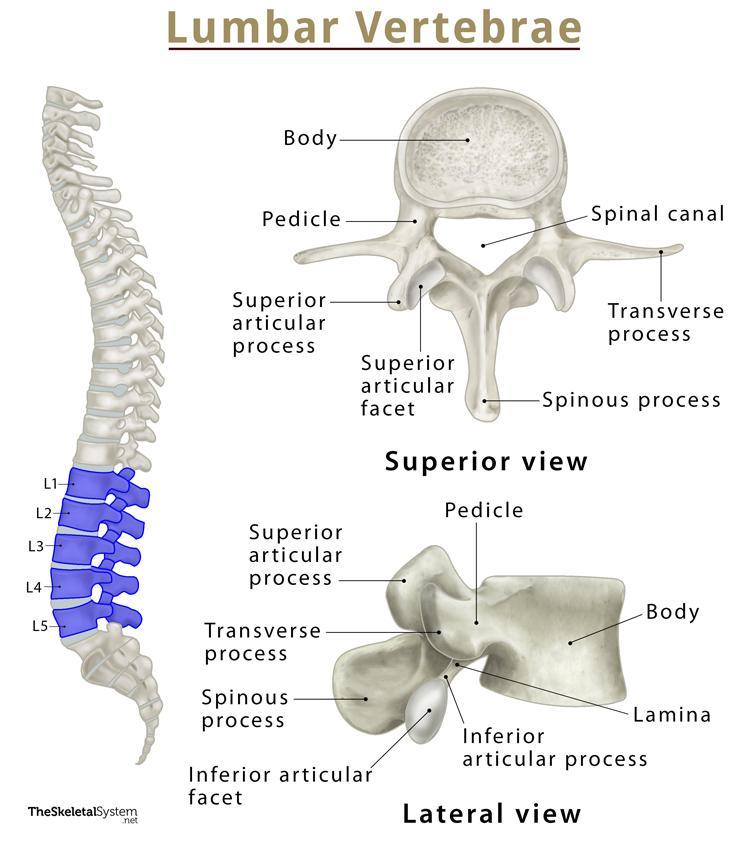
Pronator Teres

Pronates and flexes forearm.

Flexor Carpi Radialis

Flexes and abducts wrist.

Palmaris Longus

Flexes wrist (often absent).

Flexor Carpi Ulnaris

Flexes and adducts wrist.

Intermediate Layer

Flexor Digitorum Superficialis

Flexes the middle phalanges of digits 2-5.

Deep Layer

Flexor Digitorum Profundus

Flexes the distal phalanges of digits 2-5.

Flexor Pollicis Longus

Flexes the thumb.

Pronator Quadratus

Primary pronator of the forearm.

Posterior (Extensor-Supinator) Compartment

  • Innervation: Radial Nerve and its deep branch (Posterior Interosseous Nerve).
  • Main Actions: Extension of wrist and fingers; supination of forearm.

Superficial Layer
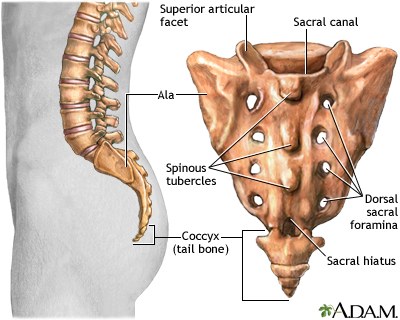
Includes wrist extensors (ECRL, ECRB, ECU), finger extensors (Extensor Digitorum, Extensor Digiti Minimi), and the unique Brachioradialis, which flexes the elbow.

Deep Layer
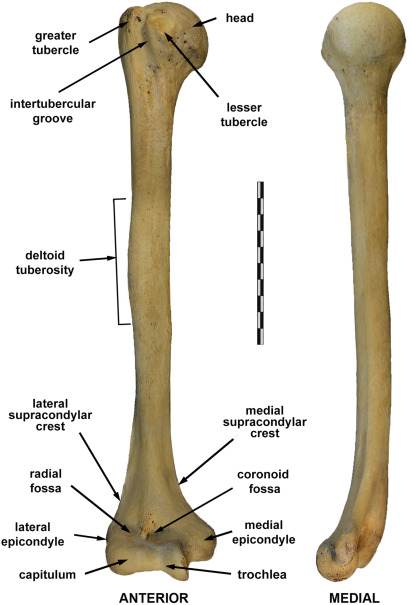
Includes the Supinator muscle, and the "outcropping" muscles of the thumb: Abductor Pollicis Longus (APL), Extensor Pollicis Brevis (EPB), and Extensor Pollicis Longus (EPL), which form the anatomical snuffbox. Also includes the Extensor Indicis for independent index finger extension.

Summary Table of Forearm Muscles

Muscle Origin Insertion Innervation Main Actions
ANTERIOR COMPARTMENT
Pronator TeresMedial epicondyle, coronoid processLateral radiusMedian N.Pronates & flexes forearm
Flexor Carpi RadialisMedial epicondyleBase of 2nd & 3rd metacarpalsMedian N.Flexes & abducts wrist
Palmaris LongusMedial epicondylePalmar aponeurosisMedian N.Flexes wrist
Flexor Carpi UlnarisMedial epicondyle, olecranonPisiform, hamate, 5th metacarpalUlnar N.Flexes & adducts wrist
Flexor Digitorum SuperficialisMedial epicondyle, coronoid, radiusMiddle phalanges of digits 2-5Median N.Flexes middle phalanges
Flexor Digitorum ProfundusUlna, interosseous membraneDistal phalanges of digits 2-5Median N. (lat), Ulnar N. (med)Flexes distal phalanges
Flexor Pollicis LongusRadius, interosseous membraneDistal phalanx of thumbMedian N. (AIN)Flexes thumb
Pronator QuadratusDistal ulnaDistal radiusMedian N. (AIN)Primary pronator of forearm
POSTERIOR COMPARTMENT
BrachioradialisLateral supracondylar ridgeStyloid process of radiusRadial N.Flexes forearm
Extensor Carpi Radialis LongusLateral supracondylar ridgeBase of 2nd metacarpalRadial N.Extends & abducts wrist
Extensor Carpi UlnarisLateral epicondyle, posterior ulnaBase of 5th metacarpalRadial N. (PIN)Extends & adducts wrist
SupinatorLateral epicondyle, ulnaProximal radiusRadial N. (Deep br.)Primary supinator of forearm

4. Muscles of the Hand

The intrinsic muscles of the hand are responsible for the fine motor control and dexterity required for complex movements. They are divided into three main groups.

a. Thenar Muscles (Ball of the Thumb)

This group of muscles acts on the thumb (pollux). All are innervated by the Recurrent Branch of the Median Nerve, except for the Adductor Pollicis.

Abductor Pollicis Brevis (APB)

Abducts the thumb.

Flexor Pollicis Brevis (FPB)

Flexes the thumb.

Opponens Pollicis (OP)

Opposes the thumb (brings it across the palm).

Adductor Pollicis

Adducts the thumb (innervated by Ulnar Nerve).

b. Hypothenar Muscles (Ball of the Little Finger)

This group acts on the little finger (digiti minimi). All are innervated by the Deep Branch of the Ulnar Nerve.

Abductor Digiti Minimi (ADM)

Abducts the little finger.

Flexor Digiti Minimi Brevis (FDMB)

Flexes the little finger.

Opponens Digiti Minimi (ODM)

Opposes the little finger (cups the palm).

c. Intrinsic Muscles of the Hand

Lumbricals (4 muscles)

Small, worm-shaped muscles that originate from the tendons of Flexor Digitorum Profundus. They flex the MCP joints and extend the IP joints. The lateral two are innervated by the Median Nerve, and the medial two by the Ulnar Nerve.

Interossei (7 muscles)

Muscles located between the metacarpals, all innervated by the Ulnar Nerve. The 4 Dorsal Interossei Abduct the fingers (DAB), and the 3 Palmar Interossei Adduct the fingers (PAD).

Summary Table of Hand Muscles

Group Muscle Origin Insertion Innervation Action
ThenarAbductor Pollicis BrevisFlexor retinaculum, scaphoid, trapeziumProximal phalanx of thumbMedian N. (Recurrent br.)Abducts thumb
Flexor Pollicis BrevisFlexor retinaculum, trapeziumProximal phalanx of thumbMedian N. (Recurrent br.)Flexes thumb
Opponens PollicisFlexor retinaculum, trapezium1st metacarpalMedian N. (Recurrent br.)Opposes thumb
Adductor PollicisCapitate, 2nd & 3rd metacarpalsProximal phalanx of thumbUlnar N. (Deep br.)Adducts thumb
HypothenarAbductor Digiti MinimiPisiformProximal phalanx of digit 5Ulnar N. (Deep br.)Abducts little finger
Flexor Digiti Minimi BrevisHook of hamateProximal phalanx of digit 5Ulnar N. (Deep br.)Flexes little finger
Opponens Digiti MinimiHook of hamate5th metacarpalUlnar N. (Deep br.)Opposes little finger
IntrinsicLumbricals (4)Tendons of FDPExtensor expansionsLat 2: Median; Med 2: UlnarFlex MCPs, Extend IPs
Dorsal Interossei (4)Adjacent metacarpalsProximal phalangesUlnar N. (Deep br.)Abduct fingers (DAB)
Palmar Interossei (3)Single metacarpalProximal phalangesUlnar N. (Deep br.)Adduct fingers (PAD)

Test Your Knowledge

A quiz on the Muscles of the Chest, Upper Arm, Forearm, and Hand.

1. Which muscle is the primary adductor and medial rotator of the humerus, forming the anterior axillary fold?

  • Latissimus Dorsi
  • Deltoid
  • Pectoralis Major
  • Teres Major

Correct (c): Pectoralis Major is a large, fan-shaped muscle whose primary actions are adduction and medial rotation of the humerus. It forms the bulk of the anterior axillary fold.

Incorrect (a): Latissimus Dorsi is a powerful extensor and forms the posterior axillary fold.

Incorrect (b): Deltoid is the primary abductor of the humerus.

Incorrect (d): Teres Major is a smaller muscle that assists in these actions but does not form the anterior axillary fold.

2. Damage to the Long Thoracic Nerve would most likely impair which muscle, leading to a "winged scapula"?

  • Rhomboid Major
  • Trapezius
  • Serratus Anterior
  • Pectoralis Minor

Correct (c): Serratus Anterior is innervated by the Long Thoracic Nerve. Its paralysis leads to the medial border of the scapula protruding posteriorly, known as "winged scapula."

Incorrect (a): Rhomboid Major is innervated by the Dorsal Scapular Nerve.

Incorrect (b): Trapezius is innervated by the Accessory Nerve (CN XI).

Incorrect (d): Pectoralis Minor is innervated by the medial and lateral pectoral nerves.

3. Which muscle of the upper arm is the strongest supinator of the forearm, especially when the elbow is flexed?

  • Triceps Brachii
  • Brachialis
  • Biceps Brachii
  • Coracobrachialis

Correct (c): Biceps Brachii is a powerful supinator of the forearm, particularly when the elbow is flexed (e.g., when using a screwdriver). It is also a strong flexor of the elbow.

Incorrect (a): Triceps Brachii is the primary extensor of the elbow.

Incorrect (b): Brachialis is the primary pure flexor of the elbow.

Incorrect (d): Coracobrachialis is a flexor and adductor of the arm at the shoulder joint.

4. The medial epicondyle of the humerus is a common origin for most muscles in which compartment of the forearm?

  • Posterior compartment
  • Anterior compartment
  • Lateral compartment
  • Deep posterior compartment

Correct (b): Most muscles of the anterior compartment of the forearm (primarily flexors and pronators) originate from the medial epicondyle, known as the common flexor origin.

Incorrect (a): The posterior compartment muscles (extensors) mostly originate from the lateral epicondyle.

5. Which of the following muscles is NOT innervated by the Radial Nerve (or its branches)?

  • Extensor Carpi Radialis Longus
  • Supinator
  • Brachioradialis
  • Flexor Carpi Ulnaris

Correct (d): Flexor Carpi Ulnaris is innervated by the Ulnar Nerve. The Radial Nerve generally innervates muscles in the posterior compartment of the arm and forearm (extensors and supinators).

Incorrect (a, b, c): All these muscles are innervated by the Radial Nerve or its branches.

6. A patient presents with weakness in wrist flexion and radial deviation. Which muscle is primarily affected?

  • Flexor Carpi Ulnaris
  • Extensor Carpi Ulnaris
  • Flexor Carpi Radialis
  • Palmaris Longus

Correct (c): Flexor Carpi Radialis flexes the wrist and radially deviates (abducts) the hand.

Incorrect (a): Flexor Carpi Ulnaris flexes the wrist and ulnarly deviates (adducts) the hand.

Incorrect (b): Extensor Carpi Ulnaris extends the wrist and ulnarly deviates the hand.

Incorrect (d): Palmaris Longus is a weak wrist flexor and does not cause radial deviation.

7. Which muscle extends the MCP and IP joints of the medial four digits?

  • Extensor Digiti Minimi
  • Extensor Pollicis Longus
  • Extensor Digitorum
  • Lumbricals

Correct (c): Extensor Digitorum is the primary muscle responsible for extending the MCP and IP joints of digits 2-5.

Incorrect (a): Extensor Digiti Minimi extends only the little finger.

Incorrect (b): Extensor Pollicis Longus extends the thumb.

Incorrect (d): Lumbricals primarily flex the MCP joints and extend the IP joints.

8. The "anatomical snuffbox" is bordered medially by the tendon of which muscle?

  • Abductor Pollicis Longus
  • Extensor Pollicis Brevis
  • Extensor Pollicis Longus
  • Flexor Pollicis Longus

Correct (c): The Extensor Pollicis Longus tendon forms the medial (ulnar) border of the anatomical snuffbox.

Incorrect (a, b): Abductor Pollicis Longus and Extensor Pollicis Brevis form the lateral border.

Incorrect (d): Flexor Pollicis Longus is on the anterior aspect of the forearm and is not a border.

9. Which of the following rotator cuff muscles medially rotates the humerus?

  • Supraspinatus
  • Infraspinatus
  • Teres Minor
  • Subscapularis

Correct (d): Subscapularis is the only rotator cuff muscle that primarily medially rotates the humerus.

Incorrect (a): Supraspinatus initiates abduction.

Incorrect (b): Infraspinatus laterally rotates the humerus.

Incorrect (c): Teres Minor laterally rotates the humerus.

10. Paralysis of the median nerve at the wrist would most severely affect which hand muscle group?

  • Dorsal Interossei
  • Hypothenar muscles
  • Thenar muscles
  • Palmar Interossei

Correct (c): The Thenar muscles, crucial for thumb opposition, are primarily innervated by the recurrent branch of the Median Nerve.

Incorrect (a, b, d): The Dorsal Interossei, Hypothenar muscles, and Palmar Interossei are all primarily innervated by the Ulnar Nerve.

11. The primary action of the Deltoid muscle is humeral __________ beyond the first 15 degrees.

Rationale: The Deltoid muscle is the main abductor of the arm, taking over after the initial 15-20 degrees of abduction initiated by the Supraspinatus.

12. The Coracobrachialis muscle aids in flexion and __________ of the arm at the shoulder joint.

Rationale: The Coracobrachialis originates from the coracoid process and inserts on the humerus, allowing it to assist in both flexion and adduction of the humerus.

13. Muscles in the anterior forearm are innervated by the Median Nerve, except for the Flexor Carpi Ulnaris and the medial half of the Flexor Digitorum Profundus, which are innervated by the __________ Nerve.

Rationale: The Ulnar Nerve supplies the Flexor Carpi Ulnaris and the part of the Flexor Digitorum Profundus that moves digits 4 and 5.

14. The deep posterior compartment of the forearm contains muscles that extend the thumb and index finger, including the Extensor Pollicis Longus and __________.

Rationale: The deep posterior compartment muscles are "APE" (Abductor Pollicis Longus, Extensor Pollicis Brevis, Extensor Pollicis Longus) and Extensor Indicis.

15. The muscle that is the purest flexor of the elbow, acting effectively in all forearm positions, is the __________.

Rationale: The Brachialis inserts directly onto the ulna, making it unaffected by forearm rotation and thus the prime and most consistent flexor of the elbow joint.

Test Your Knowledge

A quiz on the Muscles of the Forearm and Hand.

1. Which muscle is primarily responsible for powerful supination of the forearm, acting synergistically with the Biceps Brachii?

  • Pronator Teres
  • Brachioradialis
  • Supinator
  • Anconeus

Correct (c): The Supinator muscle, along with the Biceps Brachii, is a primary supinator. Supinator works in all positions and is crucial for initiating supination.

Incorrect (a): Pronator Teres pronates the forearm.

Incorrect (b): Brachioradialis is a forearm flexor that returns the forearm to a neutral position.

Incorrect (d): Anconeus assists in elbow extension.

2. All muscles from the common flexor origin are innervated by the Median Nerve, EXCEPT for which muscle?

  • Flexor Carpi Radialis
  • Palmaris Longus
  • Flexor Digitorum Superficialis
  • Flexor Carpi Ulnaris

Correct (d): The Flexor Carpi Ulnaris is the only muscle arising from the common flexor origin that is innervated by the Ulnar Nerve.

Incorrect (a, b, c): Flexor Carpi Radialis, Palmaris Longus, and Flexor Digitorum Superficialis are all innervated by the Median Nerve.

3. Which thenar muscle is primarily responsible for opposing the thumb?

  • Adductor Pollicis
  • Flexor Pollicis Brevis
  • Opponens Pollicis
  • Abductor Pollicis Brevis

Correct (c): Opponens Pollicis directly acts to oppose the thumb, bringing it across the palm to meet other digits, which is crucial for fine manipulative hand movements.

Incorrect (a, b, d): While Adductor Pollicis, Flexor Pollicis Brevis, and Abductor Pollicis Brevis all contribute to thumb function, Opponens Pollicis is the specific muscle for the action of opposition.

4. A deep cut to the posterior wrist could paralyze wrist/finger extensors. Which nerve would be affected?

  • Ulnar Nerve
  • Median Nerve
  • Radial Nerve (Deep Branch/Posterior Interosseous Nerve)
  • Musculocutaneous Nerve

Correct (c): The Radial Nerve and its deep branch (Posterior Interosseous Nerve) innervate all muscles in the posterior compartment of the forearm, which are responsible for wrist and finger extension.

Incorrect (a, b, d): The Ulnar, Median, and Musculocutaneous nerves innervate flexor compartments or muscles of the upper arm.

5. An Ulnar Nerve lesion would weaken which intrinsic hand muscles, leading to difficulty spreading the fingers?

  • Lumbricals 1 & 2
  • Dorsal Interossei
  • Palmar Interossei
  • Abductor Pollicis Brevis

Correct (b): The Dorsal Interossei muscles are responsible for abducting (spreading) the fingers, and they are innervated by the deep branch of the Ulnar Nerve.

Incorrect (a, d): Lumbricals 1 & 2 and Abductor Pollicis Brevis are innervated by the Median Nerve.

Incorrect (c): Palmar Interossei adduct (bring together) the fingers.

6. The Flexor Digitorum Superficialis (FDS) flexes which joint(s) of the fingers?

  • Distal Interphalangeal (DIP) joints
  • Proximal Interphalangeal (PIP) joints
  • Metacarpophalangeal (MCP) joints
  • Both PIP and MCP joints

Correct (d): The FDS inserts onto the middle phalanges, allowing it to flex both the Proximal Interphalangeal (PIP) joints and, as it crosses them, the Metacarpophalangeal (MCP) joints. It does not flex the DIP joints.

7. Which tendon forms the medial border of the anatomical snuffbox?

  • Abductor Pollicis Longus
  • Extensor Pollicis Brevis
  • Extensor Pollicis Longus
  • Extensor Carpi Radialis Longus

Correct (c): The Extensor Pollicis Longus forms the medial border of the anatomical snuffbox.

Incorrect (a, b): The lateral border is formed by the tendons of Abductor Pollicis Longus and Extensor Pollicis Brevis.

Incorrect (d): Extensor Carpi Radialis Longus is a wrist extensor and does not form a border of the snuffbox.

8. The hypothenar eminence muscles are primarily responsible for movements of which digit?

  • Index finger
  • Little finger
  • Thumb
  • Middle finger

Correct (b): The hypothenar eminence is the fleshy mass on the medial side of the palm, comprising muscles that act on the little finger (digit 5).

Incorrect (c): The thenar eminence acts on the thumb.

9. Which forearm muscle flexes the elbow and helps return the forearm to a neutral position?

  • Pronator Teres
  • Supinator
  • Brachioradialis
  • Anconeus

Correct (c): The Brachioradialis is unique in that it flexes the elbow and helps bring the forearm to a neutral (thumb-up) position from either full pronation or supination.

Incorrect (a): Pronator Teres pronates.

Incorrect (b): Supinator supinates.

Incorrect (d): Anconeus extends the elbow.

10. A complete Median Nerve lesion at the elbow would cause loss of DIP joint flexion in which digits?

  • All five digits
  • Digits 2 & 3 only
  • Digits 4 & 5 only
  • Digits 1, 2, & 3

Correct (b): The Flexor Digitorum Profundus (FDP) flexes the DIP joints. The Median Nerve innervates the lateral half of the FDP (to digits 2 and 3). The Ulnar Nerve innervates the medial half (to digits 4 and 5).

11. The "Hand of Benediction" sign is associated with a high lesion of the __________ nerve.

Rationale: A high median nerve lesion paralyzes the long flexors to the index and middle fingers, causing this characteristic sign when a patient attempts to make a fist.

12. The primary action of the Palmar Interossei muscles is to __________ the fingers.

Rationale: The Palmar Interossei (PAD) bring the fingers together, while the Dorsal Interossei (DAB) spread them apart.

13. The __________ muscle is absent in about 15% of people, and its tendon is often used for grafts.

Rationale: The Palmaris Longus is frequently absent and its long, slender tendon is a common source for tendon grafts in reconstructive surgery.

14. The deep muscles of the posterior forearm are innervated by the __________ Nerve.

Rationale: The Posterior Interosseous Nerve is the terminal motor branch of the Radial Nerve that supplies the extensor muscles in the forearm.

15. The main function of the Lumbricals is to flex the MCP joints and __________ the IP joints.

Rationale: This unique "Z" action of the Lumbricals is crucial for fine motor tasks like writing and precision gripping.
Muscles of the Head, Neck and Trunk

Muscles of the Head, Neck and Trunk

Axial Skeleton Muscles: The Footress.

Muscles of the Axial Skeleton


A. Muscles of the Head and Face

The muscles of the head can be broadly categorized into muscles of facial expression and muscles of mastication (chewing).

1. Muscles of Facial Expression

These unique muscles insert into the skin or other muscles, allowing us to show a wide range of emotions. They are all innervated by the Facial Nerve (Cranial Nerve VII).

a. Occipitofrontalis (Epicranius)

A broad muscle covering the top of the skull with two bellies. The Frontal belly raises the eyebrows and wrinkles the forehead, while the Occipital belly pulls the scalp posteriorly.

b. Orbicularis Oculi

A ring-like muscle encircling the eye. Its primary action is to close the eye (blinking, winking) and squint.

c. Orbicularis Oris

A complex muscle encircling the mouth. It closes and protrudes the lips, as in puckering or kissing.

d. Zygomaticus Major and Minor

Extend from the cheekbone to the corner of the mouth. They are the primary "smiling" muscles, raising the lateral corners of the mouth upward.

e. Buccinator

A thin, flat muscle of the cheek. It compresses the cheek for whistling or sucking and holds food between the teeth during chewing.

f. Platysma

A broad, superficial sheet of muscle in the neck. It tenses the skin of the neck, depresses the mandible, and pulls the lower lip down.

2. Muscles of Mastication (Chewing)

These four pairs of muscles are responsible for moving the mandible for chewing. They are all innervated by the Mandibular division of the Trigeminal Nerve (Cranial Nerve V3).

a. Masseter

A powerful muscle on the side of the jaw. It is the primary elevator of the mandible (closes the jaw).

b. Temporalis

A fan-shaped muscle in the temporal fossa. It elevates and retracts the mandible.

c. Medial Pterygoid

Located deep to the mandible. It elevates the jaw and assists in side-to-side grinding movements.

d. Lateral Pterygoid

Located deep in the jaw. It protracts the mandible (pulls it forward), moves it side-to-side, and is the only muscle of mastication that helps open the jaw.

Summary Table of Head & Face Muscles

MuscleOriginInsertionAction
FACIAL EXPRESSION (CN VII)
OccipitofrontalisGalea aponeurotica (Frontal); Occipital bone (Occipital)Skin of eyebrows; Galea aponeuroticaRaises eyebrows, wrinkles forehead, pulls scalp
Orbicularis OculiFrontal and maxillary bonesTissue of eyelidCloses eye, squints, blinks
Orbicularis OrisMaxilla and mandibleSkin and muscle at angles of mouthCloses and protrudes lips (puckering)
Zygomaticus Major/MinorZygomatic boneSkin and muscle at angle of mouthRaises lateral corners of mouth (smiling)
BuccinatorMolar region of maxilla and mandibleOrbicularis orisCompresses cheek (whistling, sucking)
PlatysmaFascia of chestBase of mandible; skin at corner of mouthTenses skin of neck, depresses mandible
MASTICATION (CN V3)
MasseterZygomatic archAngle and ramus of mandibleElevates mandible (closes jaw)
TemporalisTemporal fossaCoronoid process of mandibleElevates and retracts mandible
Medial PterygoidSphenoid and palatine bonesMedial surface of ramus of mandibleElevates mandible, moves side-to-side
Lateral PterygoidSphenoid boneCondylar process of mandible; TMJ capsuleProtracts and depresses (opens) jaw

B. Muscles of the Neck

The muscles of the neck are diverse, responsible for moving the head, stabilizing the cervical spine, assisting in breathing, and facilitating swallowing and speech. They are categorized here based on location and primary actions.

1. Superficial Anterior Neck Muscles

a. Sternocleidomastoid (SCM)

A large, two-headed muscle on each side of the neck. When acting alone (unilaterally), it rotates the head to the opposite side and flexes it to the same side. When both act together (bilaterally), they flex the neck (chin to chest).

2. Suprahyoid Muscles (Above the Hyoid Bone)

These muscles form the floor of the mouth and are primarily responsible for elevating the hyoid bone during swallowing and speaking.

a. Digastric

Two-bellied muscle that elevates the hyoid or depresses the mandible (opens the mouth).

b. Mylohyoid

Forms the floor of the mouth; elevates hyoid and floor of mouth.

c. Geniohyoid

Elevates and protracts the hyoid bone.

d. Stylohyoid

Elevates and retracts the hyoid bone.

3. Infrahyoid Muscles (Strap Muscles - Below the Hyoid)

These "strap-like" muscles primarily depress the hyoid bone and larynx during swallowing and speaking.

a. Sternohyoid

Depresses the hyoid bone and larynx.

b. Omohyoid

Two-bellied muscle that depresses and retracts the hyoid.

c. Sternothyroid

Depresses the larynx and hyoid bone.

d. Thyrohyoid

Depresses the hyoid bone but elevates the larynx.

4. Deep Lateral Neck Muscles (Scalenes)

The Anterior, Middle, and Posterior Scalene muscles are important for lateral flexion of the neck. They also act as accessory muscles of inspiration by elevating the first two ribs.

Summary Table of Neck Muscles

MuscleOriginInsertionInnervationAction
SternocleidomastoidManubrium & ClavicleMastoid processCN XI, C2-C3Unilateral: Rotates head opp., flexes same side. Bilateral: Flexes neck.
DigastricMandible & Mastoid processHyoid boneCN V3 & CN VIIElevates hyoid, depresses mandible.
MylohyoidMandibleHyoid boneCN V3Elevates hyoid & floor of mouth.
SternohyoidManubrium & ClavicleHyoid boneAnsa cervicalisDepresses hyoid and larynx.
OmohyoidScapulaHyoid boneAnsa cervicalisDepresses and retracts hyoid.
SternothyroidManubriumThyroid cartilageAnsa cervicalisDepresses larynx and hyoid.
ThyrohyoidThyroid cartilageHyoid boneC1 via CN XIIDepresses hyoid, elevates larynx.
Scalenes (Ant, Mid, Post)Cervical vertebrae (C2-C7)First & Second ribsCervical spinal nervesFlexes neck, elevates ribs for inspiration.

C. Muscles of the Torso (Trunk)

The muscles of the trunk are vital for maintaining posture, protecting internal organs, facilitating respiration, and enabling a wide range of movements.

1. Muscles of the Back

These complex, layered muscles move and stabilize the vertebral column, head, and shoulders.

a. Superficial Back Muscles

Primarily act on the upper limbs. Includes the large Trapezius (moves scapula), Latissimus Dorsi (extends and adducts arm), and the deeper Rhomboids and Levator Scapulae (retract and elevate scapula).

b. Intermediate Back Muscles

Respiratory muscles. The Serratus Posterior Superior elevates ribs for inspiration, while the Serratus Posterior Inferior depresses ribs for expiration.

c. Deep (Intrinsic) Back Muscles

Responsible for posture and vertebral column movement. The main group is the massive Erector Spinae (Iliocostalis, Longissimus, Spinalis), the prime mover of back extension. Deeper still is the Transversospinalis group, which stabilizes vertebrae.

2. Muscles of the Thorax (Chest Wall)

These muscles are primarily involved in the mechanics of breathing.

a. Intercostal Muscles

The External Intercostals elevate the ribs for inspiration. The Internal and Innermost Intercostals depress the ribs for forced expiration.

b. Diaphragm

The primary muscle of respiration. This large, dome-shaped muscle separates the thoracic and abdominal cavities. It contracts and flattens to increase thoracic volume, causing inspiration.

3. Muscles of the Abdominal Wall

Form a strong, flexible wall that protects viscera, moves the trunk, and compresses the abdominal cavity.

a. Rectus Abdominis

The vertical "six-pack" muscle, segmented by tendinous intersections. It is the primary flexor of the vertebral column (as in sit-ups).

b. Obliques & Transversus Abdominis

Three layers of flat muscles that wrap the abdomen. The External Oblique (fibers run down and in), Internal Oblique (fibers run up and in), and the deepest Transversus Abdominis (fibers run horizontally). They work together to rotate and flex the trunk and compress the abdominal contents.

c. Quadratus Lumborum

A deep, square-shaped muscle of the posterior abdominal wall that laterally flexes the trunk.

4. Pelvic Floor Muscles (Pelvic Diaphragm)

Close the inferior outlet of the pelvis, supporting pelvic organs and controlling continence.

a. Levator Ani Group & Coccygeus

This broad, funnel-shaped muscle group forms the major part of the pelvic floor, supporting pelvic organs and resisting increases in intra-abdominal pressure.

Summary Table of Torso Muscles

Muscle Origin Insertion Innervation Main Actions
TRAPEZIUSOccipital bone, C7-T12 spinous processesClavicle, acromion, spine of scapulaSpinal Accessory (CN XI), C3-C4Elevates, retracts, depresses, rotates scapula
LATISSIMUS DORSIT7-L5 spinous processes, iliac crestIntertubercular groove of humerusThoracodorsal Nerve (C6-C8)Extends, adducts, medially rotates arm
ERECTOR SPINAE GROUPIliac crest, sacrum, vertebraeRibs, vertebrae, mastoid processDorsal rami of spinal nervesExtend & laterally flex vertebral column
EXTERNAL INTERCOSTALSRib aboveRib belowIntercostal nerves (T1-T11)Elevate ribs (inspiration)
INTERNAL INTERCOSTALSRib aboveRib belowIntercostal nerves (T1-T11)Depress ribs (forced expiration)
DIAPHRAGMXiphoid, costal cartilages, lumbar vertebraeCentral tendonPhrenic Nerves (C3-C5)Primary muscle of inspiration
RECTUS ABDOMINISPubic crest and symphysisXiphoid process, costal cartilages 5-7Intercostal nerves (T7-T12)Flexes vertebral column, compresses abdomen
EXTERNAL OBLIQUERibs 5-12Linea alba, pubic tubercle, iliac crestIntercostal nerves (T7-T12)Flexes & rotates trunk (opposite side)
INTERNAL OBLIQUEThoracolumbar fascia, iliac crestLinea alba, pubic crest, ribs 10-12Intercostal (T7-T12), Iliohypo/inguinal (L1)Flexes & rotates trunk (same side)
TRANSVERSUS ABDOMINISThoracolumbar fascia, iliac crest, ribs 7-12Linea alba, pubic crestIntercostal (T7-T12), Iliohypo/inguinal (L1)Compresses abdominal contents
QUADRATUS LUMBORUMIliac crestLast rib, transverse processes of L1-L4Lumbar Plexus (T12-L4)Laterally flexes vertebral column
LEVATOR ANI GROUPPubis, ischial spineCoccyx, walls of pelvic organsPudendal Nerve (S2-S4), S3-S4Supports pelvic organs, maintains continence

Reference: The 12 Cranial Nerves

The cranial nerves are a set of 12 paired nerves that arise directly from the brain and brainstem, as opposed to spinal nerves which emerge from the spinal cord. They are responsible for conveying sensory and motor information to and from the head and neck region, as well as controlling visceral functions.

Mnemonics for Memorization

For Nerve Names:

"Oh Oh Oh To Touch And Feel A Girls Vagina Ah Heaven"

For Functional Type (S=Sensory, M=Motor, B=Both):

"Some Say Marry Money, But My Brother Says Big Brains Matter More"

I. Olfactory Nerve

Sensory

Function: Special sense of smell.
Clinical Test: Ask patient to identify common scents (e.g., coffee, vanilla) with each nostril closed.

II. Optic Nerve

Sensory

Function: Special sense of vision.
Clinical Test: Test visual acuity (Snellen chart) and visual fields.

III. Oculomotor Nerve

Motor

Function: Controls most eye movements (up, down, medially), raises eyelid, and constricts pupil.
Clinical Test: Test eye movements (H-pattern); check for pupillary light reflex and eyelid drooping (ptosis).

IV. Trochlear Nerve

Motor

Function: Controls the superior oblique muscle, which moves the eye downward and inward.
Clinical Test: Ask patient to look down and in; damage can cause vertical double vision.

V. Trigeminal Nerve

Both

Function: Sensory for the face (touch, pain, temperature) and Motor for muscles of mastication (chewing).
Clinical Test: Test facial sensation with a cotton wisp; ask patient to clench jaw and palpate masseter and temporalis muscles.

VI. Abducens Nerve

Motor

Function: Controls the lateral rectus muscle, which moves the eye laterally (abducts the eye).
Clinical Test: Ask patient to look to the side; damage can cause inability to look laterally and horizontal double vision.

VII. Facial Nerve

Both

Function: Motor for muscles of facial expression, and Sensory for taste from the anterior two-thirds of the tongue.
Clinical Test: Ask patient to smile, frown, puff cheeks, and raise eyebrows. Damage causes facial paralysis (Bell's Palsy).

VIII. Vestibulocochlear Nerve

Sensory

Function: Special senses of hearing (cochlear part) and balance/equilibrium (vestibular part).
Clinical Test: Test hearing (whisper test, Rinne/Weber tests); check for balance issues and vertigo.

IX. Glossopharyngeal Nerve

Both

Function: Motor for swallowing, and Sensory for taste from the posterior one-third of the tongue and sensation from the pharynx.
Clinical Test: Check gag reflex; ask patient to say "ahhh" and watch for symmetrical uvula elevation.

X. Vagus Nerve

Both

Function: The "wanderer"; provides parasympathetic motor innervation to most thoracic and abdominal viscera. Also motor to pharynx/larynx and sensory from the viscera.
Clinical Test: Check gag reflex and ability to swallow; assess for hoarseness.

XI. Accessory Nerve

Motor

Function: Controls the trapezius and sternocleidomastoid muscles.
Clinical Test: Ask patient to shrug shoulders (trapezius) and turn head against resistance (SCM).

XII. Hypoglossal Nerve

Motor

Function: Controls the intrinsic and extrinsic muscles of the tongue.
Clinical Test: Ask patient to stick out their tongue; it will deviate towards the side of the lesion.

Test Your Knowledge

Check your understanding of the Muscles of the Head, Neck & Trunk.

1. Which muscle is primarily responsible for retracting the scapula and is located deep to the trapezius?

  • Latissimus Dorsi
  • Levator Scapulae
  • Rhomboid Major
  • Serratus Posterior Superior

Correct (c): The Rhomboid Major, along with the Rhomboid Minor, lies deep to the Trapezius and pulls the scapula towards the spine (retraction).

Incorrect (a): Latissimus Dorsi primarily acts on the humerus (arm extension, adduction, medial rotation).

Incorrect (b): Levator Scapulae elevates and rotates the scapula downward, not primarily retraction.

Incorrect (d): Serratus Posterior Superior assists in inspiration by elevating ribs, not a primary scapular retractor.

2. A patient presents with difficulty closing their right eye and drooping of the right side of their mouth. Which cranial nerve is most likely affected?

  • Trigeminal Nerve (CN V)
  • Facial Nerve (CN VII)
  • Hypoglossal Nerve (CN XII)
  • Spinal Accessory Nerve (CN XI)

Correct (b): The Facial Nerve (CN VII) innervates the muscles of facial expression. Difficulty closing the eye (Orbicularis Oculi) and mouth drooping (Orbicularis Oris) are classic signs of Facial Nerve palsy.

Incorrect (a): Trigeminal Nerve (CN V) innervates muscles of mastication (chewing), not facial expression.

Incorrect (c): Hypoglossal Nerve (CN XII) innervates tongue muscles.

Incorrect (d): Spinal Accessory Nerve (CN XI) innervates the Sternocleidomastoid and Trapezius.

3. Which of the following muscles is not considered an infrahyoid muscle?

  • Sternohyoid
  • Omohyoid
  • Digastric
  • Thyrohyoid

Correct (c): The Digastric muscle is a suprahyoid muscle, located above the hyoid bone, and helps elevate the hyoid and depress the mandible.

Incorrect (a, b, d): Sternohyoid, Omohyoid, and Thyrohyoid are all infrahyoid (strap) muscles located below the hyoid bone, which primarily depress the hyoid.

4. During forced expiration, which abdominal muscle is most effective at compressing abdominal contents?

  • Rectus Abdominis
  • External Oblique
  • Transversus Abdominis
  • Quadratus Lumborum

Correct (c): The Transversus Abdominis, with its horizontally oriented fibers, is the deepest and most effective muscle for compressing the abdominal contents, which is crucial for forced expiration.

Incorrect (a): Rectus Abdominis primarily flexes the vertebral column.

Incorrect (b): External Oblique is involved in trunk rotation and flexion.

Incorrect (d): Quadratus Lumborum is primarily involved in lateral flexion of the trunk.

5. Unilateral contraction of the sternocleidomastoid muscle results in:

  • Flexion of the neck and elevation of the sternum.
  • Rotation of the head to the ipsilateral (same) side.
  • Rotation of the head to the contralateral (opposite) side.
  • Extension of the neck and depression of the scapula.

Correct (c): When one SCM contracts, it pulls the head down towards the same shoulder (lateral flexion) and rotates the head to face the opposite side.

Incorrect (a): Flexion of the neck is a bilateral action of the SCM.

Incorrect (b): It rotates the head to the opposite, not the same, side.

Incorrect (d): These are not primary actions of the SCM.

6. Which muscle is the prime mover for inspiration, increasing the vertical dimension of the thoracic cavity?

  • External Intercostals
  • Internal Intercostals
  • Diaphragm
  • Serratus Posterior Superior

Correct (c): The diaphragm is the primary muscle of quiet inspiration. Its contraction flattens it inferiorly, significantly increasing the thoracic cavity's vertical dimension.

Incorrect (a): External Intercostals assist inspiration by elevating the ribs.

Incorrect (b): Internal Intercostals are primarily involved in forced expiration.

Incorrect (d): Serratus Posterior Superior is an accessory muscle of inspiration.

7. The Erector Spinae group of muscles are primarily innervated by which of the following?

  • Ventral rami of spinal nerves
  • Dorsal rami of spinal nerves
  • Phrenic nerve
  • Thoracodorsal nerve

Correct (b): The deep intrinsic muscles of the back, including the Erector Spinae group, are characteristically innervated by the dorsal rami of the spinal nerves.

Incorrect (a): Ventral rami typically innervate muscles of the limbs and anterior/lateral trunk.

Incorrect (c): The Phrenic nerve innervates the diaphragm.

Incorrect (d): The Thoracodorsal nerve innervates the Latissimus Dorsi.

8. Which muscle is responsible for raising the eyebrows and wrinkling the forehead horizontally?

  • Orbicularis Oculi
  • Occipitalis
  • Frontalis (Frontal belly of Occipitofrontalis)
  • Zygomaticus Major

Correct (c): The Frontal belly of the Occipitofrontalis muscle is directly responsible for these actions of facial expression.

Incorrect (a): Orbicularis Oculi closes the eye.

Incorrect (b): Occipitalis pulls the scalp posteriorly.

Incorrect (d): Zygomaticus Major raises the corners of the mouth (smiling).

9. Damage to the Pudendal Nerve (S2-S4) would most directly impair the function of which muscle group?

  • Erector Spinae
  • Abdominal Obliques
  • Levator Ani
  • Scalenes

Correct (c): The Pudendal Nerve is the primary innervation for the muscles of the pelvic floor, including the Levator Ani group, which are critical for supporting pelvic organs and continence.

Incorrect (a): Erector Spinae are innervated by dorsal rami of spinal nerves.

Incorrect (b): Abdominal Obliques are innervated by intercostal nerves.

Incorrect (d): Scalenes are innervated by ventral rami of cervical spinal nerves.

10. The medial pterygoid muscle shares which primary action with the masseter and temporalis muscles?

  • Depression of the mandible
  • Protrusion of the mandible
  • Elevation of the mandible
  • Retraction of the mandible

Correct (c): The Masseter, Temporalis, and Medial Pterygoid are all primary muscles of mastication that work to elevate the mandible, thereby closing the jaw.

Incorrect (a): Depression of the mandible is primarily done by the Lateral Pterygoid and suprahyoid muscles.

Incorrect (b): Protrusion of the mandible is primarily done by the Lateral Pterygoid.

Incorrect (d): Retraction of the mandible is primarily done by the Temporalis.

11. The muscle that forms the floor of the mouth and is innervated by the mylohyoid nerve (branch of CN V3) is the _________.

Rationale: The Mylohyoid muscle specifically fits the description of forming the muscular floor of the mouth and having the specified innervation.

12. The most superficial abdominal muscle with fibers running inferomedially is the __________.

Rationale: The external oblique is the most superficial of the lateral abdominal muscles, and its fibers characteristically run in a "hands-in-pockets" direction (inferomedially).

13. The __________ muscle is a key muscle for side-bending the trunk and stabilizing the 12th rib.

Rationale: The Quadratus Lumborum is a key muscle for laterally flexing the vertebral column (side-bending) and stabilizing the lumbar region and 12th rib during inspiration.

14. The __________ muscle is unique for its dual innervation from both the Trigeminal (CN V3) and Facial (CN VII) nerves.

Rationale: The Digastric muscle's anterior belly is innervated by a branch of the Trigeminal Nerve (CN V3) and its posterior belly by the Facial Nerve (CN VII), a unique and frequently tested fact.

15. The primary muscle for closing and protruding the lips (the "kissing muscle") is the __________.

Rationale: The Orbicularis Oris is a circular muscle around the mouth that controls lip movements, including puckering (protrusion) and sealing (closing).
axial and appendicular regions

Axial and Appendicular Skeleton

Axial and Appendicular Skeleton The Supporters.

The Axial and Appendicular Skeleton

The human skeleton is divided into two major parts: the Axial Skeleton and the Appendicular Skeleton. Together, these two divisions provide the support, protection, and leverage necessary for movement.

The Axial Skeleton: The Body's Central Axis

The axial skeleton forms the longitudinal axis of the body. It consists of the bones of the skull, vertebral column (spine), and thoracic cage (ribs and sternum). In brief, it comprises the head and trunk.

Composition (approximately 80 bones):

  • Skull (22 bones + 7 associated): Protects the brain and forms the face.
  • Vertebral Column (26 bones): Protects the spinal cord and supports the head.
  • Thoracic Cage (25 bones): Protects the heart and lungs.

The Skull

The skull is a bony structure that forms a protective cavity for the brain, provides the head with its shape, and is formed by 22 bones joined by fibrous joints called sutures. It consists of two main parts: the Cranium and the Face.

1. The Cranium (8 Bones)

The cranium is the bony box that houses and protects the brain.

Frontal Bone (1)

Forms the forehead and the superior part of the orbits.

Parietal Bones (2)

Form the superior and lateral walls of the cranium.

Temporal Bones (2)

Form the inferolateral aspects of the skull and parts of the cranial base; contain the organs of hearing.

Occipital Bone (1)

Forms the posterior wall and most of the base of the skull. The spinal cord passes through its foramen magnum.

Sphenoid Bone (1)

The central "keystone" bone of the cranium; articulates with all other cranial bones. Contains the sella turcica for the pituitary gland.

Ethmoid Bone (1)

Forms the anterior part of the cranial floor, the medial wall of the orbits, and the roof of the nasal cavity.

2. The Face (14 Bones)

These bones form the framework of the face, contain cavities for sensory organs, and provide attachment sites for facial muscles.

Mandible (1)

The lower jawbone; the largest and strongest bone of the face.

Maxillae (2)

The upper jawbones; they form the hard palate and hold the upper teeth.

Zygomatic Bones (2)

The cheekbones; they form the prominences of the cheeks.

Nasal Bones (2)

Form the bridge of the nose.

Lacrimal Bones (2)

Form part of the medial walls of the orbits; contain the lacrimal fossa for the tear ducts.

Palatine Bones (2)

Form the posterior part of the hard palate.

Vomer (1)

Forms the inferior part of the nasal septum.

Inferior Nasal Conchae (2)

Scroll-like bones forming part of the lateral walls of the nasal cavity.

B. The Vertebral Column (Spine)

The vertebral column serves as the main support of the body, protects the spinal cord, and provides attachment points for the ribs and muscles. It is a flexible, curved structure composed of 26 irregular bones in adults.

Functions of the Vertebral Column:

  • Support: Transmits the weight of the head and trunk to the lower limbs.
  • Protection: Surrounds and protects the delicate spinal cord.
  • Movement: Provides attachment points for muscles, allowing trunk and neck movement.
  • Shock Absorption: Intervertebral discs act as shock absorbers.

Regions and Curvatures

The spine is divided into five regions and has four natural curves that increase its resilience.

Vertebral Regions

Cervical (C1-C7): 7 vertebrae in the neck.
Thoracic (T1-T12): 12 vertebrae in the chest.
Lumbar (L1-L5): 5 vertebrae in the lower back.
Sacrum: 1 bone (5 fused vertebrae).
Coccyx: 1 bone (3-5 fused vertebrae).

Spinal Curvatures

Cervical & Lumbar: Concave posteriorly (secondary curves).
Thoracic & Sacral: Convex posteriorly (primary curves).

General Structure of a Vertebra

Most vertebrae share a common structural plan, consisting of a body, an arch, and various processes for muscle attachment and articulation.

  • Vertebral Body (Centrum): The anterior, weight-bearing part.
  • Vertebral Arch: Encloses the vertebral foramen, forming the vertebral canal for the spinal cord.
  • Processes: Projections (spinous, transverse, articular) that serve as attachment and articulation points.

Intervertebral Discs

Located between adjacent vertebrae, these discs act as shock absorbers. Each is composed of an inner gelatinous nucleus pulposus and an outer collar of fibrocartilage called the anulus fibrosus.

Regional Characteristics of Vertebrae

Cervical Vertebrae (C1-C7)

The smallest, lightest vertebrae. Their unique feature is the transverse foramina for vertebral arteries. C1 (Atlas) lacks a body and articulates with the skull ("yes" motion). C2 (Axis) has a dens that acts as a pivot for head rotation ("no" motion). Most have a bifid (split) spinous process.

Thoracic Vertebrae (T1-T12)

Distinguished by their articulation with the ribs via costal facets on the vertebral bodies and transverse processes. They have a heart-shaped body and a long, slender spinous process that points sharply downward.

Lumbar Vertebrae (L1-L5)

The largest and strongest vertebrae, designed to bear the most body weight. They have a massive, kidney-shaped body and a short, thick, blunt spinous process that projects posteriorly.

Sacrum and Coccyx

The Sacrum is a triangular bone formed by the fusion of 5 sacral vertebrae, forming the posterior wall of the pelvis. The Coccyx, or "tailbone," is a small triangular bone formed by the fusion of 3-5 coccygeal vertebrae.

C. The Thoracic Cage (Bony Thorax)

The thoracic cage forms the protective "rib cage" around the vital organs of the chest. It includes the sternum, ribs, and the twelve thoracic vertebrae.

Functions of the Thoracic Cage:

  • Protection: Encloses and protects the heart, lungs, and major blood vessels.
  • Support: Provides attachment points for the shoulder girdles and upper limbs.
  • Respiration: Its ability to expand is crucial for ventilation, and it provides attachment for respiratory muscles.

Bones of the Thoracic Cage

The Sternum (Breastbone)

A flat bone in the anterior midline of the thorax, composed of three fused parts:

  • Manubrium: The superior part, articulating with the clavicles and the first two pairs of ribs. Features the palpable jugular (suprasternal) notch.
  • Body (Gladiolus): The middle and largest part, articulating with ribs 2-7.
  • Xiphoid Process: The inferior-most, small projection that serves as an attachment point for some abdominal muscles.

The Ribs (12 pairs)

All ribs attach posteriorly to the thoracic vertebrae and generally curve inferiorly and anteriorly.

Types of Ribs (Based on Sternal Attachment)

  • True Ribs (Pairs 1-7): Attach directly to the sternum via their own individual costal cartilages.
  • False Ribs (Pairs 8-12):
    • Pairs 8-10: Attach indirectly to the sternum by joining the costal cartilage of the rib above.
    • Pairs 11-12 (Floating Ribs): Have no anterior attachment at all.

General Structure of a Rib

A typical rib consists of several key parts:

  • Head: The posterior end, which articulates with the body of one or two thoracic vertebrae.
  • Neck: The constricted region just lateral to the head.
  • Tubercle: A knob-like projection that articulates with the transverse process of the corresponding vertebra.
  • Shaft (Body): The main, curved portion of the rib.
  • Costal Groove: A groove on the inferior border that protects the intercostal nerve and blood vessels.
  • Costal Cartilage: The hyaline cartilage that connects the anterior end of the rib to the sternum.

Thoracic Vertebrae (T1-T12)

As previously discussed, these 12 vertebrae form the posterior boundary of the thoracic cage and provide the crucial articulation sites for all 12 pairs of ribs via their costal facets.

The Appendicular Skeleton


A. The Pectoral (Shoulder) Girdle

The pectoral girdle consists of two bones on each side of the body: the clavicle (collarbone) and the scapula (shoulder blade). These bones attach the upper limbs to the axial skeleton and provide attachment points for many muscles that move the upper limbs.

Functions of the Pectoral Girdle:

  • Attachment: Connects the upper limb to the axial skeleton at the sternoclavicular joint (the only bony attachment).
  • Mobility: Allows for a wide range of arm motion due to its loose attachment and the shallow glenoid cavity.
  • Muscle Attachment: Provides sites for numerous muscles that move the shoulder and arm.

Bones of the Pectoral Girdle

The Clavicle (Collarbone)

A slender, S-shaped bone that lies horizontally across the superior thorax. It acts as a brace, holding the scapula and arm away from the trunk, and transmits force from the upper limb to the axial skeleton.

  • Sternal (medial) end: Articulates with the manubrium of the sternum, forming the sternoclavicular joint.
  • Acromial (lateral) end: Articulates with the acromion of the scapula, forming the acromioclavicular joint.
Clinical Note: The clavicle is one of the most frequently fractured bones in the body, often due to falling on an outstretched arm.

The Scapula (Shoulder Blade)

A thin, triangular flat bone on the posterior aspect of the rib cage. Its key features are crucial for muscle attachment and forming the shoulder joint.

Spine & Acromion

The Spine is a prominent posterior ridge that ends laterally in the Acromion, the palpable bony tip of the shoulder which articulates with the clavicle.

Glenoid Cavity (Fossa)

A shallow, pear-shaped depression on the lateral angle that articulates with the head of the humerus to form the highly mobile (but unstable) glenohumeral (shoulder) joint.

Coracoid Process

A hook-like process projecting anteriorly, serving as an attachment point for muscles and ligaments.

Fossae

Depressions for muscle attachment: the Supraspinous and Infraspinous Fossae (posterior), and the Subscapular Fossa (anterior).

B. The Upper Limbs

Each upper limb consists of 30 bones, specifically designed for mobility and manipulation. They are divided into three main segments: the arm, forearm, and hand.

1. The Arm (Brachium): Humerus

The humerus is the single bone of the arm, extending from the shoulder to the elbow. It is the longest and largest bone of the upper limb.

Key Features of the Humerus:

  • Proximal End: Features the smooth Head (for the shoulder joint), the Greater and Lesser Tubercles for rotator cuff muscle attachment, and the Surgical Neck, a common fracture site.
  • Shaft: Includes the Deltoid Tuberosity for deltoid muscle attachment and the posterior Radial Groove for the radial nerve.
  • Distal End: Forms the elbow joint with the medial Trochlea (articulating with the ulna) and the lateral Capitulum (articulating with the radius). It also features the prominent Medial and Lateral Epicondyles and three fossae (Olecranon, Coronoid, Radial) that accommodate processes of the forearm bones during movement.

2. The Forearm (Antebrachium): Radius and Ulna

The forearm is formed by two parallel bones that allow for pronation and supination. They are connected by an Interosseous Membrane.

Ulna (Medial Bone)

The main bone forming the elbow joint. Its proximal end features the hook-like Olecranon Process (the "point" of the elbow) and the Coronoid Process, which together form the Trochlear Notch to grip the humerus. The distal end is small and features the Head and a pointed Styloid Process.

Radius (Lateral Bone)

The primary bone of the wrist joint. Its proximal end features a flat, disc-shaped Head that allows rotation against the humerus and ulna. The Radial Tuberosity serves as the attachment for the biceps brachii. The distal end is broad and features a pointed Styloid Process on the thumb side.

3. The Hand (Manus)

Each hand contains 27 bones adapted for dexterity and grip, divided into the carpals (wrist), metacarpals (palm), and phalanges (fingers).

a. Carpal Bones (8 Wrist Bones)

Eight small bones arranged in two rows that provide flexibility to the wrist.

  • Proximal Row (lateral to medial): Scaphoid, Lunate, Triquetrum, Pisiform.
  • Distal Row (lateral to medial): Trapezium, Trapezoid, Capitate, Hamate.
Mnemonic: "Some Lovers Try Positions That They Can't Handle" helps remember the carpal bones in order.

b. Metacarpal Bones (5 Palm Bones)

Five long bones that form the palm, numbered I to V from the thumb to the pinky finger. Their distal heads form the knuckles.

c. Phalanges (14 Finger Bones)

The bones of the digits.

  • Thumb (Digit I): Has two phalanges (proximal and distal).
  • Fingers (Digits II-V): Each has three phalanges (proximal, middle, and distal).

C. The Pelvic Girdle (Hip Girdle)

The pelvic girdle is a robust, basin-shaped structure formed by two ossa coxae (hip bones), which articulate with the sacrum posteriorly.

Functions of the Pelvic Girdle:

  • Support: Transmits the weight of the upper body to the lower limbs.
  • Protection: Encloses and protects the pelvic organs (bladder, reproductive organs, etc.).
  • Attachment: Provides strong attachment points for muscles of the lower limbs and trunk.
  • Articulation: Forms the hip joints by articulating with the heads of the femurs.

Bones of the Pelvic Girdle: The Os Coxa

Each os coxa (hip bone) is a large, irregularly shaped bone formed by the fusion of three separate bones during adolescence: the ilium, ischium, and pubis. These three bones meet and fuse at the acetabulum, a deep, cup-shaped socket that articulates with the head of the femur.

a. Ilium

The largest and most superior part, forming the upper flank.

  • Iliac Crest: The palpable superior border (the "hip bone").
  • ASIS & PSIS: Anterior and Posterior Superior Iliac Spines, important anatomical landmarks.
  • Greater Sciatic Notch: A large indentation for the sciatic nerve.
  • Auricular Surface: Articulates with the sacrum to form the sacroiliac joint.

b. Ischium

Forms the posteroinferior part of the os coxa.

  • Ischial Tuberosity: The large, roughened projection that supports body weight when sitting (the "sit bones").
  • Ischial Spine: A sharp, pointed projection superior to the tuberosity.

c. Pubis

Forms the anteroinferior part of the os coxa.

  • Pubic Symphysis: The fibrocartilaginous joint where the two pubic bones meet anteriorly.
  • Pubic Arch: The angle formed by the inferior pubic rami, which differs between males and females.

Features of the Pelvis as a Whole

  • Acetabulum: The deep, cup-shaped socket on the lateral surface of the os coxa where the ilium, ischium, and pubis fuse. It articulates with the head of the femur to form the hip joint.
  • Obturator Foramen: A large opening inferior to the acetabulum, formed by the ischium and pubis, which is mostly closed by a membrane but allows passage for nerves and blood vessels.
  • Pelvic Brim (Inlet): The boundary that separates the superior Greater (False) Pelvis from the inferior Lesser (True) Pelvis, which contains the pelvic organs.

D. The Lower Limbs

Each lower limb consists of 30 bones, specifically adapted for weight-bearing, locomotion, and maintaining balance. They are generally larger and stronger than the bones of the upper limbs and are divided into three main segments: the thigh, leg, and foot.

1. The Thigh: Femur and Patella

a. Femur (Thigh Bone)

The single bone of the thigh, extending from the hip to the knee. It is the longest, strongest, and heaviest bone in the body.

Key Features of the Femur:
  • Proximal End: Features the spherical Head (with its Fovea Capitis) for the hip joint, the constricted Neck (a common fracture site), and the large Greater and Lesser Trochanters for muscle attachment.
  • Shaft: Includes the prominent posterior ridge, the Linea Aspera, for attachment of many thigh muscles.
  • Distal End: Forms the knee joint with the large Medial and Lateral Condyles. Also features the Medial and Lateral Epicondyles for ligament attachment and the anterior Patellar Surface where the kneecap glides.

b. Patella (Kneecap)

A small, triangular-shaped sesamoid bone located anterior to the knee joint. It protects the joint and increases the leverage of the quadriceps femoris muscle.

2. The Leg: Tibia and Fibula

The leg is formed by two parallel bones connected by an Interosseous Membrane.

a. Tibia (Shin Bone)

The larger, medial, and primary weight-bearing bone of the leg. Its proximal end has flat Medial and Lateral Condyles to articulate with the femur. The anterior Tibial Tuberosity is the attachment site for the patellar ligament. The distal end forms the inner ankle bone, the Medial Malleolus.

b. Fibula (Lateral Bone)

The smaller, lateral bone that does not bear significant weight but serves for muscle attachment and ankle stability. The proximal Head articulates with the tibia. The distal end forms the outer ankle bone, the Lateral Malleolus, which provides important lateral stability to the ankle joint.

3. The Foot

Each foot contains 26 bones designed for supporting body weight and providing balance, divided into the tarsals (ankle), metatarsals (midfoot), and phalanges (toes).

a. Tarsal Bones (7 Ankle Bones)

Seven irregularly shaped bones that form the posterior half of the foot. Key tarsals include:

  • Talus: The uppermost tarsal, forming the ankle joint with the tibia and fibula. It receives the entire weight of the body.
  • Calcaneus: The largest tarsal, forming the heel. It is the primary weight-bearing bone during standing and provides attachment for the Achilles tendon.
  • Others: Navicular, Cuboid, and three Cuneiforms (Medial, Intermediate, Lateral).

b. Metatarsal Bones (5 Midfoot Bones)

Five long bones that form the midfoot, numbered I to V from the big toe to the pinky toe. They contribute to the arches of the foot.

c. Phalanges (14 Toe Bones)

The bones of the digits.

  • Big Toe (Digit I / Hallux): Has two phalanges (proximal and distal).
  • Other Toes (Digits II-V): Each has three phalanges (proximal, middle, and distal).

d. Arches of the Foot

The bones of the foot form three natural arches (two longitudinal, one transverse) that are supported by ligaments and tendons. They are crucial for shock absorption, providing springiness for locomotion, and adapting to uneven surfaces.

Test Your Knowledge

Check your understanding of the Appendicular & Axial Skeleton.

1. Which of the following bones is part of the axial skeleton?

  • Scapula
  • Patella
  • Sacrum
  • Radius

Correct (c): The axial skeleton includes the skull, vertebral column (which contains the sacrum), and thoracic cage.

Incorrect (a): The Scapula is part of the pectoral girdle, thus appendicular.

Incorrect (b): The Patella is part of the lower limb, thus appendicular.

Incorrect (d): The Radius is part of the upper limb, thus appendicular.

2. The "true ribs" are so named because they:

  • Attach directly to the sternum via their own costal cartilages.
  • Do not attach to the sternum at all.
  • Attach indirectly to the sternum.
  • Are the longest ribs in the thoracic cage.

Correct (a): True ribs (pairs 1-7) have their own costal cartilages that connect directly to the sternum.

Incorrect (b): This describes floating ribs.

Incorrect (c): This describes false ribs (pairs 8-10).

Incorrect (d): While some true ribs are long, this is not the defining characteristic of a "true rib."

3. Which of the following is a component of the pectoral girdle?

  • Ischium
  • Sternum
  • Clavicle
  • Humerus

Correct (c): The pectoral girdle consists of the clavicle and the scapula, connecting the upper limb to the axial skeleton.

Incorrect (a): The Ischium is part of the pelvic girdle.

Incorrect (b): The Sternum is part of the axial skeleton (thoracic cage).

Incorrect (d): The Humerus is the bone of the upper arm, part of the upper limb itself, not the girdle.

4. The bone that forms the sole bone of the upper arm is the:

  • Ulna
  • Radius
  • Humerus
  • Femur

Correct (c): The humerus is the single long bone of the upper arm.

Incorrect (a): The Ulna is one of the two bones of the forearm.

Incorrect (b): The Radius is one of the two bones of the forearm.

Incorrect (d): The Femur is the bone of the thigh.

5. Which carpal bone is often fractured and articulates with the radius?

  • Pisiform
  • Hamate
  • Scaphoid
  • Lunate

Correct (c): The scaphoid is a boat-shaped carpal bone in the proximal row that articulates with the radius and is commonly fractured.

Incorrect (a): The Pisiform is a pea-shaped sesamoid bone, and does not directly articulate with the radius as a primary weight-bearer.

Incorrect (b): The Hamate is in the distal row of carpals.

Incorrect (d): The Lunate also articulates with the radius but is less frequently fractured than the scaphoid.

6. The large, basin-shaped structure formed by the two ossa coxae and the sacrum is called the:

  • Pectoral girdle
  • Thoracic cage
  • Vertebral column
  • Pelvic girdle

Correct (d): The pelvic girdle is formed by the two os coxae (hip bones) and the sacrum, forming a basin-like structure.

Incorrect (a): The Pectoral girdle is formed by the clavicle and scapula.

Incorrect (b): The Thoracic cage is formed by ribs, sternum, and thoracic vertebrae.

Incorrect (c): The Vertebral column is the spine itself.

7. The longest, strongest, and heaviest bone in the human body is the:

  • Tibia
  • Humerus
  • Femur
  • Fibula

Correct (c): The femur, or thigh bone, is renowned for these characteristics, supporting the body's entire weight.

Incorrect (a): The Tibia is the larger bone of the lower leg, but not as long or strong as the femur.

Incorrect (b): The Humerus is the upper arm bone, smaller than the femur.

Incorrect (d): The Fibula is the slender, non-weight-bearing bone of the lower leg.

8. Which part of the os coxa bears your weight when you are sitting?

  • Iliac crest
  • Ischial tuberosity
  • Pubic symphysis
  • Acetabulum

Correct (b): The ischial tuberosities are large, roughened projections on the inferior part of the ischium, specifically designed to support the body's weight in a seated position.

Incorrect (a): The Iliac crest is the superior border of the ilium, forming the "hip bone" you feel.

Incorrect (c): The Pubic symphysis is the anterior joint between the two pubic bones.

Incorrect (d): The Acetabulum is the socket for the head of the femur, involved in standing/walking.

9. How many phalanges are typically found in the big toe (hallux)?

  • One
  • Two
  • Three
  • Four

Correct (b): The big toe (hallux) has a proximal and a distal phalanx, just like the thumb.

Incorrect (a): This is too few.

Incorrect (c): This is the number for digits II-V of both fingers and toes.

Incorrect (d): This is too many.

10. Which of the following bones is NOT directly involved in forming the ankle joint with the talus?

  • Tibia
  • Fibula
  • Calcaneus
  • Medial malleolus

Correct (c): The ankle joint is formed by the articulation of the talus with the tibia and fibula. The calcaneus is below the talus and forms the subtalar joint.

Incorrect (a): The Tibia's distal end is a primary component of the ankle joint.

Incorrect (b): The Fibula's lateral malleolus is a primary component of the ankle joint.

Incorrect (d): The Medial malleolus is a part of the tibia that forms the inner boundary of the ankle joint.

11. The vertebral column consists of 7 cervical, 12 thoracic, and 5 __________ vertebrae.

Rationale: The five sections of the vertebral column are cervical, thoracic, lumbar, sacral (fused into the sacrum), and coccygeal (fused into the coccyx).

12. The depression on the distal end of the humerus that accommodates the olecranon process of the ulna is the __________.

Rationale: The olecranon fossa is a key anatomical feature of the distal humerus, forming the posterior part of the elbow joint and allowing full extension.

13. The medial bone of the forearm, which forms the "point" of the elbow, is the __________.

Rationale: The ulna is the medial bone of the forearm, and its olecranon process forms the prominent "point" of the elbow.

14. The large, roughened projection on the proximal end of the radius that serves as the attachment site for the biceps brachii is the __________.

Rationale: The radial tuberosity is a distinct feature on the radius crucial for the powerful flexion of the forearm by the biceps brachii.

15. The heel bone, which is the largest and strongest tarsal bone, is the __________.

Rationale: The calcaneus is the major weight-bearing bone of the heel and the largest of the tarsal bones, providing strong support for the foot.
Introduction to Musculoskeletal System Anatomy (1)

Introduction to Musculoskeletal System Anatomy

Musculoskeletal System Anatomy: The Supporters.

Introduction to the Musculoskeletal System

The Human Skeletal system is the body system composed of bones, cartilage, tendons, and ligaments and other tissues that perform essential functions for the human body. Altogether, the skeleton makes up about 20% of a person's body weight.

Components of the Musculoskeletal System

1. Bones

The rigid organs that form the body's structural framework. The human skeleton is composed of around 270 bones at birth, The adult human skeleton is composed of about 206 bones, which are made of specialized connective tissue with a mineralized matrix.

2. Cartilage

A soft, gel-like connective tissue that protects joints, facilitates smooth movement, and provides flexible support in areas like the nose, ears, and trachea.

3. Ligaments

Strong, tough bands of elastic connective tissue that connect bone to bone. They support and strengthen joints, limiting their movement to prevent injury. The body has approximately 900 ligaments.

4. Tendons

Strong, fibrous bands of connective tissue that attach muscle to bone. They transmit the force generated by muscle contractions to produce movement. The body has approximately 4,000 tendons.

5. Muscles (Skeletal)

Specialized contractile tissue attached to bones via tendons. Their voluntary contraction generates the force required for all conscious movement. The body has about 650 skeletal muscles.

Functions of the Musculoskeletal System

The coordinated action of these components provides the body with several critical functions.

Support

The skeleton forms the rigid internal framework that supports the body's weight and provides its shape.

Movement

Bones act as levers and muscles provide the force, allowing for locomotion and manipulation.

Protection

The skeleton safeguards vital internal organs (e.g., skull protects the brain, rib cage protects heart and lungs).

Mineral Storage

Bones act as a critical reservoir for essential minerals like calcium and phosphate.

Hematopoiesis

Red bone marrow, found within certain bones, is responsible for producing all blood cells.

Fat Storage

Yellow bone marrow stores triglycerides (fat) as a source of energy.

The Structure of Bone

Bones are the basic unit of the human skeleton. Far from being static, they are highly vascular, living tissues that are continuously remodeled throughout life. A bone is a rigid organ that protects internal organs, produces blood cells, stores minerals, provides structural support, and enables mobility. It is composed chiefly of calcium phosphate and calcium carbonate, serving as a critical reservoir for calcium.

Composition of Bone

Bone tissue is a composite material, made of both organic and inorganic components that give it its unique properties.

Organic Components (~35%)

Composed of osteoid (unmineralized matrix), which includes Type I collagen fibers and ground substance.

FUNCTION: Provides flexibility and tensile strength (resistance to twisting and pulling).

Inorganic Components (~65%)

Primarily hydroxyapatite (a complex of calcium phosphate) and other mineral salts like magnesium and fluoride.

FUNCTION: Provides hardness and resistance to compression.

Types of Bone Tissue: Compact vs. Spongy

Bone has two main structural types, each with a distinct organization and function.

Compact Bone (Cortical Bone)

A dense, solid outer layer organized into repeating structural units called osteons (Haversian systems). Each osteon is a cylinder of concentric rings (lamellae) around a central Haversian canal, which contains blood vessels and nerves. This structure provides immense strength and protection, forming the outer layer of all bones and the shaft of long bones.

Spongy Bone (Cancellous Bone)

An internal, lightweight tissue that lacks osteons. It consists of an irregular latticework of thin columns of bone called trabeculae. The spaces between the trabeculae are filled with red bone marrow, the site of hematopoiesis. This structure provides strength without excessive weight and is found in the ends of long bones and in flat bones.

The Four Types of Bone Cells

Bone is a dynamic tissue maintained by four specialized cell types.

Osteogenic Cells

Function: Mesenchymal stem cells that divide and differentiate into osteoblasts. Crucial for bone growth and repair.

Osteoblasts

Function: Bone-building cells. They synthesize and secrete the organic osteoid matrix and initiate its calcification.

Osteocytes

Function: Mature, bone-maintaining cells trapped within the matrix. They act as mechanosensors, signaling for remodeling.

Osteoclasts

Function: Bone-resorbing cells. They break down bone matrix, which is essential for remodeling and releasing minerals into the blood.

The Gross Anatomy of Bone

Now that we've explored bone at the microscopic level, let's examine its larger, more observable features, including its classification, overall structure, and the critical bone markings that indicate interaction points with other body structures.

A. Classification of Bones by Shape

Long Bones

Longer than they are wide; act as levers for movement. (e.g., Femur, Humerus, Phalanges)

Short Bones

Cube-shaped; provide stability. (e.g., Carpals, Tarsals)

Flat Bones

Thin, flattened, and often curved; provide protection. (e.g., Cranial bones, Sternum, Ribs)

Irregular Bones

Complex and varied shapes. (e.g., Vertebrae, Hip bones)

Sesamoid Bones

Small bones embedded within tendons; protect tendons from stress. (e.g., Patella)

B. Structure of a Long Bone

Diaphysis

The main, cylindrical shaft of the bone, composed of compact bone surrounding the medullary cavity.

Epiphysis

The expanded ends of a long bone, consisting mostly of spongy bone.

Metaphysis

The region where the diaphysis and epiphysis meet. Contains the epiphyseal (growth) plate.

Articular Cartilage

A thin layer of hyaline cartilage covering the epiphysis at a joint to reduce friction.

Periosteum & Endosteum

The periosteum is the tough outer membrane, while the endosteum is the thin inner lining of the medullary cavity.

C. Bone Markings (Surface Features)

Bone markings are characteristic projections, depressions, and openings on bone surfaces that serve as points of articulation, attachment for muscles and ligaments, or passageways for nerves and blood vessels.

1. Projections (Features that Bulge Outward)

MarkingDescriptionExample
HeadProminent, rounded articular surfaceHead of femur, Head of humerus
CondyleRounded articular projectionFemoral condyles
EpicondyleRaised area above a condyleMedial epicondyle of humerus
ProcessAny bony prominenceMastoid process
SpineSharp, slender projectionIschial spine
TubercleSmall, rounded projectionTubercle of humerus
TuberosityLarge, rounded, roughened projectionDeltoid tuberosity
TrochanterVery large, blunt process (only on femur)Greater trochanter
CrestNarrow, prominent ridge of boneIliac crest
LineSlight, elongated ridgeTemporal lines
RamusArm-like bar of boneRamus of mandible

2. Depressions and Openings (Indentations or Holes)

MarkingDescriptionExample
FossaShallow, basin-like depressionMandibular fossa
FoveaSmall pitFovea capitis
Sulcus (Groove)A channel-like depressionIntertubercular sulcus
ForamenRound or oval hole through boneForamen magnum
MeatusCanal-like passagewayExternal auditory meatus
FissureNarrow, slit-like openingSuperior orbital fissure
SinusAir-filled cavity within a boneParanasal sinuses
FacetSmooth, nearly flat articular surfaceArticular facets of vertebrae

Bone Formation (Ossification)

Ossification, also known as osteogenesis, is the remarkable biological process of creating new bone tissue. All bone tissue originates from mesenchyme, a specialized embryonic connective tissue derived from the mesoderm. Mesenchymal stem cells can differentiate into both chondroblasts (cartilage-formers) and osteoblasts (bone-builders).

The Two Strategies for Bone Formation

The body employs two distinct methods to construct the skeleton, differing in their initial steps.

1. Intramembranous Ossification

Process: The simpler, more direct method where bone is formed directly within a sheet or "membrane" of mesenchymal tissue. No cartilage template is used.

Forms: Primarily the flat bones of the skull and face, and parts of the clavicle.

2. Endochondral Ossification

Process: A more complex, indirect method. A model made of hyaline cartilage is created first, which then serves as a scaffold that is systematically replaced by bone tissue.

Forms: Almost all other bones, including long bones, vertebrae, and ribs.

Intramembranous Ossification: A Step-by-Step Guide

This process occurs during fetal development and continues into infancy, forming the flat bones of the skull.

Step 1: Mesenchymal Cells Condense

In the precise location where a new bone is needed, mesenchymal stem cells begin to cluster closely together, signaling the start of bone formation.

"First, all the mesenchymal stem cells get a text message: 'Party at the skull-in-progress! Be there!' So they all cluster together in one spot."

Step 2: Differentiation and Osteoid Secretion

These clustered cells transform into osteoblasts, forming an ossification center. They immediately begin secreting osteoid, the unmineralized, organic matrix (mostly collagen) that acts as the soft framework for the bone.

"These cells change jobs. They become our bone-builders, the Osteoblasts. And what do they do? They start secreting this gooey stuff called osteoid. Think of it as the rebar and mesh before you pour the concrete."

Step 3: Calcification and Trapping of Osteocytes

Calcium salts are deposited into the osteoid, making it hard and rigid (calcification). Some osteoblasts become completely surrounded by the calcified matrix, getting trapped in small spaces called lacunae. Once trapped, they mature into osteocytes, which maintain the bone tissue.

"Now the concrete truck arrives! Calcium hardens that osteoid. Some of the osteoblast workers are a bit slow and get trapped in their own concrete! They just change jobs again and become Osteocytes—the site managers."

Step 4: Formation of Spongy Bone

The ossification process radiates outward, forming tiny, interconnected rods of bone called trabeculae. This creates the characteristic structure of spongy (cancellous) bone. Blood vessels weave through the spaces, and the remaining mesenchymal cells in these spaces differentiate into red bone marrow.

"This process keeps spreading out, creating a network of tiny bone struts called trabeculae. It looks like a sponge, which is why we call it spongy bone. Blood vessels sneak into the gaps, and the leftover mesenchyme turns into red bone marrow."

Step 5: Formation of Compact Bone and Periosteum

The surrounding mesenchyme condenses to form the periosteum, a protective outer membrane. The spongy bone just deep to the periosteum is then remodeled into a dense, strong layer of compact bone, creating a "sandwich" structure with spongy bone in the middle.

"Finally, the mesenchyme on the outside forms a tough wrapper called the periosteum. The spongy bone right underneath gets remodeled into super-dense compact bone. So you end up with a bone sandwich: two layers of hard compact bone with a spongy, marrow-filled center."

Endochondral Ossification: Building on a Cartilage Model

This more intricate process is responsible for the formation and longitudinal growth of most bones in the body, particularly the long bones. It uses a hyaline cartilage model as a precursor.

Step 1: The Hyaline Cartilage Model is Formed

Mesenchymal cells differentiate into chondroblasts, which produce a miniature, scaled-down model of the future bone made entirely of hyaline cartilage, surrounded by a perichondrium.

"First, the body makes a perfect, wobbly model of the bone out of hyaline cartilage. It’s the exact shape of the final bone, just… squishier."

Step 2: Hypertrophy and Calcification in the Center

In the center of the diaphysis, chondrocytes swell (hypertrophy) and cause the surrounding cartilage matrix to calcify, making it rigid.

"The cartilage cells right in the middle of the shaft get big and swollen. They get so big they make the area around them hard and chalky. It calcifies."

Step 3: The Periosteal Bone Collar Forms (Primary Ossification Center)

The perichondrium transforms into the periosteum. Osteoblasts in its inner layer secrete a thin layer of bone around the diaphysis, called the subperiosteal bone collar. This marks the establishment of the primary ossification center.

"The outer wrapping sees what’s happening and turns into a periosteum. Its osteoblasts build a thin collar of bone around the middle of the shaft. This is our primary ossification center."

Step 4: Invasion of the Osteogenic Bud

The calcified cartilage matrix blocks nutrient diffusion, causing the central chondrocytes to die and leaving empty cavities. An osteogenic bud (a blood vessel with osteoprogenitor cells and osteoclasts) invades these central cavities.

"The cartilage cells in the middle can't get any food, and they die. Then, the cavalry arrives! A blood vessel called the osteogenic bud drills its way in, bringing the Osteoclasts (demolition team) and more Osteoblasts (construction team)."

Step 5 & 6: Spongy Bone Formation and Medullary Cavity

Osteoclasts break down the dead cartilage, while osteoblasts lay down new bone matrix on the remnants, forming spongy bone. As this ossification center expands towards the ends of the bone, osteoclasts in the very center resorb the newly formed bone, carving out the medullary (marrow) cavity.

"The osteoclasts clear out the dead cartilage, and the osteoblasts build spongy bone. The demolition crew is very efficient, hollowing out the very center of the shaft to create the medullary cavity. It’s a constant cycle of building and carving."

Step 7: Secondary Ossification Centers Appear

After birth, a similar process occurs in the epiphyses (the ends of the bone). Blood vessels invade the cartilage ends, and spongy bone is formed, creating secondary ossification centers. This transforms the cartilage ends into bone, though some articular cartilage remains.

"After the baby is born, this whole process starts all over again at the ends of the bone, the epiphyses. These are the secondary ossification centers."

How Bones Grow in Length (Longitudinal Growth)

The continuous increase in the length of long bones is driven by the epiphyseal growth plate, a thin layer of hyaline cartilage between the diaphysis and each epiphysis. This plate is organized into distinct zones:

  1. Zone of Reserve Cartilage: Anchors the growth plate to the epiphysis.
  2. Zone of Proliferation: Chondrocytes undergo rapid mitosis, forming stacks of new cells that push the epiphysis away from the diaphysis, adding length.
  3. Zone of Hypertrophy & Maturation: Chondrocytes stop dividing and enlarge significantly.
  4. Zone of Calcification: The surrounding matrix calcifies, and the chondrocytes die.
  5. Zone of Ossification: Osteoclasts remove the dead cartilage, and osteoblasts lay down new bone on the remaining scaffolding, extending the diaphysis.

At the end of puberty, hormonal changes cause this cartilage growth to stop. The plate is completely replaced by bone, leaving a faint epiphyseal line, and longitudinal growth ceases.

How Bones Grow in Width (Appositional Growth)

Bones also grow in width to become thicker and stronger through appositional growth. This is a balanced process:

  • On the Outside: Osteoblasts in the periosteum deposit new layers of bone onto the outer surface, increasing the bone's diameter.
  • On the Inside: Simultaneously, osteoclasts in the endosteum resorb bone from the inner surface that lines the medullary cavity.

This coordinated action allows the bone to increase in diameter and strength without becoming excessively dense and heavy.

Bone Healing (Fracture Repair)

Bone healing is a remarkable biological process that follows a predictable sequence of events to restore the integrity of a broken bone. Unlike soft tissue repair, which often results in scar tissue, bone healing has the unique ability to restore the original bone structure.

The Four Stages of Fracture Repair

Stage 1: Hematoma Formation (Inflammatory Stage)

Immediately after a fracture, torn blood vessels hemorrhage, forming a mass of clotted blood called a hematoma at the fracture site. The area becomes swollen and inflamed, and bone cells deprived of nutrition die. Phagocytic cells and osteoclasts begin to clean up the debris.

Stage 2: Fibrocartilaginous Callus Formation (Soft Callus)

Within days to weeks, new capillaries grow into the hematoma. Fibroblasts produce collagen fibers to connect the broken ends, while chondroblasts secrete a cartilage matrix. This entire mass of repair tissue is known as the fibrocartilaginous (soft) callus, which acts as a natural splint for the bone ends.

Stage 3: Bony Callus Formation (Hard Callus)

Over weeks to months, osteoblasts become active and gradually convert the soft callus into a hard, bony callus of spongy bone. This process firmly unites the two bone fragments, significantly increasing the strength of the repair site.

Stage 4: Bone Remodeling

Over several months to years, the bony callus is remodeled. Osteoclasts remove excess material on the outside of the bone and within the medullary cavity. Osteoblasts lay down compact bone to reconstruct the shaft walls. This final phase restores the bone to its original shape and strength, often leaving little to no trace of the original injury.

Factors Influencing Bone Healing

The success and speed of fracture repair can be influenced by a variety of local and systemic factors.

  • Fracture Severity and Type: Simple fractures heal more quickly than complex, comminuted, or open (compound) fractures.
  • Blood Supply: An adequate blood supply is absolutely crucial for delivering the necessary cells, oxygen, and nutrients to the fracture site.
  • Immobilization: Proper alignment and stabilization (e.g., with a cast or surgical fixation) are essential to prevent movement that could disrupt the delicate callus.
  • Nutrition: A diet rich in calcium, vitamin D, vitamin C (for collagen synthesis), and protein is vital for building new bone.
  • Age: Children and adolescents generally heal much faster than adults and the elderly.
  • Health Status: Chronic diseases (like diabetes), systemic infections, and certain medications (e.g., corticosteroids) can significantly impair or delay the healing process.
  • Hormones: Growth hormone, thyroid hormones, and hormones that regulate calcium (calcitonin, parathyroid hormone) all play important roles in bone metabolism and repair.

Congenital Bone Malformations

Congenital bone malformations, also known as skeletal dysplasias, are a group of over 400 rare genetic disorders that affect the development of bones and cartilage. These conditions result in abnormalities in the size and shape of the skeleton, affecting approximately 1 in every 5,000 births.

I. Disorders of Bone Formation (Dysplasias)

These involve abnormal development of bone or cartilage tissue itself, leading to generalized skeletal defects.

Achondroplasia

Description: The most common form of short-limbed dwarfism, caused by a mutation in the FGFR3 gene that impairs cartilage formation, leading to severely shortened long bones.

Osteogenesis Imperfecta (Brittle Bone Disease)

Description: A group of genetic disorders characterized by extremely fragile bones that break easily, caused by defects in Type I collagen production. Features include frequent fractures, blue sclera, and hearing loss.

II. Disorders of Bone Number or Fusion

These involve having too many, too few, or improperly fused bones.

Polydactyly & Syndactyly

Polydactyly is the presence of extra fingers or toes. Syndactyly is the fusion of two or more digits ("webbed" fingers/toes).

Spina Bifida

Description: A neural tube defect where the vertebral arches fail to fuse posteriorly. Severity ranges from mild (occulta) to severe (myelomeningocele), where the spinal cord protrudes.

Craniosynostosis

Description: The premature fusion of one or more cranial sutures in an infant's skull, leading to an abnormally shaped head and restricted brain growth.

III. Disorders of Limb Development

These involve malformations of the entire limb or significant portions of it.

Amelia

Description: The complete absence of an arm or leg, resulting from a severe disruption of early limb bud development.

Phocomelia

Description: A condition where the hands or feet are attached close to the trunk, with the limbs being greatly reduced in size or absent. Notably associated with thalidomide exposure.

IV. Genetic Syndromes with Skeletal Manifestations

Many genetic syndromes include skeletal abnormalities as part of their broader clinical picture.

Marfan Syndrome

Description: A connective tissue disorder caused by a mutation in the FBN1 gene. Skeletal features include tall stature, long limbs and fingers (arachnodactyly), flexible joints, scoliosis, and chest deformities.

Test Your Knowledge

Check your understanding of the Skeletal System's structure and function.

1. Which of the following is NOT a primary function of the skeletal system?

  • Support and protection
  • Mineral storage
  • Blood cell formation
  • Hormone production

Correct (d): While some endocrine functions are associated with bone (e.g., osteocalcin), hormone production is not considered a primary function of the skeletal system itself in the same way as support, protection, mineral storage, or hematopoiesis.

Incorrect (a): The skeleton provides the body's framework (support) and encases vital organs like the brain and spinal cord (protection).

Incorrect (b): Bones serve as a reservoir for calcium, phosphate, and other essential minerals.

Incorrect (c): Red bone marrow, found within certain bones, is the primary site of hematopoiesis (blood cell formation).

2. Which type of bone cell is responsible for breaking down bone tissue?

  • Osteoblast
  • Osteocyte
  • Osteoclast
  • Chondrocyte

Correct (c): Osteoclasts are large, multinucleated cells derived from monocytes that resorb (break down) bone tissue, releasing minerals into the blood.

Incorrect (a): Osteoblasts are bone-forming cells that synthesize and deposit new bone matrix.

Incorrect (b): Osteocytes are mature bone cells, trapped within the bone matrix, that maintain bone tissue.

Incorrect (d): Chondrocytes are cells found in cartilage, not directly involved in bone tissue breakdown.

3. The process of bone formation from a cartilaginous model is called:

  • Intramembranous ossification
  • Endochondral ossification
  • Appositional growth
  • Interstitial growth

Correct (b): Endochondral ossification is the process where bone develops by replacing a hyaline cartilage model. Most bones of the body, especially long bones, form this way.

Incorrect (a): Intramembranous ossification is the direct formation of bone from mesenchymal connective tissue, primarily forming flat bones.

Incorrect (c): Appositional growth refers to the increase in bone width.

Incorrect (d): Interstitial growth refers to the increase in length of cartilage or bone from within.

4. Which zone of the epiphyseal plate is responsible for the proliferation of chondrocytes, leading to longitudinal bone growth?

  • Zone of resting cartilage
  • Zone of proliferation
  • Zone of hypertrophy
  • Zone of calcification

Correct (b): In the zone of proliferation, chondrocytes rapidly divide by mitosis, pushing the epiphysis away from the diaphysis and lengthening the bone.

Incorrect (a): The zone of resting cartilage anchors the epiphyseal plate to the epiphysis.

Incorrect (c): In the zone of hypertrophy, chondrocytes enlarge and mature.

Incorrect (d): In the zone of calcification, the cartilage matrix calcifies, and the chondrocytes die.

5. Which of the following is the final stage of bone repair after a fracture?

  • Hematoma formation
  • Fibrocartilaginous callus formation
  • Bony callus formation
  • Bone remodeling

Correct (d): Bone remodeling is the long-term process where the bony callus is reshaped and strengthened by osteoblasts and osteoclasts, eventually restoring the original bone structure.

Incorrect (a): Hematoma formation is the initial stage.

Incorrect (b): Fibrocartilaginous callus formation is the second stage.

Incorrect (c): Bony callus formation is the third stage, preceding remodeling.

6. Which classification of bone is primarily composed of trabeculae and contains red bone marrow?

  • Compact bone
  • Cortical bone
  • Spongy bone
  • Lamellar bone

Correct (c): Spongy (cancellous) bone is characterized by a network of bony struts called trabeculae, which provide strength with minimal weight and house red bone marrow.

Incorrect (a) & (b): Compact (cortical) bone is the dense, solid outer layer of bones.

Incorrect (d): Lamellar bone is a structural term for mature bone tissue, which can be either compact or spongy.

7. Which hormone plays a crucial role in regulating blood calcium levels by stimulating osteoclast activity?

  • Calcitonin
  • Growth hormone
  • Parathyroid hormone (PTH)
  • Thyroid hormone

Correct (c): Parathyroid hormone (PTH) is released when blood calcium levels are low. It stimulates osteoclasts to resorb bone, releasing calcium into the bloodstream.

Incorrect (a): Calcitonin is released when blood calcium levels are high and inhibits osteoclast activity.

Incorrect (b): Growth hormone promotes overall bone growth but does not primarily regulate acute calcium levels.

Incorrect (d): Thyroid hormone influences metabolic rate but is not the primary regulator of blood calcium.

8. The term for a break in a bone is a:

  • Sprain
  • Strain
  • Fracture
  • Dislocation

Correct (c): A fracture is specifically a break or crack in a bone.

Incorrect (a): A sprain is an injury to ligaments (tissue connecting bones to bones).

Incorrect (b): A strain is an injury to a muscle or tendon (tissue connecting muscle to bone).

Incorrect (d): A dislocation occurs when bones at a joint are forced out of alignment.

9. Which of the following bone cells are considered "bone-forming" cells?

  • Osteocytes
  • Osteoclasts
  • Osteoblasts
  • Chondroblasts

Correct (c): Osteoblasts are responsible for synthesizing and secreting the organic components of the bone matrix and initiating its mineralization, thus building new bone.

Incorrect (a): Osteocytes are mature bone cells that maintain the bone matrix.

Incorrect (b): Osteoclasts are bone-resorbing cells.

Incorrect (d): Chondroblasts are cells that form cartilage, not bone.

10. The process of bone remodeling involves the continuous coordinated activity of:

  • Osteoblasts and chondrocytes
  • Osteoclasts and chondrocytes
  • Osteoblasts and osteoclasts
  • Osteocytes and fibroblasts

Correct (c): Bone remodeling is a dynamic process where old bone is continuously removed by osteoclasts (resorption) and replaced by new bone formed by osteoblasts (formation).

Incorrect (a) & (b): Chondrocytes are primarily involved in cartilage formation, not the ongoing remodeling of mature bone.

Incorrect (d): Fibroblasts produce connective tissue but are not the primary cells of bone remodeling.

11. The shaft of a long bone is called the _____________.

Rationale: The diaphysis is the long, tubular main portion of a long bone, composed primarily of compact bone surrounding the medullary cavity.

12. The inorganic matrix of bone is primarily composed of mineral salts, mainly _____________.

Rationale: Calcium phosphate combines with calcium hydroxide to form crystals of hydroxyapatite, which gives bone its characteristic hardness and resistance to compression.

13. The growth plate in long bones, responsible for increasing bone length, is known as the _____________ plate.

Rationale: The epiphyseal plate (or physis) is a layer of hyaline cartilage where longitudinal bone growth occurs during childhood and adolescence.

14. The specialized connective tissue that lines the medullary cavity and covers the trabeculae of spongy bone is the _____________.

Rationale: The endosteum is a thin vascular membrane that contains bone-forming (osteoblasts) and bone-resorbing (osteoclasts) cells, crucial for bone growth, repair, and remodeling.

15. A complete break in a bone where the bone ends penetrate the skin is called a _____________ fracture.

Rationale: A compound fracture, also known as an open fracture, is a more severe type of fracture as the break in the skin creates a risk of infection.
Respiratory System

Respiratory System Anatomy

Respirator System Anatomy: Breath in, Out!

Objective: To describe the macroscopic and microscopic anatomy of the respiratory system and relate structure to function in the processes of air conduction, gas exchange, and protection.

Introduction to the Respiratory System

The respiratory system is a complex network of organs and tissues that work together to move air into and out of the body and facilitate gas exchange. It can be broadly divided into two main parts based on function: the conducting zone (for air transport) and the respiratory zone (for gas exchange).


The respiratory system is a vital biological system responsible for the exchange of gases between the body and the external environment. Its primary function is to take in oxygen (O₂) from the atmosphere and expel carbon dioxide (CO₂), a waste product of cellular metabolism. This process, known as respiration, is essential for energy production and maintaining the body's pH balance.

A. Upper Respiratory Tract (Conducting Zone)

This part of the system is primarily involved in conditioning the inspired air.

1. Nose and Nasal Cavity

  • External Nose: The visible part, supported by bone and cartilage.
  • Nasal Cavity: Extends from the nostrils (nares) to the posterior nasal apertures (choanae).
  • Vestibule: The anterior-most part, lined with skin and stiff hairs (vibrissae) that filter large particles.
  • Nasal Conchae (Turbinates): Three bony projections (superior, middle, inferior) covered by mucous membranes. They dramatically increase the surface area of the nasal cavity and create turbulent airflow.

Function of Turbinates & Mucosa

This turbulent flow forces inhaled air to come into contact with the moist mucous membranes, which effectively:

  • Filters: Traps dust, pollen, and other particulate matter.
  • Warms: Heat from the underlying capillaries warms the air to body temperature.
  • Humidifies: Water vapor from the mucus moistens the air, preventing drying of the delicate lung tissues.

Mucosal Types:

  • Olfactory Mucosa: Located in the superior nasal cavity; contains olfactory receptors for the sense of smell.
  • Respiratory Mucosa: Lines most of the nasal cavity; composed of pseudostratified ciliated columnar epithelium with abundant goblet cells.
    • Goblet Cells: Produce mucus.
    • Cilia: Beat rhythmically to move mucus (and trapped particles) towards the pharynx to be swallowed. This is part of the mucociliary escalator.

Paranasal Sinuses: Air-filled cavities in the frontal, sphenoid, ethmoid, and maxillary bones. They lighten the skull, warm and humidify air, and contribute to voice resonance. They drain into the nasal cavity.

2. Pharynx (Throat)

A muscular tube extending from the posterior nasal cavity to the esophagus and larynx. It serves as a passageway for both air and food.

Regions:

  • Nasopharynx: Posterior to the nasal cavity. Lined with pseudostratified ciliated columnar epithelium. Contains the pharyngeal tonsils (adenoids) and the openings of the auditory (Eustachian) tubes.
  • Oropharynx: Posterior to the oral cavity. Lined with stratified squamous epithelium (to resist abrasion from food). Contains the palatine and lingual tonsils.
  • Laryngopharynx: Extends from the epiglottis to the esophagus. Also lined with stratified squamous epithelium.

Function: Passageway for air and food; voice resonance; protective immune function (tonsils).

3. Larynx (Voice Box)

Connects the pharynx to the trachea. Primarily cartilaginous structure.

Main Cartilages

  • Thyroid Cartilage: The largest, forms the "Adam's apple."
  • Cricoid Cartilage: Ring-shaped, inferior to the thyroid cartilage, forms the base of the larynx.
  • Epiglottis: Leaf-shaped elastic cartilage that guards the glottis (opening to the larynx). During swallowing, it tips posteriorly to prevent food from entering the trachea.
  • Arytenoid, Corniculate, Cuneiform: Small cartilages involved in vocal cord movement.

Vocal Folds & Function

Vocal Folds (True Vocal Cords): Ligaments covered by mucous membrane, stretching across the larynx. Vibrate to produce sound as air passes over them. Tension is controlled by small intrinsic muscles.

Functions:

  • Air passageway: Keeps the airway open.
  • Voice production (phonation).
  • Prevention of food/liquid aspiration: Epiglottis and vocal cord closure.

B. Lower Respiratory Tract (Conducting and Respiratory Zones)

This part begins in the neck and extends into the thoracic cavity, leading to the lungs.

1. Trachea (Windpipe)

A rigid tube extending from the larynx (C6) to the main bronchi (T4/T5, carina).

  • Structure: Composed of 16-20 C-shaped rings of hyaline cartilage.
  • Function of Cartilage Rings: Prevent tracheal collapse, ensuring a patent airway. The open posterior ends of the C-rings are connected by the trachealis muscle, allowing the esophagus to expand anteriorly during swallowing.
  • Lining: Similar to the nasal cavity, it is lined with pseudostratified ciliated columnar epithelium with goblet cells, forming a robust mucociliary escalator that traps and sweeps debris upwards towards the pharynx.
  • Carina: The point where the trachea bifurcates into the left and right main bronchi. This area is highly sensitive, and touching it triggers a strong cough reflex.

2. Bronchi

The trachea divides into two main (primary) bronchi, one for each lung.

Clinical Note: The right main bronchus is shorter, wider, and more vertical than the left, making it a more common site for aspirated foreign objects.

Within the lungs, the branching continues:

  • Main bronchi divide into lobar (secondary) bronchi (three on the right, two on the left, corresponding to lung lobes).
  • Lobar bronchi then divide into segmental (tertiary) bronchi (supplying bronchopulmonary segments).
  • Structure: Bronchi maintain cartilage (initially rings, then irregular plates) to keep them open. They are also lined with pseudostratified ciliated columnar epithelium, though it gradually becomes shorter and less abundant deeper in the system. Smooth muscle becomes more prominent as cartilage diminishes.

3. Bronchioles

Bronchi continue to branch and become progressively smaller, eventually losing their cartilage support and becoming bronchioles (diameter < 1 mm).

  • Terminal Bronchioles: The smallest airways of the conducting zone. Lined with simple cuboidal epithelium. They contain club cells (Clara cells), which secrete components of surfactant, detoxify airborne toxins, and act as stem cells.
  • Function: These are primarily smooth muscle tubes, allowing for significant control over airway diameter and thus airflow resistance (bronchodilation and bronchoconstriction). The mucociliary escalator fades out here.

4. Respiratory Bronchioles & Alveolar Ducts

  • Respiratory Bronchioles: The first part of the respiratory zone, where gas exchange can begin. Distinguished from terminal bronchioles by the presence of a few scattered alveoli in their walls. Lined with simple cuboidal epithelium.
  • Alveolar Ducts: Branch off the respiratory bronchioles. They are essentially tubes composed of rings of alveoli.
  • Alveolar Sacs: Clusters of alveoli at the ends of alveolar ducts, resembling a bunch of grapes. The primary site of gas exchange.

C. Lung Parenchyma

The functional tissue of the lungs, primarily composed of alveoli.

1. Alveoli (Air Sacs)

Tiny, thin-walled air sacs, numbering about 300-500 million per lung. They collectively provide an enormous surface area (approx. 70-100 m²) for gas exchange.

Type I Pneumocytes

(Squamous Alveolar Cells)

Extremely thin, flattened cells (0.1-0.5 µm thick). They form the primary structural component of the alveolar wall and are the main site of gas exchange. Their thinness minimizes diffusion distance.

Type II Pneumocytes

(Septal Cells)

Cuboidal cells interspersed among Type I cells. They secrete surfactant, a lipoprotein complex that reduces the surface tension of the alveolar fluid, preventing alveolar collapse during expiration. They can also differentiate into Type I pneumocytes to repair damaged alveolar lining.

Alveolar Macrophages

(Dust Cells)

Phagocytic cells that patrol the alveolar surface, engulfing dust, pathogens, and debris that enter the alveoli. They are essential for lung defense.

Elastic Fibers: The alveolar walls contain abundant elastic fibers, contributing to the elastic recoil of the lungs during expiration.

2. Alveolar-Capillary Membrane (Respiratory Membrane)

The thin barrier through which gas exchange occurs between the alveoli and the blood. It is extremely thin (0.2-0.6 µm), optimizing the diffusion rate.

Components (from air to blood):

  1. Layer of alveolar fluid containing surfactant.
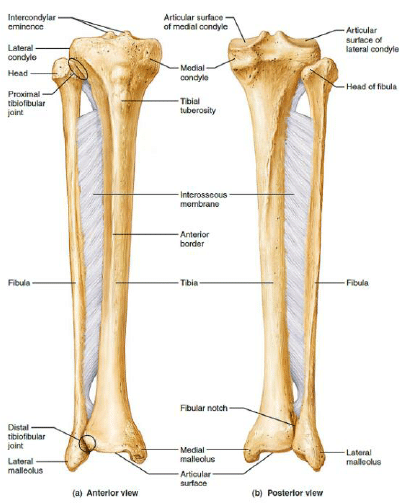
  2. Alveolar epithelium (Type I pneumocyte).
  3. Fused basement membrane of the alveolar epithelium and capillary endothelium.
  4. Capillary endothelium.

Interstitium: The connective tissue space between the alveolar epithelial cells and the capillary endothelial cells. It contains collagen, elastic fibers, and some interstitial fluid. Its thickness can significantly impact gas diffusion in disease states.

D. Pleura

The lungs are enclosed in serous membranes called pleura.

  • Visceral Pleura: Covers the surface of the lungs, dipping into the fissures between the lobes.
  • Parietal Pleura: Lines the thoracic cavity wall, mediastinum, and superior surface of the diaphragm.
  • Pleural Cavity: The potential space between the visceral and parietal pleura.
  • Pleural Fluid: A thin layer of serous fluid (about 10-20 mL) within the pleural cavity.
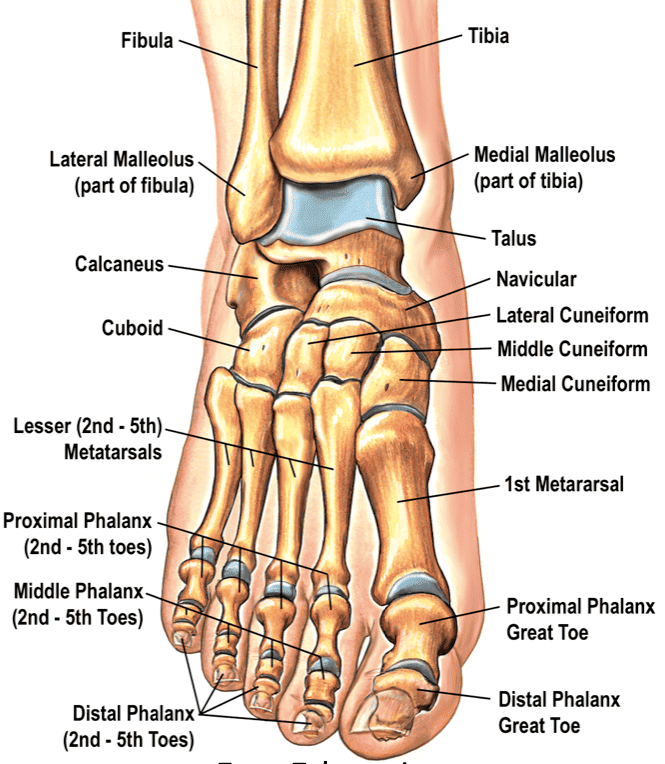
Functions of Pleura:
  • Lubrication: Allows the lungs to slide smoothly against the thoracic wall during breathing.
  • Surface Tension (Adhesion): Creates an adhesive force that keeps the lung surface "stuck" to the thoracic wall, allowing the lungs to expand and recoil with the chest wall. This is crucial for maintaining the negative intrapleural pressure and facilitating lung expansion.

E. Respiratory Muscles

The muscles responsible for changing the volume of the thoracic cavity, thereby driving air movement.

Primary Muscles of Inspiration

Diaphragm:

A large, dome-shaped sheet of skeletal muscle separating the thoracic and abdominal cavities.

  • Contraction: Flattens and moves inferiorly, increasing the vertical dimension of the thoracic cavity.
  • Innervation: Phrenic nerves (C3-C5).
External Intercostal Muscles:

Located between the ribs.

  • Contraction: Pulls the rib cage upwards and outwards, increasing the anteroposterior and lateral dimensions.

Expiration & Accessory Muscles

Internal Intercostal Muscles:

Located deep to the external intercostals. Primarily used in forced expiration.

  • Contraction: Pulls the rib cage downwards and inwards, decreasing thoracic volume.
Accessory Muscles:
  • Forced Inspiration: Sternocleidomastoid, scalenes, pectoralis minor.
  • Forced Expiration: Abdominal muscles (rectus abdominis, internal and external obliques, transversus abdominis) – push abdominal contents upwards, forcing diaphragm up.

Key Functions of the Respiratory System

Gas Exchange

The exchange of O₂ and CO₂ between the lungs and blood (external) and between the blood and tissues (internal).

Ventilation (Breathing)

The mechanical process of moving air into (inhalation) and out of (exhalation) the lungs.

Acid-Base Balance

Regulates blood pH by controlling CO₂ levels in the blood.

Speech (Phonation)

Air passing over the vocal cords produces sound for vocalization.

Olfaction (Smell)

Olfactory receptors in the nasal cavity detect airborne chemicals.

Protection & Defense

Filters, warms, and humidifies inhaled air, trapping pathogens and irritants.

Organization of the Respiratory System

The system can be divided into two main zones based on function and anatomy.

Conducting Zone

A series of interconnected cavities and tubes that conduct, filter, warm, and humidify air on its way to the lungs. No gas exchange occurs here.

Components:

  • Nasal Cavity & Pharynx
  • Larynx & Trachea
  • Bronchi & Terminal Bronchioles

Respiratory Zone

The site where the actual gas exchange between air and blood takes place. This is the functional end of the respiratory tract.

Components:

  • Respiratory Bronchioles
  • Alveolar Ducts & Sacs
  • Alveoli

Components and Associated Structures

The respiratory system is a complex network of organs and structures that can be divided into upper and lower tracts.

Upper Respiratory Tract

Includes the nose, nasal cavity, pharynx (naso-, oro-, laryngo-), and larynx.

Lower Respiratory Tract

Includes the trachea, bronchi, bronchioles, and the lungs (containing the respiratory zone structures).

Associated Structures

  • Thoracic Cage: Ribs, sternum, and thoracic vertebrae that form a protective bony framework.
  • Respiratory Muscles: The diaphragm and intercostal muscles, responsible for the mechanics of breathing.
  • Pleura: Membranes surrounding the lungs that facilitate smooth movement.

Respiratory System Development

The respiratory system begins its development early in embryonic life (around week 4) as a ventral outgrowth from the primitive foregut, highlighting its close developmental relationship with the digestive system.

1. Laryngotracheal Diverticulum (Respiratory Bud)

A groove in the ventral wall of the foregut deepens and grows outward to form the respiratory bud. This bud is then separated from the foregut by the fusion of the tracheoesophageal septum, forming the laryngotracheal tube (future respiratory tract) and the esophagus (digestive tract).

2. Larynx

The lining of the larynx develops from the endoderm of the cranial end of the tube. The cartilages and muscles are derived from the mesenchyme of the 4th and 6th pharyngeal arches. The lumen reopens (recanalization) to form the vocal cords.

3. Trachea

The trachea develops from the part of the tube distal to the larynx. Its epithelial lining and glands are from endoderm, while the cartilaginous rings, muscle, and connective tissue are from the surrounding splanchnic mesenchyme.

4. Bronchi and Lungs

Bronchial Buds & Branching:

Around week 5, the laryngotracheal tube bifurcates into two bronchial buds. These buds undergo a process called branching morphogenesis, repeatedly dividing to form the entire bronchial tree: primary, secondary (lobar), and tertiary (segmental) bronchi, and eventually the smaller bronchioles.

Tissue Origins:

  • The entire epithelial lining of the bronchial tree and alveoli is derived from endoderm.
  • The connective tissue, cartilage, smooth muscle, and blood vessels are derived from the surrounding splanchnic mesenchyme.

Maturation of the Lungs

The development of the lungs from simple tubes into a complex organ capable of gas exchange is a prolonged process that continues from early embryonic life until well after birth. This maturation can be divided into several distinct histological stages.

1. Embryonic Stage (Weeks 4-7)

This initial stage involves the formation of the laryngotracheal diverticulum and its division into the primary, secondary, and tertiary bronchi, establishing the basic framework of the tracheobronchial tree.

2. Pseudoglandular Stage (Weeks 5-16)

The bronchial tree undergoes extensive branching to form the terminal bronchioles. The lung tissue at this stage resembles a gland, hence the name. Crucially, no respiratory bronchioles or alveoli are present yet, so respiration is not possible.

3. Canalicular Stage (Weeks 16-26)

The terminal bronchioles divide into respiratory bronchioles, which then divide into alveolar ducts. The lung tissue becomes highly vascularized. Some primitive alveolar sacs (saccules) begin to form. Survival is difficult, but some gas exchange may be possible near the end of this stage.

4. Saccular Stage (Weeks 26-Birth)

Alveolar ducts terminate in thin-walled terminal sacs (saccules). Two crucial cell types differentiate: Type I pneumocytes (for gas exchange) and Type II pneumocytes, which begin to produce surfactant. Surfactant is essential for reducing surface tension and preventing the collapse of the air sacs during exhalation.

5. Alveolar Stage (Late Fetal to ~8 Years)

Mature alveoli develop from the saccules. The number of alveoli continues to increase significantly after birth, from about 50 million at birth to the adult number of approximately 300 million by 8 years of age. This highlights that lung development is a long postnatal process.

Summary of Tissue Origins

A recap of the germ layers responsible for forming the respiratory system:

  • Endoderm: Forms the entire epithelial lining of the larynx, trachea, bronchi, and alveoli, as well as the glands.
  • Splanchnic Mesenchyme: Forms all the supporting structures, including the cartilage, smooth muscle, connective tissue, and blood vessels of the respiratory tract.

The Pleura and its Nerve Supply

The pleura are serous membranes that envelop the lungs and line the walls of the thoracic cavity. They play a critical role in lung function by allowing smooth movement during breathing and creating the necessary pressure environment for lung inflation.

A. The Pleural Layers

Visceral Pleura

This layer directly covers the entire surface of the lungs, including the fissures between the lobes. It is thin, transparent, and firmly adherent to the lung tissue.
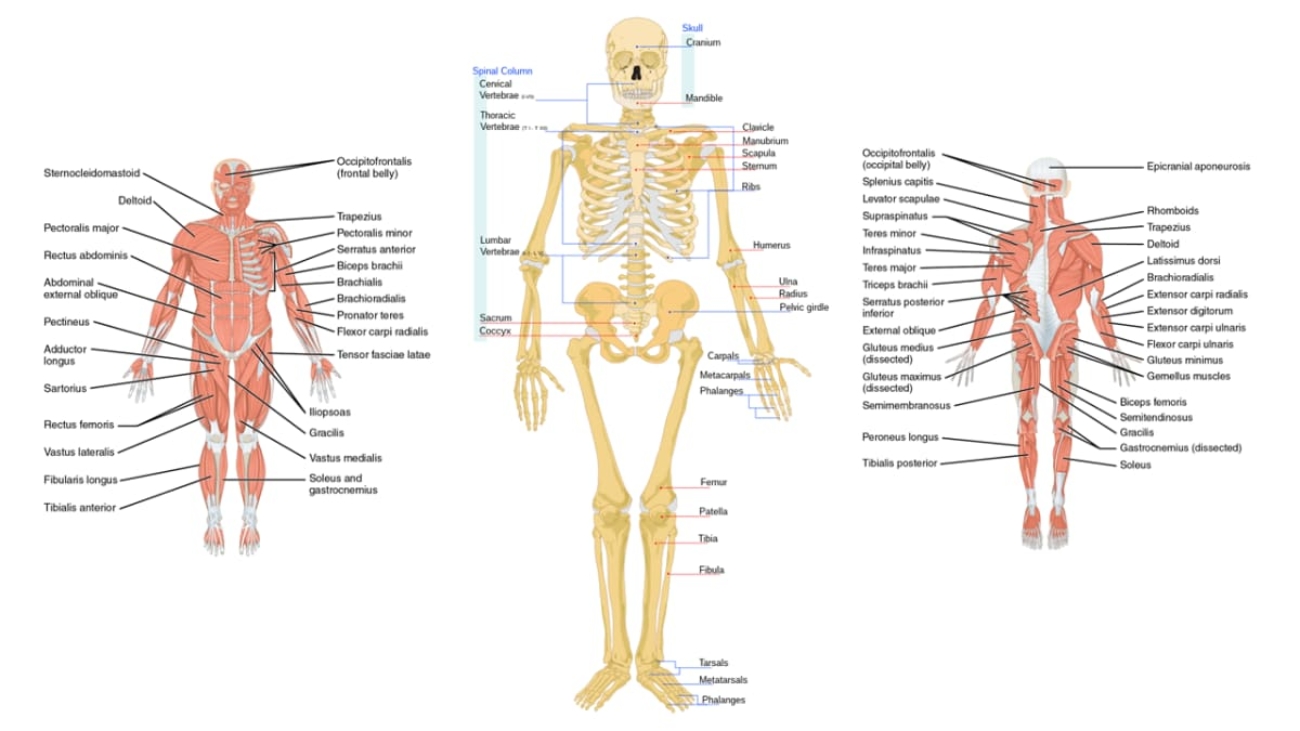
Parietal Pleura

This layer lines the inner surface of the thoracic cavity. It is subdivided based on the region it lines:
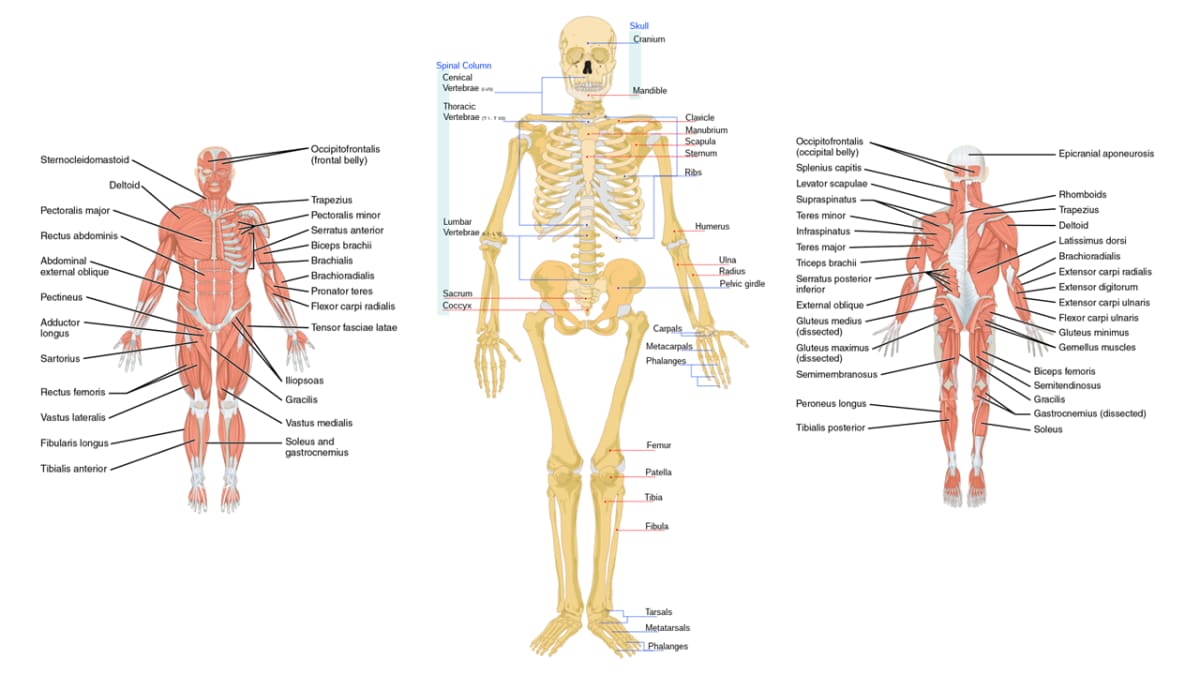
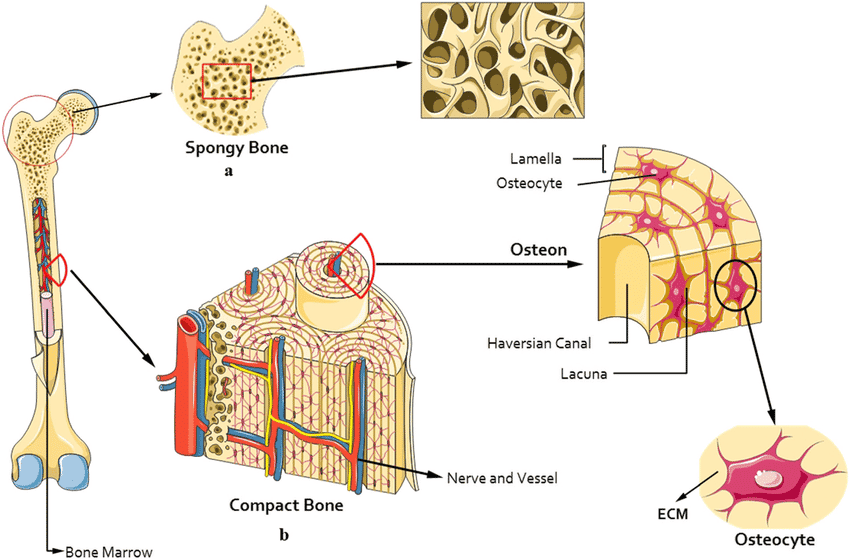
  • Cervical Pleura (Cupola): Extends superiorly into the neck, covering the apex of the lung.
  • Costal Pleura: Lines the inner surface of the ribs and intercostal muscles.
  • Mediastinal Pleura: Covers the lateral aspect of the mediastinum.
  • Diaphragmatic Pleura: Covers the superior surface of the diaphragm.

B. The Pleural Cavity

This is the potential space between the visceral and parietal pleura. It normally contains only a thin film of serous pleural fluid.

Functions of Pleural Fluid:

  • Lubrication: Allows the pleural layers to slide smoothly over each other during breathing, reducing friction.
  • Surface Tension: Creates a cohesive force that adheres the lung surface (visceral pleura) to the chest wall (parietal pleura), ensuring the lungs expand and contract with the movements of the thorax.

C. Pleural Recesses (Sinuses)

These are areas where the parietal pleura extends beyond the borders of the lungs, forming potential spaces where fluid can accumulate. They are important clinically.

  • Costodiaphragmatic Recess: The largest and most significant recess, located between the ribs and the diaphragm. It is the lowest point of the pleural cavity when upright, making it a common site for fluid accumulation (pleural effusion).
  • Costomediastinal Recess: Smaller recesses located anteriorly between the ribs and the mediastinum.

D. Nerve Supply of the Pleura

The nerve supply differs significantly between the two pleural layers, which has major clinical implications for pain sensation.

Parietal Pleura

  • Innervation: Somatic sensory nerves.
  • Sensitivity: Highly sensitive to pain, touch, temperature, and pressure.
  • Nerves:
    • Intercostal nerves (for costal pleura).
    • Phrenic nerves (for mediastinal and central diaphragmatic pleura).
  • Clinical Significance: Inflammation (pleurisy) causes sharp, well-localized pain. Pain from the diaphragmatic pleura can be famously referred to the shoulder tip (via the phrenic nerve).

Visceral Pleura

  • Innervation: Autonomic nerves from the pulmonary plexus.
  • Sensitivity: Insensitive to pain, touch, and temperature. It does contain stretch receptors.
  • Nerves:
    • Vagus nerve (parasympathetic).
    • Sympathetic trunks.
  • Clinical Significance: Lung tissue and the visceral pleura can be extensively diseased without causing pain, until the process affects the pain-sensitive parietal pleura.

Differences Between Right and Left Lungs

While both lungs perform the same vital function of gas exchange, they exhibit distinct anatomical differences, primarily due to the asymmetrical placement of the heart and great vessels within the thoracic cavity.

A. General Characteristics at a Glance

FeatureRight LungLeft Lung
Size & WeightLarger and heavierSmaller and lighter
Lobes3 Lobes (Superior, Middle, Inferior)2 Lobes (Superior, Inferior)
Fissures2 Fissures (Oblique, Horizontal)1 Fissure (Oblique)
Cardiac NotchAbsentProminent indentation for the heart
LingulaAbsentPresent (tongue-like part of superior lobe)
Main BronchusShorter, wider, more verticalLonger, narrower, more horizontal

B. Detailed Anatomical Differences


1. Lobes and Fissures

The right lung is divided into three lobes by two fissures, while the left lung has only two lobes and one fissure.

Right Lung
  • Horizontal Fissure: Separates the superior and middle lobes.
  • Oblique Fissure: Separates the middle and inferior lobes.
Left Lung
  • Oblique Fissure: Separates the superior and inferior lobes.
  • No horizontal fissure.

2. Cardiac Structures and Impressions

The left lung is significantly molded by the heart, creating unique features not seen on the right.

Right Lung

Has a less pronounced cardiac impression and features grooves for the Superior Vena Cava, Azygos vein, and Esophagus.

Left Lung

Features a deep Cardiac Notch and a tongue-like Lingula. It has prominent grooves for the Aortic Arch and the Descending Aorta.

3. Hilum (Root of the Lung)

The arrangement of the bronchus, pulmonary artery, and pulmonary veins differs at the hilum of each lung.

Right Lung Hilum

The bronchus is typically superior and posterior, while the pulmonary artery is anterior to it. The azygos vein arches over the top.

Left Lung Hilum

The pulmonary artery is typically the most superior structure. The bronchus lies posterior and inferior to the artery. The aortic arch passes over the top.

4. Bronchial Tree

The structure of the main bronchi is a key difference with significant clinical implications.

Right Main Bronchus

Shorter, wider, and more vertical.

Clinical Note: Due to its more vertical orientation, aspirated foreign bodies are more likely to lodge in the right lung.
Left Main Bronchus

Longer, narrower, and more horizontal.

Anatomical Reason: The heart and the prominent aortic arch push down on the left bronchus, forcing it to take a more horizontal path to reach the left lung.

Complications and Common Disorders

The respiratory system is susceptible to a wide range of complications and disorders, affecting any part of the tract from the upper airways to the deep lung parenchyma.

A. Obstructive Lung Diseases

Characterized by increased resistance to airflow, making it difficult to fully exhale.

Chronic Obstructive Pulmonary Disease (COPD)

A progressive disease including Chronic Bronchitis (inflamed, narrow airways with excess mucus) and Emphysema (damaged, inelastic alveoli leading to air trapping). Primarily caused by smoking.

Asthma

A chronic inflammatory disease with reversible airway obstruction, characterized by hyper-responsiveness to triggers leading to wheezing, shortness of breath, and coughing.

Cystic Fibrosis (CF)

A genetic disorder causing thick, sticky mucus that clogs airways, leading to chronic infections and severe lung damage (bronchiectasis).

B. Restrictive Lung Diseases

Characterized by reduced lung volumes and decreased lung compliance (stiffness), making it difficult to fully inhale.

Pulmonary Fibrosis

Scarring and thickening of lung tissue, making the lungs stiff. Can be idiopathic or caused by toxins or autoimmune diseases.

Pneumoconiosis

A group of diseases caused by inhalation of inorganic dusts (e.g., asbestosis, silicosis), leading to inflammation and fibrosis.

Chest Wall & Neuromuscular Disorders

Conditions like scoliosis or diseases like ALS and muscular dystrophy that weaken respiratory muscles or restrict chest movement.

C. Infections of the Respiratory System

Pneumonia

Inflammation of the lung parenchyma where alveoli fill with fluid, impairing gas exchange. Can be caused by bacteria, viruses, or fungi.

Tuberculosis (TB)

A bacterial infection (Mycobacterium tuberculosis) that primarily affects the lungs, causing chronic cough, fever, and night sweats.

D. Vascular Disorders

Pulmonary Embolism (PE)

A life-threatening blockage in a pulmonary artery, typically from a blood clot that traveled from the deep veins of the legs. Causes sudden shortness of breath and sharp chest pain.

Pulmonary Hypertension

High blood pressure in the arteries of the lungs, making it harder for the right side of the heart to pump blood, which can lead to heart failure.

E. Other Significant Disorders

Lung Cancer

Uncontrolled growth of abnormal cells in the lungs. Primarily caused by smoking.

Pneumothorax

A collapsed lung, where air leaks into the pleural cavity, causing the lung to pull away from the chest wall.

Pleural Effusion

An accumulation of excess fluid in the pleural cavity, often caused by heart failure, infections, or cancer.

F. Complications Associated with Respiratory Disorders

Respiratory Failure

The inability of the system to maintain adequate gas exchange, leading to hypoxemia (low blood O₂) and/or hypercapnia (high blood CO₂).

Acute Respiratory Distress Syndrome (ARDS)

A severe, life-threatening lung condition that prevents enough oxygen from getting into the blood, often a complication of other severe illnesses.

Developmental Anomalies of the Respiratory System

Developmental anomalies, also known as congenital anomalies or birth defects, are structural or functional abnormalities that occur during fetal development. Errors during the complex formation of the respiratory tract can lead to a variety of conditions.

A. Anomalies of the Trachea and Bronchi

Tracheoesophageal Fistula (TEF) & Esophageal Atresia (EA)

Description: An abnormal connection between the trachea and esophagus (TEF), often with the esophagus ending in a blind pouch (EA).
Clinical Presentation: Neonates present with choking, coughing, and cyanosis during feeds; inability to pass a nasogastric tube.

Tracheal Stenosis/Atresia

Description: A narrowing (stenosis) or complete absence (atresia) of a segment of the trachea, leading to severe respiratory distress or stridor at birth.

Tracheomalacia/Bronchomalacia

Description: Weakness of the tracheal or bronchial cartilage, leading to airway collapse during exhalation. Causes a barking cough and stridor that worsens with crying.

Bronchial Atresia

Description: A blind-ending bronchus that leads to an over-inflated, air-trapping segment of the lung distally. Often asymptomatic but can cause recurrent infections.

B. Anomalies of the Lungs and Lung Development

Pulmonary Agenesis/Aplasia/Hypoplasia

A spectrum from complete absence of a lung (agenesis) to underdevelopment with reduced size and number of alveoli (hypoplasia). Often associated with conditions that restrict lung growth, like a diaphragmatic hernia.

Congenital Pulmonary Airway Malformation (CPAM)

A non-cancerous lesion of abnormal, cystic lung tissue. Can cause respiratory distress in neonates or lead to recurrent infections in older children.

Bronchopulmonary Sequestration

A mass of non-functional lung tissue not connected to the normal bronchial tree, which receives its blood supply from a systemic artery (like the aorta).

Congenital Lobar Emphysema (CLE)

Over-inflation of a lung lobe due to a "check-valve" mechanism where air gets trapped. Can cause progressive respiratory distress and shift mediastinal structures.

Congenital Diaphragmatic Hernia (CDH)

A defect in the diaphragm allowing abdominal organs to herniate into the chest, leading to severe pulmonary hypoplasia and hypertension. A surgical emergency.

10 Key Developmental Anomalies: A Summary

  1. Tracheoesophageal Fistula (TEF) & Esophageal Atresia (EA)
  2. Laryngeal Cleft
  3. Tracheal Stenosis/Atresia
  4. Tracheomalacia/Bronchomalacia
  5. Bronchial Atresia
  6. Pulmonary Agenesis/Aplasia/Hypoplasia
  7. Congenital Pulmonary Airway Malformation (CPAM)
  8. Bronchopulmonary Sequestration
  9. Congenital Lobar Emphysema (CLE)
  10. Congenital Diaphragmatic Hernia (CDH)

Test Your Knowledge

Check your understanding of the Respiratory System's development and function.

1. Which of the following is the primary function of the respiratory system?

  • Digestion of nutrients
  • Regulation of body temperature
  • Gas exchange (oxygen and carbon dioxide)
  • Blood filtration
Rationale: The fundamental role of the respiratory system is to facilitate the intake of oxygen into the body and the removal of carbon dioxide, a waste product of metabolism.

2. During fetal development, the respiratory system originates from which germ layer?

  • Ectoderm
  • Mesoderm
  • Endoderm
  • Neuroectoderm
Rationale: The epithelial lining of the respiratory tract, including the lungs, trachea, bronchi, and alveoli, develops from the endoderm, specifically from the laryngotracheal groove of the foregut.

3. The production of surfactant, crucial for preventing alveolar collapse, begins to significantly increase during which stage of lung maturation?

  • Pseudoglandular stage
  • Canalicular stage
  • Saccular stage
  • Alveolar stage
Rationale: While some surfactant production begins in the canalicular stage, it significantly increases in the saccular stage (weeks 24-36), preparing the lungs for extrauterine life by reducing surface tension in the alveoli.

4. Respiratory Distress Syndrome (RDS) in newborns is primarily caused by:

  • Bacterial infection
  • Incomplete development of the diaphragm
  • Insufficient production of pulmonary surfactant
  • Structural abnormalities of the trachea
Rationale: RDS, often seen in premature infants, is due to the immature lungs not producing enough surfactant, leading to widespread alveolar collapse and difficulty breathing.

5. Which of the following describes the condition where the trachea fails to properly separate from the esophagus during development?

  • Bronchial atresia
  • Tracheoesophageal fistula
  • Congenital diaphragmatic hernia
  • Pulmonary hypoplasia
Rationale: A tracheoesophageal fistula (TEF) is an abnormal connection between the trachea and the esophagus, often resulting from incomplete partitioning of the foregut during development. This can lead to aspiration and feeding difficulties.

6. Which part of the respiratory system is responsible for warming, humidifying, and filtering inhaled air?

  • Alveoli
  • Bronchioles
  • Upper respiratory tract (nasal cavity, pharynx, larynx)
  • Diaphragm
Rationale: The nasal cavity, in particular, with its rich vascular supply and mucous membranes, plays a vital role in conditioning the air before it reaches the lungs.

7. A congenital diaphragmatic hernia (CDH) is characterized by:

  • An abnormal opening in the chest wall.
  • A portion of the diaphragm being underdeveloped, allowing abdominal contents to enter the chest cavity.
  • Complete absence of lung tissue.
  • Narrowing of the bronchi.
Rationale: CDH occurs when the diaphragm fails to close completely during fetal development, leading to abdominal organs moving into the chest, which can impede lung development.

8. During the canalicular stage of lung development, what significant event occurs?

  • The formation of the laryngotracheal bud.
  • The branching of the bronchi and bronchioles is complete.
  • The respiratory bronchioles and alveolar ducts begin to form, and vascularization increases.
  • Mature alveoli with thin walls are established.
Rationale: The canalicular stage (weeks 16-26) is characterized by the widening of the lumen of the bronchi and bronchioles, the formation of respiratory bronchioles and alveolar ducts, and a significant increase in the vascular supply, bringing capillaries close to the developing airspaces.

9. Which disorder is characterized by chronic inflammation and narrowing of the airways, often triggered by allergens or irritants?

  • Emphysema
  • Cystic Fibrosis
  • Asthma
  • Bronchitis
Rationale: Asthma is a chronic respiratory condition characterized by airway hyperresponsiveness, inflammation, and reversible airflow obstruction, leading to symptoms like wheezing, shortness of breath, chest tightness, and coughing.

10. The main muscle responsible for normal, quiet inspiration is the:

  • External intercostals
  • Internal intercostals
  • Diaphragm
  • Abdominal muscles
Rationale: The diaphragm is the primary muscle of inspiration. When it contracts, it flattens and moves downward, increasing the volume of the thoracic cavity and drawing air into the lungs.

11. The smallest conducting airways in the lungs are called _____________.

Rationale: Bronchioles are the smaller branches of the bronchial airways that lead to the alveoli. They play a key role in controlling airflow distribution in the lungs.

12. The final stage of lung maturation, where mature alveoli with thin walls and close contact with capillaries are formed, is known as the _____________ stage.

Rationale: The alveolar stage, which continues after birth, is marked by the formation of mature alveoli, which dramatically increases the surface area available for gas exchange.

13. A genetic disorder that causes thick, sticky mucus to build up in the lungs and other organs is _____________.

Rationale: Cystic Fibrosis is an inherited disorder that severely affects the respiratory and digestive systems by disrupting the normal function of mucus-producing cells.

14. The vocal cords are located within the _____________.

Rationale: The larynx, or voice box, houses the vocal cords and is responsible for sound production (phonation) and protecting the trachea from food aspiration.

15. _____________ is a condition where the lungs are incompletely developed or abnormally small.

Rationale: Pulmonary hypoplasia is a serious developmental issue where the lungs fail to grow to a normal size, often associated with conditions that limit chest space, like a congenital diaphragmatic hernia.