Muscles of the Head, Neck and Trunk

Muscles of the Head, Neck and Trunk

Axial Skeleton Muscles: The Footress.

Muscles of the Axial Skeleton
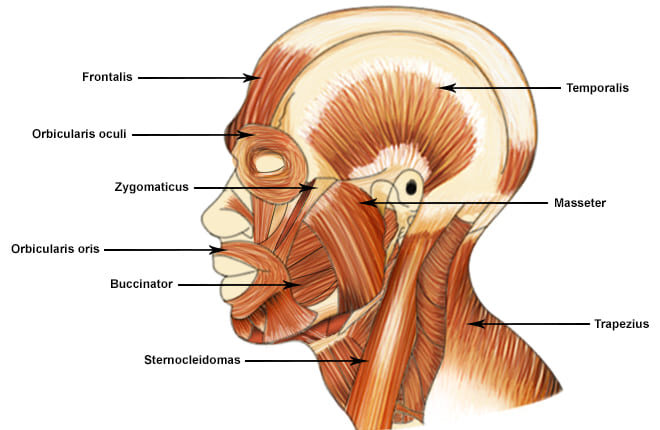

A. Muscles of the Head and Face

The muscles of the head can be broadly categorized into muscles of facial expression and muscles of mastication (chewing).

1. Muscles of Facial Expression

These unique muscles insert into the skin or other muscles, allowing us to show a wide range of emotions. They are all innervated by the Facial Nerve (Cranial Nerve VII).

a. Occipitofrontalis (Epicranius)

A broad muscle covering the top of the skull with two bellies. The Frontal belly raises the eyebrows and wrinkles the forehead, while the Occipital belly pulls the scalp posteriorly.

b. Orbicularis Oculi

A ring-like muscle encircling the eye. Its primary action is to close the eye (blinking, winking) and squint.

c. Orbicularis Oris

A complex muscle encircling the mouth. It closes and protrudes the lips, as in puckering or kissing.

d. Zygomaticus Major and Minor

Extend from the cheekbone to the corner of the mouth. They are the primary "smiling" muscles, raising the lateral corners of the mouth upward.

e. Buccinator

A thin, flat muscle of the cheek. It compresses the cheek for whistling or sucking and holds food between the teeth during chewing.
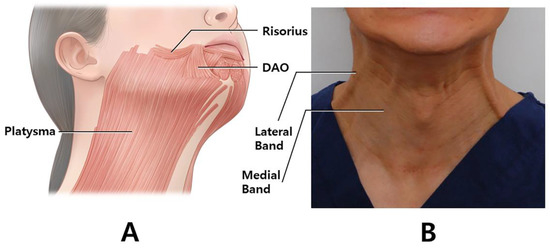
f. Platysma

A broad, superficial sheet of muscle in the neck. It tenses the skin of the neck, depresses the mandible, and pulls the lower lip down.

2. Muscles of Mastication (Chewing)

These four pairs of muscles are responsible for moving the mandible for chewing. They are all innervated by the Mandibular division of the Trigeminal Nerve (Cranial Nerve V3).
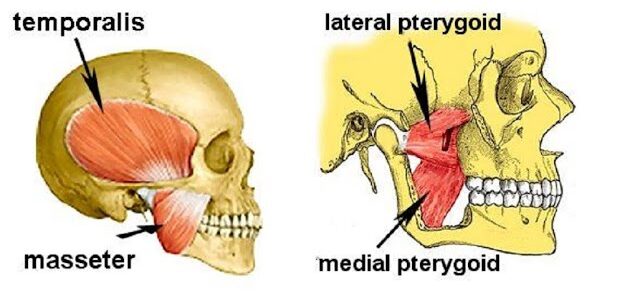
a. Masseter

A powerful muscle on the side of the jaw. It is the primary elevator of the mandible (closes the jaw).

b. Temporalis

A fan-shaped muscle in the temporal fossa. It elevates and retracts the mandible.

c. Medial Pterygoid

Located deep to the mandible. It elevates the jaw and assists in side-to-side grinding movements.

d. Lateral Pterygoid

Located deep in the jaw. It protracts the mandible (pulls it forward), moves it side-to-side, and is the only muscle of mastication that helps open the jaw.

Summary Table of Head & Face Muscles

MuscleOriginInsertionAction
FACIAL EXPRESSION (CN VII)
OccipitofrontalisGalea aponeurotica (Frontal); Occipital bone (Occipital)Skin of eyebrows; Galea aponeuroticaRaises eyebrows, wrinkles forehead, pulls scalp
Orbicularis OculiFrontal and maxillary bonesTissue of eyelidCloses eye, squints, blinks
Orbicularis OrisMaxilla and mandibleSkin and muscle at angles of mouthCloses and protrudes lips (puckering)
Zygomaticus Major/MinorZygomatic boneSkin and muscle at angle of mouthRaises lateral corners of mouth (smiling)
BuccinatorMolar region of maxilla and mandibleOrbicularis orisCompresses cheek (whistling, sucking)
PlatysmaFascia of chestBase of mandible; skin at corner of mouthTenses skin of neck, depresses mandible
MASTICATION (CN V3)
MasseterZygomatic archAngle and ramus of mandibleElevates mandible (closes jaw)
TemporalisTemporal fossaCoronoid process of mandibleElevates and retracts mandible
Medial PterygoidSphenoid and palatine bonesMedial surface of ramus of mandibleElevates mandible, moves side-to-side
Lateral PterygoidSphenoid boneCondylar process of mandible; TMJ capsuleProtracts and depresses (opens) jaw

B. Muscles of the Neck

The muscles of the neck are diverse, responsible for moving the head, stabilizing the cervical spine, assisting in breathing, and facilitating swallowing and speech. They are categorized here based on location and primary actions.

1. Superficial Anterior Neck Muscles

a. Sternocleidomastoid (SCM)

A large, two-headed muscle on each side of the neck. When acting alone (unilaterally), it rotates the head to the opposite side and flexes it to the same side. When both act together (bilaterally), they flex the neck (chin to chest).
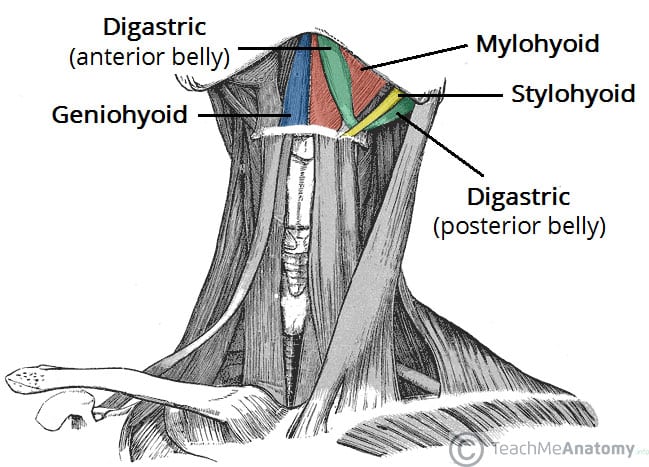
2. Suprahyoid Muscles (Above the Hyoid Bone)

These muscles form the floor of the mouth and are primarily responsible for elevating the hyoid bone during swallowing and speaking.

a. Digastric

Two-bellied muscle that elevates the hyoid or depresses the mandible (opens the mouth).

b. Mylohyoid

Forms the floor of the mouth; elevates hyoid and floor of mouth.

c. Geniohyoid

Elevates and protracts the hyoid bone.

d. Stylohyoid

Elevates and retracts the hyoid bone.
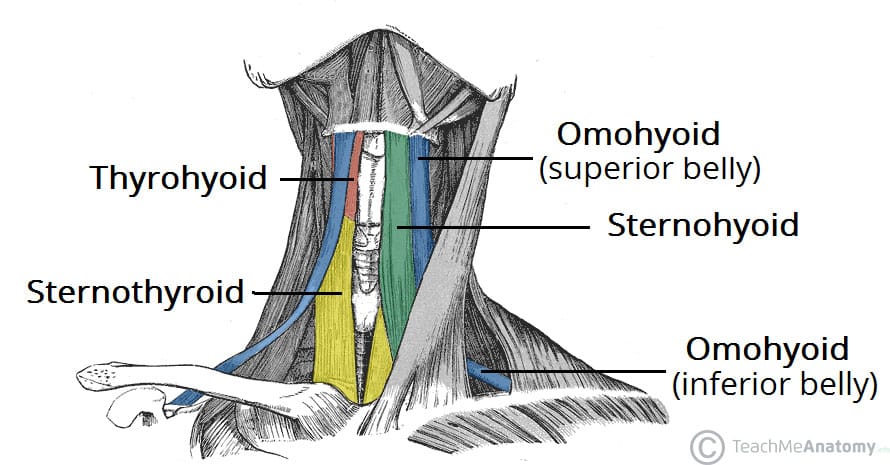
3. Infrahyoid Muscles (Strap Muscles - Below the Hyoid)

These "strap-like" muscles primarily depress the hyoid bone and larynx during swallowing and speaking.

a. Sternohyoid

Depresses the hyoid bone and larynx.

b. Omohyoid

Two-bellied muscle that depresses and retracts the hyoid.

c. Sternothyroid

Depresses the larynx and hyoid bone.

d. Thyrohyoid

Depresses the hyoid bone but elevates the larynx.
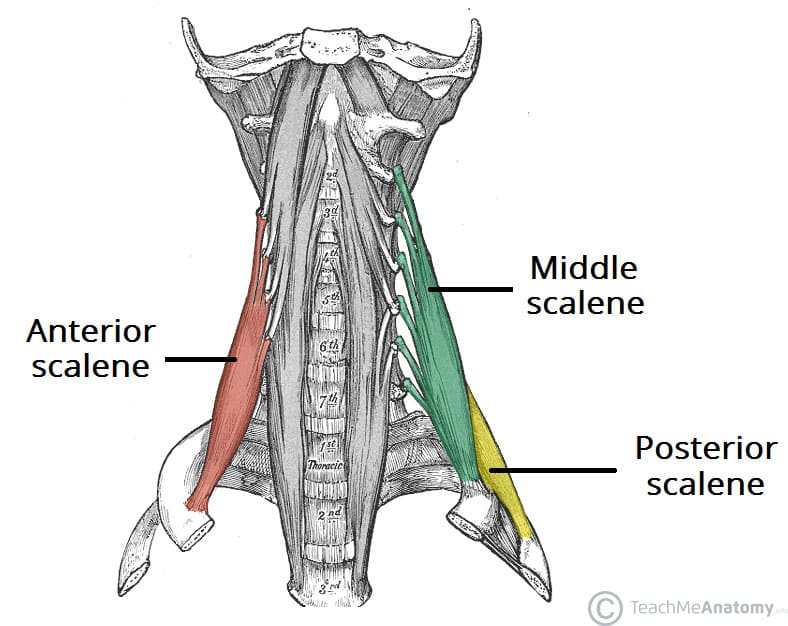
4. Deep Lateral Neck Muscles (Scalenes)

The Anterior, Middle, and Posterior Scalene muscles are important for lateral flexion of the neck. They also act as accessory muscles of inspiration by elevating the first two ribs.

Summary Table of Neck Muscles

MuscleOriginInsertionInnervationAction
SternocleidomastoidManubrium & ClavicleMastoid processCN XI, C2-C3Unilateral: Rotates head opp., flexes same side. Bilateral: Flexes neck.
DigastricMandible & Mastoid processHyoid boneCN V3 & CN VIIElevates hyoid, depresses mandible.
MylohyoidMandibleHyoid boneCN V3Elevates hyoid & floor of mouth.
SternohyoidManubrium & ClavicleHyoid boneAnsa cervicalisDepresses hyoid and larynx.
OmohyoidScapulaHyoid boneAnsa cervicalisDepresses and retracts hyoid.
SternothyroidManubriumThyroid cartilageAnsa cervicalisDepresses larynx and hyoid.
ThyrohyoidThyroid cartilageHyoid boneC1 via CN XIIDepresses hyoid, elevates larynx.
Scalenes (Ant, Mid, Post)Cervical vertebrae (C2-C7)First & Second ribsCervical spinal nervesFlexes neck, elevates ribs for inspiration.

C. Muscles of the Torso (Trunk)

The muscles of the trunk are vital for maintaining posture, protecting internal organs, facilitating respiration, and enabling a wide range of movements.
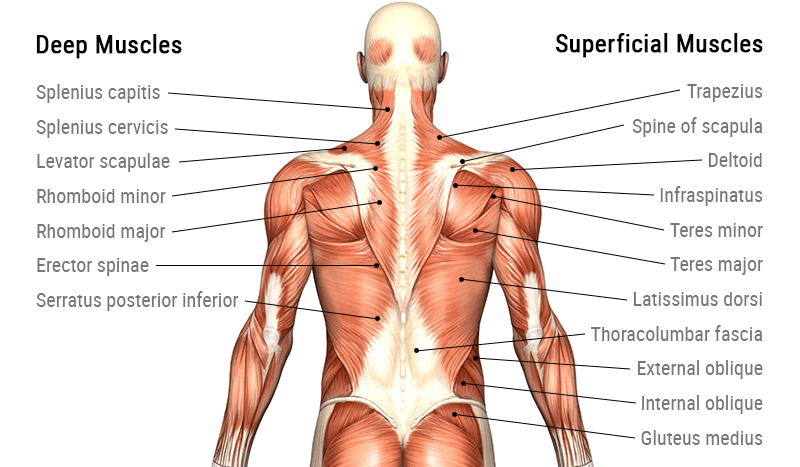
1. Muscles of the Back

These complex, layered muscles move and stabilize the vertebral column, head, and shoulders.

a. Superficial Back Muscles

Primarily act on the upper limbs. Includes the large Trapezius (moves scapula), Latissimus Dorsi (extends and adducts arm), and the deeper Rhomboids and Levator Scapulae (retract and elevate scapula).

b. Intermediate Back Muscles

Respiratory muscles. The Serratus Posterior Superior elevates ribs for inspiration, while the Serratus Posterior Inferior depresses ribs for expiration.

c. Deep (Intrinsic) Back Muscles

Responsible for posture and vertebral column movement. The main group is the massive Erector Spinae (Iliocostalis, Longissimus, Spinalis), the prime mover of back extension. Deeper still is the Transversospinalis group, which stabilizes vertebrae.
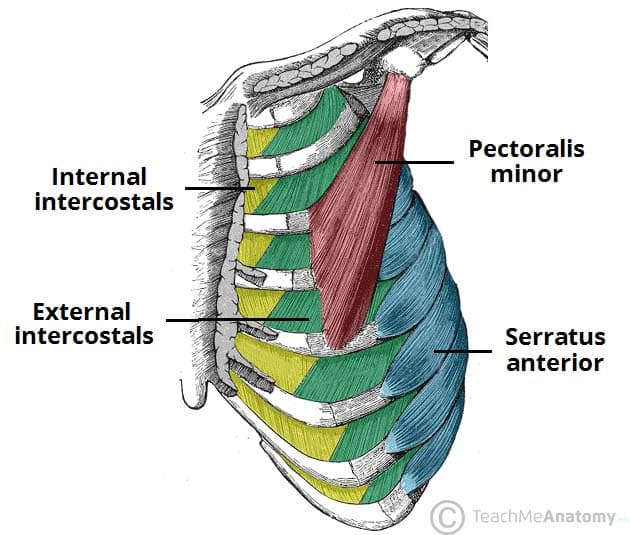
2. Muscles of the Thorax (Chest Wall)

These muscles are primarily involved in the mechanics of breathing.

a. Intercostal Muscles

The External Intercostals elevate the ribs for inspiration. The Internal and Innermost Intercostals depress the ribs for forced expiration.

b. Diaphragm

The primary muscle of respiration. This large, dome-shaped muscle separates the thoracic and abdominal cavities. It contracts and flattens to increase thoracic volume, causing inspiration.
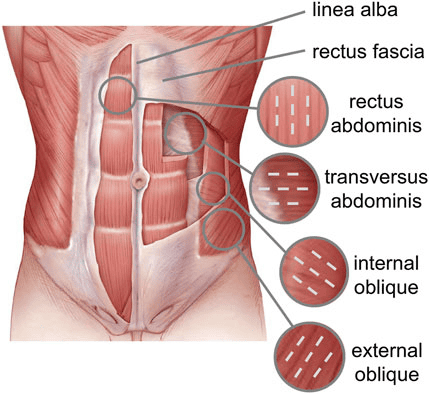
3. Muscles of the Abdominal Wall

Form a strong, flexible wall that protects viscera, moves the trunk, and compresses the abdominal cavity.

a. Rectus Abdominis

The vertical "six-pack" muscle, segmented by tendinous intersections. It is the primary flexor of the vertebral column (as in sit-ups).

b. Obliques & Transversus Abdominis

Three layers of flat muscles that wrap the abdomen. The External Oblique (fibers run down and in), Internal Oblique (fibers run up and in), and the deepest Transversus Abdominis (fibers run horizontally). They work together to rotate and flex the trunk and compress the abdominal contents.

c. Quadratus Lumborum

A deep, square-shaped muscle of the posterior abdominal wall that laterally flexes the trunk.
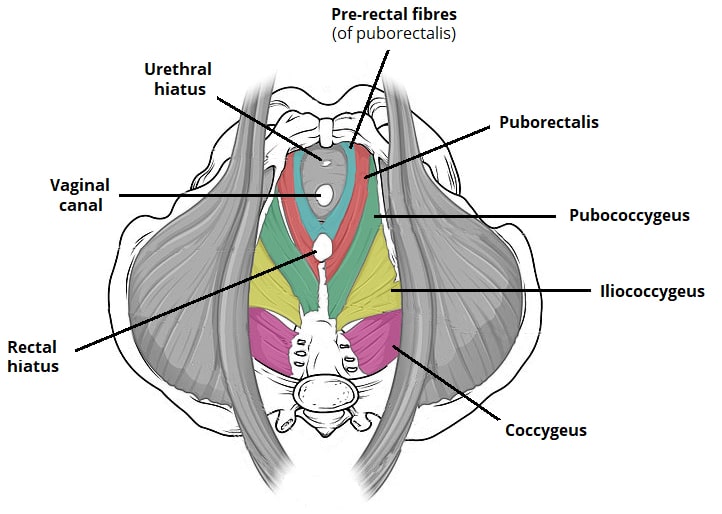
4. Pelvic Floor Muscles (Pelvic Diaphragm)

Close the inferior outlet of the pelvis, supporting pelvic organs and controlling continence.

a. Levator Ani Group & Coccygeus

This broad, funnel-shaped muscle group forms the major part of the pelvic floor, supporting pelvic organs and resisting increases in intra-abdominal pressure.

Summary Table of Torso Muscles

Muscle Origin Insertion Innervation Main Actions
TRAPEZIUSOccipital bone, C7-T12 spinous processesClavicle, acromion, spine of scapulaSpinal Accessory (CN XI), C3-C4Elevates, retracts, depresses, rotates scapula
LATISSIMUS DORSIT7-L5 spinous processes, iliac crestIntertubercular groove of humerusThoracodorsal Nerve (C6-C8)Extends, adducts, medially rotates arm
ERECTOR SPINAE GROUPIliac crest, sacrum, vertebraeRibs, vertebrae, mastoid processDorsal rami of spinal nervesExtend & laterally flex vertebral column
EXTERNAL INTERCOSTALSRib aboveRib belowIntercostal nerves (T1-T11)Elevate ribs (inspiration)
INTERNAL INTERCOSTALSRib aboveRib belowIntercostal nerves (T1-T11)Depress ribs (forced expiration)
DIAPHRAGMXiphoid, costal cartilages, lumbar vertebraeCentral tendonPhrenic Nerves (C3-C5)Primary muscle of inspiration
RECTUS ABDOMINISPubic crest and symphysisXiphoid process, costal cartilages 5-7Intercostal nerves (T7-T12)Flexes vertebral column, compresses abdomen
EXTERNAL OBLIQUERibs 5-12Linea alba, pubic tubercle, iliac crestIntercostal nerves (T7-T12)Flexes & rotates trunk (opposite side)
INTERNAL OBLIQUEThoracolumbar fascia, iliac crestLinea alba, pubic crest, ribs 10-12Intercostal (T7-T12), Iliohypo/inguinal (L1)Flexes & rotates trunk (same side)
TRANSVERSUS ABDOMINISThoracolumbar fascia, iliac crest, ribs 7-12Linea alba, pubic crestIntercostal (T7-T12), Iliohypo/inguinal (L1)Compresses abdominal contents
QUADRATUS LUMBORUMIliac crestLast rib, transverse processes of L1-L4Lumbar Plexus (T12-L4)Laterally flexes vertebral column
LEVATOR ANI GROUPPubis, ischial spineCoccyx, walls of pelvic organsPudendal Nerve (S2-S4), S3-S4Supports pelvic organs, maintains continence

Reference: The 12 Cranial Nerves

The cranial nerves are a set of 12 paired nerves that arise directly from the brain and brainstem, as opposed to spinal nerves which emerge from the spinal cord. They are responsible for conveying sensory and motor information to and from the head and neck region, as well as controlling visceral functions.
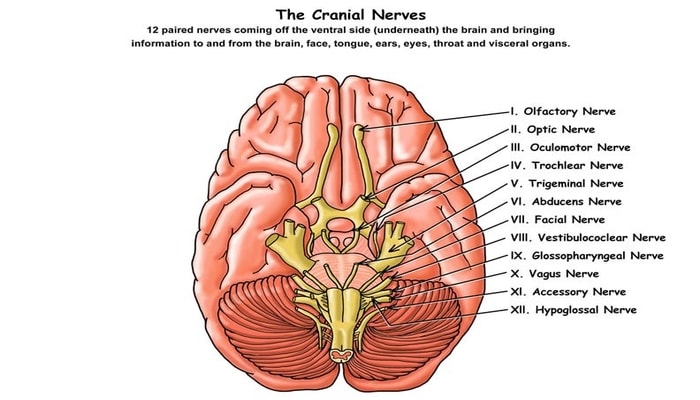
Mnemonics for Memorization

For Nerve Names:

"Oh Oh Oh To Touch And Feel A Girls Vagina Ah Heaven"

For Functional Type (S=Sensory, M=Motor, B=Both):

"Some Say Marry Money, But My Brother Says Big Brains Matter More"

I. Olfactory Nerve

Sensory

Function: Special sense of smell.
Clinical Test: Ask patient to identify common scents (e.g., coffee, vanilla) with each nostril closed.

II. Optic Nerve

Sensory

Function: Special sense of vision.
Clinical Test: Test visual acuity (Snellen chart) and visual fields.

III. Oculomotor Nerve

Motor

Function: Controls most eye movements (up, down, medially), raises eyelid, and constricts pupil.
Clinical Test: Test eye movements (H-pattern); check for pupillary light reflex and eyelid drooping (ptosis).

IV. Trochlear Nerve

Motor

Function: Controls the superior oblique muscle, which moves the eye downward and inward.
Clinical Test: Ask patient to look down and in; damage can cause vertical double vision.

V. Trigeminal Nerve

Both

Function: Sensory for the face (touch, pain, temperature) and Motor for muscles of mastication (chewing).
Clinical Test: Test facial sensation with a cotton wisp; ask patient to clench jaw and palpate masseter and temporalis muscles.

VI. Abducens Nerve

Motor

Function: Controls the lateral rectus muscle, which moves the eye laterally (abducts the eye).
Clinical Test: Ask patient to look to the side; damage can cause inability to look laterally and horizontal double vision.

VII. Facial Nerve

Both

Function: Motor for muscles of facial expression, and Sensory for taste from the anterior two-thirds of the tongue.
Clinical Test: Ask patient to smile, frown, puff cheeks, and raise eyebrows. Damage causes facial paralysis (Bell's Palsy).

VIII. Vestibulocochlear Nerve

Sensory

Function: Special senses of hearing (cochlear part) and balance/equilibrium (vestibular part).
Clinical Test: Test hearing (whisper test, Rinne/Weber tests); check for balance issues and vertigo.

IX. Glossopharyngeal Nerve

Both

Function: Motor for swallowing, and Sensory for taste from the posterior one-third of the tongue and sensation from the pharynx.
Clinical Test: Check gag reflex; ask patient to say "ahhh" and watch for symmetrical uvula elevation.

X. Vagus Nerve

Both

Function: The "wanderer"; provides parasympathetic motor innervation to most thoracic and abdominal viscera. Also motor to pharynx/larynx and sensory from the viscera.
Clinical Test: Check gag reflex and ability to swallow; assess for hoarseness.

XI. Accessory Nerve

Motor

Function: Controls the trapezius and sternocleidomastoid muscles.
Clinical Test: Ask patient to shrug shoulders (trapezius) and turn head against resistance (SCM).

XII. Hypoglossal Nerve

Motor

Function: Controls the intrinsic and extrinsic muscles of the tongue.
Clinical Test: Ask patient to stick out their tongue; it will deviate towards the side of the lesion.
Test Your Knowledge

Check your understanding of the Muscles of the Head, Neck & Trunk.

1. Which muscle is primarily responsible for retracting the scapula and is located deep to the trapezius?

  • Latissimus Dorsi
  • Levator Scapulae
  • Rhomboid Major
  • Serratus Posterior Superior

Correct (c): The Rhomboid Major, along with the Rhomboid Minor, lies deep to the Trapezius and pulls the scapula towards the spine (retraction).

Incorrect (a): Latissimus Dorsi primarily acts on the humerus (arm extension, adduction, medial rotation).

Incorrect (b): Levator Scapulae elevates and rotates the scapula downward, not primarily retraction.

Incorrect (d): Serratus Posterior Superior assists in inspiration by elevating ribs, not a primary scapular retractor.

2. A patient presents with difficulty closing their right eye and drooping of the right side of their mouth. Which cranial nerve is most likely affected?

  • Trigeminal Nerve (CN V)
  • Facial Nerve (CN VII)
  • Hypoglossal Nerve (CN XII)
  • Spinal Accessory Nerve (CN XI)

Correct (b): The Facial Nerve (CN VII) innervates the muscles of facial expression. Difficulty closing the eye (Orbicularis Oculi) and mouth drooping (Orbicularis Oris) are classic signs of Facial Nerve palsy.
Incorrect (a): Trigeminal Nerve (CN V) innervates muscles of mastication (chewing), not facial expression.
Incorrect (c): Hypoglossal Nerve (CN XII) innervates tongue muscles.

Incorrect (d): Spinal Accessory Nerve (CN XI) innervates the Sternocleidomastoid and Trapezius.

3. Which of the following muscles is not considered an infrahyoid muscle?

  • Sternohyoid
  • Omohyoid
  • Digastric
  • Thyrohyoid

Correct (c): The Digastric muscle is a suprahyoid muscle, located above the hyoid bone, and helps elevate the hyoid and depress the mandible.

Incorrect (a, b, d): Sternohyoid, Omohyoid, and Thyrohyoid are all infrahyoid (strap) muscles located below the hyoid bone, which primarily depress the hyoid.

4. During forced expiration, which abdominal muscle is most effective at compressing abdominal contents?

  • Rectus Abdominis
  • External Oblique
  • Transversus Abdominis
  • Quadratus Lumborum

Correct (c): The Transversus Abdominis, with its horizontally oriented fibers, is the deepest and most effective muscle for compressing the abdominal contents, which is crucial for forced expiration.
Incorrect (a): Rectus Abdominis primarily flexes the vertebral column.
Incorrect (b): External Oblique is involved in trunk rotation and flexion.
Incorrect (d): Quadratus Lumborum is primarily involved in lateral flexion of the trunk.

5. Unilateral contraction of the sternocleidomastoid muscle results in:

  • Flexion of the neck and elevation of the sternum.
  • Rotation of the head to the ipsilateral (same) side.
  • Rotation of the head to the contralateral (opposite) side.
  • Extension of the neck and depression of the scapula.

Correct (c): When one SCM contracts, it pulls the head down towards the same shoulder (lateral flexion) and rotates the head to face the opposite side.

Incorrect (a): Flexion of the neck is a bilateral action of the SCM.

Incorrect (b): It rotates the head to the opposite, not the same, side.

Incorrect (d): These are not primary actions of the SCM.

6. Which muscle is the prime mover for inspiration, increasing the vertical dimension of the thoracic cavity?

  • External Intercostals
  • Internal Intercostals
  • Diaphragm
  • Serratus Posterior Superior

Correct (c): The diaphragm is the primary muscle of quiet inspiration. Its contraction flattens it inferiorly, significantly increasing the thoracic cavity's vertical dimension.

Incorrect (a): External Intercostals assist inspiration by elevating the ribs.

Incorrect (b): Internal Intercostals are primarily involved in forced expiration.

Incorrect (d): Serratus Posterior Superior is an accessory muscle of inspiration.

7. The Erector Spinae group of muscles are primarily innervated by which of the following?

  • Ventral rami of spinal nerves
  • Dorsal rami of spinal nerves
  • Phrenic nerve
  • Thoracodorsal nerve

Correct (b): The deep intrinsic muscles of the back, including the Erector Spinae group, are characteristically innervated by the dorsal rami of the spinal nerves.

Incorrect (a): Ventral rami typically innervate muscles of the limbs and anterior/lateral trunk.

Incorrect (c): The Phrenic nerve innervates the diaphragm.

Incorrect (d): The Thoracodorsal nerve innervates the Latissimus Dorsi.

8. Which muscle is responsible for raising the eyebrows and wrinkling the forehead horizontally?

  • Orbicularis Oculi
  • Occipitalis
  • Frontalis (Frontal belly of Occipitofrontalis)
  • Zygomaticus Major

Correct (c): The Frontal belly of the Occipitofrontalis muscle is directly responsible for these actions of facial expression.

Incorrect (a): Orbicularis Oculi closes the eye.

Incorrect (b): Occipitalis pulls the scalp posteriorly.

Incorrect (d): Zygomaticus Major raises the corners of the mouth (smiling).

9. Damage to the Pudendal Nerve (S2-S4) would most directly impair the function of which muscle group?

  • Erector Spinae
  • Abdominal Obliques
  • Levator Ani
  • Scalenes

Correct (c): The Pudendal Nerve is the primary innervation for the muscles of the pelvic floor, including the Levator Ani group, which are critical for supporting pelvic organs and continence.

Incorrect (a): Erector Spinae are innervated by dorsal rami of spinal nerves.

Incorrect (b): Abdominal Obliques are innervated by intercostal nerves.

Incorrect (d): Scalenes are innervated by ventral rami of cervical spinal nerves.

10. The medial pterygoid muscle shares which primary action with the masseter and temporalis muscles?

  • Depression of the mandible
  • Protrusion of the mandible
  • Elevation of the mandible
  • Retraction of the mandible

Correct (c): The Masseter, Temporalis, and Medial Pterygoid are all primary muscles of mastication that work to elevate the mandible, thereby closing the jaw.

Incorrect (a): Depression of the mandible is primarily done by the Lateral Pterygoid and suprahyoid muscles.

Incorrect (b): Protrusion of the mandible is primarily done by the Lateral Pterygoid.

Incorrect (d): Retraction of the mandible is primarily done by the Temporalis.

11. The muscle that forms the floor of the mouth and is innervated by the mylohyoid nerve (branch of CN V3) is the _________.

Rationale: The Mylohyoid muscle specifically fits the description of forming the muscular floor of the mouth and having the specified innervation.

12. The most superficial abdominal muscle with fibers running inferomedially is the __________.

Rationale: The external oblique is the most superficial of the lateral abdominal muscles, and its fibers characteristically run in a "hands-in-pockets" direction (inferomedially).

13. The __________ muscle is a key muscle for side-bending the trunk and stabilizing the 12th rib.

Rationale: The Quadratus Lumborum is a key muscle for laterally flexing the vertebral column (side-bending) and stabilizing the lumbar region and 12th rib during inspiration.

14. The __________ muscle is unique for its dual innervation from both the Trigeminal (CN V3) and Facial (CN VII) nerves.

Rationale: The Digastric muscle's anterior belly is innervated by a branch of the Trigeminal Nerve (CN V3) and its posterior belly by the Facial Nerve (CN VII), a unique and frequently tested fact.

15. The primary muscle for closing and protruding the lips (the "kissing muscle") is the __________.

Rationale: The Orbicularis Oris is a circular muscle around the mouth that controls lip movements, including puckering (protrusion) and sealing (closing).
axial and appendicular regions

Axial and Appendicular Skeleton

Axial and Appendicular Skeleton The Supporters.

The Axial and Appendicular Skeleton

The human skeleton is divided into two major parts: the Axial Skeleton and the Appendicular Skeleton. Together, these two divisions provide the support, protection, and leverage necessary for movement.

The Axial Skeleton: The Body's Central Axis

The axial skeleton forms the longitudinal axis of the body. It consists of the bones of the skull, vertebral column (spine), and thoracic cage (ribs and sternum). In brief, it comprises the head and trunk.

Composition (approximately 80 bones):

  • Skull (22 bones + 7 associated): Protects the brain and forms the face.
  • Vertebral Column (26 bones): Protects the spinal cord and supports the head.
  • Thoracic Cage (25 bones): Protects the heart and lungs.

The Skull

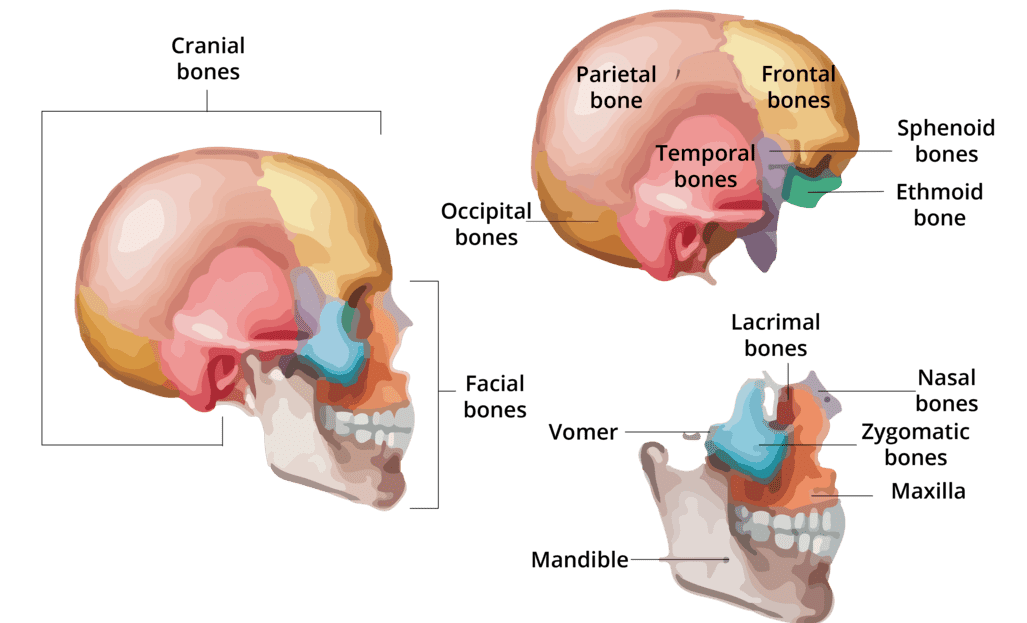
The skull is a bony structure that forms a protective cavity for the brain, provides the head with its shape, and is formed by 22 bones joined by fibrous joints called sutures. It consists of two main parts: the Cranium and the Face.

1. The Cranium (8 Bones)

The cranium is the bony box that houses and protects the brain.

Frontal Bone (1)

Forms the forehead and the superior part of the orbits.

Parietal Bones (2)

Form the superior and lateral walls of the cranium.

Temporal Bones (2)

Form the inferolateral aspects of the skull and parts of the cranial base; contain the organs of hearing.

Occipital Bone (1)

Forms the posterior wall and most of the base of the skull. The spinal cord passes through its foramen magnum.

Sphenoid Bone (1)

The central "keystone" bone of the cranium; articulates with all other cranial bones. Contains the sella turcica for the pituitary gland.

Ethmoid Bone (1)

Forms the anterior part of the cranial floor, the medial wall of the orbits, and the roof of the nasal cavity.

2. The Face (14 Bones)

These bones form the framework of the face, contain cavities for sensory organs, and provide attachment sites for facial muscles.

Mandible (1)

The lower jawbone; the largest and strongest bone of the face.

Maxillae (2)

The upper jawbones; they form the hard palate and hold the upper teeth.

Zygomatic Bones (2)

The cheekbones; they form the prominences of the cheeks.

Nasal Bones (2)

Form the bridge of the nose.

Lacrimal Bones (2)

Form part of the medial walls of the orbits; contain the lacrimal fossa for the tear ducts.

Palatine Bones (2)

Form the posterior part of the hard palate.

Vomer (1)

Forms the inferior part of the nasal septum.

Inferior Nasal Conchae (2)

Scroll-like bones forming part of the lateral walls of the nasal cavity.

B. The Vertebral Column (Spine)

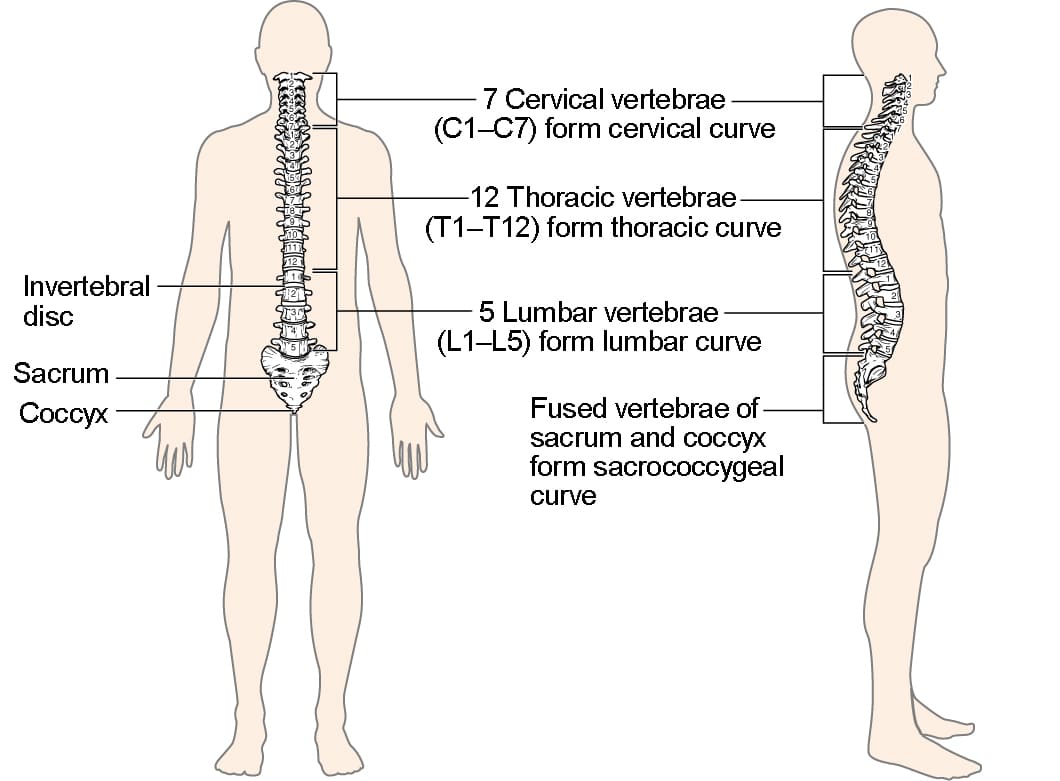
The vertebral column serves as the main support of the body, protects the spinal cord, and provides attachment points for the ribs and muscles. It is a flexible, curved structure composed of 26 irregular bones in adults.

Functions of the Vertebral Column:

  • Support: Transmits the weight of the head and trunk to the lower limbs.
  • Protection: Surrounds and protects the delicate spinal cord.
  • Movement: Provides attachment points for muscles, allowing trunk and neck movement.
  • Shock Absorption: Intervertebral discs act as shock absorbers.

Regions and Curvatures

The spine is divided into five regions and has four natural curves that increase its resilience.

Vertebral Regions

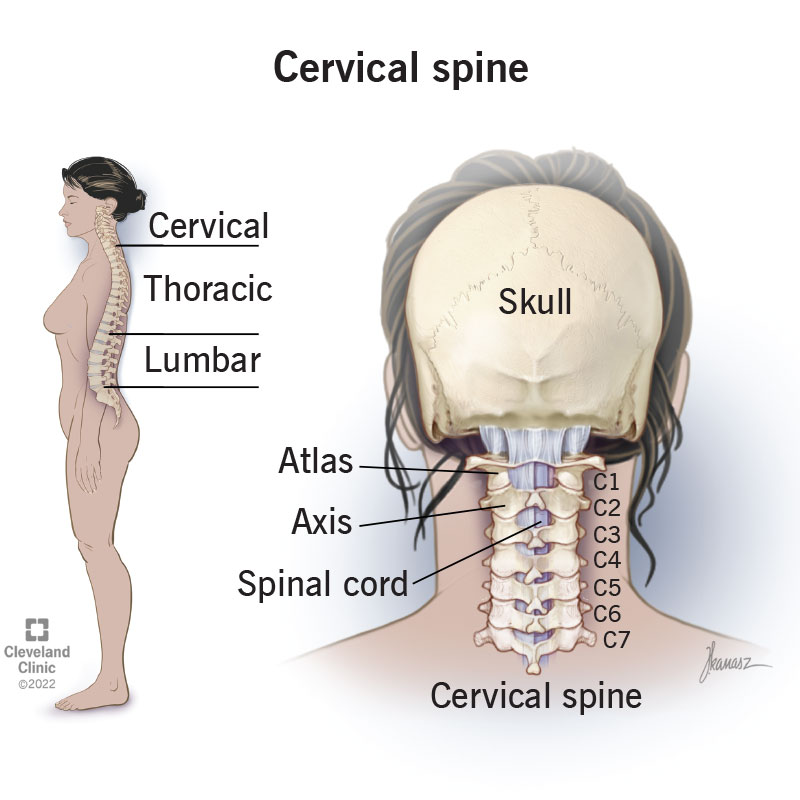
Cervical (C1-C7): 7 vertebrae in the neck.
Thoracic (T1-T12): 12 vertebrae in the chest.
Lumbar (L1-L5): 5 vertebrae in the lower back.
Sacrum: 1 bone (5 fused vertebrae).
Coccyx: 1 bone (3-5 fused vertebrae).

Spinal Curvatures

Cervical & Lumbar: Concave posteriorly (secondary curves).
Thoracic & Sacral: Convex posteriorly (primary curves).

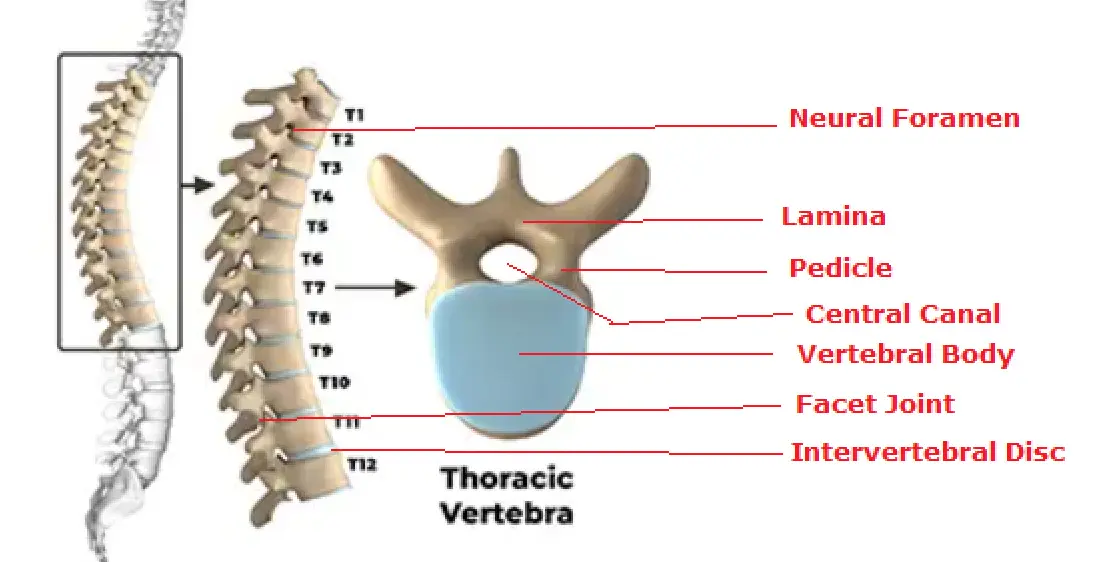
General Structure of a Vertebra

Most vertebrae share a common structural plan, consisting of a body, an arch, and various processes for muscle attachment and articulation.

  • Vertebral Body (Centrum): The anterior, weight-bearing part.
  • Vertebral Arch: Encloses the vertebral foramen, forming the vertebral canal for the spinal cord.
  • Processes: Projections (spinous, transverse, articular) that serve as attachment and articulation points.

Intervertebral Discs

Located between adjacent vertebrae, these discs act as shock absorbers. Each is composed of an inner gelatinous nucleus pulposus and an outer collar of fibrocartilage called the anulus fibrosus.

Regional Characteristics of Vertebrae

Cervical Vertebrae (C1-C7)

The smallest, lightest vertebrae. Their unique feature is the transverse foramina for vertebral arteries. C1 (Atlas) lacks a body and articulates with the skull ("yes" motion). C2 (Axis) has a dens that acts as a pivot for head rotation ("no" motion). Most have a bifid (split) spinous process.

Thoracic Vertebrae (T1-T12)

Distinguished by their articulation with the ribs via costal facets on the vertebral bodies and transverse processes. They have a heart-shaped body and a long, slender spinous process that points sharply downward.

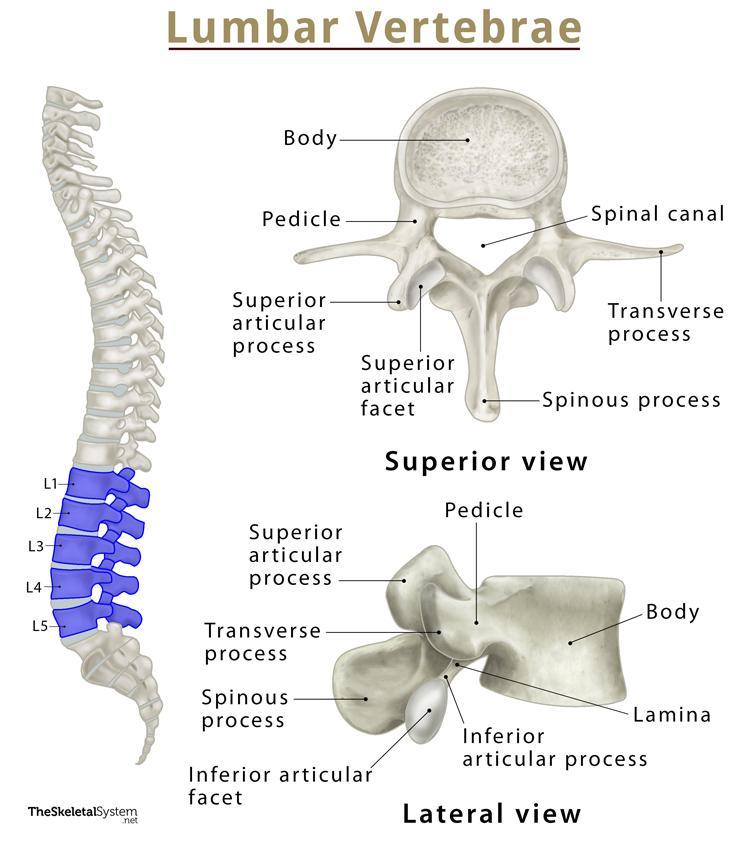
Lumbar Vertebrae (L1-L5)

The largest and strongest vertebrae, designed to bear the most body weight. They have a massive, kidney-shaped body and a short, thick, blunt spinous process that projects posteriorly.

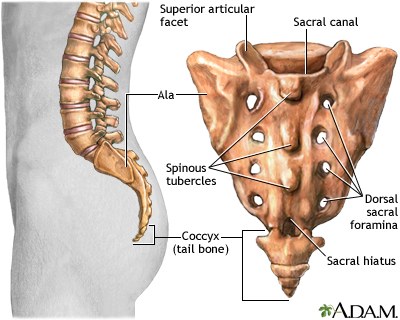
Sacrum and Coccyx

The Sacrum is a triangular bone formed by the fusion of 5 sacral vertebrae, forming the posterior wall of the pelvis. The Coccyx, or "tailbone," is a small triangular bone formed by the fusion of 3-5 coccygeal vertebrae.

C. The Thoracic Cage (Bony Thorax)

The thoracic cage forms the protective "rib cage" around the vital organs of the chest. It includes the sternum, ribs, and the twelve thoracic vertebrae.

Functions of the Thoracic Cage:

  • Protection: Encloses and protects the heart, lungs, and major blood vessels.
  • Support: Provides attachment points for the shoulder girdles and upper limbs.
  • Respiration: Its ability to expand is crucial for ventilation, and it provides attachment for respiratory muscles.

Bones of the Thoracic Cage

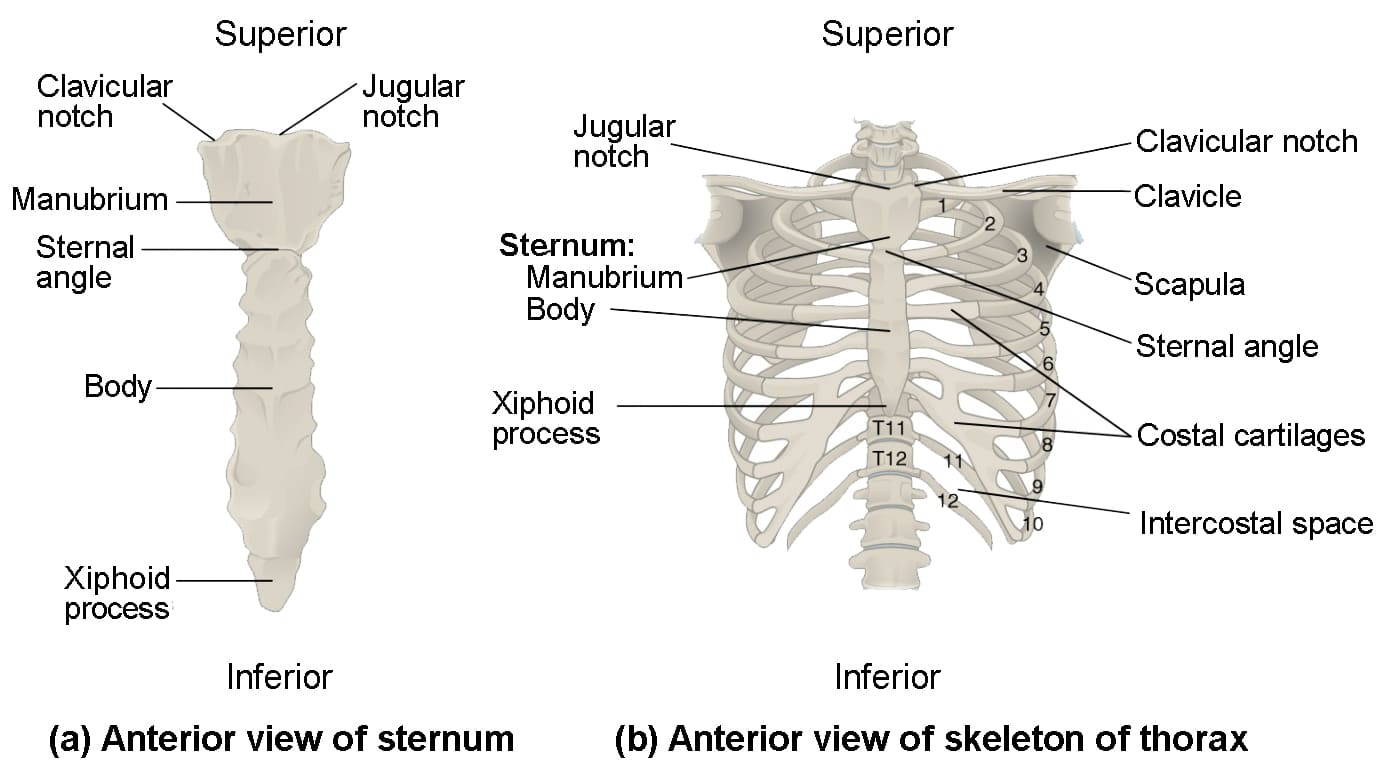
The Sternum (Breastbone)

A flat bone in the anterior midline of the thorax, composed of three fused parts:

  • Manubrium: The superior part, articulating with the clavicles and the first two pairs of ribs. Features the palpable jugular (suprasternal) notch.
  • Body (Gladiolus): The middle and largest part, articulating with ribs 2-7.
  • Xiphoid Process: The inferior-most, small projection that serves as an attachment point for some abdominal muscles.

The Ribs (12 pairs)

All ribs attach posteriorly to the thoracic vertebrae and generally curve inferiorly and anteriorly.

Types of Ribs (Based on Sternal Attachment)

  • True Ribs (Pairs 1-7): Attach directly to the sternum via their own individual costal cartilages.
  • False Ribs (Pairs 8-12):
    • Pairs 8-10: Attach indirectly to the sternum by joining the costal cartilage of the rib above.
    • Pairs 11-12 (Floating Ribs): Have no anterior attachment at all.

General Structure of a Rib

A typical rib consists of several key parts:

  • Head: The posterior end, which articulates with the body of one or two thoracic vertebrae.
  • Neck: The constricted region just lateral to the head.
  • Tubercle: A knob-like projection that articulates with the transverse process of the corresponding vertebra.
  • Shaft (Body): The main, curved portion of the rib.
  • Costal Groove: A groove on the inferior border that protects the intercostal nerve and blood vessels.
  • Costal Cartilage: The hyaline cartilage that connects the anterior end of the rib to the sternum.

Thoracic Vertebrae (T1-T12)

As previously discussed, these 12 vertebrae form the posterior boundary of the thoracic cage and provide the crucial articulation sites for all 12 pairs of ribs via their costal facets.

The Appendicular Skeleton


A. The Pectoral (Shoulder) Girdle

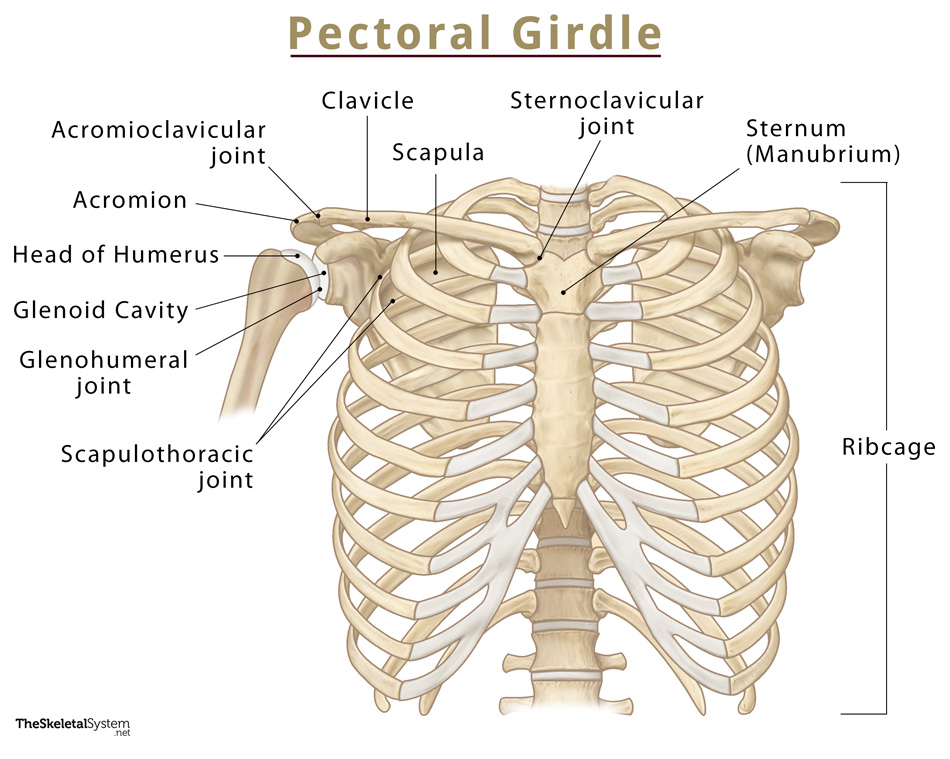
The pectoral girdle consists of two bones on each side of the body: the clavicle (collarbone) and the scapula (shoulder blade). These bones attach the upper limbs to the axial skeleton and provide attachment points for many muscles that move the upper limbs.

Functions of the Pectoral Girdle:

  • Attachment: Connects the upper limb to the axial skeleton at the sternoclavicular joint (the only bony attachment).
  • Mobility: Allows for a wide range of arm motion due to its loose attachment and the shallow glenoid cavity.
  • Muscle Attachment: Provides sites for numerous muscles that move the shoulder and arm.

Bones of the Pectoral Girdle

The Clavicle (Collarbone)

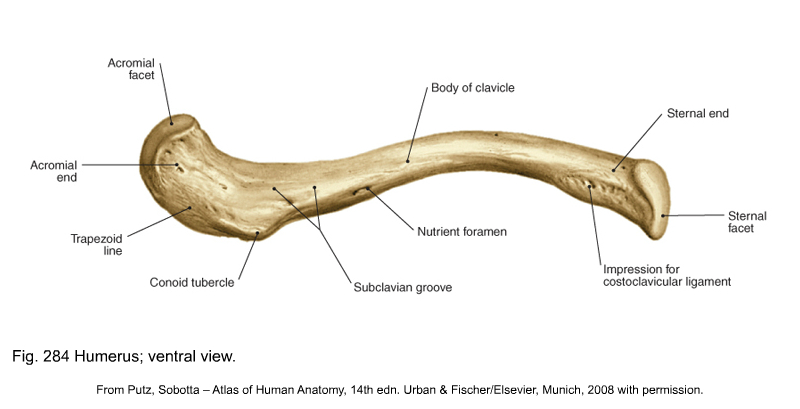
A slender, S-shaped bone that lies horizontally across the superior thorax. It acts as a brace, holding the scapula and arm away from the trunk, and transmits force from the upper limb to the axial skeleton.

  • Sternal (medial) end: Articulates with the manubrium of the sternum, forming the sternoclavicular joint.
  • Acromial (lateral) end: Articulates with the acromion of the scapula, forming the acromioclavicular joint.
Clinical Note: The clavicle is one of the most frequently fractured bones in the body, often due to falling on an outstretched arm.

The Scapula (Shoulder Blade)

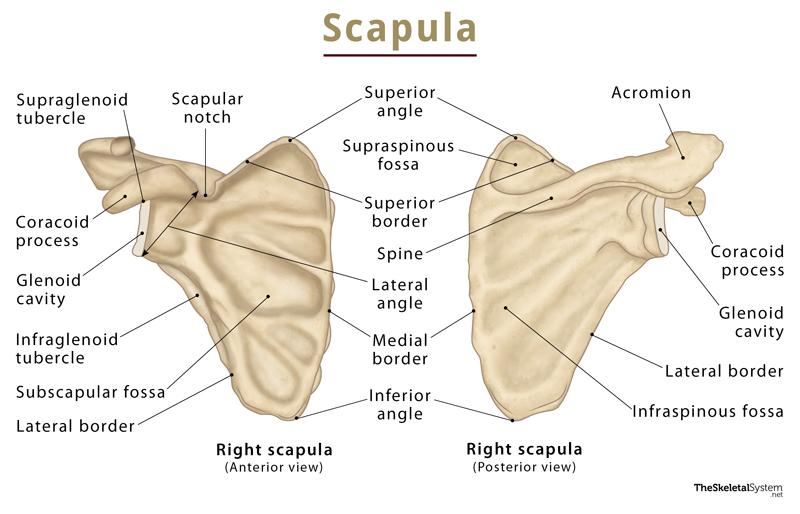
A thin, triangular flat bone on the posterior aspect of the rib cage. Its key features are crucial for muscle attachment and forming the shoulder joint.

Spine & Acromion

The Spine is a prominent posterior ridge that ends laterally in the Acromion, the palpable bony tip of the shoulder which articulates with the clavicle.

Glenoid Cavity (Fossa)

A shallow, pear-shaped depression on the lateral angle that articulates with the head of the humerus to form the highly mobile (but unstable) glenohumeral (shoulder) joint.

Coracoid Process

A hook-like process projecting anteriorly, serving as an attachment point for muscles and ligaments.

Fossae

Depressions for muscle attachment: the Supraspinous and Infraspinous Fossae (posterior), and the Subscapular Fossa (anterior).

B. The Upper Limbs

Each upper limb consists of 30 bones, specifically designed for mobility and manipulation. They are divided into three main segments: the arm, forearm, and hand.

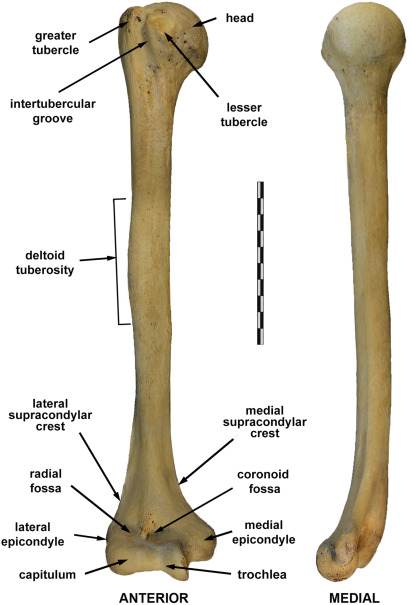
1. The Arm (Brachium): Humerus

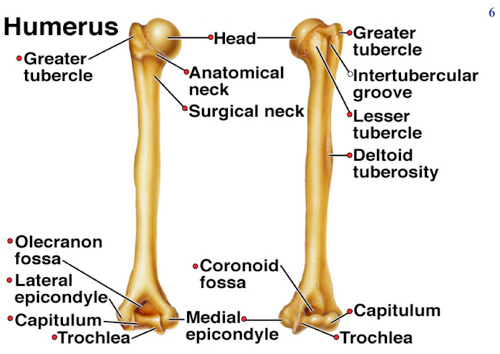
The humerus is the single bone of the arm, extending from the shoulder to the elbow. It is the longest and largest bone of the upper limb.

Key Features of the Humerus:

  • Proximal End: Features the smooth Head (for the shoulder joint), the Greater and Lesser Tubercles for rotator cuff muscle attachment, and the Surgical Neck, a common fracture site.
  • Shaft: Includes the Deltoid Tuberosity for deltoid muscle attachment and the posterior Radial Groove for the radial nerve.
  • Distal End: Forms the elbow joint with the medial Trochlea (articulating with the ulna) and the lateral Capitulum (articulating with the radius). It also features the prominent Medial and Lateral Epicondyles and three fossae (Olecranon, Coronoid, Radial) that accommodate processes of the forearm bones during movement.

2. The Forearm (Antebrachium): Radius and Ulna

The forearm is formed by two parallel bones that allow for pronation and supination. They are connected by an Interosseous Membrane.

Ulna (Medial Bone)

The main bone forming the elbow joint. Its proximal end features the hook-like Olecranon Process (the "point" of the elbow) and the Coronoid Process, which together form the Trochlear Notch to grip the humerus. The distal end is small and features the Head and a pointed Styloid Process.

Radius (Lateral Bone)

The primary bone of the wrist joint. Its proximal end features a flat, disc-shaped Head that allows rotation against the humerus and ulna. The Radial Tuberosity serves as the attachment for the biceps brachii. The distal end is broad and features a pointed Styloid Process on the thumb side.

3. The Hand (Manus)

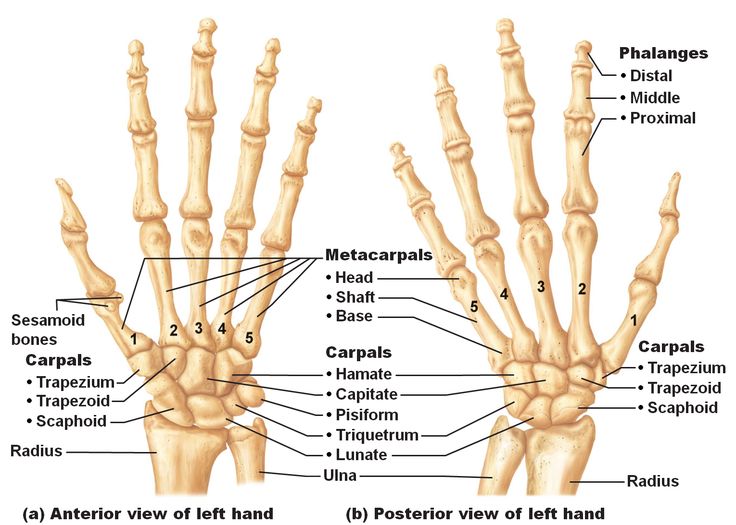
Each hand contains 27 bones adapted for dexterity and grip, divided into the carpals (wrist), metacarpals (palm), and phalanges (fingers).

a. Carpal Bones (8 Wrist Bones)

Eight small bones arranged in two rows that provide flexibility to the wrist.

  • Proximal Row (lateral to medial): Scaphoid, Lunate, Triquetrum, Pisiform.
  • Distal Row (lateral to medial): Trapezium, Trapezoid, Capitate, Hamate.
Mnemonic: "Some Lovers Try Positions That They Can't Handle" helps remember the carpal bones in order.

b. Metacarpal Bones (5 Palm Bones)

Five long bones that form the palm, numbered I to V from the thumb to the pinky finger. Their distal heads form the knuckles.

c. Phalanges (14 Finger Bones)

The bones of the digits.

  • Thumb (Digit I): Has two phalanges (proximal and distal).
  • Fingers (Digits II-V): Each has three phalanges (proximal, middle, and distal).

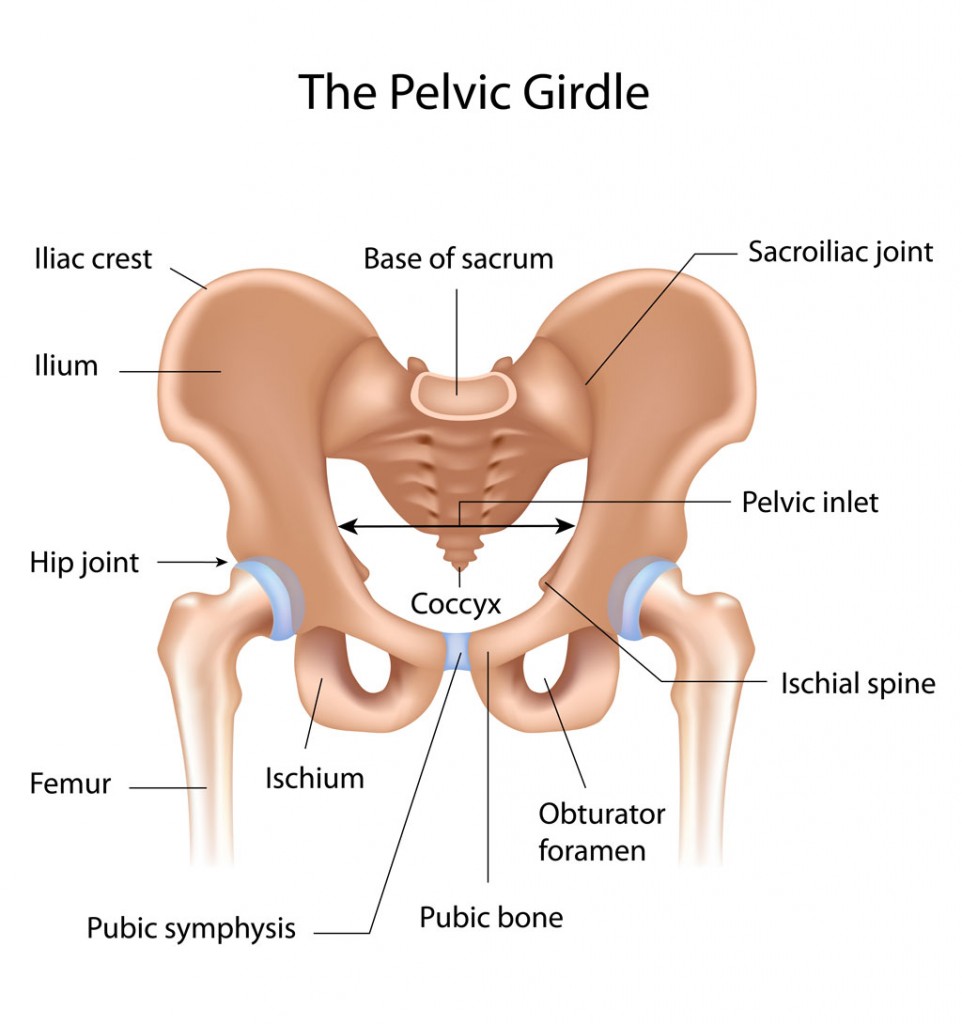
C. The Pelvic Girdle (Hip Girdle)

The pelvic girdle is a robust, basin-shaped structure formed by two ossa coxae (hip bones), which articulate with the sacrum posteriorly.

Functions of the Pelvic Girdle:

  • Support: Transmits the weight of the upper body to the lower limbs.
  • Protection: Encloses and protects the pelvic organs (bladder, reproductive organs, etc.).
  • Attachment: Provides strong attachment points for muscles of the lower limbs and trunk.
  • Articulation: Forms the hip joints by articulating with the heads of the femurs.

Bones of the Pelvic Girdle: The Os Coxa

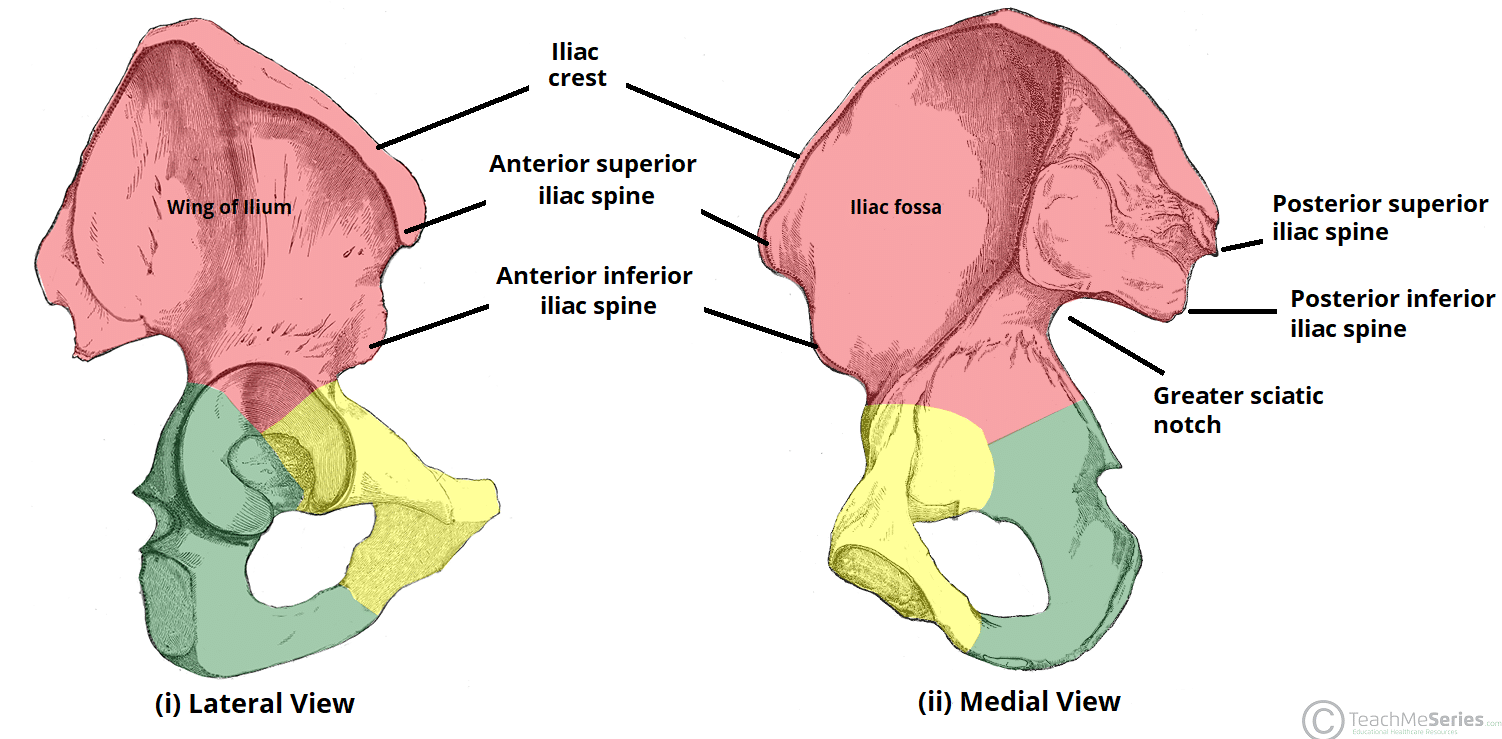
Each os coxa (hip bone) is a large, irregularly shaped bone formed by the fusion of three separate bones during adolescence: the ilium, ischium, and pubis. These three bones meet and fuse at the acetabulum, a deep, cup-shaped socket that articulates with the head of the femur.

a. Ilium

The largest and most superior part, forming the upper flank.

  • Iliac Crest: The palpable superior border (the "hip bone").
  • ASIS & PSIS: Anterior and Posterior Superior Iliac Spines, important anatomical landmarks.
  • Greater Sciatic Notch: A large indentation for the sciatic nerve.
  • Auricular Surface: Articulates with the sacrum to form the sacroiliac joint.

b. Ischium

Forms the posteroinferior part of the os coxa.

  • Ischial Tuberosity: The large, roughened projection that supports body weight when sitting (the "sit bones").
  • Ischial Spine: A sharp, pointed projection superior to the tuberosity.

c. Pubis

Forms the anteroinferior part of the os coxa.

  • Pubic Symphysis: The fibrocartilaginous joint where the two pubic bones meet anteriorly.
  • Pubic Arch: The angle formed by the inferior pubic rami, which differs between males and females.

Features of the Pelvis as a Whole

  • Acetabulum: The deep, cup-shaped socket on the lateral surface of the os coxa where the ilium, ischium, and pubis fuse. It articulates with the head of the femur to form the hip joint.
  • Obturator Foramen: A large opening inferior to the acetabulum, formed by the ischium and pubis, which is mostly closed by a membrane but allows passage for nerves and blood vessels.
  • Pelvic Brim (Inlet): The boundary that separates the superior Greater (False) Pelvis from the inferior Lesser (True) Pelvis, which contains the pelvic organs.

D. The Lower Limbs

Each lower limb consists of 30 bones, specifically adapted for weight-bearing, locomotion, and maintaining balance. They are generally larger and stronger than the bones of the upper limbs and are divided into three main segments: the thigh, leg, and foot.

1. The Thigh: Femur and Patella

a. Femur (Thigh Bone)

The single bone of the thigh, extending from the hip to the knee. It is the longest, strongest, and heaviest bone in the body.

Key Features of the Femur:
  • Proximal End: Features the spherical Head (with its Fovea Capitis) for the hip joint, the constricted Neck (a common fracture site), and the large Greater and Lesser Trochanters for muscle attachment.
  • Shaft: Includes the prominent posterior ridge, the Linea Aspera, for attachment of many thigh muscles.
  • Distal End: Forms the knee joint with the large Medial and Lateral Condyles. Also features the Medial and Lateral Epicondyles for ligament attachment and the anterior Patellar Surface where the kneecap glides.

b. Patella (Kneecap)

A small, triangular-shaped sesamoid bone located anterior to the knee joint. It protects the joint and increases the leverage of the quadriceps femoris muscle.

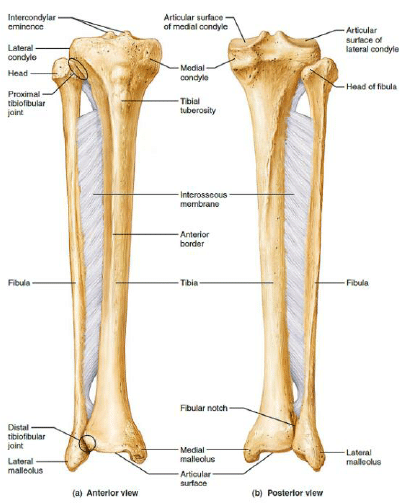
2. The Leg: Tibia and Fibula

The leg is formed by two parallel bones connected by an Interosseous Membrane.

a. Tibia (Shin Bone)

The larger, medial, and primary weight-bearing bone of the leg. Its proximal end has flat Medial and Lateral Condyles to articulate with the femur. The anterior Tibial Tuberosity is the attachment site for the patellar ligament. The distal end forms the inner ankle bone, the Medial Malleolus.

b. Fibula (Lateral Bone)

The smaller, lateral bone that does not bear significant weight but serves for muscle attachment and ankle stability. The proximal Head articulates with the tibia. The distal end forms the outer ankle bone, the Lateral Malleolus, which provides important lateral stability to the ankle joint.

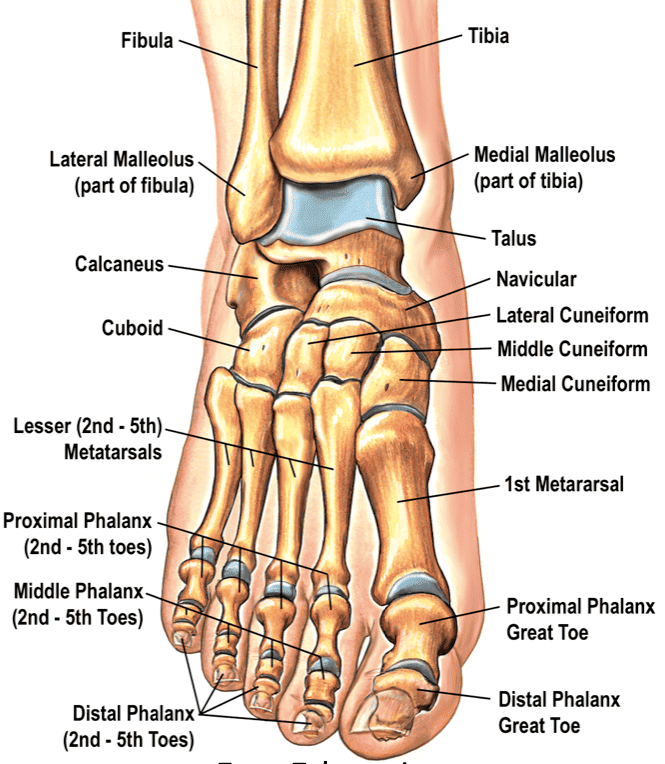
3. The Foot

Each foot contains 26 bones designed for supporting body weight and providing balance, divided into the tarsals (ankle), metatarsals (midfoot), and phalanges (toes).

a. Tarsal Bones (7 Ankle Bones)

Seven irregularly shaped bones that form the posterior half of the foot. Key tarsals include:

  • Talus: The uppermost tarsal, forming the ankle joint with the tibia and fibula. It receives the entire weight of the body.
  • Calcaneus: The largest tarsal, forming the heel. It is the primary weight-bearing bone during standing and provides attachment for the Achilles tendon.
  • Others: Navicular, Cuboid, and three Cuneiforms (Medial, Intermediate, Lateral).

b. Metatarsal Bones (5 Midfoot Bones)

Five long bones that form the midfoot, numbered I to V from the big toe to the pinky toe. They contribute to the arches of the foot.

c. Phalanges (14 Toe Bones)

The bones of the digits.

  • Big Toe (Digit I / Hallux): Has two phalanges (proximal and distal).
  • Other Toes (Digits II-V): Each has three phalanges (proximal, middle, and distal).

d. Arches of the Foot

The bones of the foot form three natural arches (two longitudinal, one transverse) that are supported by ligaments and tendons. They are crucial for shock absorption, providing springiness for locomotion, and adapting to uneven surfaces.

Test Your Knowledge

Check your understanding of the Appendicular & Axial Skeleton.

1. Which of the following bones is part of the axial skeleton?

  • Scapula
  • Patella
  • Sacrum
  • Radius

Correct (c): The axial skeleton includes the skull, vertebral column (which contains the sacrum), and thoracic cage.

Incorrect (a): The Scapula is part of the pectoral girdle, thus appendicular.

Incorrect (b): The Patella is part of the lower limb, thus appendicular.

Incorrect (d): The Radius is part of the upper limb, thus appendicular.

2. The "true ribs" are so named because they:

  • Attach directly to the sternum via their own costal cartilages.
  • Do not attach to the sternum at all.
  • Attach indirectly to the sternum.
  • Are the longest ribs in the thoracic cage.

Correct (a): True ribs (pairs 1-7) have their own costal cartilages that connect directly to the sternum.

Incorrect (b): This describes floating ribs.

Incorrect (c): This describes false ribs (pairs 8-10).

Incorrect (d): While some true ribs are long, this is not the defining characteristic of a "true rib."

3. Which of the following is a component of the pectoral girdle?

  • Ischium
  • Sternum
  • Clavicle
  • Humerus

Correct (c): The pectoral girdle consists of the clavicle and the scapula, connecting the upper limb to the axial skeleton.

Incorrect (a): The Ischium is part of the pelvic girdle.

Incorrect (b): The Sternum is part of the axial skeleton (thoracic cage).

Incorrect (d): The Humerus is the bone of the upper arm, part of the upper limb itself, not the girdle.

4. The bone that forms the sole bone of the upper arm is the:

  • Ulna
  • Radius
  • Humerus
  • Femur

Correct (c): The humerus is the single long bone of the upper arm.

Incorrect (a): The Ulna is one of the two bones of the forearm.

Incorrect (b): The Radius is one of the two bones of the forearm.

Incorrect (d): The Femur is the bone of the thigh.

5. Which carpal bone is often fractured and articulates with the radius?

  • Pisiform
  • Hamate
  • Scaphoid
  • Lunate

Correct (c): The scaphoid is a boat-shaped carpal bone in the proximal row that articulates with the radius and is commonly fractured.

Incorrect (a): The Pisiform is a pea-shaped sesamoid bone, and does not directly articulate with the radius as a primary weight-bearer.

Incorrect (b): The Hamate is in the distal row of carpals.

Incorrect (d): The Lunate also articulates with the radius but is less frequently fractured than the scaphoid.

6. The large, basin-shaped structure formed by the two ossa coxae and the sacrum is called the:

  • Pectoral girdle
  • Thoracic cage
  • Vertebral column
  • Pelvic girdle

Correct (d): The pelvic girdle is formed by the two os coxae (hip bones) and the sacrum, forming a basin-like structure.

Incorrect (a): The Pectoral girdle is formed by the clavicle and scapula.

Incorrect (b): The Thoracic cage is formed by ribs, sternum, and thoracic vertebrae.

Incorrect (c): The Vertebral column is the spine itself.

7. The longest, strongest, and heaviest bone in the human body is the:

  • Tibia
  • Humerus
  • Femur
  • Fibula

Correct (c): The femur, or thigh bone, is renowned for these characteristics, supporting the body's entire weight.

Incorrect (a): The Tibia is the larger bone of the lower leg, but not as long or strong as the femur.

Incorrect (b): The Humerus is the upper arm bone, smaller than the femur.

Incorrect (d): The Fibula is the slender, non-weight-bearing bone of the lower leg.

8. Which part of the os coxa bears your weight when you are sitting?

  • Iliac crest
  • Ischial tuberosity
  • Pubic symphysis
  • Acetabulum

Correct (b): The ischial tuberosities are large, roughened projections on the inferior part of the ischium, specifically designed to support the body's weight in a seated position.

Incorrect (a): The Iliac crest is the superior border of the ilium, forming the "hip bone" you feel.

Incorrect (c): The Pubic symphysis is the anterior joint between the two pubic bones.

Incorrect (d): The Acetabulum is the socket for the head of the femur, involved in standing/walking.

9. How many phalanges are typically found in the big toe (hallux)?

  • One
  • Two
  • Three
  • Four

Correct (b): The big toe (hallux) has a proximal and a distal phalanx, just like the thumb.

Incorrect (a): This is too few.

Incorrect (c): This is the number for digits II-V of both fingers and toes.

Incorrect (d): This is too many.

10. Which of the following bones is NOT directly involved in forming the ankle joint with the talus?

  • Tibia
  • Fibula
  • Calcaneus
  • Medial malleolus

Correct (c): The ankle joint is formed by the articulation of the talus with the tibia and fibula. The calcaneus is below the talus and forms the subtalar joint.

Incorrect (a): The Tibia's distal end is a primary component of the ankle joint.

Incorrect (b): The Fibula's lateral malleolus is a primary component of the ankle joint.

Incorrect (d): The Medial malleolus is a part of the tibia that forms the inner boundary of the ankle joint.

11. The vertebral column consists of 7 cervical, 12 thoracic, and 5 __________ vertebrae.

Rationale: The five sections of the vertebral column are cervical, thoracic, lumbar, sacral (fused into the sacrum), and coccygeal (fused into the coccyx).

12. The depression on the distal end of the humerus that accommodates the olecranon process of the ulna is the __________.

Rationale: The olecranon fossa is a key anatomical feature of the distal humerus, forming the posterior part of the elbow joint and allowing full extension.

13. The medial bone of the forearm, which forms the "point" of the elbow, is the __________.

Rationale: The ulna is the medial bone of the forearm, and its olecranon process forms the prominent "point" of the elbow.

14. The large, roughened projection on the proximal end of the radius that serves as the attachment site for the biceps brachii is the __________.

Rationale: The radial tuberosity is a distinct feature on the radius crucial for the powerful flexion of the forearm by the biceps brachii.

15. The heel bone, which is the largest and strongest tarsal bone, is the __________.

Rationale: The calcaneus is the major weight-bearing bone of the heel and the largest of the tarsal bones, providing strong support for the foot.
Introduction to Musculoskeletal System Anatomy (1)

Introduction to Musculoskeletal System Anatomy

Musculoskeletal System Anatomy: The Supporters.

Introduction to the Musculoskeletal System

The Human Skeletal system is the body system composed of bones, cartilage, tendons, and ligaments and other tissues that perform essential functions for the human body. Altogether, the skeleton makes up about 20% of a person's body weight.

Components of the Musculoskeletal System

1. Bones

The rigid organs that form the body's structural framework. The human skeleton is composed of around 270 bones at birth, The adult human skeleton is composed of about 206 bones, which are made of specialized connective tissue with a mineralized matrix.

2. Cartilage

A soft, gel-like connective tissue that protects joints, facilitates smooth movement, and provides flexible support in areas like the nose, ears, and trachea.

3. Ligaments

Strong, tough bands of elastic connective tissue that connect bone to bone. They support and strengthen joints, limiting their movement to prevent injury. The body has approximately 900 ligaments.

4. Tendons

Strong, fibrous bands of connective tissue that attach muscle to bone. They transmit the force generated by muscle contractions to produce movement. The body has approximately 4,000 tendons.

5. Muscles (Skeletal)

Specialized contractile tissue attached to bones via tendons. Their voluntary contraction generates the force required for all conscious movement. The body has about 650 skeletal muscles.

Functions of the Musculoskeletal System

The coordinated action of these components provides the body with several critical functions.

Support

The skeleton forms the rigid internal framework that supports the body's weight and provides its shape.

Movement

Bones act as levers and muscles provide the force, allowing for locomotion and manipulation.

Protection

The skeleton safeguards vital internal organs (e.g., skull protects the brain, rib cage protects heart and lungs).

Mineral Storage

Bones act as a critical reservoir for essential minerals like calcium and phosphate.

Hematopoiesis

Red bone marrow, found within certain bones, is responsible for producing all blood cells.

Fat Storage

Yellow bone marrow stores triglycerides (fat) as a source of energy.

The Structure of Bone

Bones are the basic unit of the human skeleton. Far from being static, they are highly vascular, living tissues that are continuously remodeled throughout life. A bone is a rigid organ that protects internal organs, produces blood cells, stores minerals, provides structural support, and enables mobility. It is composed chiefly of calcium phosphate and calcium carbonate, serving as a critical reservoir for calcium.

Composition of Bone

Bone tissue is a composite material, made of both organic and inorganic components that give it its unique properties.

Organic Components (~35%)

Composed of osteoid (unmineralized matrix), which includes Type I collagen fibers and ground substance.

FUNCTION: Provides flexibility and tensile strength (resistance to twisting and pulling).

Inorganic Components (~65%)

Primarily hydroxyapatite (a complex of calcium phosphate) and other mineral salts like magnesium and fluoride.

FUNCTION: Provides hardness and resistance to compression.

Types of Bone Tissue: Compact vs. Spongy

Bone has two main structural types, each with a distinct organization and function.

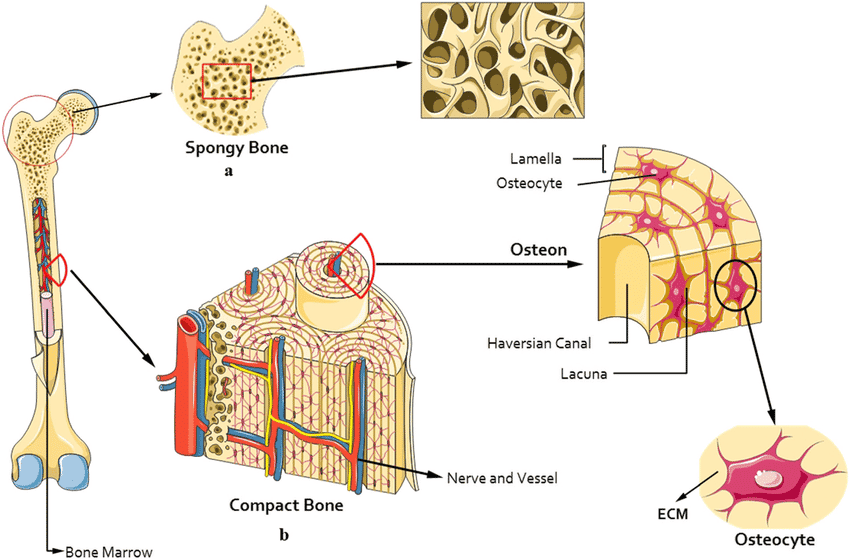
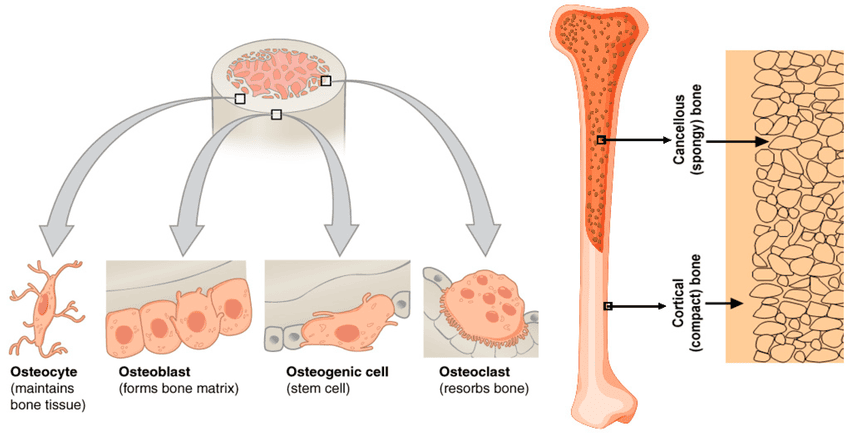
Compact Bone (Cortical Bone)

A dense, solid outer layer organized into repeating structural units called osteons (Haversian systems). Each osteon is a cylinder of concentric rings (lamellae) around a central Haversian canal, which contains blood vessels and nerves. This structure provides immense strength and protection, forming the outer layer of all bones and the shaft of long bones.

Spongy Bone (Cancellous Bone)

An internal, lightweight tissue that lacks osteons. It consists of an irregular latticework of thin columns of bone called trabeculae. The spaces between the trabeculae are filled with red bone marrow, the site of hematopoiesis. This structure provides strength without excessive weight and is found in the ends of long bones and in flat bones.

The Four Types of Bone Cells

Bone is a dynamic tissue maintained by four specialized cell types.

Osteogenic Cells

Function: Mesenchymal stem cells that divide and differentiate into osteoblasts. Crucial for bone growth and repair.

Osteoblasts

Function: Bone-building cells. They synthesize and secrete the organic osteoid matrix and initiate its calcification.

Osteocytes

Function: Mature, bone-maintaining cells trapped within the matrix. They act as mechanosensors, signaling for remodeling.

Osteoclasts

Function: Bone-resorbing cells. They break down bone matrix, which is essential for remodeling and releasing minerals into the blood.

The Gross Anatomy of Bone

Now that we've explored bone at the microscopic level, let's examine its larger, more observable features, including its classification, overall structure, and the critical bone markings that indicate interaction points with other body structures.

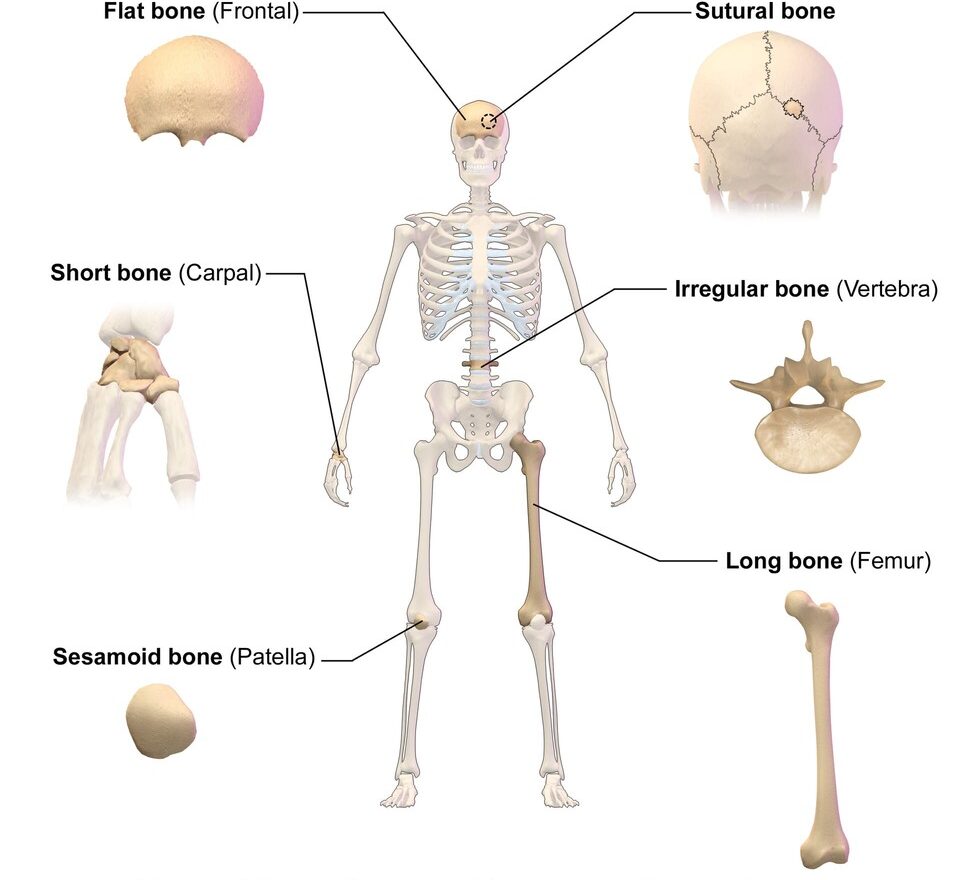
A. Classification of Bones by Shape

Long Bones

Longer than they are wide; act as levers for movement. (e.g., Femur, Humerus, Phalanges)

Short Bones

Cube-shaped; provide stability. (e.g., Carpals, Tarsals)

Flat Bones

Thin, flattened, and often curved; provide protection. (e.g., Cranial bones, Sternum, Ribs)

Irregular Bones

Complex and varied shapes. (e.g., Vertebrae, Hip bones)

Sesamoid Bones

Small bones embedded within tendons; protect tendons from stress. (e.g., Patella)

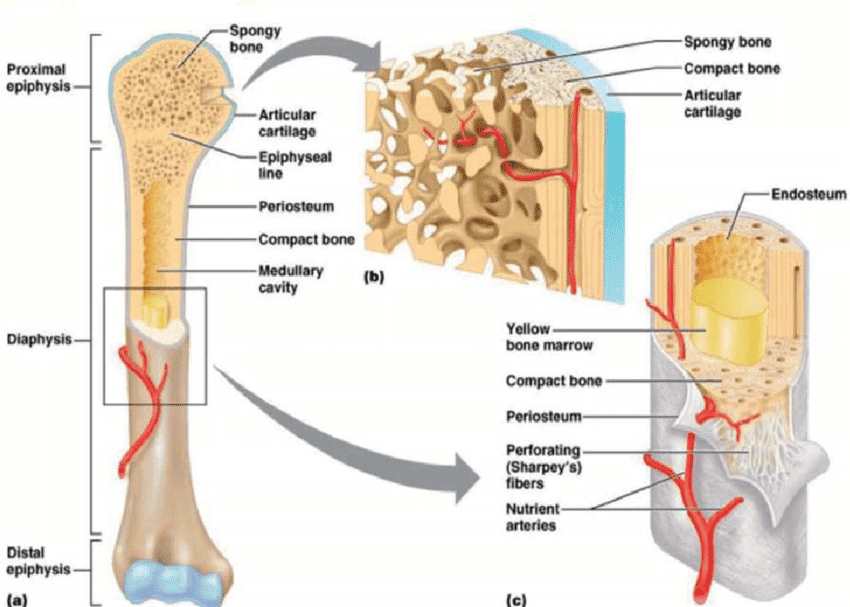
B. Structure of a Long Bone

Diaphysis

The main, cylindrical shaft of the bone, composed of compact bone surrounding the medullary cavity.

Epiphysis

The expanded ends of a long bone, consisting mostly of spongy bone.

Metaphysis

The region where the diaphysis and epiphysis meet. Contains the epiphyseal (growth) plate.

Articular Cartilage

A thin layer of hyaline cartilage covering the epiphysis at a joint to reduce friction.

Periosteum & Endosteum

The periosteum is the tough outer membrane, while the endosteum is the thin inner lining of the medullary cavity.

C. Bone Markings (Surface Features)

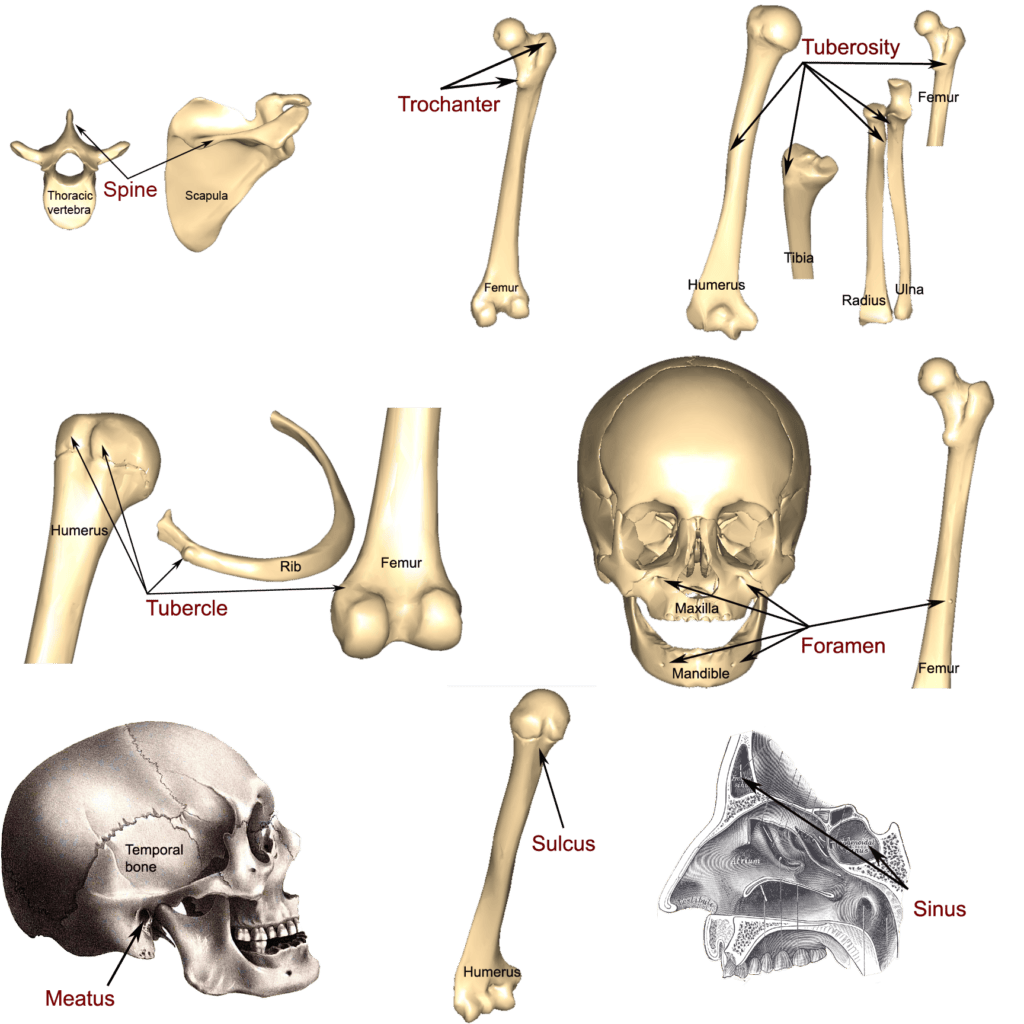
Bone markings are characteristic projections, depressions, and openings on bone surfaces that serve as points of articulation, attachment for muscles and ligaments, or passageways for nerves and blood vessels.

1. Projections (Features that Bulge Outward)

MarkingDescriptionExample
HeadProminent, rounded articular surfaceHead of femur, Head of humerus
CondyleRounded articular projectionFemoral condyles
EpicondyleRaised area above a condyleMedial epicondyle of humerus
ProcessAny bony prominenceMastoid process
SpineSharp, slender projectionIschial spine
TubercleSmall, rounded projectionTubercle of humerus
TuberosityLarge, rounded, roughened projectionDeltoid tuberosity
TrochanterVery large, blunt process (only on femur)Greater trochanter
CrestNarrow, prominent ridge of boneIliac crest
LineSlight, elongated ridgeTemporal lines
RamusArm-like bar of boneRamus of mandible

2. Depressions and Openings (Indentations or Holes)

MarkingDescriptionExample
FossaShallow, basin-like depressionMandibular fossa
FoveaSmall pitFovea capitis
Sulcus (Groove)A channel-like depressionIntertubercular sulcus
ForamenRound or oval hole through boneForamen magnum
MeatusCanal-like passagewayExternal auditory meatus
FissureNarrow, slit-like openingSuperior orbital fissure
SinusAir-filled cavity within a boneParanasal sinuses
FacetSmooth, nearly flat articular surfaceArticular facets of vertebrae

Bone Formation (Ossification)

Ossification, also known as osteogenesis, is the remarkable biological process of creating new bone tissue. All bone tissue originates from mesenchyme, a specialized embryonic connective tissue derived from the mesoderm. Mesenchymal stem cells can differentiate into both chondroblasts (cartilage-formers) and osteoblasts (bone-builders).

The Two Strategies for Bone Formation

The body employs two distinct methods to construct the skeleton, differing in their initial steps.

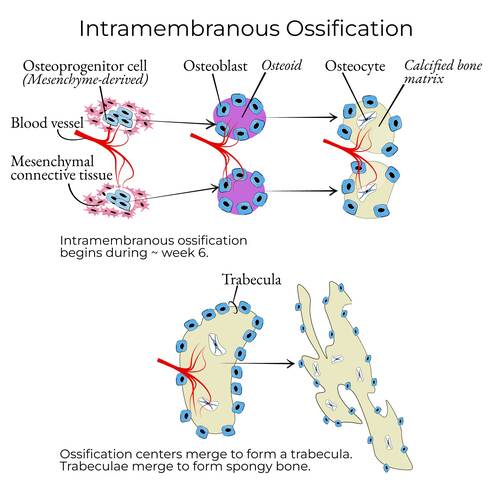
1. Intramembranous Ossification

Process: The simpler, more direct method where bone is formed directly within a sheet or "membrane" of mesenchymal tissue. No cartilage template is used.

Forms: Primarily the flat bones of the skull and face, and parts of the clavicle.

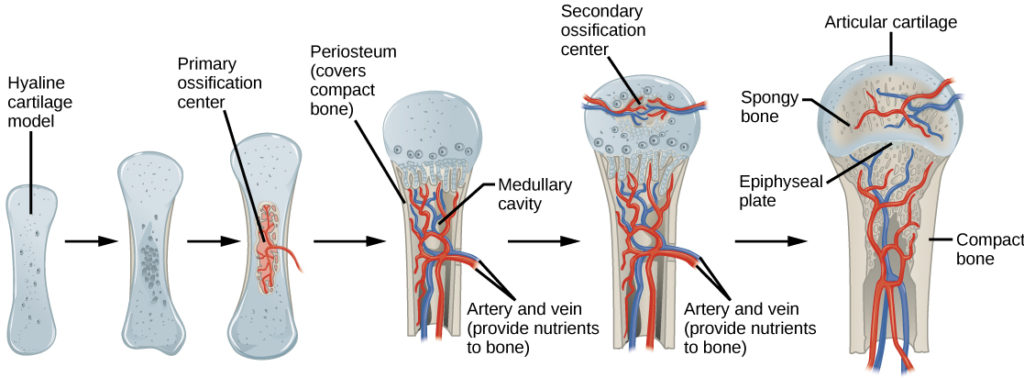
2. Endochondral Ossification

Process: A more complex, indirect method. A model made of hyaline cartilage is created first, which then serves as a scaffold that is systematically replaced by bone tissue.

Forms: Almost all other bones, including long bones, vertebrae, and ribs.

Intramembranous Ossification: A Step-by-Step Guide

This process occurs during fetal development and continues into infancy, forming the flat bones of the skull.

Step 1: Mesenchymal Cells Condense

In the precise location where a new bone is needed, mesenchymal stem cells begin to cluster closely together, signaling the start of bone formation.

"First, all the mesenchymal stem cells get a text message: 'Party at the skull-in-progress! Be there!' So they all cluster together in one spot."

Step 2: Differentiation and Osteoid Secretion

These clustered cells transform into osteoblasts, forming an ossification center. They immediately begin secreting osteoid, the unmineralized, organic matrix (mostly collagen) that acts as the soft framework for the bone.

"These cells change jobs. They become our bone-builders, the Osteoblasts. And what do they do? They start secreting this gooey stuff called osteoid. Think of it as the rebar and mesh before you pour the concrete."

Step 3: Calcification and Trapping of Osteocytes

Calcium salts are deposited into the osteoid, making it hard and rigid (calcification). Some osteoblasts become completely surrounded by the calcified matrix, getting trapped in small spaces called lacunae. Once trapped, they mature into osteocytes, which maintain the bone tissue.

"Now the concrete truck arrives! Calcium hardens that osteoid. Some of the osteoblast workers are a bit slow and get trapped in their own concrete! They just change jobs again and become Osteocytes—the site managers."

Step 4: Formation of Spongy Bone

The ossification process radiates outward, forming tiny, interconnected rods of bone called trabeculae. This creates the characteristic structure of spongy (cancellous) bone. Blood vessels weave through the spaces, and the remaining mesenchymal cells in these spaces differentiate into red bone marrow.

"This process keeps spreading out, creating a network of tiny bone struts called trabeculae. It looks like a sponge, which is why we call it spongy bone. Blood vessels sneak into the gaps, and the leftover mesenchyme turns into red bone marrow."

Step 5: Formation of Compact Bone and Periosteum

The surrounding mesenchyme condenses to form the periosteum, a protective outer membrane. The spongy bone just deep to the periosteum is then remodeled into a dense, strong layer of compact bone, creating a "sandwich" structure with spongy bone in the middle.

"Finally, the mesenchyme on the outside forms a tough wrapper called the periosteum. The spongy bone right underneath gets remodeled into super-dense compact bone. So you end up with a bone sandwich: two layers of hard compact bone with a spongy, marrow-filled center."

Endochondral Ossification: Building on a Cartilage Model

This more intricate process is responsible for the formation and longitudinal growth of most bones in the body, particularly the long bones. It uses a hyaline cartilage model as a precursor.

Step 1: The Hyaline Cartilage Model is Formed

Mesenchymal cells differentiate into chondroblasts, which produce a miniature, scaled-down model of the future bone made entirely of hyaline cartilage, surrounded by a perichondrium.

"First, the body makes a perfect, wobbly model of the bone out of hyaline cartilage. It’s the exact shape of the final bone, just… squishier."

Step 2: Hypertrophy and Calcification in the Center

In the center of the diaphysis, chondrocytes swell (hypertrophy) and cause the surrounding cartilage matrix to calcify, making it rigid.

"The cartilage cells right in the middle of the shaft get big and swollen. They get so big they make the area around them hard and chalky. It calcifies."

Step 3: The Periosteal Bone Collar Forms (Primary Ossification Center)

The perichondrium transforms into the periosteum. Osteoblasts in its inner layer secrete a thin layer of bone around the diaphysis, called the subperiosteal bone collar. This marks the establishment of the primary ossification center.

"The outer wrapping sees what’s happening and turns into a periosteum. Its osteoblasts build a thin collar of bone around the middle of the shaft. This is our primary ossification center."

Step 4: Invasion of the Osteogenic Bud

The calcified cartilage matrix blocks nutrient diffusion, causing the central chondrocytes to die and leaving empty cavities. An osteogenic bud (a blood vessel with osteoprogenitor cells and osteoclasts) invades these central cavities.

"The cartilage cells in the middle can't get any food, and they die. Then, the cavalry arrives! A blood vessel called the osteogenic bud drills its way in, bringing the Osteoclasts (demolition team) and more Osteoblasts (construction team)."

Step 5 & 6: Spongy Bone Formation and Medullary Cavity

Osteoclasts break down the dead cartilage, while osteoblasts lay down new bone matrix on the remnants, forming spongy bone. As this ossification center expands towards the ends of the bone, osteoclasts in the very center resorb the newly formed bone, carving out the medullary (marrow) cavity.

"The osteoclasts clear out the dead cartilage, and the osteoblasts build spongy bone. The demolition crew is very efficient, hollowing out the very center of the shaft to create the medullary cavity. It’s a constant cycle of building and carving."

Step 7: Secondary Ossification Centers Appear

After birth, a similar process occurs in the epiphyses (the ends of the bone). Blood vessels invade the cartilage ends, and spongy bone is formed, creating secondary ossification centers. This transforms the cartilage ends into bone, though some articular cartilage remains.

"After the baby is born, this whole process starts all over again at the ends of the bone, the epiphyses. These are the secondary ossification centers."

How Bones Grow in Length (Longitudinal Growth)

The continuous increase in the length of long bones is driven by the epiphyseal growth plate, a thin layer of hyaline cartilage between the diaphysis and each epiphysis. This plate is organized into distinct zones:

  1. Zone of Reserve Cartilage: Anchors the growth plate to the epiphysis.
  2. Zone of Proliferation: Chondrocytes undergo rapid mitosis, forming stacks of new cells that push the epiphysis away from the diaphysis, adding length.
  3. Zone of Hypertrophy & Maturation: Chondrocytes stop dividing and enlarge significantly.
  4. Zone of Calcification: The surrounding matrix calcifies, and the chondrocytes die.
  5. Zone of Ossification: Osteoclasts remove the dead cartilage, and osteoblasts lay down new bone on the remaining scaffolding, extending the diaphysis.

At the end of puberty, hormonal changes cause this cartilage growth to stop. The plate is completely replaced by bone, leaving a faint epiphyseal line, and longitudinal growth ceases.

How Bones Grow in Width (Appositional Growth)

Bones also grow in width to become thicker and stronger through appositional growth. This is a balanced process:

  • On the Outside: Osteoblasts in the periosteum deposit new layers of bone onto the outer surface, increasing the bone's diameter.
  • On the Inside: Simultaneously, osteoclasts in the endosteum resorb bone from the inner surface that lines the medullary cavity.

This coordinated action allows the bone to increase in diameter and strength without becoming excessively dense and heavy.

Bone Healing (Fracture Repair)

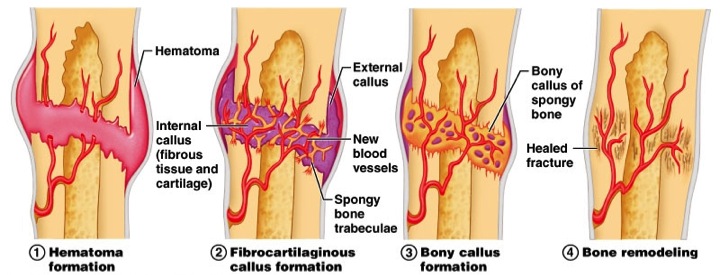
Bone healing is a remarkable biological process that follows a predictable sequence of events to restore the integrity of a broken bone. Unlike soft tissue repair, which often results in scar tissue, bone healing has the unique ability to restore the original bone structure.

The Four Stages of Fracture Repair

Stage 1: Hematoma Formation (Inflammatory Stage)

Immediately after a fracture, torn blood vessels hemorrhage, forming a mass of clotted blood called a hematoma at the fracture site. The area becomes swollen and inflamed, and bone cells deprived of nutrition die. Phagocytic cells and osteoclasts begin to clean up the debris.

Stage 2: Fibrocartilaginous Callus Formation (Soft Callus)

Within days to weeks, new capillaries grow into the hematoma. Fibroblasts produce collagen fibers to connect the broken ends, while chondroblasts secrete a cartilage matrix. This entire mass of repair tissue is known as the fibrocartilaginous (soft) callus, which acts as a natural splint for the bone ends.

Stage 3: Bony Callus Formation (Hard Callus)

Over weeks to months, osteoblasts become active and gradually convert the soft callus into a hard, bony callus of spongy bone. This process firmly unites the two bone fragments, significantly increasing the strength of the repair site.

Stage 4: Bone Remodeling

Over several months to years, the bony callus is remodeled. Osteoclasts remove excess material on the outside of the bone and within the medullary cavity. Osteoblasts lay down compact bone to reconstruct the shaft walls. This final phase restores the bone to its original shape and strength, often leaving little to no trace of the original injury.

Factors Influencing Bone Healing

The success and speed of fracture repair can be influenced by a variety of local and systemic factors.

  • Fracture Severity and Type: Simple fractures heal more quickly than complex, comminuted, or open (compound) fractures.
  • Blood Supply: An adequate blood supply is absolutely crucial for delivering the necessary cells, oxygen, and nutrients to the fracture site.
  • Immobilization: Proper alignment and stabilization (e.g., with a cast or surgical fixation) are essential to prevent movement that could disrupt the delicate callus.
  • Nutrition: A diet rich in calcium, vitamin D, vitamin C (for collagen synthesis), and protein is vital for building new bone.
  • Age: Children and adolescents generally heal much faster than adults and the elderly.
  • Health Status: Chronic diseases (like diabetes), systemic infections, and certain medications (e.g., corticosteroids) can significantly impair or delay the healing process.
  • Hormones: Growth hormone, thyroid hormones, and hormones that regulate calcium (calcitonin, parathyroid hormone) all play important roles in bone metabolism and repair.

Congenital Bone Malformations

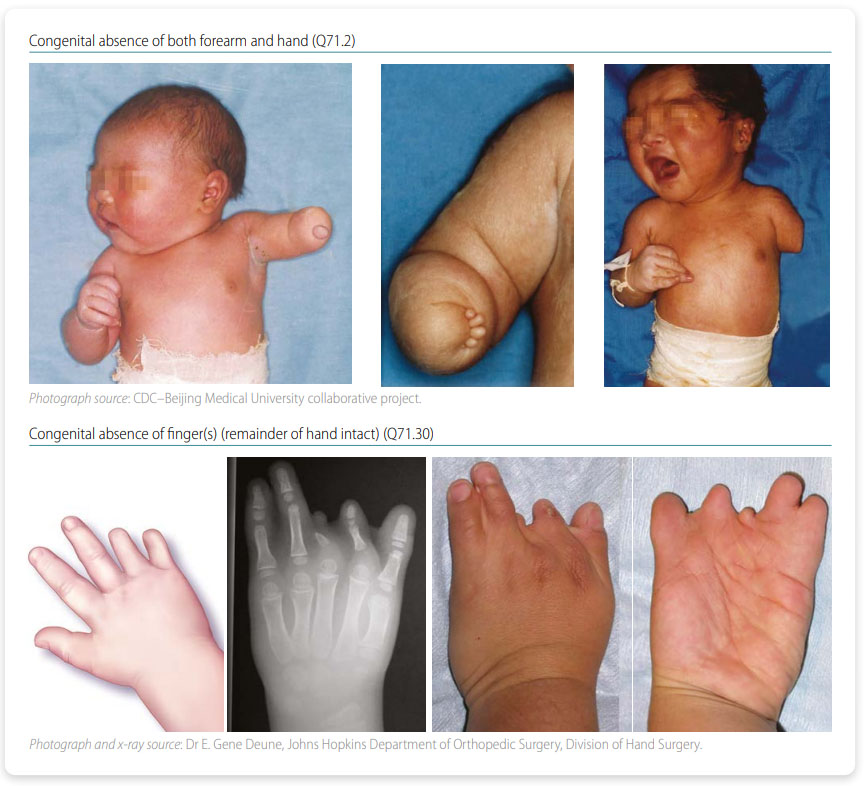
Congenital bone malformations, also known as skeletal dysplasias, are a group of over 400 rare genetic disorders that affect the development of bones and cartilage. These conditions result in abnormalities in the size and shape of the skeleton, affecting approximately 1 in every 5,000 births.

I. Disorders of Bone Formation (Dysplasias)

These involve abnormal development of bone or cartilage tissue itself, leading to generalized skeletal defects.

Achondroplasia

Description: The most common form of short-limbed dwarfism, caused by a mutation in the FGFR3 gene that impairs cartilage formation, leading to severely shortened long bones.

Osteogenesis Imperfecta (Brittle Bone Disease)

Description: A group of genetic disorders characterized by extremely fragile bones that break easily, caused by defects in Type I collagen production. Features include frequent fractures, blue sclera, and hearing loss.

II. Disorders of Bone Number or Fusion

These involve having too many, too few, or improperly fused bones.

Polydactyly & Syndactyly

Polydactyly is the presence of extra fingers or toes. Syndactyly is the fusion of two or more digits ("webbed" fingers/toes).

Spina Bifida

Description: A neural tube defect where the vertebral arches fail to fuse posteriorly. Severity ranges from mild (occulta) to severe (myelomeningocele), where the spinal cord protrudes.

Craniosynostosis

Description: The premature fusion of one or more cranial sutures in an infant's skull, leading to an abnormally shaped head and restricted brain growth.

III. Disorders of Limb Development

These involve malformations of the entire limb or significant portions of it.

Amelia

Description: The complete absence of an arm or leg, resulting from a severe disruption of early limb bud development.

Phocomelia

Description: A condition where the hands or feet are attached close to the trunk, with the limbs being greatly reduced in size or absent. Notably associated with thalidomide exposure.

IV. Genetic Syndromes with Skeletal Manifestations

Many genetic syndromes include skeletal abnormalities as part of their broader clinical picture.

Marfan Syndrome

Description: A connective tissue disorder caused by a mutation in the FBN1 gene. Skeletal features include tall stature, long limbs and fingers (arachnodactyly), flexible joints, scoliosis, and chest deformities.

Test Your Knowledge

Check your understanding of the Skeletal System's structure and function.

1. Which of the following is NOT a primary function of the skeletal system?

  • Support and protection
  • Mineral storage
  • Blood cell formation
  • Hormone production

Correct (d): While some endocrine functions are associated with bone (e.g., osteocalcin), hormone production is not considered a primary function of the skeletal system itself in the same way as support, protection, mineral storage, or hematopoiesis.

Incorrect (a): The skeleton provides the body's framework (support) and encases vital organs like the brain and spinal cord (protection).

Incorrect (b): Bones serve as a reservoir for calcium, phosphate, and other essential minerals.

Incorrect (c): Red bone marrow, found within certain bones, is the primary site of hematopoiesis (blood cell formation).

2. Which type of bone cell is responsible for breaking down bone tissue?

  • Osteoblast
  • Osteocyte
  • Osteoclast
  • Chondrocyte

Correct (c): Osteoclasts are large, multinucleated cells derived from monocytes that resorb (break down) bone tissue, releasing minerals into the blood.

Incorrect (a): Osteoblasts are bone-forming cells that synthesize and deposit new bone matrix.

Incorrect (b): Osteocytes are mature bone cells, trapped within the bone matrix, that maintain bone tissue.

Incorrect (d): Chondrocytes are cells found in cartilage, not directly involved in bone tissue breakdown.

3. The process of bone formation from a cartilaginous model is called:

  • Intramembranous ossification
  • Endochondral ossification
  • Appositional growth
  • Interstitial growth

Correct (b): Endochondral ossification is the process where bone develops by replacing a hyaline cartilage model. Most bones of the body, especially long bones, form this way.

Incorrect (a): Intramembranous ossification is the direct formation of bone from mesenchymal connective tissue, primarily forming flat bones.

Incorrect (c): Appositional growth refers to the increase in bone width.

Incorrect (d): Interstitial growth refers to the increase in length of cartilage or bone from within.

4. Which zone of the epiphyseal plate is responsible for the proliferation of chondrocytes, leading to longitudinal bone growth?

  • Zone of resting cartilage
  • Zone of proliferation
  • Zone of hypertrophy
  • Zone of calcification

Correct (b): In the zone of proliferation, chondrocytes rapidly divide by mitosis, pushing the epiphysis away from the diaphysis and lengthening the bone.

Incorrect (a): The zone of resting cartilage anchors the epiphyseal plate to the epiphysis.

Incorrect (c): In the zone of hypertrophy, chondrocytes enlarge and mature.

Incorrect (d): In the zone of calcification, the cartilage matrix calcifies, and the chondrocytes die.

5. Which of the following is the final stage of bone repair after a fracture?

  • Hematoma formation
  • Fibrocartilaginous callus formation
  • Bony callus formation
  • Bone remodeling

Correct (d): Bone remodeling is the long-term process where the bony callus is reshaped and strengthened by osteoblasts and osteoclasts, eventually restoring the original bone structure.

Incorrect (a): Hematoma formation is the initial stage.

Incorrect (b): Fibrocartilaginous callus formation is the second stage.

Incorrect (c): Bony callus formation is the third stage, preceding remodeling.

6. Which classification of bone is primarily composed of trabeculae and contains red bone marrow?

  • Compact bone
  • Cortical bone
  • Spongy bone
  • Lamellar bone

Correct (c): Spongy (cancellous) bone is characterized by a network of bony struts called trabeculae, which provide strength with minimal weight and house red bone marrow.

Incorrect (a) & (b): Compact (cortical) bone is the dense, solid outer layer of bones.

Incorrect (d): Lamellar bone is a structural term for mature bone tissue, which can be either compact or spongy.

7. Which hormone plays a crucial role in regulating blood calcium levels by stimulating osteoclast activity?

  • Calcitonin
  • Growth hormone
  • Parathyroid hormone (PTH)
  • Thyroid hormone

Correct (c): Parathyroid hormone (PTH) is released when blood calcium levels are low. It stimulates osteoclasts to resorb bone, releasing calcium into the bloodstream.

Incorrect (a): Calcitonin is released when blood calcium levels are high and inhibits osteoclast activity.

Incorrect (b): Growth hormone promotes overall bone growth but does not primarily regulate acute calcium levels.

Incorrect (d): Thyroid hormone influences metabolic rate but is not the primary regulator of blood calcium.

8. The term for a break in a bone is a:

  • Sprain
  • Strain
  • Fracture
  • Dislocation

Correct (c): A fracture is specifically a break or crack in a bone.

Incorrect (a): A sprain is an injury to ligaments (tissue connecting bones to bones).

Incorrect (b): A strain is an injury to a muscle or tendon (tissue connecting muscle to bone).

Incorrect (d): A dislocation occurs when bones at a joint are forced out of alignment.

9. Which of the following bone cells are considered "bone-forming" cells?

  • Osteocytes
  • Osteoclasts
  • Osteoblasts
  • Chondroblasts

Correct (c): Osteoblasts are responsible for synthesizing and secreting the organic components of the bone matrix and initiating its mineralization, thus building new bone.

Incorrect (a): Osteocytes are mature bone cells that maintain the bone matrix.

Incorrect (b): Osteoclasts are bone-resorbing cells.

Incorrect (d): Chondroblasts are cells that form cartilage, not bone.

10. The process of bone remodeling involves the continuous coordinated activity of:

  • Osteoblasts and chondrocytes
  • Osteoclasts and chondrocytes
  • Osteoblasts and osteoclasts
  • Osteocytes and fibroblasts

Correct (c): Bone remodeling is a dynamic process where old bone is continuously removed by osteoclasts (resorption) and replaced by new bone formed by osteoblasts (formation).

Incorrect (a) & (b): Chondrocytes are primarily involved in cartilage formation, not the ongoing remodeling of mature bone.

Incorrect (d): Fibroblasts produce connective tissue but are not the primary cells of bone remodeling.

11. The shaft of a long bone is called the _____________.

Rationale: The diaphysis is the long, tubular main portion of a long bone, composed primarily of compact bone surrounding the medullary cavity.

12. The inorganic matrix of bone is primarily composed of mineral salts, mainly _____________.

Rationale: Calcium phosphate combines with calcium hydroxide to form crystals of hydroxyapatite, which gives bone its characteristic hardness and resistance to compression.

13. The growth plate in long bones, responsible for increasing bone length, is known as the _____________ plate.

Rationale: The epiphyseal plate (or physis) is a layer of hyaline cartilage where longitudinal bone growth occurs during childhood and adolescence.

14. The specialized connective tissue that lines the medullary cavity and covers the trabeculae of spongy bone is the _____________.

Rationale: The endosteum is a thin vascular membrane that contains bone-forming (osteoblasts) and bone-resorbing (osteoclasts) cells, crucial for bone growth, repair, and remodeling.

15. A complete break in a bone where the bone ends penetrate the skin is called a _____________ fracture.

Rationale: A compound fracture, also known as an open fracture, is a more severe type of fracture as the break in the skin creates a risk of infection.
Respiratory System

Respiratory System Anatomy

Respirator System Anatomy: Breath in, Out!

Objective: To describe the macroscopic and microscopic anatomy of the respiratory system and relate structure to function in the processes of air conduction, gas exchange, and protection.

Introduction to the Respiratory System

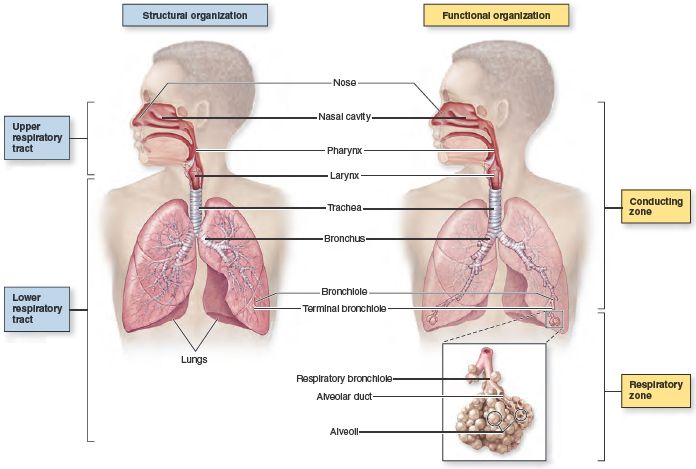
The respiratory system is a complex network of organs and tissues that work together to move air into and out of the body and facilitate gas exchange. It can be broadly divided into two main parts based on function: the conducting zone (for air transport) and the respiratory zone (for gas exchange).


The respiratory system is a vital biological system responsible for the exchange of gases between the body and the external environment. Its primary function is to take in oxygen (O₂) from the atmosphere and expel carbon dioxide (CO₂), a waste product of cellular metabolism. This process, known as respiration, is essential for energy production and maintaining the body's pH balance.

A. Upper Respiratory Tract (Conducting Zone)

This part of the system is primarily involved in conditioning the inspired air.

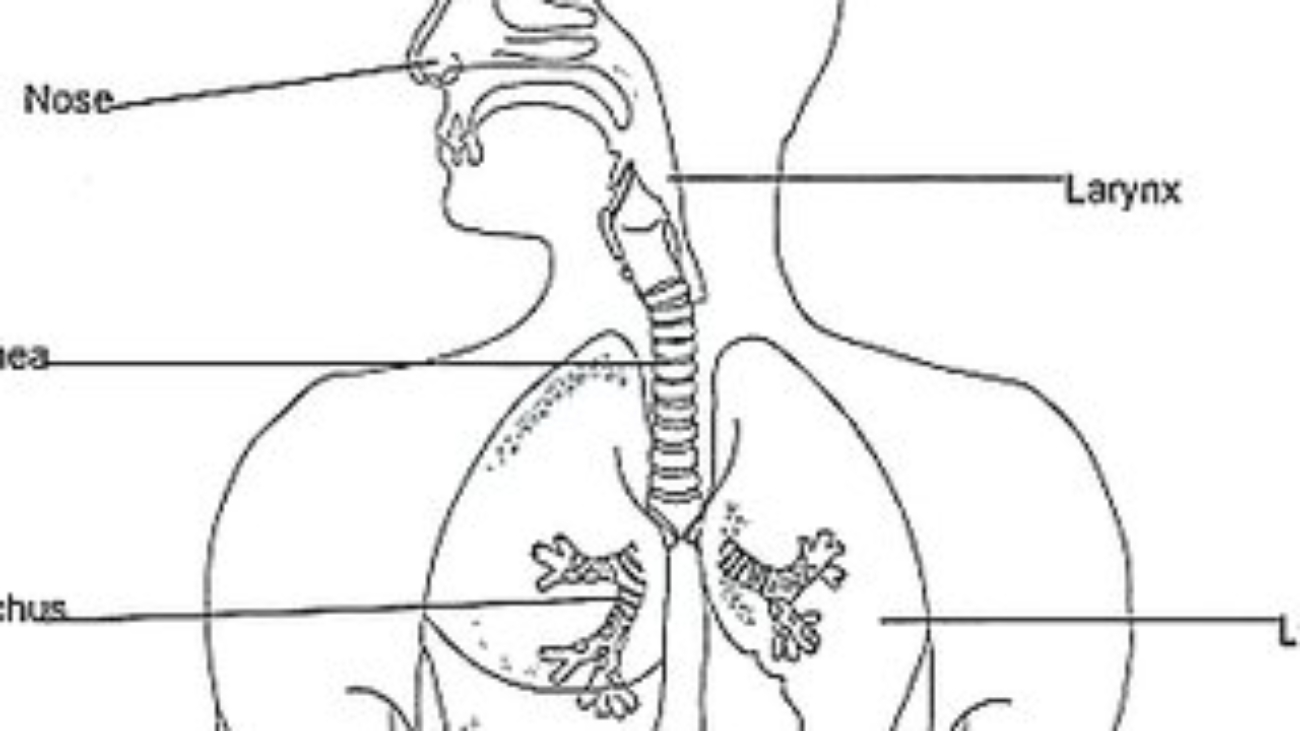
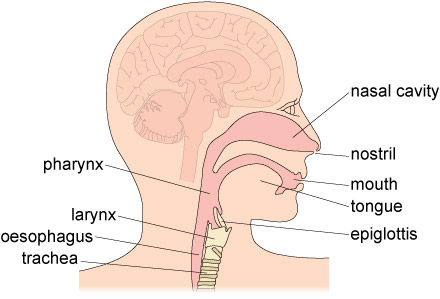
1. Nose and Nasal Cavity

  • External Nose: The visible part, supported by bone and cartilage.
  • Nasal Cavity: Extends from the nostrils (nares) to the posterior nasal apertures (choanae).
  • Vestibule: The anterior-most part, lined with skin and stiff hairs (vibrissae) that filter large particles.
  • Nasal Conchae (Turbinates): Three bony projections (superior, middle, inferior) covered by mucous membranes. They dramatically increase the surface area of the nasal cavity and create turbulent airflow.

Function of Turbinates & Mucosa

This turbulent flow forces inhaled air to come into contact with the moist mucous membranes, which effectively:

  • Filters: Traps dust, pollen, and other particulate matter.
  • Warms: Heat from the underlying capillaries warms the air to body temperature.
  • Humidifies: Water vapor from the mucus moistens the air, preventing drying of the delicate lung tissues.

Mucosal Types:

  • Olfactory Mucosa: Located in the superior nasal cavity; contains olfactory receptors for the sense of smell.
  • Respiratory Mucosa: Lines most of the nasal cavity; composed of pseudostratified ciliated columnar epithelium with abundant goblet cells.
    • Goblet Cells: Produce mucus.
    • Cilia: Beat rhythmically to move mucus (and trapped particles) towards the pharynx to be swallowed. This is part of the mucociliary escalator.

Paranasal Sinuses: Air-filled cavities in the frontal, sphenoid, ethmoid, and maxillary bones. They lighten the skull, warm and humidify air, and contribute to voice resonance. They drain into the nasal cavity.

2. Pharynx (Throat)

A muscular tube extending from the posterior nasal cavity to the esophagus and larynx. It serves as a passageway for both air and food.

Regions:

  • Nasopharynx: Posterior to the nasal cavity. Lined with pseudostratified ciliated columnar epithelium. Contains the pharyngeal tonsils (adenoids) and the openings of the auditory (Eustachian) tubes.
  • Oropharynx: Posterior to the oral cavity. Lined with stratified squamous epithelium (to resist abrasion from food). Contains the palatine and lingual tonsils.
  • Laryngopharynx: Extends from the epiglottis to the esophagus. Also lined with stratified squamous epithelium.

Function: Passageway for air and food; voice resonance; protective immune function (tonsils).

3. Larynx (Voice Box)

Connects the pharynx to the trachea. Primarily cartilaginous structure.

Main Cartilages

  • Thyroid Cartilage: The largest, forms the "Adam's apple."
  • Cricoid Cartilage: Ring-shaped, inferior to the thyroid cartilage, forms the base of the larynx.
  • Epiglottis: Leaf-shaped elastic cartilage that guards the glottis (opening to the larynx). During swallowing, it tips posteriorly to prevent food from entering the trachea.
  • Arytenoid, Corniculate, Cuneiform: Small cartilages involved in vocal cord movement.

Vocal Folds & Function

Vocal Folds (True Vocal Cords): Ligaments covered by mucous membrane, stretching across the larynx. Vibrate to produce sound as air passes over them. Tension is controlled by small intrinsic muscles.

Functions:

  • Air passageway: Keeps the airway open.
  • Voice production (phonation).
  • Prevention of food/liquid aspiration: Epiglottis and vocal cord closure.

B. Lower Respiratory Tract (Conducting and Respiratory Zones)

This part begins in the neck and extends into the thoracic cavity, leading to the lungs.

1. Trachea (Windpipe)

A rigid tube extending from the larynx (C6) to the main bronchi (T4/T5, carina).

  • Structure: Composed of 16-20 C-shaped rings of hyaline cartilage.
  • Function of Cartilage Rings: Prevent tracheal collapse, ensuring a patent airway. The open posterior ends of the C-rings are connected by the trachealis muscle, allowing the esophagus to expand anteriorly during swallowing.
  • Lining: Similar to the nasal cavity, it is lined with pseudostratified ciliated columnar epithelium with goblet cells, forming a robust mucociliary escalator that traps and sweeps debris upwards towards the pharynx.
  • Carina: The point where the trachea bifurcates into the left and right main bronchi. This area is highly sensitive, and touching it triggers a strong cough reflex.

2. Bronchi

The trachea divides into two main (primary) bronchi, one for each lung.

Clinical Note: The right main bronchus is shorter, wider, and more vertical than the left, making it a more common site for aspirated foreign objects.

Within the lungs, the branching continues:

  • Main bronchi divide into lobar (secondary) bronchi (three on the right, two on the left, corresponding to lung lobes).
  • Lobar bronchi then divide into segmental (tertiary) bronchi (supplying bronchopulmonary segments).
  • Structure: Bronchi maintain cartilage (initially rings, then irregular plates) to keep them open. They are also lined with pseudostratified ciliated columnar epithelium, though it gradually becomes shorter and less abundant deeper in the system. Smooth muscle becomes more prominent as cartilage diminishes.

3. Bronchioles

Bronchi continue to branch and become progressively smaller, eventually losing their cartilage support and becoming bronchioles (diameter < 1 mm).

  • Terminal Bronchioles: The smallest airways of the conducting zone. Lined with simple cuboidal epithelium. They contain club cells (Clara cells), which secrete components of surfactant, detoxify airborne toxins, and act as stem cells.
  • Function: These are primarily smooth muscle tubes, allowing for significant control over airway diameter and thus airflow resistance (bronchodilation and bronchoconstriction). The mucociliary escalator fades out here.

4. Respiratory Bronchioles & Alveolar Ducts

  • Respiratory Bronchioles: The first part of the respiratory zone, where gas exchange can begin. Distinguished from terminal bronchioles by the presence of a few scattered alveoli in their walls. Lined with simple cuboidal epithelium.
  • Alveolar Ducts: Branch off the respiratory bronchioles. They are essentially tubes composed of rings of alveoli.
  • Alveolar Sacs: Clusters of alveoli at the ends of alveolar ducts, resembling a bunch of grapes. The primary site of gas exchange.

C. Lung Parenchyma

The functional tissue of the lungs, primarily composed of alveoli.

1. Alveoli (Air Sacs)

Tiny, thin-walled air sacs, numbering about 300-500 million per lung. They collectively provide an enormous surface area (approx. 70-100 m²) for gas exchange.

Type I Pneumocytes

(Squamous Alveolar Cells)

Extremely thin, flattened cells (0.1-0.5 µm thick). They form the primary structural component of the alveolar wall and are the main site of gas exchange. Their thinness minimizes diffusion distance.

Type II Pneumocytes

(Septal Cells)

Cuboidal cells interspersed among Type I cells. They secrete surfactant, a lipoprotein complex that reduces the surface tension of the alveolar fluid, preventing alveolar collapse during expiration. They can also differentiate into Type I pneumocytes to repair damaged alveolar lining.

Alveolar Macrophages

(Dust Cells)

Phagocytic cells that patrol the alveolar surface, engulfing dust, pathogens, and debris that enter the alveoli. They are essential for lung defense.

Elastic Fibers: The alveolar walls contain abundant elastic fibers, contributing to the elastic recoil of the lungs during expiration.

2. Alveolar-Capillary Membrane (Respiratory Membrane)

The thin barrier through which gas exchange occurs between the alveoli and the blood. It is extremely thin (0.2-0.6 µm), optimizing the diffusion rate.

Components (from air to blood):

  1. Layer of alveolar fluid containing surfactant.
  2. Alveolar epithelium (Type I pneumocyte).
  3. Fused basement membrane of the alveolar epithelium and capillary endothelium.
  4. Capillary endothelium.

Interstitium: The connective tissue space between the alveolar epithelial cells and the capillary endothelial cells. It contains collagen, elastic fibers, and some interstitial fluid. Its thickness can significantly impact gas diffusion in disease states.

D. Pleura

The lungs are enclosed in serous membranes called pleura.

  • Visceral Pleura: Covers the surface of the lungs, dipping into the fissures between the lobes.
  • Parietal Pleura: Lines the thoracic cavity wall, mediastinum, and superior surface of the diaphragm.
  • Pleural Cavity: The potential space between the visceral and parietal pleura.
  • Pleural Fluid: A thin layer of serous fluid (about 10-20 mL) within the pleural cavity.
Functions of Pleura:
  • Lubrication: Allows the lungs to slide smoothly against the thoracic wall during breathing.
  • Surface Tension (Adhesion): Creates an adhesive force that keeps the lung surface "stuck" to the thoracic wall, allowing the lungs to expand and recoil with the chest wall. This is crucial for maintaining the negative intrapleural pressure and facilitating lung expansion.

E. Respiratory Muscles

The muscles responsible for changing the volume of the thoracic cavity, thereby driving air movement.

Primary Muscles of Inspiration

Diaphragm:

A large, dome-shaped sheet of skeletal muscle separating the thoracic and abdominal cavities.

  • Contraction: Flattens and moves inferiorly, increasing the vertical dimension of the thoracic cavity.
  • Innervation: Phrenic nerves (C3-C5).
External Intercostal Muscles:

Located between the ribs.

  • Contraction: Pulls the rib cage upwards and outwards, increasing the anteroposterior and lateral dimensions.

Expiration & Accessory Muscles

Internal Intercostal Muscles:

Located deep to the external intercostals. Primarily used in forced expiration.

  • Contraction: Pulls the rib cage downwards and inwards, decreasing thoracic volume.
Accessory Muscles:
  • Forced Inspiration: Sternocleidomastoid, scalenes, pectoralis minor.
  • Forced Expiration: Abdominal muscles (rectus abdominis, internal and external obliques, transversus abdominis) – push abdominal contents upwards, forcing diaphragm up.

Key Functions of the Respiratory System

Gas Exchange

The exchange of O₂ and CO₂ between the lungs and blood (external) and between the blood and tissues (internal).

Ventilation (Breathing)

The mechanical process of moving air into (inhalation) and out of (exhalation) the lungs.

Acid-Base Balance

Regulates blood pH by controlling CO₂ levels in the blood.

Speech (Phonation)

Air passing over the vocal cords produces sound for vocalization.

Olfaction (Smell)

Olfactory receptors in the nasal cavity detect airborne chemicals.

Protection & Defense

Filters, warms, and humidifies inhaled air, trapping pathogens and irritants.

Organization of the Respiratory System

The system can be divided into two main zones based on function and anatomy.

Conducting Zone

A series of interconnected cavities and tubes that conduct, filter, warm, and humidify air on its way to the lungs. No gas exchange occurs here.

Components:

  • Nasal Cavity & Pharynx
  • Larynx & Trachea
  • Bronchi & Terminal Bronchioles

Respiratory Zone

The site where the actual gas exchange between air and blood takes place. This is the functional end of the respiratory tract.

Components:

  • Respiratory Bronchioles
  • Alveolar Ducts & Sacs
  • Alveoli

Components and Associated Structures

The respiratory system is a complex network of organs and structures that can be divided into upper and lower tracts.

Upper Respiratory Tract

Includes the nose, nasal cavity, pharynx (naso-, oro-, laryngo-), and larynx.

Lower Respiratory Tract

Includes the trachea, bronchi, bronchioles, and the lungs (containing the respiratory zone structures).

Associated Structures

  • Thoracic Cage: Ribs, sternum, and thoracic vertebrae that form a protective bony framework.
  • Respiratory Muscles: The diaphragm and intercostal muscles, responsible for the mechanics of breathing.
  • Pleura: Membranes surrounding the lungs that facilitate smooth movement.

Respiratory System Development

The respiratory system begins its development early in embryonic life (around week 4) as a ventral outgrowth from the primitive foregut, highlighting its close developmental relationship with the digestive system.

1. Laryngotracheal Diverticulum (Respiratory Bud)

A groove in the ventral wall of the foregut deepens and grows outward to form the respiratory bud. This bud is then separated from the foregut by the fusion of the tracheoesophageal septum, forming the laryngotracheal tube (future respiratory tract) and the esophagus (digestive tract).

2. Larynx

The lining of the larynx develops from the endoderm of the cranial end of the tube. The cartilages and muscles are derived from the mesenchyme of the 4th and 6th pharyngeal arches. The lumen reopens (recanalization) to form the vocal cords.

3. Trachea

The trachea develops from the part of the tube distal to the larynx. Its epithelial lining and glands are from endoderm, while the cartilaginous rings, muscle, and connective tissue are from the surrounding splanchnic mesenchyme.

4. Bronchi and Lungs

Bronchial Buds & Branching:

Around week 5, the laryngotracheal tube bifurcates into two bronchial buds. These buds undergo a process called branching morphogenesis, repeatedly dividing to form the entire bronchial tree: primary, secondary (lobar), and tertiary (segmental) bronchi, and eventually the smaller bronchioles.

Tissue Origins:

  • The entire epithelial lining of the bronchial tree and alveoli is derived from endoderm.
  • The connective tissue, cartilage, smooth muscle, and blood vessels are derived from the surrounding splanchnic mesenchyme.

Maturation of the Lungs

The development of the lungs from simple tubes into a complex organ capable of gas exchange is a prolonged process that continues from early embryonic life until well after birth. This maturation can be divided into several distinct histological stages.

1. Embryonic Stage (Weeks 4-7)

This initial stage involves the formation of the laryngotracheal diverticulum and its division into the primary, secondary, and tertiary bronchi, establishing the basic framework of the tracheobronchial tree.

2. Pseudoglandular Stage (Weeks 5-16)

The bronchial tree undergoes extensive branching to form the terminal bronchioles. The lung tissue at this stage resembles a gland, hence the name. Crucially, no respiratory bronchioles or alveoli are present yet, so respiration is not possible.

3. Canalicular Stage (Weeks 16-26)

The terminal bronchioles divide into respiratory bronchioles, which then divide into alveolar ducts. The lung tissue becomes highly vascularized. Some primitive alveolar sacs (saccules) begin to form. Survival is difficult, but some gas exchange may be possible near the end of this stage.

4. Saccular Stage (Weeks 26-Birth)

Alveolar ducts terminate in thin-walled terminal sacs (saccules). Two crucial cell types differentiate: Type I pneumocytes (for gas exchange) and Type II pneumocytes, which begin to produce surfactant. Surfactant is essential for reducing surface tension and preventing the collapse of the air sacs during exhalation.

5. Alveolar Stage (Late Fetal to ~8 Years)

Mature alveoli develop from the saccules. The number of alveoli continues to increase significantly after birth, from about 50 million at birth to the adult number of approximately 300 million by 8 years of age. This highlights that lung development is a long postnatal process.

Summary of Tissue Origins

A recap of the germ layers responsible for forming the respiratory system:

  • Endoderm: Forms the entire epithelial lining of the larynx, trachea, bronchi, and alveoli, as well as the glands.
  • Splanchnic Mesenchyme: Forms all the supporting structures, including the cartilage, smooth muscle, connective tissue, and blood vessels of the respiratory tract.

The Pleura and its Nerve Supply

The pleura are serous membranes that envelop the lungs and line the walls of the thoracic cavity. They play a critical role in lung function by allowing smooth movement during breathing and creating the necessary pressure environment for lung inflation.

A. The Pleural Layers

Visceral Pleura

This layer directly covers the entire surface of the lungs, including the fissures between the lobes. It is thin, transparent, and firmly adherent to the lung tissue.

Parietal Pleura

This layer lines the inner surface of the thoracic cavity. It is subdivided based on the region it lines:

  • Cervical Pleura (Cupola): Extends superiorly into the neck, covering the apex of the lung.
  • Costal Pleura: Lines the inner surface of the ribs and intercostal muscles.
  • Mediastinal Pleura: Covers the lateral aspect of the mediastinum.
  • Diaphragmatic Pleura: Covers the superior surface of the diaphragm.

B. The Pleural Cavity

This is the potential space between the visceral and parietal pleura. It normally contains only a thin film of serous pleural fluid.

Functions of Pleural Fluid:

  • Lubrication: Allows the pleural layers to slide smoothly over each other during breathing, reducing friction.
  • Surface Tension: Creates a cohesive force that adheres the lung surface (visceral pleura) to the chest wall (parietal pleura), ensuring the lungs expand and contract with the movements of the thorax.

C. Pleural Recesses (Sinuses)

These are areas where the parietal pleura extends beyond the borders of the lungs, forming potential spaces where fluid can accumulate. They are important clinically.

  • Costodiaphragmatic Recess: The largest and most significant recess, located between the ribs and the diaphragm. It is the lowest point of the pleural cavity when upright, making it a common site for fluid accumulation (pleural effusion).
  • Costomediastinal Recess: Smaller recesses located anteriorly between the ribs and the mediastinum.

D. Nerve Supply of the Pleura

The nerve supply differs significantly between the two pleural layers, which has major clinical implications for pain sensation.

Parietal Pleura

  • Innervation: Somatic sensory nerves.
  • Sensitivity: Highly sensitive to pain, touch, temperature, and pressure.
  • Nerves:
    • Intercostal nerves (for costal pleura).
    • Phrenic nerves (for mediastinal and central diaphragmatic pleura).
  • Clinical Significance: Inflammation (pleurisy) causes sharp, well-localized pain. Pain from the diaphragmatic pleura can be famously referred to the shoulder tip (via the phrenic nerve).

Visceral Pleura

  • Innervation: Autonomic nerves from the pulmonary plexus.
  • Sensitivity: Insensitive to pain, touch, and temperature. It does contain stretch receptors.
  • Nerves:
    • Vagus nerve (parasympathetic).
    • Sympathetic trunks.
  • Clinical Significance: Lung tissue and the visceral pleura can be extensively diseased without causing pain, until the process affects the pain-sensitive parietal pleura.

Differences Between Right and Left Lungs

While both lungs perform the same vital function of gas exchange, they exhibit distinct anatomical differences, primarily due to the asymmetrical placement of the heart and great vessels within the thoracic cavity.

A. General Characteristics at a Glance

FeatureRight LungLeft Lung
Size & WeightLarger and heavierSmaller and lighter
Lobes3 Lobes (Superior, Middle, Inferior)2 Lobes (Superior, Inferior)
Fissures2 Fissures (Oblique, Horizontal)1 Fissure (Oblique)
Cardiac NotchAbsentProminent indentation for the heart
LingulaAbsentPresent (tongue-like part of superior lobe)
Main BronchusShorter, wider, more verticalLonger, narrower, more horizontal

B. Detailed Anatomical Differences


1. Lobes and Fissures

The right lung is divided into three lobes by two fissures, while the left lung has only two lobes and one fissure.

Right Lung
  • Horizontal Fissure: Separates the superior and middle lobes.
  • Oblique Fissure: Separates the middle and inferior lobes.
Left Lung
  • Oblique Fissure: Separates the superior and inferior lobes.
  • No horizontal fissure.

2. Cardiac Structures and Impressions

The left lung is significantly molded by the heart, creating unique features not seen on the right.

Right Lung

Has a less pronounced cardiac impression and features grooves for the Superior Vena Cava, Azygos vein, and Esophagus.

Left Lung

Features a deep Cardiac Notch and a tongue-like Lingula. It has prominent grooves for the Aortic Arch and the Descending Aorta.

3. Hilum (Root of the Lung)

The arrangement of the bronchus, pulmonary artery, and pulmonary veins differs at the hilum of each lung.

Right Lung Hilum

The bronchus is typically superior and posterior, while the pulmonary artery is anterior to it. The azygos vein arches over the top.

Left Lung Hilum

The pulmonary artery is typically the most superior structure. The bronchus lies posterior and inferior to the artery. The aortic arch passes over the top.

4. Bronchial Tree

The structure of the main bronchi is a key difference with significant clinical implications.

Right Main Bronchus

Shorter, wider, and more vertical.

Clinical Note: Due to its more vertical orientation, aspirated foreign bodies are more likely to lodge in the right lung.
Left Main Bronchus

Longer, narrower, and more horizontal.

Anatomical Reason: The heart and the prominent aortic arch push down on the left bronchus, forcing it to take a more horizontal path to reach the left lung.

Complications and Common Disorders

The respiratory system is susceptible to a wide range of complications and disorders, affecting any part of the tract from the upper airways to the deep lung parenchyma.

A. Obstructive Lung Diseases

Characterized by increased resistance to airflow, making it difficult to fully exhale.

Chronic Obstructive Pulmonary Disease (COPD)

A progressive disease including Chronic Bronchitis (inflamed, narrow airways with excess mucus) and Emphysema (damaged, inelastic alveoli leading to air trapping). Primarily caused by smoking.

Asthma

A chronic inflammatory disease with reversible airway obstruction, characterized by hyper-responsiveness to triggers leading to wheezing, shortness of breath, and coughing.

Cystic Fibrosis (CF)

A genetic disorder causing thick, sticky mucus that clogs airways, leading to chronic infections and severe lung damage (bronchiectasis).

B. Restrictive Lung Diseases

Characterized by reduced lung volumes and decreased lung compliance (stiffness), making it difficult to fully inhale.

Pulmonary Fibrosis

Scarring and thickening of lung tissue, making the lungs stiff. Can be idiopathic or caused by toxins or autoimmune diseases.

Pneumoconiosis

A group of diseases caused by inhalation of inorganic dusts (e.g., asbestosis, silicosis), leading to inflammation and fibrosis.

Chest Wall & Neuromuscular Disorders

Conditions like scoliosis or diseases like ALS and muscular dystrophy that weaken respiratory muscles or restrict chest movement.

C. Infections of the Respiratory System

Pneumonia

Inflammation of the lung parenchyma where alveoli fill with fluid, impairing gas exchange. Can be caused by bacteria, viruses, or fungi.

Tuberculosis (TB)

A bacterial infection (Mycobacterium tuberculosis) that primarily affects the lungs, causing chronic cough, fever, and night sweats.

D. Vascular Disorders

Pulmonary Embolism (PE)

A life-threatening blockage in a pulmonary artery, typically from a blood clot that traveled from the deep veins of the legs. Causes sudden shortness of breath and sharp chest pain.

Pulmonary Hypertension

High blood pressure in the arteries of the lungs, making it harder for the right side of the heart to pump blood, which can lead to heart failure.

E. Other Significant Disorders

Lung Cancer

Uncontrolled growth of abnormal cells in the lungs. Primarily caused by smoking.

Pneumothorax

A collapsed lung, where air leaks into the pleural cavity, causing the lung to pull away from the chest wall.

Pleural Effusion

An accumulation of excess fluid in the pleural cavity, often caused by heart failure, infections, or cancer.

F. Complications Associated with Respiratory Disorders

Respiratory Failure

The inability of the system to maintain adequate gas exchange, leading to hypoxemia (low blood O₂) and/or hypercapnia (high blood CO₂).

Acute Respiratory Distress Syndrome (ARDS)

A severe, life-threatening lung condition that prevents enough oxygen from getting into the blood, often a complication of other severe illnesses.

Developmental Anomalies of the Respiratory System

Developmental anomalies, also known as congenital anomalies or birth defects, are structural or functional abnormalities that occur during fetal development. Errors during the complex formation of the respiratory tract can lead to a variety of conditions.

A. Anomalies of the Trachea and Bronchi

Tracheoesophageal Fistula (TEF) & Esophageal Atresia (EA)

Description: An abnormal connection between the trachea and esophagus (TEF), often with the esophagus ending in a blind pouch (EA).
Clinical Presentation: Neonates present with choking, coughing, and cyanosis during feeds; inability to pass a nasogastric tube.

Tracheal Stenosis/Atresia

Description: A narrowing (stenosis) or complete absence (atresia) of a segment of the trachea, leading to severe respiratory distress or stridor at birth.

Tracheomalacia/Bronchomalacia

Description: Weakness of the tracheal or bronchial cartilage, leading to airway collapse during exhalation. Causes a barking cough and stridor that worsens with crying.

Bronchial Atresia

Description: A blind-ending bronchus that leads to an over-inflated, air-trapping segment of the lung distally. Often asymptomatic but can cause recurrent infections.

B. Anomalies of the Lungs and Lung Development

Pulmonary Agenesis/Aplasia/Hypoplasia

A spectrum from complete absence of a lung (agenesis) to underdevelopment with reduced size and number of alveoli (hypoplasia). Often associated with conditions that restrict lung growth, like a diaphragmatic hernia.

Congenital Pulmonary Airway Malformation (CPAM)

A non-cancerous lesion of abnormal, cystic lung tissue. Can cause respiratory distress in neonates or lead to recurrent infections in older children.

Bronchopulmonary Sequestration

A mass of non-functional lung tissue not connected to the normal bronchial tree, which receives its blood supply from a systemic artery (like the aorta).

Congenital Lobar Emphysema (CLE)

Over-inflation of a lung lobe due to a "check-valve" mechanism where air gets trapped. Can cause progressive respiratory distress and shift mediastinal structures.

Congenital Diaphragmatic Hernia (CDH)

A defect in the diaphragm allowing abdominal organs to herniate into the chest, leading to severe pulmonary hypoplasia and hypertension. A surgical emergency.

10 Key Developmental Anomalies: A Summary

  1. Tracheoesophageal Fistula (TEF) & Esophageal Atresia (EA)
  2. Laryngeal Cleft
  3. Tracheal Stenosis/Atresia
  4. Tracheomalacia/Bronchomalacia
  5. Bronchial Atresia
  6. Pulmonary Agenesis/Aplasia/Hypoplasia
  7. Congenital Pulmonary Airway Malformation (CPAM)
  8. Bronchopulmonary Sequestration
  9. Congenital Lobar Emphysema (CLE)
  10. Congenital Diaphragmatic Hernia (CDH)

Test Your Knowledge

Check your understanding of the Respiratory System's development and function.

1. Which of the following is the primary function of the respiratory system?

  • Digestion of nutrients
  • Regulation of body temperature
  • Gas exchange (oxygen and carbon dioxide)
  • Blood filtration
Rationale: The fundamental role of the respiratory system is to facilitate the intake of oxygen into the body and the removal of carbon dioxide, a waste product of metabolism.

2. During fetal development, the respiratory system originates from which germ layer?

  • Ectoderm
  • Mesoderm
  • Endoderm
  • Neuroectoderm
Rationale: The epithelial lining of the respiratory tract, including the lungs, trachea, bronchi, and alveoli, develops from the endoderm, specifically from the laryngotracheal groove of the foregut.

3. The production of surfactant, crucial for preventing alveolar collapse, begins to significantly increase during which stage of lung maturation?

  • Pseudoglandular stage
  • Canalicular stage
  • Saccular stage
  • Alveolar stage
Rationale: While some surfactant production begins in the canalicular stage, it significantly increases in the saccular stage (weeks 24-36), preparing the lungs for extrauterine life by reducing surface tension in the alveoli.

4. Respiratory Distress Syndrome (RDS) in newborns is primarily caused by:

  • Bacterial infection
  • Incomplete development of the diaphragm
  • Insufficient production of pulmonary surfactant
  • Structural abnormalities of the trachea
Rationale: RDS, often seen in premature infants, is due to the immature lungs not producing enough surfactant, leading to widespread alveolar collapse and difficulty breathing.

5. Which of the following describes the condition where the trachea fails to properly separate from the esophagus during development?

  • Bronchial atresia
  • Tracheoesophageal fistula
  • Congenital diaphragmatic hernia
  • Pulmonary hypoplasia
Rationale: A tracheoesophageal fistula (TEF) is an abnormal connection between the trachea and the esophagus, often resulting from incomplete partitioning of the foregut during development. This can lead to aspiration and feeding difficulties.

6. Which part of the respiratory system is responsible for warming, humidifying, and filtering inhaled air?

  • Alveoli
  • Bronchioles
  • Upper respiratory tract (nasal cavity, pharynx, larynx)
  • Diaphragm
Rationale: The nasal cavity, in particular, with its rich vascular supply and mucous membranes, plays a vital role in conditioning the air before it reaches the lungs.

7. A congenital diaphragmatic hernia (CDH) is characterized by:

  • An abnormal opening in the chest wall.
  • A portion of the diaphragm being underdeveloped, allowing abdominal contents to enter the chest cavity.
  • Complete absence of lung tissue.
  • Narrowing of the bronchi.
Rationale: CDH occurs when the diaphragm fails to close completely during fetal development, leading to abdominal organs moving into the chest, which can impede lung development.

8. During the canalicular stage of lung development, what significant event occurs?

  • The formation of the laryngotracheal bud.
  • The branching of the bronchi and bronchioles is complete.
  • The respiratory bronchioles and alveolar ducts begin to form, and vascularization increases.
  • Mature alveoli with thin walls are established.
Rationale: The canalicular stage (weeks 16-26) is characterized by the widening of the lumen of the bronchi and bronchioles, the formation of respiratory bronchioles and alveolar ducts, and a significant increase in the vascular supply, bringing capillaries close to the developing airspaces.

9. Which disorder is characterized by chronic inflammation and narrowing of the airways, often triggered by allergens or irritants?

  • Emphysema
  • Cystic Fibrosis
  • Asthma
  • Bronchitis
Rationale: Asthma is a chronic respiratory condition characterized by airway hyperresponsiveness, inflammation, and reversible airflow obstruction, leading to symptoms like wheezing, shortness of breath, chest tightness, and coughing.

10. The main muscle responsible for normal, quiet inspiration is the:

  • External intercostals
  • Internal intercostals
  • Diaphragm
  • Abdominal muscles
Rationale: The diaphragm is the primary muscle of inspiration. When it contracts, it flattens and moves downward, increasing the volume of the thoracic cavity and drawing air into the lungs.

11. The smallest conducting airways in the lungs are called _____________.

Rationale: Bronchioles are the smaller branches of the bronchial airways that lead to the alveoli. They play a key role in controlling airflow distribution in the lungs.

12. The final stage of lung maturation, where mature alveoli with thin walls and close contact with capillaries are formed, is known as the _____________ stage.

Rationale: The alveolar stage, which continues after birth, is marked by the formation of mature alveoli, which dramatically increases the surface area available for gas exchange.

13. A genetic disorder that causes thick, sticky mucus to build up in the lungs and other organs is _____________.

Rationale: Cystic Fibrosis is an inherited disorder that severely affects the respiratory and digestive systems by disrupting the normal function of mucus-producing cells.

14. The vocal cords are located within the _____________.

Rationale: The larynx, or voice box, houses the vocal cords and is responsible for sound production (phonation) and protecting the trachea from food aspiration.

15. _____________ is a condition where the lungs are incompletely developed or abnormally small.

Rationale: Pulmonary hypoplasia is a serious developmental issue where the lungs fail to grow to a normal size, often associated with conditions that limit chest space, like a congenital diaphragmatic hernia.