anatomy lecture doctors revision

Anatomy Introduction

Intro to Anatomy: Terms & Concepts

Introduction to Anatomy

Anatomy is the scientific study of the structural organization of the human body, ranging from microscopic cells to large, visible structures like organs and bones. Derived from the Greek word for "cutting apart," it explores how these parts are arranged to form functional systems, often in conjunction with physiology, which focuses on function.

The History of Anatomy

For centuries, the dissection of human bodies was taboo in many societies. The journey of anatomical study is marked by key historical milestones:

  • Claudius Galenus: A second-century Greek physician who learned about the human form by performing vivisections on pigs.
  • Leonardo da Vinci: Poked around in dead bodies and created beautifully detailed anatomical drawings until the Pope made him stop.
  • 17th and 18th Centuries: Certified anatomists were allowed to perform tightly regulated human dissections. These were often popular public events attended by artists like Michelangelo and Rembrandt.
  • The Anatomy Act (1832): The study of human anatomy became such a craze in Europe that grave robbing became a lucrative occupation until Britain passed this act, which provided students with corpses of executed murderers.
  • Modern Day: Today, students of anatomy and physiology still use educational cadavers, which are donated by volunteers.
  • Andreas Vesalius: Known as the 'Father of Anatomy'. He was the first to carry out dissection to closely observe the inner structure and construction of the human body.

Key Concepts in Anatomy and Physiology


Function Follows Form

This is the core principle of anatomy. It means that the shape of a body part (its structure or form) is perfectly designed for its job (its function). The function of a cell, organ, or whole organism always reflects its form. This is also known as the Complementarity of Structure and Function.

Example: Form & Function

Think of a fork. It has prongs (its form) specifically to help it pick up food (its function). Your teeth are a perfect biological example. Your sharp front teeth are for tearing food, while your flat back teeth are for grinding. Their shape is perfect for their job.

Hierarchy of Organization

The human body is organized in a hierarchical manner, from the smallest chemical components to the entire organism. Levels of Organization in the Body:

  1. Chemical Level: Atoms and molecules, the smallest units of matter.
  2. Cellular Level: Cells, the smallest units of living things.
  3. Tissue Level: Groups of similar cells that work together.
  4. Organ Level: Two or more tissue types performing a specific function.
  5. Organ System Level: Groups of organs working together for a common purpose.
  6. Organismal Level: The sum total of all structural levels working together to keep us alive.

Homeostasis

Homeostasis is the ability of all living systems to maintain stable internal conditions no matter what changes are occurring outside the body. Survival is all about maintaining this delicate balance.

Example: Homeostasis

Think of a thermostat. If the house gets too cold, the heat turns on. If it gets too hot, the A/C kicks in. Your body does this constantly. If you get hot, you sweat to cool down. If you get cold, you shiver to warm up. Your body is always working to keep your temperature, blood sugar, and many other factors in a perfect, stable range.

Foundational Anatomical Terms

Mastering the language of anatomy is the first step to understanding its complexities. This guide covers the foundational terminology you will encounter throughout your studies. These terms provide a universal standard for describing the structure and function of the human body.

  • Human anatomy (ah-nat -o−-me−) is the study of the structure and organization of the body and the study of the relationships of body parts to one another. There are two subdivisions of anatomy:
    • Gross anatomy involves the dissection and examination of various parts of the body without magnifying lenses.
    • Microanatomy, also known as histology, consists of the examination of tissues and cells with various magnification techniques.
  • Human physiology (fiz-e−-ol-o−-je−) is the study of the function of the body and its parts. Physiology involves observation and experimentation, and it usually requires the use of specialized equipment and materials.
Term (Etymology) Definition Example
Anatomy
(ana = apart; tom = to cut)
The study of the structure of living organisms. Studying the bones, muscles, and organs in a human cadaver to understand their physical arrangement.
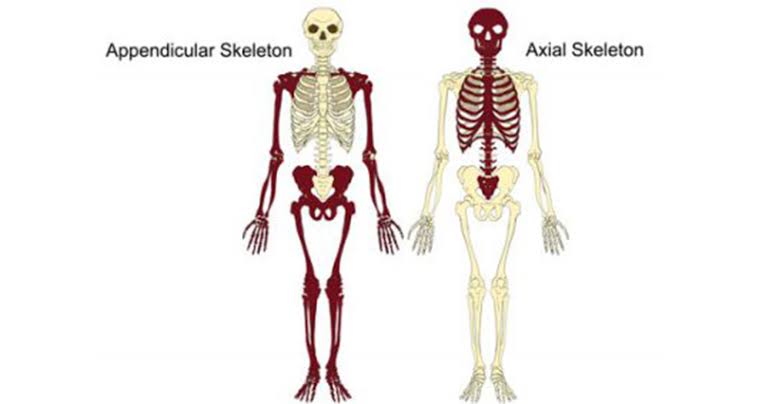
Appendicular
(append = to hang)
Pertaining to the upper and lower limbs. The appendicular skeleton includes the bones of the arms, legs, shoulders, and pelvis.
Axial
(ax = axis)
Pertaining to the longitudinal axis of the body. The axial skeleton consists of the skull, vertebral column, and rib cage, forming the central support of the body.
Body region
(regio = boundary)
A portion of the body with a special identifying name. The "cephalic region" refers to the head, while the "thoracic region" refers to the chest.
Directional term
(directio = act of guiding)
A term that references how the position of a body part relates to the position of another body part. The nose is superior to the mouth, and the feet are inferior to the knees. The sternum (breastbone) is anterior to the spine.
Effector
(efet = result)
A structure that functions by performing an action that is directed by an integrating center. In regulating body temperature, sweat glands are effectors that produce sweat to cool the body down when directed by the brain.
Homeostasis
(homeo = same; sta = make stand or stop)
Maintenance of a relatively stable internal environment. The body maintaining a constant internal temperature of approximately 37°C (98.6°F) regardless of external temperature changes.
Integrating center
(integratus = make whole)
A structure that functions to interpret information and coordinate a response. The brain acts as an integrating center when it receives signals that blood sugar is too high and then sends signals to the pancreas to release insulin.
Metabolism
(metabole = change)
The sum of the chemical reactions in the body. The digestion of food into nutrients (catabolism) and the building of new tissues from those nutrients (anabolism) are both parts of metabolism.
Parietal
(paries = wall)
Pertaining to the wall of a body cavity. The parietal pleura is the outer membrane lining the wall of the thoracic (chest) cavity.
Pericardium
(peri = around; cardi = heart)
The membrane surrounding the heart. The pericardium provides protection and lubrication for the heart as it beats within the chest cavity.
Peritoneum
(peri = around; ton = to stretch)
The membrane lining the abdominal cavity and covering the abdominal organs. The peritoneum allows organs like the intestines to slide past each other without friction during digestion.
Physiology
(physio = nature; logy = study of)
The study of the functioning of living organisms. Studying how the heart pumps blood through the circulatory system or how the kidneys filter waste from the blood.
Plane
(planum = flat surface)
Imaginary two-dimensional flat surface that marks the direction of a cut through a structure. A sagittal plane divides the body vertically into right and left parts.
Pleura
(pleura = rib)
The membrane lining the thoracic cavity and covering the lungs. The pleura secretes a fluid that allows the lungs to expand and contract smoothly within the rib cage during breathing.
Receptor
(recipere = receive)
A structure that functions to collect information. Temperature receptors in the skin detect changes in environmental temperature and send signals to the brain.
Section
(sectio = cutting)
A flat surface of the body produced by a cut through a plane of the body. A cross-section (or transverse section) of the small intestine would show its internal layers, like the mucosa and muscle layers.
Serous membrane
(serum = watery fluid; membrana = thin layer)
A two-layered membrane that lines body cavities and covers the internal organs. The pleura, pericardium, and peritoneum are all examples of serous membranes.
Visceral
(viscus = internal organ)
Pertaining to organs in a body cavity. The visceral pleura is the inner membrane that directly covers the surface of the lungs.

Understanding Anatomy: Structure, Branches, and How to Study


What is Anatomy?

Imagine you're taking apart a complex toy to see how it's built. Anatomy is very similar – it's the study of the body's structure, like looking at all the pieces of that toy.

  • Body Parts: This includes everything from the smallest cells to the largest organs and how they all fit together.
  • Relationships: It's not just about what the parts are, but also how they interact. Think of how a gear connects to another gear in that toy.
  • Analogy: If you're building a house, anatomy is like looking at the blueprint and understanding where all the walls, pipes, and wires go.

Branches of Anatomy: Different Ways to Look at the Body

Anatomy is a huge field, so scientists have divided it into different ways to study the body, kind of like having different magnifying glasses to look at the same object.

1. Gross (Macroscopic) Anatomy: What You Can See

This is about the big stuff, the parts of the body you can see with your naked eye without a microscope.

  • "Gross" here means large, not disgusting!
  • Example: When you see a doctor examining a bruise on your arm, or when a surgeon operates and sees organs like the heart or lungs directly, that's gross anatomy in action.
  • Origin of the word "Anatomy": It comes from Greek words meaning "to cut apart." This makes sense for gross anatomy, as doctors and scientists often dissect (cut up) bodies or organs to study them.

Subdivisions of Gross Anatomy:

  • Regional Anatomy: Studying everything in one specific area.
    • Imagine: You're studying the "head region." You'd look at the bones of the skull, the muscles of the face, the nerves, and blood vessels all within that one area at the same time.
    • Another example: If you're studying the "leg," you'd look at the femur bone, the quadriceps muscle, the femoral artery, and the sciatic nerve, all as they exist in the leg.
  • Systemic Anatomy: Studying one body system throughout the entire body.
    • Imagine: You're studying the "circulatory system." You'd follow the heart, arteries, veins, and capillaries all over the body, from your head to your toes.
    • Another example: When you study the "skeletal system," you learn about all the bones in the body, their names, and how they connect, regardless of where they are located.
  • Surface Anatomy: Looking at what's under the skin by observing the surface.
    • Imagine: A bodybuilder flexing their biceps. You can see the shape of the muscle just by looking at their arm, even though the muscle is under the skin.
    • Another example: A nurse feeling for a pulse in your wrist is using surface anatomy to locate the radial artery, even though they can't see it directly.

2. Microscopic Anatomy: What You Need a Microscope For

This branch deals with the tiny structures you can't see without magnification.

  • Example: Think about how you need a magnifying glass to see the details of a tiny insect. For microscopic anatomy, we use powerful microscopes.
  • How it's done: Scientists take very thin slices of body tissue, stain them (to make different parts visible), and then look at them under a microscope.

Subdivisions of Microscopic Anatomy:

  • Cytology: The study of individual cells.
    • Imagine: Looking at a single brick of a house. Cytology is studying that individual brick – its shape, what's inside it, how it functions.
    • Example: Examining a red blood cell to see its biconcave shape and lack of a nucleus.
  • Histology: The study of tissues (groups of similar cells working together).
    • Imagine: Looking at a whole wall of a house, which is made up of many bricks. Histology is studying how those cells (bricks) are organized into tissues (walls).
    • Example: Looking at a piece of muscle tissue and seeing how the muscle cells are arranged to allow for contraction.

Microscopes Used:

  • Light Microscope (for Histology): Uses light to magnify. It's good for seeing tissues and larger cells, but has limitations.
  • Electron Microscope (for Cytology/Ultrastructure): Uses a beam of electrons for much higher magnification. This allows us to see the tiny structures inside cells (like organelles).
  • Analogy: A light microscope is like seeing a blurry photo, while an electron microscope is like a super high-definition photo, letting you see every tiny detail.

3. Developmental Anatomy: How the Body Changes Over Time

This branch focuses on how the body grows and changes throughout an individual's entire life.

  • Example: How does a single fertilized egg develop into a baby, then a child, an adult, and eventually an elderly person? Developmental anatomy studies all these transformations.

Subdivisions of Developmental Anatomy:

  • Embryology: The study of development before birth.
    • Imagine: Watching a tiny seed sprout and grow into a small plant before it even breaks the surface of the soil. Embryology is studying the development of a baby inside the mother's womb.
    • Example: Understanding how the heart forms from simple tubes into a four-chambered organ during the first few weeks of pregnancy.
  • Ontogeny (Ontogenesis/Morphogenesis): The study of development from conception (fertilized egg) all the way through old age.
    • Imagine: Following that plant from the seed, through its growth into a mature plant, producing flowers and fruits, and eventually withering and dying. Ontogeny covers the entire lifespan.
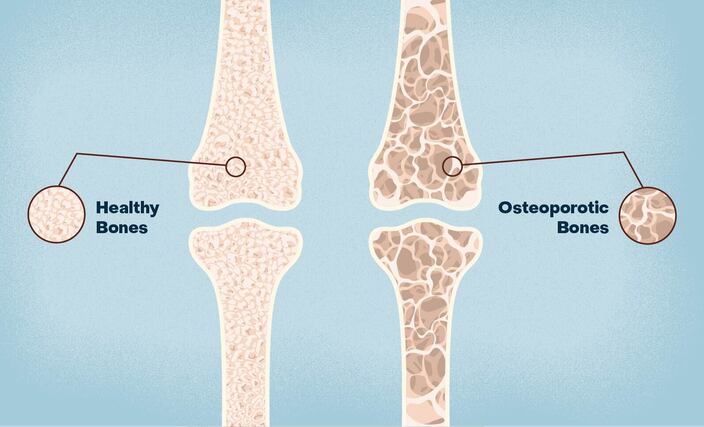
    • Example: Studying how bones grow and change density from childhood to adulthood and how they might weaken in old age.

Other Specialized Branches (for Medical and Research Purposes)

These are like specific tools used for particular jobs in medicine and science.

  • Pathological Anatomy: Studies how diseases change the body's structures.
    • Example: Examining a cancerous tumor to understand how the cells have changed and what kind of cancer it is.
  • Radiographic Anatomy: Studies internal structures using imaging techniques.
    • Example: An X-ray to look at a broken bone, an ultrasound to see a baby in the womb, or a CT scan to create detailed images of organs. These help doctors see inside without cutting the body open.
  • Molecular Biology: Investigates the structure of tiny biological molecules (like DNA or proteins).
    • Example: Studying the shape of a specific protein to understand how it functions in the body or how a drug might interact with it.

How to Study Anatomy

It's not just about memorizing names! Here are the key methods used to study the human body:

  • Anatomical Terminology: Learning the specific language used to describe body parts and directions (e.g., "anterior" for front, "posterior" for back). This is like learning the vocabulary for a new language.
  • Observation: Looking closely at models, diagrams, or actual specimens.
  • Manipulation: Handling models or specimens to understand their 3D relationships.
  • Palpation: Feeling organs or structures with your hands (e.g., a doctor feeling your lymph nodes).
  • Auscultation: Listening to body sounds with a stethoscope (e.g., a doctor listening to your heart or lungs).

Test Your Knowledge

Check your understanding of the concepts covered in this post.

1. Which of the following terms describes the study of the functioning of living organisms?

  • Anatomy
  • Histology
  • Physiology
  • Embryology
Rationale: Physiology is defined as "The study of the functioning of living organisms." Anatomy is the study of structure, while Histology and Embryology are specific branches of anatomy.

2. What does the term "Axial" pertain to in anatomy?

  • The upper and lower limbs
  • The longitudinal axis of the body
  • The wall of a body cavity
  • Organs in a body cavity
Rationale: "Axial" is defined as "Pertaining to the longitudinal axis of the body," which includes the head, neck, and trunk.

3. Which level of organization is defined as "groups of similar cells that work together"?

  • Organ Level
  • Chemical Level
  • Organismal Level
  • Tissue Level
Rationale: According to the hierarchy of organization, the Tissue Level is where "Tissues are groups of similar cells that work together."

4. The ability of all living systems to maintain stable internal conditions regardless of external changes is known as:

  • Metabolism
  • Homeostasis
  • Complementarity
  • Ontogeny
Rationale: Homeostasis is explicitly defined as "The ability of all living systems to maintain stable internal conditions no matter what changes are occurring outside the body."

5. Which branch of anatomy focuses on structures that can be seen with the naked eye?

  • Cytology
  • Microscopic Anatomy
  • Gross Anatomy
  • Embryology
Rationale: Gross (Macroscopic) Anatomy is described as studying "the big stuff, the parts of the body you can see with your naked eye without a microscope."

6. If you are studying the development of a human from conception through old age, which branch of developmental anatomy are you primarily focused on?

  • Embryology
  • Histology
  • Ontogeny
  • Regional Anatomy
Rationale: Ontogeny is described as "The study of development from conception (fertilized egg) all the way through old age." Embryology specifically covers development before birth.

7. A doctor uses an X-ray to examine a patient's broken bone. This is an application of which specialized branch of anatomy?

  • Pathological Anatomy
  • Molecular Biology
  • Radiographic Anatomy
  • Surface Anatomy
Rationale: Radiographic Anatomy "Studies internal structures using imaging techniques," such as X-rays, CT scans, and ultrasounds.

8. What is the term for a structure that functions to collect information, like temperature receptors in the skin?

  • Effector
  • Integrating center
  • Receptor
  • Visceral
Rationale: A receptor is defined as "A structure that functions to collect information."

9. The principle that states the shape of a body part is designed for its job is known as:

  • Hierarchy of Organization
  • Homeostasis
  • Metabolism
  • Function Follows Form / Complementarity of Structure and Function
Rationale: The content explicitly states, "Function Follows Form: This means that the shape of a body part is designed for its job. The function of a cell, organ, or whole organism always reflects its form."

10. Leonardo da Vinci's anatomical drawings were notable for their detail. Which of the following statements about his work is true according to the provided text?

  • He exclusively performed vivisections on pigs.
  • The Pope encouraged his dissection work.
  • He created detailed anatomical drawings by "poking around in dead bodies."
  • He was one of the certified anatomists allowed tightly regulated human dissections in the 17th century.
Rationale: The text states, "Leonardo da Vinci poked around in dead bodies and created beautifully detailed anatomical drawings until the Pope made him stop." The other options are either attributed to others or contradict the text.

11. The study of the structure of living organisms is called ____________.

Rationale: Anatomy is introduced as "The study of the structure of living organisms."

12. The membrane lining the abdominal cavity and covering the abdominal organs is the ____________.

Rationale: The definition provided for Peritoneum is exactly "The membrane lining the abdominal cavity and covering the abdominal organs."

13. In the hierarchy of organization, the smallest units of living things are at the ____________ Level.

Rationale: The hierarchy states, "Cellular Level: Cells are the smallest units of living things."

14. A term that references how the position of a body part relates to the position of another body part is a ____________ term.

Rationale: Directional term is defined as "A term that references how the position of a body part relates to the position of another body part."

15. The study of individual cells is known as ____________.

Rationale: Under Microscopic Anatomy, Cytology is defined as "The study of individual cells."
```
anatomy lecture doctors revision

Foundations of Anatomy: Understanding The Cell

Cell Theory
Alright, let’s dive into the microscopic world that makes up our bodies, starting with the fundamental concept of the Cell Theory. This theory is one of the cornerstones of biology and medicine, giving us the basic understanding of life. It essentially has three main parts, like three key rules about cells:

All living organisms are made up of one or more cells. This means whether it’s a tiny bacterium, a plant, or a human being, the basic unit of structure is the cell. Some organisms are single-celled (like amoeba), while complex organisms like us are made of trillions of cells working together.

histology introduction

Histology Introduction

Introduction to Histology: The Study of Tissues

What is Histology?

Histology is the study of tissues. The word is derived from the Greek words “histo” (tissue) and “logos” (study). Therefore, histology is the science of the microscopic structure of cells, tissues, and organs. Simply put, it's the study of tissues under a microscope.

This field examines the microscopic anatomy of biological tissues and is fundamental to understanding the structure and function of the entire body.

Why Health workers Need to Know Histology

A strong foundation in histology is not just for doctors or researchers; it is a critical component of a professional nurse's knowledge base. It elevates a nurse's practice from task-oriented care to a deeper, more analytical level of patient management.

Explains Form & Function

Shows how tissue structure relates to its job, making treatments like oxygen therapy more meaningful.

Identifies Disease

Knowing normal tissue helps nurses recognize changes in disease, aiding in assessments like wound care.

Enhances Practical Skills

Improves participation in collecting and interpreting lab samples (e.g., biopsies).

Informs Patient Education

Allows nurses to better explain conditions and treatments, leading to more informed care.

Medication Efficacy

Helps nurses anticipate medication effects and side effects by understanding drug-cell interactions.

Interdisciplinary Collaboration

Facilitates clearer communication with pathologists, doctors, and other healthcare professionals.

Methods of Histology

Histology employs various techniques to prepare tissues for microscopic examination. These methods are crucial for preserving tissue integrity and allowing for the study of their structure and function. The main steps involve tissue preparation, staining, and microscopy.

1. Tissue Preparation Techniques

This is the first and most critical step to preserve tissue and allow for thin sectioning. There are three main methods.

a. Paraffin Technique

This is the most common method for preparing tissues for routine histological examination.

Procedures of the Paraffin Technique:
  1. Tissue Sample Collection: Obtaining the sample (biopsy, surgical excision).
  2. Fixation: Preserving the tissue, commonly with 4% formaldehyde (formalin).
  3. Dehydration: Removing water with increasing concentrations of alcohol.
  4. Clearing: Replacing alcohol with a clearing agent like xylene.
  5. Impregnation: Infiltrating the tissue with melted soft paraffin.
  6. Embedding: Transferring the tissue to hard paraffin to form a solid block.
  7. Sectioning: Cutting the block into very thin (5-8 µm) sections using a microtome.

b. Celloidin Technique

Provides superior support for both soft and hard tissues, such as bones, teeth, and large brain sections.

Advantages:
  • Excellent support for hard tissues
  • Minimal shrinkage and distortion
  • Good architectural preservation
Disadvantages:
  • Very time-consuming process
  • Difficult to cut very thin sections
  • Requires specialized technical skills

c. Freezing Technique

Rapidly prepares tissues by freezing, especially for urgent diagnoses during surgery.

Advantages:
  • Rapid diagnosis (minutes)
  • Preserves molecules (DNA, RNA, proteins)
  • Preserves antigens for immunostaining
Disadvantages:
  • Poor staining and cellular detail
  • Inadequate fixation compared to paraffin
  • Expensive and complex equipment (cryostat)

2. Staining Techniques

Staining uses dyes to enhance the visibility of different tissue structures under the microscope. This is essential because most tissues are colorless.

Common Stains and Their Uses:

Hematoxylin and Eosin (H&E): The most common stain. Hematoxylin stains acidic structures like the nucleus blue, while Eosin stains basic structures like the cytoplasm pink.
PAS (Periodic Acid-Schiff): Stains carbohydrates magenta. Useful for identifying basement membranes, mucus, glycogen, and fungal walls.
Silver Stains (Reticulin): Stains reticular fibers black. Used in kidney, liver, and bone marrow biopsies.
Trichrome Stains: Differentiates muscle (red), collagen (blue/green), and fibrin. Used for assessing fibrosis.
Immunostains (Immunohistochemistry): Uses antibodies to detect specific molecules or cell types. Crucial for cancer diagnosis and classification.

3. Microscopy Techniques

Microscopy is the use of microscopes to visualize small structures that are not visible to the naked eye.

Light Microscope

Uses natural or electric light to examine stained sections. This is the most commonly used microscope in routine histology.

Electron Microscope

Uses a beam of electrons for much higher magnification. TEM provides high-resolution internal details, while SEM provides detailed 3D surface images.

Test Your Knowledge

Check your understanding of the concepts covered in this post.

1. Histology is defined as the study of:

  • Cells under a light microscope.
  • Gross anatomy of organs.
  • Tissues under a microscope.
  • Chemical composition of biological structures.
Rationale: The text explicitly states, "Histology therefore is the science of the microscopic structure of cells, tissues and organs OR simply put; The study of tissues under a microscope."

2. Why is understanding histology important for nurses regarding medication efficacy?

  • It helps them prescribe the correct dosage.
  • It allows them to understand how drugs interact with specific cell types and tissues.
  • It teaches them how to administer intravenous medications.
  • It explains the cost-effectiveness of different drugs.
Rationale: The text states under "Medication Efficacy," "Understanding how drugs interact with specific cell types and tissues (e.g., receptors on cell surfaces) helps nurses anticipate medication effects and side effects."

3. Which tissue preparation technique is most commonly used for routine histological examination due to its preservation and hardening properties?

  • Celloidin Technique
  • Freezing Technique
  • Paraffin Technique
  • Vital Staining
Rationale: The text states, "The paraffin technique is the most common method for preparing tissues for routine histological examination."

4. What is the primary disadvantage of the Celloidin Technique mentioned in the text?

  • It causes significant tissue shrinkage and distortion.
  • It is a very rapid process.
  • It is time-consuming and difficult to cut very thin sections.
  • It poorly preserves hard tissues like bone.
Rationale: Under "Disadvantages of Celloidin Technique," the text lists, "Time-Consuming: The process is lengthy," and "Difficulty in Cutting Thin Sections: Achieving very thin sections can be challenging."

5. In the Paraffin Technique, what is the purpose of the 'Clearing' step?

  • To replace water with alcohol.
  • To harden the tissue by coagulating proteins.
  • To replace alcohol with a clearing agent like xylene.
  • To embed the tissue in molten paraffin.
Rationale: The text explains under "Clearing," "Aim: To replace alcohol with xylene, which is miscible with paraffin."

6. Which staining technique uses positively charged dyes to stain negatively charged cellular components, such as nuclei?

  • Acidic Staining
  • Basic Staining
  • Neutral Staining
  • Metachromatic Staining
Rationale: The text states under "Basic Staining," "Uses positively charged dyes to stain negatively charged cellular components (e.g., nuclei with hematoxylin, methylene blue)."

7. Which stain is described as the "most routinely used" and provides a basic architectural overview of tissues, staining nuclei blue and cytoplasm pink?

  • PAS (Periodic Acid-Schiff)
  • Silver Stains
  • Trichrome Stains
  • Hematoxylin and Eosin (H&E)
Rationale: The text states under "Common Stains - Hematoxylin and Eosin (H&E)," "Most routinely used stain. Hematoxylin stains nuclei blue... Eosin stains cytoplasm pink. Provides the basic architectural overview of tissues."

8. The Freezing Technique is particularly useful for:

  • Ensuring minimal shrinkage over several days.
  • Providing rapid diagnosis during surgical procedures.
  • Creating very thin sections for routine examination.
  • Hardening very delicate tissues like brain.
Rationale: The text highlights, "Rapid Diagnosis: Frozen sections can be prepared and examined within minutes, crucial for intraoperative consultations to guide immediate surgical decisions."

9. What is a key advantage of the Freezing Technique for molecular studies?

  • It causes significant protein denaturation.
  • It allows for rapid decomposition of cellular enzymes.
  • It preserves biomolecules like DNA, RNA, and enzymes.
  • It requires extensive prior chemical fixation.
Rationale: Under "Advantages of Freezing Technique," it notes, "Molecular Preservation: Freezing preserves biomolecules (DNA, RNA, proteins, enzymes), ideal for molecular detection and enzyme activity assessment."

10. Which type of electron microscope provides high-resolution images of the internal details of a specimen by passing electrons through it?

  • Scanning Electron Microscope (SEM)
  • Transmission Electron Microscope (TEM)
  • Light Microscope
  • Cryostat
Rationale: The text specifies, "Transmission Electron Microscope (TEM): A beam of electrons passes through the specimen, providing high-resolution internal details."

11. The Greek word "histo" in histology means ________________.

Rationale: The definition states, "The word histology is derived from Greek words “histo” meaning tissue..."

12. In the Paraffin Technique, ________________ is used to remove water from the tissue by immersing it in increasing concentrations of alcohol.

Rationale: The text explains under "Dehydration," "Tissue is immersed in increasing concentrations of alcohol... Aim: To remove water from tissue spaces..."

13. The primary fixative commonly used in the Paraffin Technique is ________________.

Rationale: The text states under "Fixation," "Commonly uses 4% formaldehyde (formalin)."

14. The technique that uses antibodies to show specific molecules or cell types, crucial for cancer diagnosis, is called ________________.

Rationale: The text describes under "Immunostains (Immunohistochemistry)," "Uses antibodies to show specific molecules or cell types. Crucial for cancer diagnosis..."

15. A cryostat is used to perform sectioning for the ________________ technique.

Rationale: The text states under "Freezing Technique," "Sectioning is performed using a cryostat (a freezing microtome)."