Enzymology and Kinetics
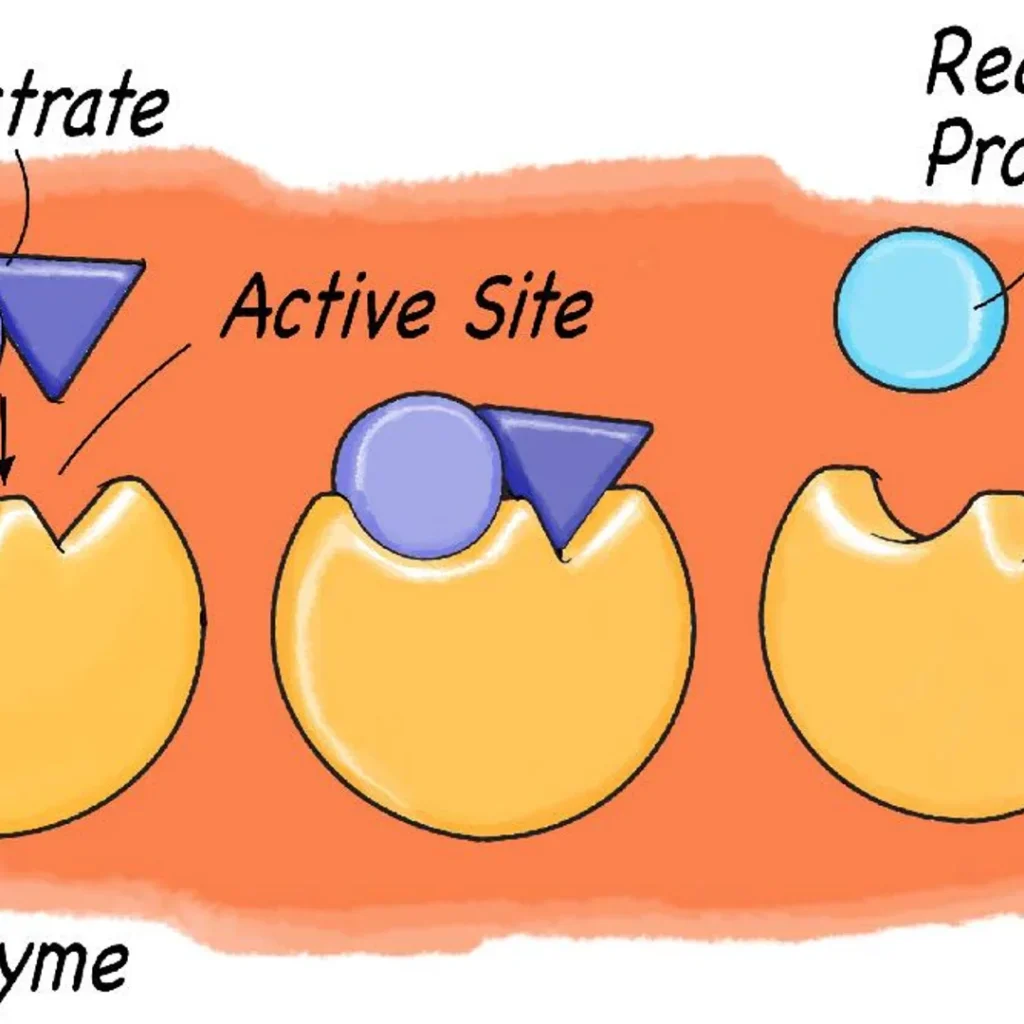
Enzymes: Enzymology & Kinetics What are Enzymes? Enzymes are biological catalysts that are predominantly protein in nature. They are specialized macromolecules that accelerate the rate of biochemical reactions within living organisms without being consumed in the process. Precisely: Biological: This highlights that enzymes originate from and function within living systems (cells, organisms). Catalysts: A catalyst is any substance that increases the rate of a chemical reaction without undergoing any net change itself. Enzymes achieve this by providing an alternative reaction pathway with a lower activation energy. Predominantly Protein in Nature: The majority of known enzymes are proteins. It’s important to note the “predominantly” because there are exceptions, such as ribozymes (RNA molecules with catalytic activity), but for the purpose of general understanding, enzymes are equated with proteins. Accelerate the Rate of Biochemical Reactions: Enzymes can speed up reactions by factors of millions or even trillions. Without enzymes, most biological reactions would occur too slowly to sustain life. For example, the hydrolysis of urea by the enzyme urease occurs 10¹⁴ times faster! (100,000,000,000,000) Without Being Consumed in the Process: A defining characteristic of any catalyst is that it is regenerated at the end of the reaction. This means a single enzyme molecule can catalyze the transformation of many substrate molecules. Are biological catalysts, proteins in nature, made in the body of living things whose function is to catalyze chemical reactions in living cells. So that reactions occur at a rate compatible with cellular processes. Enzymes operate under specific conditions such as pH, temp, [S] etc.. Explain Enzyme Function How do they speed up reactions? How does it affect the energy of activation of a reaction? Energy of activation: Energy needed for molecules to react with one another Catalyst: Substance that increases the rate of a chemical reaction. From the graph, we have REACTANTS and we have PRODUCTS. Activation energy is the energy required to change Reactants into Products. Usually, it takes A LOT of energy to change Reactants into Products, BUT THIS TIME ROUND, Enzymes act as CATALYSTS, and Catalysts are substances that lower the energy of activation needed for a reaction to occur. Enzymes as Biological Catalysts: Lowering Activation Energy The primary function of enzymes is to accelerate the rate of biochemical reactions by lowering the activation energy (Ea) of the reaction. To understand this, let’s first consider the concept of activation energy: Activation Energy (Ea): For any chemical reaction to occur, reactant molecules must overcome an energy barrier. This barrier is the activation energy – the minimum amount of energy required to convert reactants into products. Think of it like pushing a ball over a hill. Transition State: At the peak of this energy barrier, the reactants are in an unstable, high-energy intermediate state called the transition state. They are neither fully reactants nor fully products. How Enzymes Lower Activation Energy: Enzymes do not change the overall thermodynamics of a reaction (i.e., they do not change the equilibrium constant or the net energy change, ΔG, between reactants and products). Instead, they provide an alternative, lower-energy pathway for the reaction to proceed. How? Bringing Reactants Together (Proximity and Orientation): Enzymes have a specific region called the active site, which is a three-dimensional cleft or pocket where the reactant molecule(s), known as the substrate(s), bind. By binding to the active site, the enzyme brings the substrates into close proximity and holds them in the correct orientation to react. Straining Substrate Bonds (Induced Fit): When the substrate binds, the enzyme often undergoes a slight conformational change, a phenomenon known as induced fit. This induced fit can subtly distort or strain specific bonds within the substrate, pushing it towards the unstable transition state. Providing an Optimal Microenvironment: The active site can create a favorable microenvironment. This might involve: Optimal pH: Certain amino acid side chains can act as acid or base catalysts. Excluding Water: In some cases, excluding water can prevent unwanted side reactions. Temperature: Increasing the temperature makes molecules move faster but biological systems are very sensitive to temperature changes. Enzymes can increase the rate of reactions without increasing the temperature. They do this by lowering the activation energy. They create a new reaction pathway, “a shortcut”, which occurs with less energy requirement. Analogy: Think of climbing over a mountain (high activation energy). An enzyme doesn’t change the height of the valleys (reactants and products), but it digs a tunnel through the mountain (provides a lower activation energy pathway), making it much easier and faster to get to the other side. Substrate: molecule that an enzyme acts upon to catalyze a chemical reaction. Enzyme Structure Enzymes are proteins. They have a globular shape. Have a complex 3-D structure. Enzymes are globular proteins with specific three-dimensional shapes that are made to function as biological catalysts. This structure includes a specialized region called the active site, which is where the enzyme binds to its specific substrate molecule to catalyze a reaction. The Protein Nature of Enzymes (Primary, Secondary, Tertiary, Quaternary Structure) Primary Structure: This is the linear sequence of amino acids linked by peptide bonds, determined by the gene encoding the enzyme. It dictates how the protein will fold. Secondary Structure: Localized, regular folding patterns of the polypeptide chain. The most common are: Alpha-helices (α-helices): Spiral structures. Beta-sheets (β-sheets): Extended, pleated structures. Tertiary Structure: The three-dimensional shape of a single polypeptide chain. This intricate shape is stabilized by various interactions: Hydrogen & Ionic bonds, Disulfide bridges, and Hydrophobic interactions. This unique tertiary structure creates the specific active site and is essential for the enzyme’s function. Quaternary Structure: This applies to enzymes composed of more than one polypeptide chain (subunits). Not all enzymes have a quaternary structure. The integrity of the 3D structure is essential for enzyme activity. Changes to this structure (e.g., denaturation) will lead to a loss of function. Simple Enzymes vs. Conjugated Enzymes Enzymes can be categorized based on their composition: Simple Enzymes: These enzymes are composed entirely of protein. Example: Urease, pepsin, trypsin. Conjugated Enzymes (Holoenzymes): Many enzymes require a