1
2
3
4
5
6
7
8
9
10
🎯 Score
0
⭐ High Score
0
🔥 Streak
0
0
NADH Produced
0
FADH₂ Produced
0
GTP Produced
0
CO₂ Released
Stage 1: The Great Entry 🚪
Acetyl-CoA + Oxaloacetate → Citrate: Committing to the Cycle!
Acetyl-CoA (C₂)
CH₃
C=O
S-CoA
O
2-Carbon fuel
High-energy thioester
High-energy thioester
🔗
Citrate Synthase
Oxaloacetate (C₄)
C=O
CH₂
CH₂
C=O
O
O
O
4-Carbon acceptor
Regenerated later
Regenerated later
⚡ Energy Investment: Thioester bond hydrolysis
The high-energy thioester bond in Acetyl-CoA powers this condensation
🎮 INSERTING YOUR TOKEN!
Acetyl-CoA is your "game token" - you insert it into the machine (citrate synthase) where it merges with the existing 4C platform.
This forms a 6C citrate molecule and commits you to playing through the entire cycle!
🎯 Key Points:
- ✅ C-C bond formation - only step that builds a bond
- ✅ Irreversible - commitment step to the cycle
- ✅ Oxaloacetate acts as a catalyst (regenerated)
- ✅ Energy from thioester bond makes reaction favorable
📝 Challenge Questions - Stage 1
Q1: Why is this step irreversible?
Q2: What happens to the CoA group?
Q3: Why is oxaloacetate called a catalyst?
🎉 Stage 1 Complete! Score: 0/30
Stage 2: The Isomerization Shuffle 🔄
Citrate → Isocitrate: Getting Ready for Oxidation!
Citrate (C₆)
COOH
CH₂
COH
CH₂
COOH
CH₂
O
O
O
O
6-Carbon
Tertiary alcohol (unstable)
Tertiary alcohol (unstable)
🎲
Aconitase
Isocitrate (C₆)
COOH
CH₂
CH
CH₂
COOH
CH₂
O
O
O
O
OH
6-Carbon
Secondary alcohol (oxidizable!)
Secondary alcohol (oxidizable!)
⚡ Energy Status: Near equilibrium
Two-step process via cis-aconitate intermediate
🔧 ADJUSTING THE SPARK PLUG!
Citrate's hydroxyl group is in the wrong position (tertiary). Aconitase "moves" it via dehydration then rehydration,
converting it to isocitrate's secondary alcohol - now perfectly positioned for oxidation!
🎯 Key Points:
- ✅ Isomerization: Same formula, different structure
- ✅ Moves OH group from tertiary → secondary carbon
- ✅ Involves dehydration then rehydration
- ✅ Activates molecule for the first oxidation step
📝 Challenge Questions - Stage 2
Q1: Why is this rearrangement necessary?
Q2: What is the intermediate?
Q3: This reaction involves...
🎉 Stage 2 Complete! Score: 0/60
Stage 3: First Oxidation Strike ⚡
Isocitrate → α-Ketoglutarate: First NADH & CO₂!
Isocitrate (C₆)
COOH
CH₂
CH(OH)
CH₂
COOH
CH₂
O
O
O
O
OH
6-Carbon
Ready to oxidize
Ready to oxidize
⚡
Isocitrate Dehydrogenase
α-Ketoglutarate (C₅)
COOH
C=O
CH₂
COOH
CH₂
O
O
O
O
5-Carbon
α-keto acid
α-keto acid
+1
NADH + H⁺
↑
CO₂ Released
🎉 FIRST ENERGY HARVEST!
- ✅ Oxidation: Isocitrate loses 2 electrons
- ✅ Decarboxylation: One carbon leaves as CO₂
- ✅ NAD⁺ reduced: To NADH + H⁺ (energy carrier)
- ✅ Product: α-Ketoglutarate (5 carbons)
🎯 FIRST PRIZE CLAW!
You're playing a claw machine (isocitrate dehydrogenase). You grab the electron prize (NADH) and drop the waste carbon (CO₂) into the chute.
You walk away with one less carbon but an energy-rich NADH battery!
📝 Challenge Questions - Stage 3
Q1: What is the carbon count change?
Q2: What is the energy product?
Q3: What type of reaction is this?
🎉 Stage 3 Complete! NADH: 0 | CO₂: 1
Stage 4: Second Oxidation Blast 💥
α-Ketoglutarate → Succinyl-CoA: Second NADH & CO₂!
α-Ketoglutarate (C₅)
COOH
C=O
CH₂
COOH
CH₂
O
O
O
O
5-Carbon α-keto acid
Next to be oxidized
Next to be oxidized
💥
α-Ketoglutarate Dehydrogenase Complex
Succinyl-CoA (C₄)
COOH
CH₂
CH₂
COOH
S-CoA
O
O
O
O
4-Carbon
High-energy thioester
High-energy thioester
+1
NADH + H⁺
↑
CO₂ Released
+
CoA-SH Added
🎉 SECOND ENERGY CAPTURE!
- ✅ Oxidative decarboxylation (like Stage 3)
- ✅ Uses same enzyme complex as pyruvate dehydrogenase
- ✅ Produces high-energy thioester (succinyl-CoA)
- ✅ 2nd NADH and 2nd CO₂ per acetyl-CoA
🗑️ SECOND TRASH COMPACTOR!
Another carbon gets kicked out as CO₂ waste, and you grab another NADH energy prize!
The enzyme complex is identical to the one that converts pyruvate → acetyl-CoA.
📝 Challenge Questions - Stage 4
Q1: Total CO₂ released so far?
Q2: What makes succinyl-CoA special?
Q3: This enzyme is similar to...
🎉 Stage 4 Complete! NADH: 0 | CO₂: 2
Stage 5: Energy Cash-Out 💰
Succinyl-CoA → Succinate: The TCA Cycle's Only Direct ATP!
Succinyl-CoA (C₄)
COOH
CH₂
CH₂
COOH
S-CoA
O
O
O
O
High-energy thioester
Ready to release energy
Ready to release energy
💸
Succinyl-CoA Synthetase
Succinate (C₄)
COOH
CH₂
CH₂
COOH
O
O
O
O
Standard acid
Lower energy
Lower energy
+1
GTP → GDP + Pi
→
CoA-SH Released
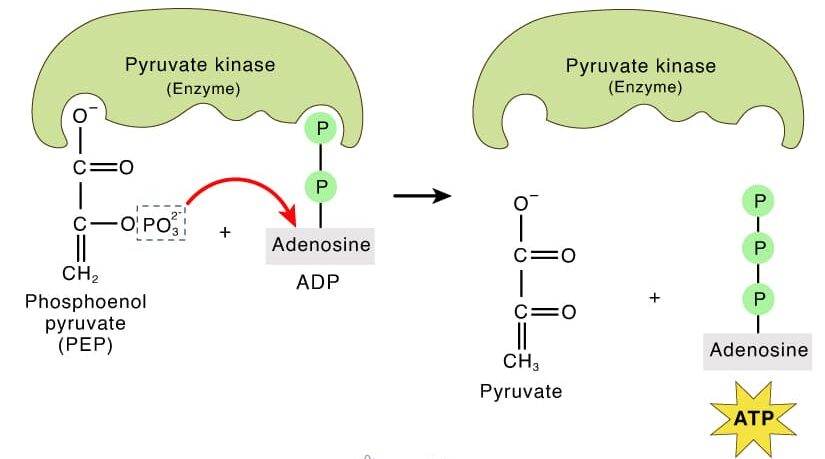
🎉 SUBSTRATE-LEVEL PHOSPHORYLATION!
- ✅ Thioester bond energy transferred to GTP
- ✅ GTP can phosphorylate ADP → ATP (nucleoside diphosphate kinase)
- ✅ Only direct energy currency produced in TCA cycle
- ✅ Equivalent to 1 ATP per acetyl-CoA
🏦 CASHING A CHECK!
Your succinyl-CoA is a cashier's check (high-energy thioester).
The bank (succinyl-CoA synthetase) cashes it into GTP cash.
You can immediately convert GTP to ATP at the currency exchange!
📝 Challenge Questions - Stage 5
Q1: What is unique about this step?
Q2: GTP is equivalent to...
Q3: The CoA is...
🎉 Stage 5 Complete! GTP: 1 | NADH: 0
Stage 6: FADH₂ Battery Charge 🔋
Succinate → Fumarate: Membrane-Bound Oxidation!
Succinate (C₄)
COOH
CH₂
CH₂
COOH
O
O
O
O
Saturated dicarboxylic acid
No double bonds
No double bonds
⚡
Succinate Dehydrogenase
(Complex II)
(Complex II)
Fumarate (C₄)
COOH
=CH
=CH
COOH
O
O
O
O
Trans-unsaturated
Double bond formed
Double bond formed
+1
FADH₂
→
FAD is reduced
🎉 THIRD ENERGY CAPTURE!
- ✅ Dehydrogenation: Removes 2 H atoms (2e⁻ + 2H⁺)
- ✅ Creates trans double bond (stereospecific)
- ✅ FAD reduced → FADH₂ (electron carrier)
- ✅ Enzyme is Complex II of electron transport chain
🔌 RECHARGING THE BATTERY!
Succinate dehydrogenase is like a wireless charging pad. As succinate passes over it,
2 hydrogen atoms (electrons) jump onto FAD, recharging it to FADH₂.
This "battery" will later power the electron transport chain!
📝 Challenge Questions - Stage 6
Q1: What is the key change in succinate?
Q2: Where is this enzyme located?
Q3: FADH₂ holds...
🎉 Stage 6 Complete! FADH₂: 1 | NADH: 0
Stage 7: Water Addition Splash 💧
Fumarate → L-Malate: Stereospecific Hydration!
Fumarate (C₄)
COOH
=CH
=CH
COOH
O
O
O
O
Trans double bond
No OH groups
No OH groups
💧
Fumarase
L-Malate (C₄)
COOH
CH(OH)
CH₂
COOH
O
O
O
O
OH
Hydroxy-dicarboxylic acid
OH added to C2
OH added to C2
⚡ Energy Status: Near equilibrium
Adds H₂O across double bond in trans configuration
💦 FILLING THE TANK!
Fumarase is like a water station at a car wash. As fumarate drives through,
it gets a precise water spray added to its double bond, becoming malate -
perfectly positioned for the final oxidation step!
🎯 Key Points:
- ✅ Hydration: Adds H₂O across double bond
- ✅ Stereospecific: Only L-malate formed (not D-)
- ✅ No energy carriers produced
- ✅ Prepares molecule for final oxidation
📝 Challenge Questions - Stage 7
Q1: What is added to fumarate?
Q2: This step is...
Q3: Energy carriers produced?
🎉 Stage 7 Complete! Malate ready for final step!
Stage 8: Final Oxidation & Regeneration 🏁
Malate → Oxaloacetate: Third NADH & Cycle Complete!
L-Malate (C₄)
COOH
CH(OH)
CH₂
COOH
O
O
O
O
OH
Hydroxy-dicarboxylic acid
Ready for final oxidation
Ready for final oxidation
🏁
Malate Dehydrogenase
Oxaloacetate (C₄)
C=O
CH₂
CH₂
C=O
O
O
O
O
4-Carbon keto-dicarboxylic acid
Cycle can restart!
Cycle can restart!
+1
NADH + H⁺
↻
Oxaloacetate regenerated!
🎉 CYCLE COMPLETE!
- ✅ 3rd NADH produced per acetyl-CoA
- ✅ Oxaloacetate regenerated (catalyst restored)
- ✅ Cycle ready for next acetyl-CoA
- ✅ Net reaction complete!
⭕ COMING FULL CIRCLE!
You've come full circle! Malate dehydrogenase is the exit ramp that drops you back at the starting line (oxaloacetate),
but not before grabbing one last NADH prize. The platform is ready for the next acetyl-CoA player!
📝 Challenge Questions - Stage 8
Q1: Why is this step highly favorable?
Q2: Total NADH per acetyl-CoA?
Q3: The cycle is now...
🎉 Stage 8 Complete! NADH: 0 | FADH₂: 0
Stage 9: Energy Accounting 📊
Counting the Total Energy Harvested per Acetyl-CoA!
Per Acetyl-CoA Input
CH₃
C=O
S-CoA
O
2-Carbon fuel
Starting material
Starting material
📊
Energy Audit
Total Energy Yield
3 NADH × 2.5 ATP = 7.5 ATP
1 FADH₂ × 1.5 ATP = 1.5 ATP
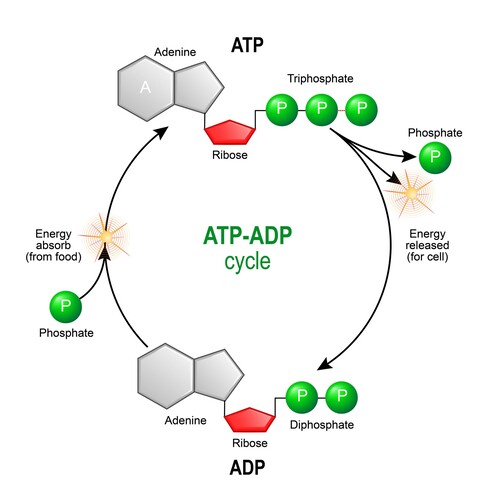
1 GTP = 1 ATP
Total ≈ 10 ATP!
Plus 2 CO₂ released
3
NADH (7.5 ATP)
1
FADH₂ (1.5 ATP)
1
GTP (1 ATP)
🎯 NET REACTION PER ACETYL-CoA:
Acetyl-CoA + 3 NAD⁺ + FAD + GDP + Pi + 2 H₂O →
2 CO₂ + 3 NADH + FADH₂ + GTP + CoA-SH + 3 H⁺
2 CO₂ + 3 NADH + FADH₂ + GTP + CoA-SH + 3 H⁺
🏦 COUNTING THE LOOT!
After completing the cycle, you count your winnings: 3 high-value NADH bonds (7.5 ATP),
1 FADH₂ bond (1.5 ATP), and 1 cash GTP (1 ATP). Total ≈ 10 ATP per acetyl-CoA!
Not bad for one spin through the cycle!
📝 Challenge Questions - Stage 9
Q1: Why does NADH produce more ATP than FADH₂?
Q2: What happened to the 2 carbons from acetyl-CoA?
Q3: The cycle is efficient because...
🎉 Energy Audit Complete! Total ≈ 10 ATP per cycle!
Stage 10: Master Control Panel 🎛️
Regulation & Integration: The Power Plant Command Center!
Regulatory Enzymes
Citrate Synthase
Isocitrate DH
α-Ketoglutarate DH
Three control points
Rate-limiting steps
Rate-limiting steps
🎛️
Regulatory Network
Key Regulators
Inhibitors: ATP, NADH, succinyl-CoA
Activators: ADP, Ca²⁺
Feedback inhibition
Allosteric control
Responds to cell energy status
Responds to cell energy status
⚡ Regulation Principle: Energy Status
High [ATP]/[NADH] = "Energy rich" → Slow down cycle
High [ADP]/[Ca²⁺] = "Energy needed" → Speed up cycle
High [ADP]/[Ca²⁺] = "Energy needed" → Speed up cycle
🎯 Key Regulatory Features:
- ✅ Citrate Synthase: Inhibited by ATP, NADH, succinyl-CoA (feedback)
- ✅ Isocitrate DH: Activated by ADP/Ca²⁺, inhibited by ATP/NADH
- ✅ α-Ketoglutarate DH: Inhibited by ATP, NADH, succinyl-CoA
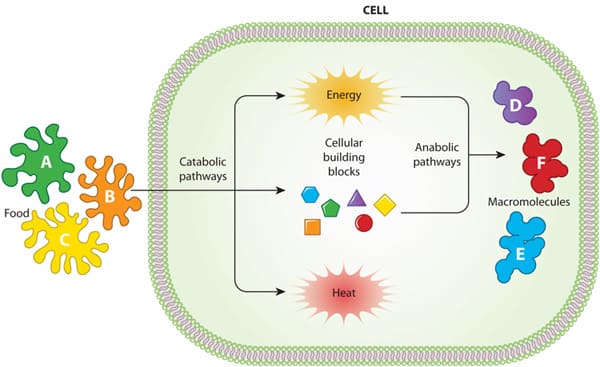
- ✅ Amphibolic: Both catabolic (energy) and anabolic (biosynthesis)
- ✅ Intermediates feed: Amino acid synthesis, fatty acid synthesis
🤖 SMART FACTORY CONTROL!
The TCA cycle is like a smart factory that adjusts production based on inventory levels.
When ATP "inventory" is full, production slows down. When ADP "orders" pile up, production accelerates.
The factory also produces "spare parts" (intermediates) for other factories (biosynthetic pathways)!
📝 Challenge Questions - Stage 10
Q1: Why does high ATP inhibit the cycle?
Q2: What activates the cycle?
Q3: "Amphibolic" means...
🎉 Stage 10 Complete! Full Mastery Achieved!
🏆 TCA Cycle Mastery Complete!
3
NADH per cycle
1
FADH₂ per cycle
1
GTP per cycle
≈10
ATP equivalent
🎯 Complete Journey Recap:
- ✅ Stage 1: Acetyl-CoA + oxaloacetate condensed via citrate synthase (commitment)
- ✅ Stage 2: Citrate isomerized to isocitrate via aconitase (OH repositioning)
- ✅ Stage 3: 1st oxidation: isocitrate → α-ketoglutarate (1 NADH, 1 CO₂)
- ✅ Stage 4: 2nd oxidation: α-ketoglutarate → succinyl-CoA (1 NADH, 1 CO₂)
- ✅ Stage 5: Substrate-level phosphorylation: succinyl-CoA → succinate (1 GTP)
- ✅ Stage 6: 3rd oxidation: succinate → fumarate (1 FADH₂)
- ✅ Stage 7: Hydration: fumarate → L-malate (water addition)
- ✅ Stage 8: Final oxidation: malate → oxaloacetate (1 NADH, cycle complete)
- ✅ Stage 9: Energy accounting: ~10 ATP per acetyl-CoA
- ✅ Stage 10: Regulation: Allosteric control by ATP/NADH/ADP/Ca²⁺
🚀 Amphibolic Powerhouse: The TCA cycle is both energy-generating (catabolic) and provides biosynthetic precursors (anabolic) for amino acids, fatty acids, and more!