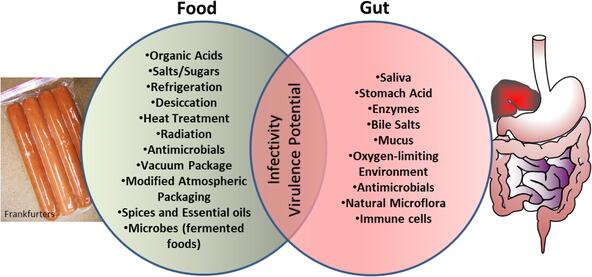
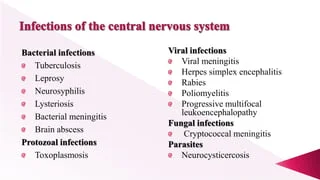
Infections of the Central Nervous System (CNS) Infections of the Central Nervous System (CNS) Exam Prep Focus Welcome to CNS Infections! This section is highly tested on exams because recognizing a CNS infection quickly is a matter of life and death. 1. Introduction to CNS Infections The Central Nervous System (brain and spinal cord) is a highly protected fortress. However, when invaders breach the walls, the results are devastating. Why? Because the cranium (skull) and vertebrae are rigid bones. When infection causes inflammation and swelling, there is nowhere for the tissue to expand. This leads to increased pressure, crushing vital brain structures, resulting in significant morbidity (disability) and mortality (death). Deep The Monro-Kellie Doctrine To understand why brain swelling is so lethal, think of the skull as a rigid, closed box containing three things: Brain Tissue (80%), Blood (10%), and CSF (10%). If a bacterial infection causes the brain tissue to swell with edema, it takes up more space. Because the skull cannot expand, the body must squeeze out the blood and CSF to make room. This leads to brain ischemia (lack of blood flow) and eventually pushes the brain out the bottom of the skull (herniation), which is fatal. Agents: Viruses, bacteria, fungi, protozoa, and helminths (parasites). The Mimics: Not everything that looks like an infection is one. Tumors, medications, and systemic illnesses can present with identical symptoms. Timeline of Infection: Acute: Hours to days (highly virulent organisms, e.g., Bacterial Meningitis). Subacute: Days to weeks. Chronic: Weeks to months (e.g., Tuberculosis, Fungal infections). Meningitis vs. Encephalitis The distinction between these syndromes is technically artificial (since etiology and pathology often overlap—e.g., Tuberculous meningitis can be subacute or chronic), but it is crucial for guiding clinical management. Acute Meningitis: Inflammation of the meninges (the protective layers covering the brain). Characterized by the onset of meningeal symptoms over hours to days. Headache is the prominent early symptom, followed later by confusion, stupor, or coma if untreated. Chronic Meningitis: Symptoms, signs, and abnormal Cerebrospinal Fluid (CSF) findings last for at least 4 weeks. Encephalitis: Infection/inflammation of the brain tissue itself (parenchyma). Distinguished by decreased mentation (confusion, stupor, altered mental status) or seizures EARLY in the course of the disease, with minimal meningeal signs (stiff neck). Clinical Pearl & Classic Presentation Most patients with CNS infections present with a classic triad/tetrad: Fever, Headache, Altered Mental Status, and Focal Neurologic Deficits. However, be careful on exams! These are nonspecific, and not every patient will have all of them. Clinical Scenario 1 The ER Triage: Meningitis A 20-year-old college student presents to the ER with a severe, pounding headache, a fever of 103°F, and severe photophobia (light hurts his eyes). When you ask him to touch his chin to his chest, he screams in pain (nuchal rigidity). He knows his name, location, and the date. Diagnosis: Meningitis. The infection is currently localized to the meningeal wrappers; his actual brain tissue is intact, so his mental status is completely normal right now. Clinical Scenario 2 The ER Triage: Encephalitis A 45-year-old man is brought in by his wife. He has a mild fever. She says he has been acting “bizarrely,” talking to people who aren’t there, and earlier he had a grand mal seizure. His neck is completely soft and pain-free when bent. Diagnosis: Encephalitis. The infection has directly attacked the brain tissue (parenchyma), immediately altering his personality and triggering electrical storms (seizures), without inflaming the meninges. 2. Epidemiology and Etiology (The “Who” and “What”) A. Bacterial Meningitis Bacterial meningitis remains a major global threat. Historically, Haemophilus influenzae type B (HiB) was a leading cause in children, but thanks to the HiB vaccine, its incidence has drastically declined. The “Big Three” (Account for >80% of cases): Haemophilus influenzae (45% historically, capsular type B strains) Streptococcus pneumoniae (47%, 18 pneumococcal serotypes) Neisseria meningitidis (Serogroups B, C, and Y) Other important causes: Streptococcus agalactiae (Group B Strep – 52% incidence in its specific demographic). Most common cause in neonates! Listeria monocytogenes (8%, serotypes 1/2b and 4b). Affects the very young, very old, and pregnant/immunocompromised. Aerobic Gram-Negative Bacilli (Klebsiella, E. coli, Serratia, Pseudomonas, Salmonella). Staphylococci (S. aureus, S. epidermidis). Exam High-Yield: Bacteria by Age & Predisposing Factor Age / Risk Factor Bacterial Pathogens to Suspect Clinical Logic (Why?) < 1 month (Neonate) S. agalactiae, E. coli, L. monocytogenes, Klebsiella pneumoniae Baby catches these passing through the mother’s birth canal or from maternal blood. 1 – 23 months S. agalactiae, E. coli, H. influenzae, S. pneumoniae, N. meningitidis Maternal antibodies wane; baby is exposed to respiratory droplets in daycare. 2 – 50 years (Adults) S. pneumoniae, N. meningitidis Standard community-acquired respiratory transmission. (Close quarters like dorms/military barracks highly favor N. meningitidis). > 50 years (Elderly) S. pneumoniae, N. meningitidis, L. monocytogenes, Gram-negative bacilli Aging immune system allows Listeria (from unpasteurized foods) and gut bacteria to invade. Immunocompromised S. pneumoniae, N. meningitidis, L. monocytogenes, Gram-negatives (incl. P. aeruginosa) Lack of T-cell/B-cell function allows opportunistic bugs to thrive. Basilar Skull Fracture S. pneumoniae, H. influenzae, Group A Strep Fracture connects the nasopharynx directly to the brain, allowing respiratory flora to leak in. Head Trauma / Neurosurgery S. aureus, S. epidermidis, P. aeruginosa Skin flora and resistant hospital bugs get pushed directly into the skull. Exam Pearl: The Listeria Threat Listeria monocytogenes is unique because it grows extremely well in cold temperatures (like inside a refrigerator). This is why pregnant women, the elderly, and immunocompromised patients are explicitly warned to avoid unpasteurized soft cheeses, cold deli meats, and hot dogs. Eating these can introduce Listeria into the gut, which then crosses into the blood and preferentially attacks the meninges. B. Viral Meningitis Viruses are the major cause of “Aseptic Meningitis”. “Aseptic” means the patient has meningitis symptoms and lymphocytic pleocytosis (high lymphocyte white blood cells in CSF), but routine bacterial cultures come back negative. Enteroviruses: The most common cause overall. Herpesviruses: HSV-1, HSV-2, VZV (Chickenpox/Shingles), CMV, EBV, HHV-6/7/8. (Exam note: HSV-1 is the most common cause of fatal, sporadic viral encephalitis, notoriously destroying