
Pharyngitis: Causes, Diagnosis, Treatment and Prevention
On this page
1 Overview
Pharyngitis — inflammation of the pharynx — is among the most common reasons for outpatient visits and antibiotic prescriptions worldwide. It presents with sore throat, odynophagia and fever, and is caused overwhelmingly by respiratory viruses; only a minority of cases are bacterial, the clinically dominant one being group A β-haemolytic streptococcus (GAS). The challenge is not treating the sore throat — that is usually simple — but separating the bacterial minority, whose complications (rheumatic fever, glomerulonephritis, peritonsillar abscess) antibiotics prevent, from the viral majority, which antibiotics only harm through resistance and side effects.
2 Learning Objectives
- List the viral, bacterial and other causes of pharyngitis in order of frequency.
- Differentiate viral from streptococcal pharyngitis on clinical grounds.
- Apply the Centor criteria (and its McIsaac age modification) to decide who needs testing for GAS.
- Describe the suppurative and non-suppurative complications of streptococcal pharyngitis and their prevention.
- Outline evidence-based treatment, including first-line antibiotics, supportive care and the danger signs of deep neck space infection.
3 The Pharynx in Clinical Context
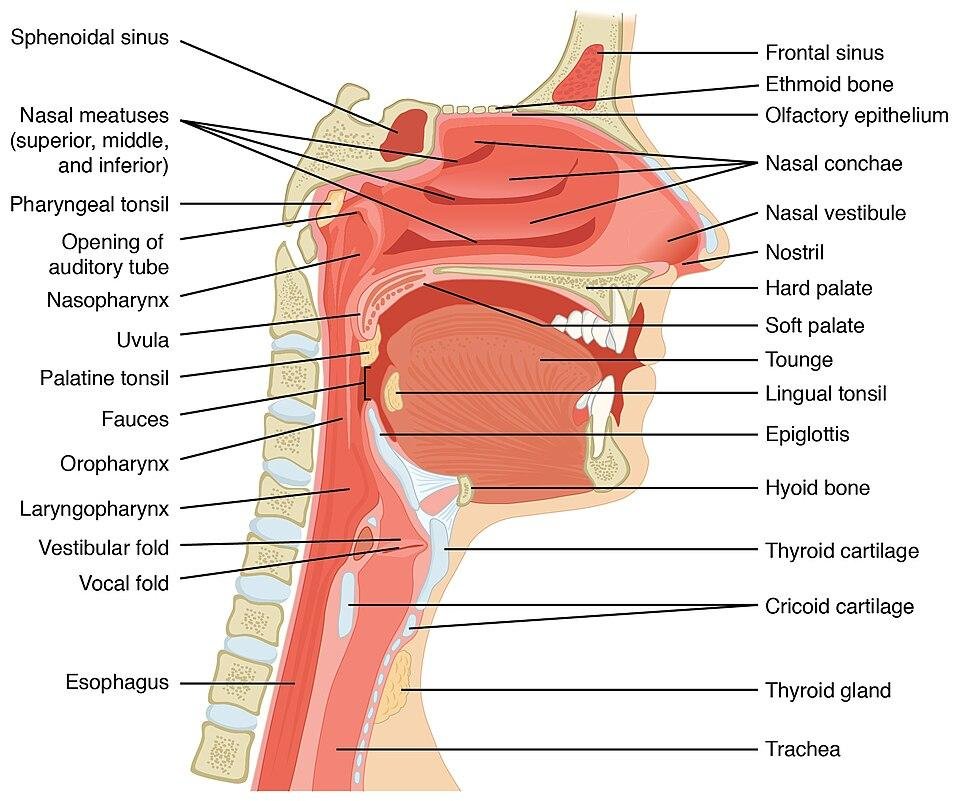
The pharynx is a fibromuscular tube extending from the skull base to the oesophagus (C6), divided into nasopharynx, oropharynx and laryngopharynx. Waldeyer's ring — adenoids, tubal tonsils, palatine tonsils and lingual tonsil — forms a ring of lymphoid tissue at its entrance that samples incoming pathogens; this is why most "sore throats" are really tonsillopharyngitis. Its proximity explains the spread patterns clinicians see: to the middle ear via the Eustachian tube (otitis media), to the sinuses (sinusitis), to the larynx (laryngitis), and downward to deep neck spaces (parapharyngeal and retropharyngeal abscess).
4 Aetiology
Scroll the table sideways on a smaller screen.
| Category | Agents | Clinical notes |
|---|---|---|
| Viral (~50–80%) | Rhinovirus, coronavirus, adenovirus, influenza/parainfluenza, RSV, EBV, enterovirus, HIV (acute seroconversion) | Coryza, cough, hoarseness, conjunctivitis, oral ulcers, exanthem favour viral cause |
| Group A streptococcus (15–30% in children, 5–15% adults) | Streptococcus pyogenes | Sudden onset, fever, exudate, tender anterior cervical nodes, no cough; risk of rheumatic fever |
| Other bacterial | Groups C/G strep, Neisseria gonorrhoeae (sexually active), Corynebacterium diphtheriae (membrane — check vaccination), Fusobacterium necrophorum (young adults; Lemierre syndrome), Mycoplasma, Chlamydophila | Consider with risk factors: sexual exposure, poor immunisation, severe unilateral disease |
| Non-infectious | Reflux (LPR), allergy/postnasal drip, irritants (smoke, dust), dry air, malignancy, medication (e.g. captopril), neutropenia, PFAPA syndrome | Chronic/recurrent sore throat without fever |
5 Clinical Features
Viral pharyngitis
Gradual onset sore throat with cough, rhinorrhoea, hoarseness, conjunctivitis, oral ulcers and viral exanthem. Examination shows diffuse pharyngeal erythema without prominent exudate; anterior cervical nodes may be enlarged but are less tender. EBV (infectious mononucleosis) causes marked exudative pharyngitis with posterior (rather than anterior) cervical lymphadenopathy, splenomegaly and atypical lymphocytes — avoid amoxicillin, which triggers a morbilliform rash.
Streptococcal pharyngitis
Sudden onset of sore throat, fever, painful swallowing, headache and abdominal pain (especially in children). Examination: tonsillar exudates, tender anterior cervical lymphadenitis, palatal petechiae, strawberry tongue, uvular oedema; a fine sandpaper (scarlatinal) rash indicates scarlet fever. Cough, coryza, hoarseness and conjunctivitis argue against GAS.
Danger signs of deep neck space infection
- "Hot potato" muffled voice, drooling, trismus
- Uvular deviation, bulging of the soft palate or pharyngeal wall → peritonsillar abscess (quinsy)
- Tripod positioning, stridor, tachypnoea, retractions, toxicity → epiglottitis or retropharyngeal abscess — do not instrument the pharynx; secure the airway first
6 Centor Criteria & Testing for GAS
The Centor criteria estimate the probability of streptococcal pharyngitis in ambulatory patients (one point each):
- Tonsillar exudates
- Tender anterior cervical lymphadenopathy
- Fever > 38 °C
- Absence of cough
The McIsaac modification adds age: +1 for age 3–14, 0 for 15–44, −1 for ≥ 45.
Scroll the table sideways on a smaller screen.
| Score | Probability of GAS | Action |
|---|---|---|
| 0–1 | 1–10% | No testing, no antibiotics — supportive care only |
| 2–3 | 11–35% | Rapid antigen detection test (RADT) or throat culture; treat only if positive |
| 4–5 | 51–53% | Test preferred; in high-risk settings or strong suspicion, treat empirically after cultures |
Tests: RADT is highly specific but less sensitive — a negative RADT in children should be backed by throat culture (the reference standard, result in 24–48 h). Scoring systems are not reliable predictors in young children, and clinical judgement always overrides the score. Concurrent cough, rhinorrhoea, ulcers, conjunctivitis or exanthem make viral aetiology likely enough that no testing is needed.
7 Complications
Suppurative (from direct spread)
- Peritonsillar abscess (quinsy) — fever, trismus, uvular deviation, "hot potato" voice; needs aspiration/incision and drainage plus antibiotics.
- Retropharyngeal / parapharyngeal abscess — children; drooling, neck stiffness, torticollis, airway threat; CT neck, surgical drainage, IV antibiotics.
- Otitis media, sinusitis, mastoiditis; Lemierre syndrome (fusobacterial septicaemia with jugular vein thrombophlebitis and lung emboli).
Non-suppurative (immune-mediated, after GAS)
- Acute rheumatic fever — 2–4 weeks post-infection; migratory polyarthritis, carditis, Sydenham chorea, erythema marginatum, subcutaneous nodules (Jones criteria). Antibiotic treatment of GAS pharyngitis is given primarily to prevent this.
- Post-streptococcal glomerulonephritis — 1–3 weeks post-infection; haematuria, oedema, hypertension; antibiotics do not prevent it, unlike rheumatic fever.
- Post-streptococcal reactive arthritis, PANDAS (contested).
8 Management
Viral pharyngitis
Supportive: paracetamol or ibuprofen for pain and fever, warm saline gargles, lozenges, adequate fluids and rest. Antibiotics are not indicated and their misuse breeds resistance.
Confirmed/suspected GAS pharyngitis
- First line — penicillin V (500 mg orally twice daily) or amoxicillin (500 mg three times daily, or 50 mg/kg once daily in children) for 10 days, even if symptoms resolve earlier (eradication prevents rheumatic fever).
- Penicillin allergy — cephalexin if non-anaphylactic; clindamycin or a macrolide (azithromycin, clarithromycin) if severe allergy — check local resistance.
- Symptom relief — analgesics/antipyretics; steroids may shorten pain duration in severe cases but are not routine.
- Adjuncts — avoid amoxicillin when EBV is possible; treat household/close-contact cases selectively (outbreaks, high-risk contacts), not routinely.
Deep neck space infection
Hospital admission, IV broad-spectrum antibiotics covering streptococci, staphylococci and anaerobes, airway management (sitting, ENT/anaesthesia standby), urgent imaging (CT) and surgical drainage of abscesses.
9 Special Forms
- Diphtheria — grey adherent membrane with bleeding on removal, bull-neck lymphadenitis, myocarditis and neuropathy; unimmunised or partially immunised children; treat urgently with antitoxin plus penicillin/erythromycin and isolate; report to public health. A membranous pharyngitis in an unimmunised child is diphtheria until proven otherwise.
- Gonococcal pharyngitis — mild exudative pharyngitis in sexually active patients; ceftriaxone after confirmation; screen for other STIs.
- EBV/infectious mononucleosis — exudative pharyngitis, posterior nodes, splenomegaly, atypical lymphocytes; supportive; avoid amoxicillin and contact sports (splenic rupture).
- HIV seroconversion — acute retroviral syndrome can mimic mononucleosis with exudative pharyngitis.
- Chronic/recurrent pharyngitis — evaluate for reflux, allergy, irritants, smoking, malignancy (unilateral, persistent, with weight loss or referred otalgia).
10 Recurrent Pharyngitis & Tonsillectomy
Most recurrent sore throats remain viral or related to allergy, reflux and irritants, but a small subgroup of children and adults have recurrent documented GAS tonsillopharyngitis that merits surgical consideration. The Paradise criteria remain the standard for tonsillectomy referral:
- Seven or more documented GAS episodes in one year, or
- Five episodes per year for two consecutive years, or
- Three episodes per year for three consecutive years,
— each episode ideally documented by positive RADT/culture, or with two of: fever, exudate, tender nodes, absence of cough. Tonsillectomy is also indicated for peritonsillar abscess (particularly recurrent), PFAPA syndrome, and suspected malignancy. Before referring, confirm genuine GAS recurrence rather than carrier state: streptococcal carriers have positive cultures between symptomatic episodes but no immune response (low or absent ASO/anti-DNase B titres) and do not respond symptomatically to antibiotics. Carriers do not need eradication unless they are the source of an outbreak or live with a person with rheumatic fever.
11 Prevention
- Hand hygiene and respiratory etiquette reduce viral transmission.
- Complete immunisation — diphtheria–pertussis–tetanus and measles-containing vaccines prevent important causes of severe pharyngitis.
- Antibiotic stewardship — treat only confirmed or strongly suspected GAS; explain to patients why their viral sore throat does not need antibiotics.
- Secondary prophylaxis — patients with rheumatic fever require long-term penicillin prophylaxis to prevent recurrence.
12 Viva & Exam Points
- Commonest cause — viruses; cough/coryza/ulcers = viral, no test needed.
- Centor 4 — exudates, tender anterior cervical nodes, fever, no cough; McIsaac adds age.
- Test — RADT (specific) backed by culture in children (sensitive); treat positives.
- First-line drugs — penicillin V or amoxicillin × 10 days.
- Why treat — prevent rheumatic fever (and suppuration); PSGN is not prevented.
- Quinsy signs — uvular deviation, trismus, hot-potato voice → aspirate/drain.
- Diphtheria — membrane, myocarditis, antitoxin; check immunisation.
13 References
- Acute Pharyngitis. StatPearls. NCBI Bookshelf — viral vs bacterial differentiation, Centor criteria, testing strategy.
- Anatomy, Head and Neck: Pharynx. StatPearls. NCBI Bookshelf.
- OpenStax Anatomy and Physiology 2e — The Mouth, Pharynx, and Esophagus.
For education only. Apply current Uganda Clinical Guidelines and local protocols when managing patients.
Pingback: Adenotonsillitis: Diagnosis, Treatment & Complications