Body Regions, Abdominal Quadrants, and Terminology (1)

Body Regions, Abdominal Quadrants, and Terminology

Body Regions, Abdominal Quadrants & Terminology

Anatomy: Body Regions, Quadrants, and Terminology
ANATOMY & PHYSIOLOGY

I. Introduction to Body Regions

The human body is divided into various anatomical regions to facilitate precise localization, communication, and study. This regional approach helps in systematically understanding the organization of structures (muscles, bones, nerves, vessels) and organs, which is crucial for physical examination, diagnosis, and surgical interventions.

The body is broadly divided into two main parts:

  1. Axial Region: Forms the main axis of the body, comprising the head, neck, and trunk.
  2. Appendicular Region: Consists of the limbs (appendages) attached to the axial skeleton.

II. The Axial Region

The axial region forms the central core of the body and includes the most vital organs for survival.

A. Head (Caput):

  1. Boundaries:
    • Superior: Vertex (highest point of the skull).
    • Inferior: Mandible (jawbone) and the base of the skull, connecting to the neck.
    • Anterior: Face, extending from the forehead to the chin.
    • Posterior: Occipital region.
    • Lateral: Temporal and parietal regions.
  2. Key Features/Subdivisions:
    • Cranium (Skull): Encloses and protects the brain. Subdivided into:
      • Frontal: Forehead.
      • Parietal: Sides and roof of the skull.
      • Temporal: Sides of the head, inferior to parietal.
      • Occipital: Back and base of the skull.
    • Face (Facies): Contains sensory organs and the entry points for the digestive and respiratory systems. Subdivided into:
      • Orbital: Around the eyes.
      • Nasal: Nose region.
      • Oral (Buccal): Mouth and cheeks.
      • Mental: Chin.
      • Zygomatic: Cheekbones.
      • Auricular: Ear region.
Clinical Significance (Head): Houses the brain (CNS), major sense organs (eyes, ears, nose, tongue), and is a common site for trauma, neurological assessment, and ENT (Ear, Nose, Throat) conditions.

B. Neck (Cervix):

  1. Boundaries:
    • Superior: Base of the skull and inferior border of the mandible.
    • Inferior: Superior border of the clavicles (collarbones) and the superior border of the sternum (breastbone), extending posteriorly to the first thoracic vertebra.
    • Anterior: From chin to suprasternal notch.
    • Posterior: From occipital region to upper back.
  2. Key Features/Subdivisions:
    • Anterior Cervical Region: Contains the trachea, larynx, thyroid gland, major blood vessels (carotid arteries, jugular veins), and neck muscles.
    • Posterior Cervical Region (Nuchal Region): Contains the cervical vertebrae and deep back muscles.
    • Lateral Cervical Region: Defined by the sternocleidomastoid muscle, dividing it into anterior and posterior triangles.
Clinical Significance (Neck): Critical passageway for vital structures (airway, esophagus, major vessels, nerves, spinal cord). Common site for lymph node examination, thyroid assessment, and trauma.

C. Trunk (Truncus):

The trunk is the largest region of the axial body, divided into the thorax, abdomen, and pelvis.

1. Thorax (Chest):

  • Boundaries:
    • Superior: Thoracic inlet (superior aperture of the thorax), continuous with the neck.
    • Inferior: Diaphragm, separating it from the abdomen.
    • Anterior: Sternum and costal cartilages.
    • Posterior: Thoracic vertebrae.
    • Lateral: Ribs and intercostal muscles.
  • Key Features/Subdivisions:
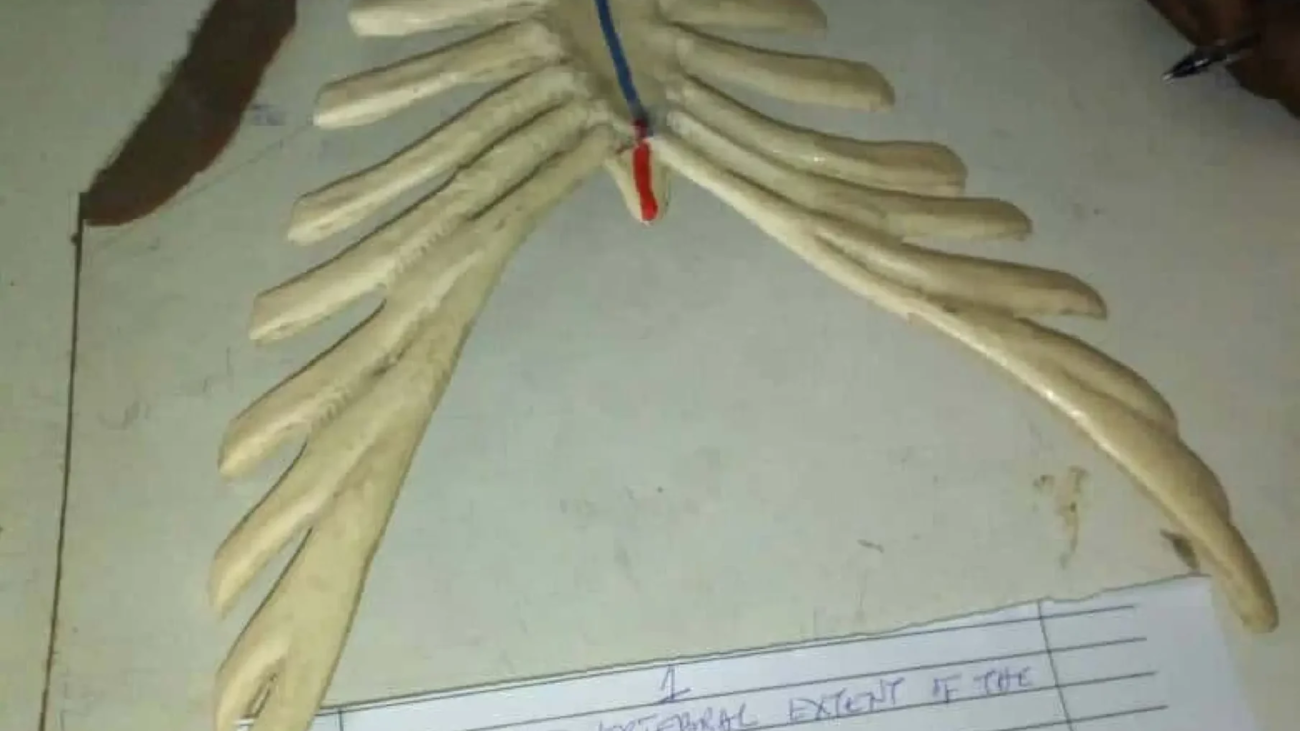
    • Thoracic Wall: Provides bony protection (rib cage).
    • Thoracic Cavity: Contains the heart, lungs, great vessels, esophagus, trachea, and thymus gland.
    • Breasts (Mammary Region): Located anteriorly, superficial to the pectoralis major muscle.
  • Clinical Significance: Houses vital respiratory and circulatory organs. Site for respiratory and cardiac examinations, chest trauma, and breast pathologies.

2. Abdomen:

  • Boundaries:
    • Superior: Diaphragm.
    • Inferior: Continuous with the pelvis at the level of the pelvic inlet.
    • Anterior/Lateral: Abdominal wall muscles (rectus abdominis, obliques, transversus abdominis).
    • Posterior: Lumbar vertebrae and associated muscles.
  • Key Features/Subdivisions:
    • Abdominal Cavity: Contains most of the digestive organs, spleen, kidneys, adrenal glands.
    • Abdominal Wall: Muscular layers provide support and protect organs.
  • Clinical Significance: Site of many digestive, urinary, and reproductive system pathologies. Crucial for abdominal examination, assessment of pain, and surgical access.

3. Pelvis:

  • Boundaries:
    • Superior: Pelvic inlet (linea terminalis), continuous with the abdomen.
    • Inferior: Pelvic outlet (pelvic diaphragm/floor).
    • Lateral: Hip bones (ilium, ischium, pubis).
    • Posterior: Sacrum and coccyx.
  • Key Features/Subdivisions:
    • Pelvic Cavity: Contains the urinary bladder, rectum, and reproductive organs.
    • Perineum: Region inferior to the pelvic diaphragm, containing external genitalia and anal canal.
  • Clinical Significance: Houses urinary, reproductive, and terminal digestive organs. Important for urological, gynecological, and colorectal examinations.

III. The Appendicular Region

The appendicular region consists of the upper and lower limbs, specialized for movement and manipulation.

A. Upper Limb (Extremitas Superior):

  1. Boundaries: Attached to the axial skeleton via the pectoral girdle (scapula and clavicle).
  2. Key Features/Subdivisions:
    • Shoulder (Deltoid Region): Proximal attachment to the trunk, site of glenohumeral joint.
    • Arm (Brachium): Between shoulder and elbow. Contains humerus.
    • Elbow (Cubital Region): Joint between arm and forearm.
    • Forearm (Antebrachium): Between elbow and wrist. Contains radius and ulna.
    • Wrist (Carpus): Joint between forearm and hand.
    • Hand (Manus): Distal end, highly mobile and manipulative. Subdivided into:
      • Palm (Palmar/Volar aspect): Anterior surface.
      • Dorsum (Dorsal aspect): Posterior surface.
      • Digits (Fingers): Phalanges.
  3. Clinical Significance: High mobility, frequent site of fractures, dislocations, nerve entrapments (e.g., carpal tunnel syndrome), and vascular issues.

B. Lower Limb (Extremitas Inferior):

  1. Boundaries: Attached to the axial skeleton via the pelvic girdle (hip bones).
  2. Key Features/Subdivisions:
    • Hip (Coxal Region): Proximal attachment to the trunk, site of hip joint.
    • Thigh (Femoral Region): Between hip and knee. Contains femur.
    • Knee (Patellar/Popliteal Region): Joint between thigh and leg.
      • Patellar: Anterior aspect (kneecap).
      • Popliteal: Posterior aspect (back of knee).
    • Leg (Crus): Between knee and ankle. Contains tibia and fibula.
    • Ankle (Tarsus): Joint between leg and foot.
    • Foot (Pes): Distal end, weight-bearing and propulsion. Subdivided into:
      • Dorsum: Superior surface.
      • Plantar: Inferior surface (sole).
      • Digits (Toes): Phalanges.
  3. Clinical Significance: Weight-bearing, locomotion. Common site for fractures, sprains (ankle), degenerative joint disease (knee, hip), and vascular conditions (e.g., DVT).
Region Subdivision(s) Key Bony/Muscular Boundaries Key Contents/Features
Axial: Head Cranium, Face Skull bones, Mandible Brain, Sense organs (eyes, ears, nose, mouth)
Axial: Neck Anterior, Posterior, Lateral Base of skull, Mandible, Clavicles, Sternum, C7 vertebra Trachea, Larynx, Thyroid, Carotids, Jugulars, Cervical spine
Axial: Trunk (Thorax) Thorax Rib cage, Sternum, Thoracic vertebrae, Diaphragm (inferior) Heart, Lungs, Esophagus, Trachea, Great vessels, Breasts
Axial: Trunk (Abdomen) Abdomen Diaphragm (superior), Pelvic inlet (inferior), Abdominal muscles, Lumbar vertebrae Most digestive organs, Kidneys, Spleen, Adrenals
Axial: Trunk (Pelvis) Pelvis Pelvic inlet (superior), Pelvic floor (inferior), Hip bones, Sacrum, Coccyx Bladder, Rectum, Reproductive organs
Appendicular: Upper Limb Shoulder, Arm, Elbow, Forearm, Wrist, Hand Pectoral girdle, Humerus, Radius, Ulna, Carpals, Metacarpals, Phalanges Muscles, Nerves (e.g., Brachial plexus), Vessels (e.g., Brachial artery)
Appendicular: Lower Limb Hip, Thigh, Knee, Leg, Ankle, Foot Pelvic girdle, Femur, Patella, Tibia, Fibula, Tarsals, Metatarsals, Phalanges Muscles, Nerves (e.g., Sciatic nerve), Vessels (e.g., Femoral artery)

IV. Abdominal Quadrants

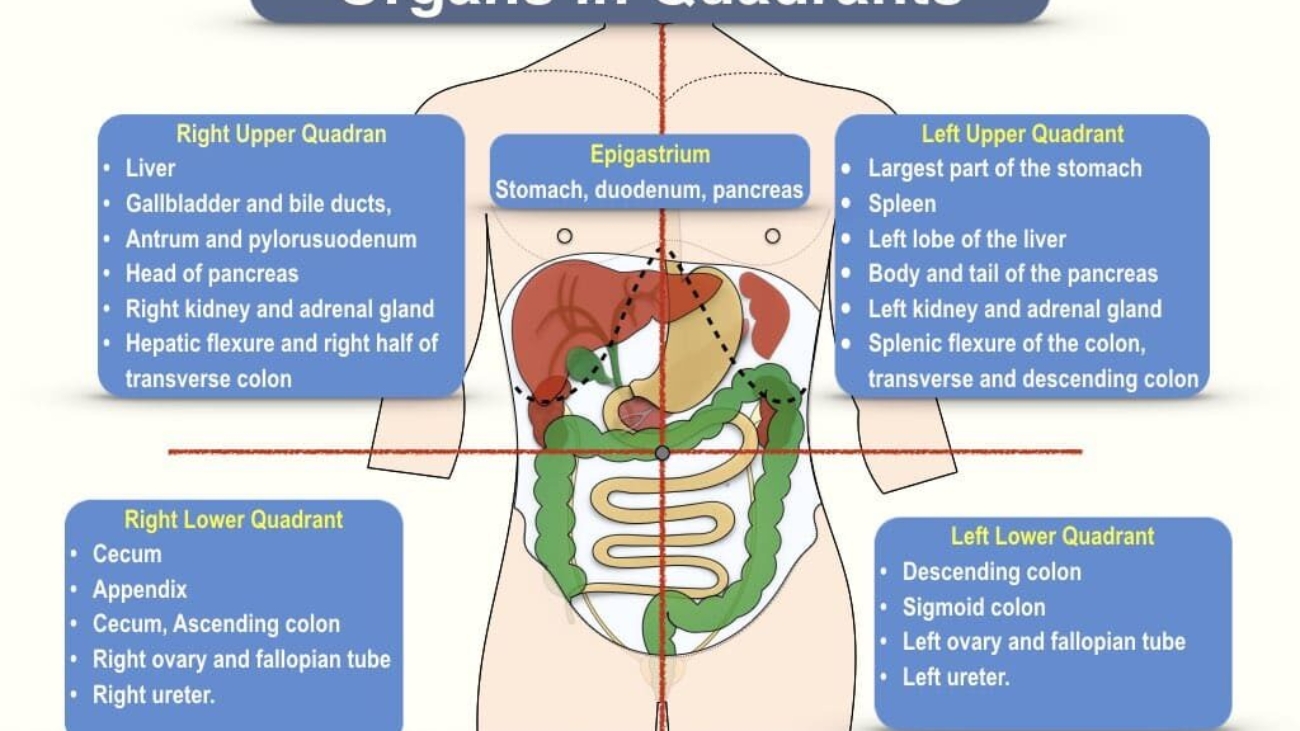
The abdominal cavity is a large and complex space. For simplicity and quick communication in clinical settings (especially during physical examinations or when discussing pain location), it is often divided into four quadrants. This division is less precise than the nine regions but provides a useful initial localization.

A. Delineation of Quadrants:

The abdomen is divided into four quadrants by two imaginary perpendicular lines that intersect at the umbilicus (navel):

  1. Median Plane (Mid-sagittal Plane): A vertical line that passes through the sternum, umbilicus, and pubic symphysis, dividing the abdomen into left and right halves.
  2. Transumbilical Plane (Transverse Plane): A horizontal line that passes through the umbilicus, dividing the abdomen into upper and lower halves.

1. Right Upper Quadrant (RUQ):

  • Liver: Right lobe (majority).
  • Gallbladder: Often the source of RUQ pain (cholecystitis).
  • Duodenum: First part of the small intestine.
  • Head of Pancreas: The most superior part of the pancreas.
  • Right Kidney: Upper part.
  • Right Adrenal Gland.
  • Hepatic Flexure of Colon: The bend between the ascending and transverse colon.
  • Pylorus of Stomach: Distal part of the stomach.

2. Left Upper Quadrant (LUQ):

  • Stomach: Majority of the stomach.
  • Spleen: Located posterolaterally, susceptible to injury.
  • Pancreas: Body and tail.
  • Liver: Small portion of the left lobe.
  • Left Kidney: Upper part.
  • Left Adrenal Gland.
  • Jejunum and Proximal Ileum: Parts of the small intestine.
  • Splenic Flexure of Colon: The bend between the transverse and descending colon.

3. Right Lower Quadrant (RLQ):

  • Cecum: First part of the large intestine.
  • Appendix: Attached to the cecum, classic site of appendicitis pain.
  • Ascending Colon: Lower part.
  • Ileum: Distal part of the small intestine.
  • Right Ovary and Fallopian Tube (Females).
  • Right Ureter.
  • Right Spermatic Cord (Males).
  • Part of the Urinary Bladder (when distended).

4. Left Lower Quadrant (LLQ):

  • Descending Colon.
  • Sigmoid Colon: S-shaped part of the large intestine, common site of diverticulitis pain.
  • Left Ovary and Fallopian Tube (Females).
  • Left Ureter.
  • Left Spermatic Cord (Males).
  • Part of the Urinary Bladder (when distended).

V. Abdominal Regions

For a more precise anatomical and clinical description, the abdomen is further divided into nine regions. This system is particularly useful for detailing localized pain, masses, or organ abnormalities.

A. Delineation of Regions:

The nine abdominal regions are created by two imaginary horizontal (transverse) planes and two imaginary vertical (sagittal/midclavicular) planes.

  1. Horizontal (Transverse) Planes:
    • Subcostal Plane (Superior Transverse Line): Passes inferior to the lowest part of the costal margins (rib cage), typically at the level of the 10th costal cartilage or the third lumbar vertebra (L3).
    • Transtubercular Plane (Inferior Transverse Line): Passes between the tubercles of the iliac crests (prominent points on the top of the hip bones), typically at the level of the fifth lumbar vertebra (L5).
  2. Vertical (Sagittal/Midclavicular) Planes:
    • Right Midclavicular Line: Extends vertically downward from the midpoint of the right clavicle to the middle of the inguinal ligament.
    • Left Midclavicular Line: Extends vertically downward from the midpoint of the left clavicle to the middle of the inguinal ligament.

B. The Nine Abdominal Regions and Their Major Organ Contents:

1. Epigastric Region (Upper Central):

Location: Superior to the umbilicus, between the right and left midclavicular lines, above the subcostal plane.

Contents: Stomach (Pyloric part), Duodenum (First part), Pancreas (Body), Liver (Left lobe), Aorta (Abdominal aorta), Inferior Vena Cava (IVC).

2. Umbilical Region (Central):

Location: Centered around the umbilicus, between the right and left midclavicular lines, between the subcostal and transtubercular planes.

Contents: Small Intestine (Jejunum and Ileum), Transverse Colon (Middle part), Kidneys (Medial parts), Ureters (Upper parts), Great Vessels (Aorta, IVC bifurcation).

3. Hypogastric (Pubic) Region (Lower Central):

Location: Inferior to the umbilicus, between the right and left midclavicular lines, below the transtubercular plane.

Contents: Urinary Bladder (when full), Small Intestine (Coils of ileum), Sigmoid Colon, Uterus (Females, gravid), Rectum (upper part).

4. Right Hypochondriac Region (Upper Right Lateral):

Location: Superior to the subcostal plane, lateral to the right midclavicular line.

Contents: Liver (Right lobe majority), Gallbladder, Right Kidney (Upper part), Duodenum (Part of it), Hepatic Flexure of Colon.

5. Left Hypochondriac Region (Upper Left Lateral):

Location: Superior to the subcostal plane, lateral to the left midclavicular line.

Contents: Spleen, Stomach (Fundus and body), Pancreas (Tail), Left Kidney (Upper part), Splenic Flexure of Colon, Part of Transverse Colon.

6. Right Lumbar (Flank) Region (Middle Right Lateral):

Location: Between the subcostal and transtubercular planes, lateral to the right midclavicular line.

Contents: Ascending Colon, Right Kidney (Lower part), Small Intestine (Coils of small bowel).

7. Left Lumbar (Flank) Region (Middle Left Lateral):

Location: Between the subcostal and transtubercular planes, lateral to the left midclavicular line.

Contents: Descending Colon, Left Kidney (Lower part), Small Intestine (Coils of small bowel).

8. Right Iliac (Inguinal) Region (Lower Right Lateral):

Location: Inferior to the transtubercular plane, lateral to the right midclavicular line.

Contents: Cecum, Appendix (McBurney's point), Distal Ileum, Right Ovary/Fallopian Tube (F), Right Spermatic Cord (M).

9. Left Iliac (Inguinal) Region (Lower Left Lateral):

Location: Inferior to the transtubercular plane, lateral to the left midclavicular line.

Contents: Sigmoid Colon, Left Ovary/Fallopian Tube (F), Left Spermatic Cord (M).

VI. Clinical Significance of Abdominal Quadrants and Regions

The division of the abdomen into quadrants and regions is not merely an academic exercise; it is a fundamental tool in clinical medicine, essential for clear communication, accurate diagnosis, and effective treatment.

A. Diagnostic Purposes:

  1. Localization of Symptoms:
    • Pain: The most common symptom prompting abdominal assessment. Localizing pain to a specific quadrant or region significantly narrows down the differential diagnosis.
      • Example: Right Lower Quadrant (RLQ) pain with migration from the umbilical region strongly suggests appendicitis.
      • Example: Right Upper Quadrant (RUQ) pain, especially post-prandial, is characteristic of cholecystitis (gallbladder inflammation).
      • Example: Left Lower Quadrant (LLQ) pain in an older adult often points to diverticulitis.
      • Example: Epigastric pain can indicate gastritis, peptic ulcer disease, or even cardiac issues (referred pain).
    • Tenderness/Rebound Tenderness: Indicates inflammation or irritation of underlying organs or peritoneum. Precise localization helps identify the affected structure.
    • Masses/Swelling: Identifying a palpable mass in a specific region helps determine its potential origin (e.g., enlarged liver in RUQ, splenic enlargement in LUQ, ovarian cyst in iliac regions).
    • Referred Pain: Knowledge of organ innervation patterns helps understand how pain from one organ can be perceived in a distant body region. For instance, diaphragmatic irritation (e.g., from a ruptured spleen or subphrenic abscess) can cause pain referred to the shoulder (due to phrenic nerve irritation).
  2. Differential Diagnosis: Each quadrant/region has a characteristic set of organs. Knowing these allows clinicians to quickly generate a list of possible conditions based on the patient's presenting symptoms.
    • Example: A patient presenting with fever and RUQ pain will prompt consideration of cholecystitis, hepatitis, liver abscess, or ascending cholangitis, among others.

B. Physical Examination:

  1. Systematic Approach: Quadrants and regions provide a systematic framework for conducting a thorough abdominal examination (inspection, auscultation, percussion, palpation).
    • Inspection: Observing for distension, scars, rashes, pulsations, hernias in specific areas.
    • Auscultation: Listening for bowel sounds in all four quadrants to assess bowel motility.
    • Percussion: Tapping over regions to identify organ size (e.g., liver span in RUQ), presence of fluid (ascites), or gas (tympanitic sound over bowel).
    • Palpation: Gently and deeply pressing into each region to assess for tenderness, masses, organomegaly (enlarged organs), or guarding.
  2. Documentation: Provides a standardized language for documenting findings, ensuring consistency and clarity among healthcare providers.

C. Surgical Planning and Procedures:

  1. Incision Placement: Surgeons use regional anatomy to plan optimal incision sites to access specific organs while minimizing damage to surrounding structures.
    • Example: A McBurney incision for appendectomy in the RLQ, or a subcostal incision for gallbladder removal in the RUQ.
  2. Organ Identification: During surgery, knowledge of regional anatomy helps surgeons quickly identify and differentiate organs.
  3. Endoscopic Procedures: Guiding instruments during laparoscopy or endoscopy relies on understanding the spatial relationships of abdominal contents within these regions.
  4. Biopsy and Aspiration: Precise localization ensures that biopsies (e.g., liver biopsy) or fluid aspirations (e.g., paracentesis) are performed safely and effectively.

D. Anatomical Teaching and Learning:

  • Simplification of Complexity: Breaking down the vast abdominal cavity into smaller, manageable units makes it easier for students to learn and recall organ locations.
  • Foundation for Advanced Concepts: A solid understanding of these basic regional divisions is crucial before delving into more complex anatomical relationships and disease processes.

VII. Utilizing Appropriate Anatomical Terminology

Accurate and consistent use of anatomical terminology is paramount in healthcare for effective communication, avoiding ambiguity, and ensuring patient safety.

A. General Principles of Anatomical Language:

  1. Standard Anatomical Position: All descriptions of body regions, locations, and movements are made with reference to the standard anatomical position (standing erect, feet parallel, arms at sides, palms facing forward). This provides a universal baseline.
  2. Directional Terms:
    • Superior (Cranial): Towards the head.
    • Inferior (Caudal): Away from the head, towards the lower part of the body.
    • Anterior (Ventral): Towards the front of the body.
    • Posterior (Dorsal): Towards the back of the body.
    • Medial: Towards the midline of the body.
    • Lateral: Away from the midline of the body.
    • Proximal: Closer to the point of origin or attachment (e.g., limb).
    • Distal: Farther from the point of origin or attachment (e.g., limb).
    • Superficial: Towards the body surface.
    • Deep: Away from the body surface, internal.
    • Ipsilateral: On the same side of the body.
    • Contralateral: On the opposite side of the body.
  3. Regional Terms: Using the precise names for body regions (e.g., "brachial" for arm, "femoral" for thigh, "lumbar" for lower back) rather than colloquial terms ensures accuracy.

B. Specific Application to Abdominal Regions:

  1. Quadrant Terminology (for broad localization):
    • "Patient complains of sharp pain in the Right Upper Quadrant (RUQ), radiating to the back."
    • "A palpable mass was noted in the Left Lower Quadrant (LLQ)."
    • "Bowel sounds are present and active in all four quadrants."
  2. Regional Terminology (for precise localization):
    • "Tenderness elicited on deep palpation of the Right Iliac Region (McBurney's point)."
    • "The patient reports a burning sensation localized to the Epigastric Region."
    • "An enlarged spleen was palpated extending into the Left Hypochondriac and Left Lumbar Regions."
    • "A hernia was identified in the Hypogastric Region, superior to the pubic symphysis."
  3. Combining Terms: Clinicians often combine regional terms with directional terms for even greater specificity.
    • "Pain is superficial in the right lumbar region."
    • "The lesion is located medial to the left midclavicular line within the umbilical region."
CRITICAL RULE: AVOIDING AMBIGUITY
  • Always use anatomical terms over vague descriptions. Instead of "stomach area," say "epigastric region" or "LUQ" depending on specificity required.
  • When reporting findings, be consistent with the chosen system (quadrants or regions) and always reference the standard anatomical position implicitly.

Source: https://doctorsrevisionuganda.com | Whatsapp: 0726113908

Anatomy: Body Regions & Quadrants Quiz
Logo

Body Regions & Quadrants

Test your knowledge with these 20 questions.

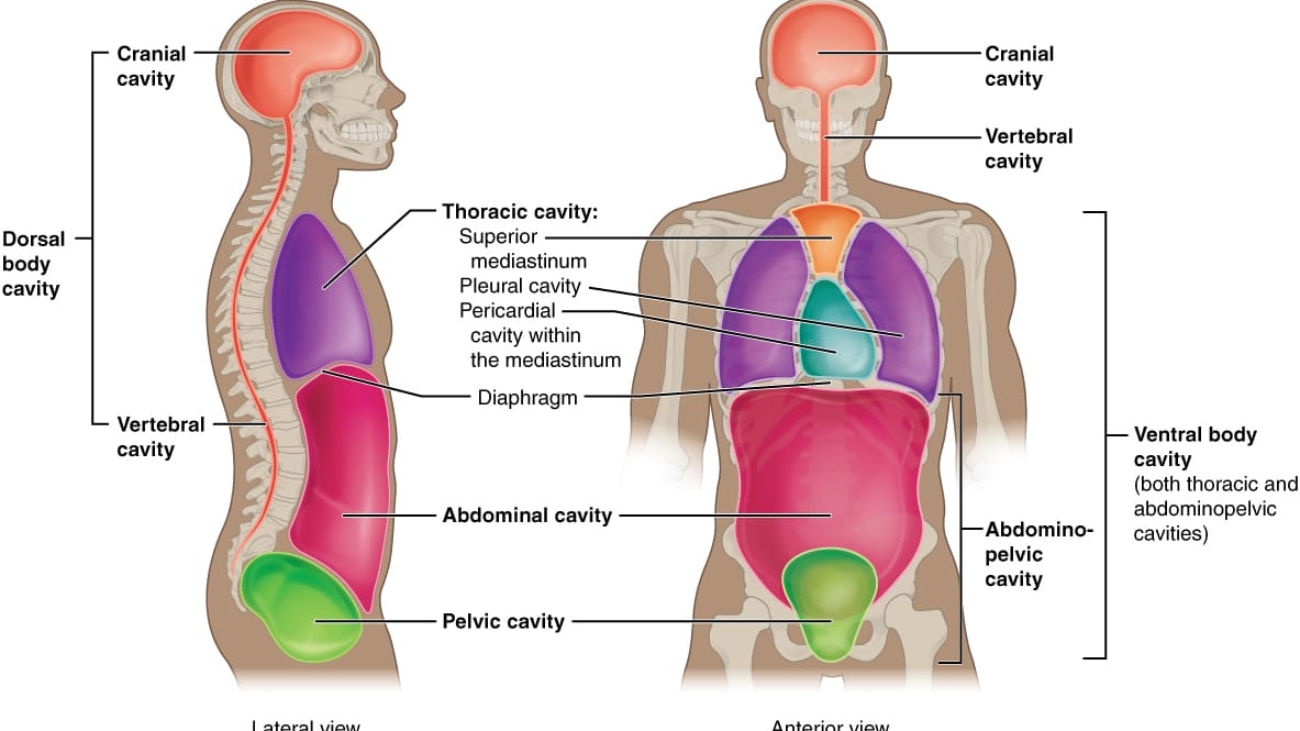
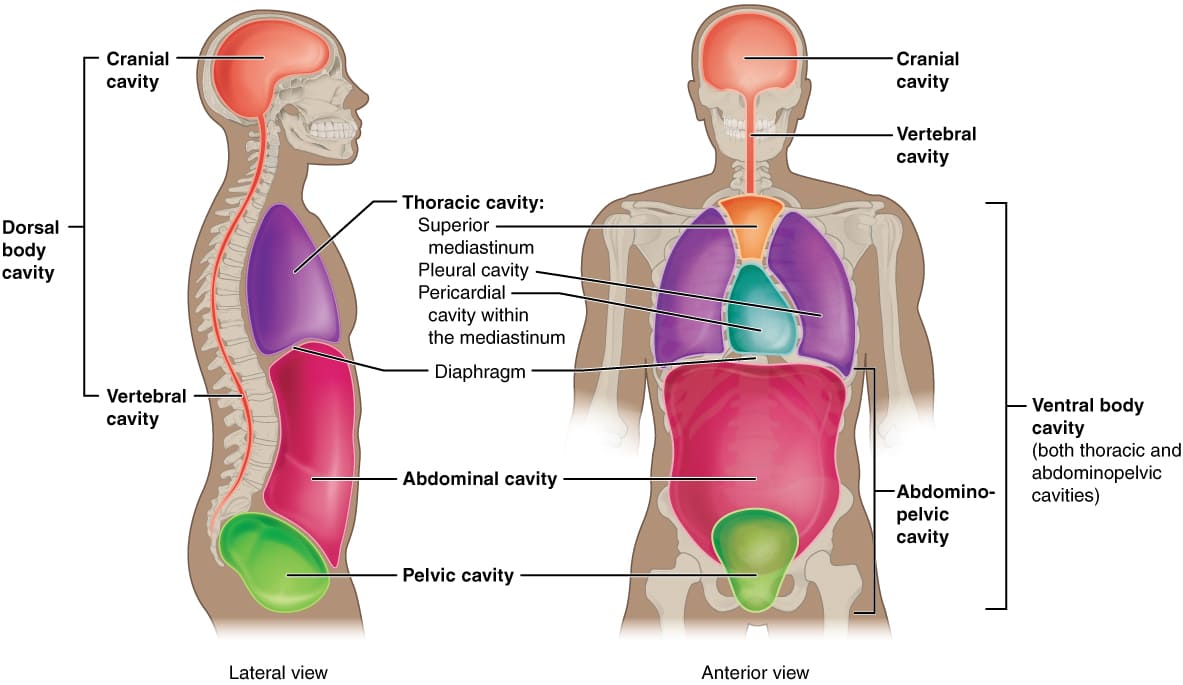
Introduction to Body Cavities

Introduction to Body Cavities

INTRODUCTION TO BODY CAVITIES

Anatomy: Body Cavities Reference
HUMAN ANATOMY

I. Introduction to Body Cavities

Body cavities are enclosed, fluid-filled spaces within the human body that contain and protect internal organs. They are crucial for:

  • Protection: Cushioning delicate organs from shocks and impacts.
  • Support: Providing a stable environment for organs.
  • Permitting organ movement: Allowing organs to change size and shape (e.g., heart beating, lungs expanding, stomach distending) without friction or damage to surrounding tissues.

The human body possesses two main sets of internal cavities: the Dorsal Body Cavity and the Ventral Body Cavity. These cavities are formed during embryonic development and house organs of the nervous, circulatory, respiratory, digestive, urinary, and reproductive systems.

II. The Dorsal Body Cavity

The dorsal body cavity is located posteriorly and protects the fragile organs of the central nervous system. It has two continuous subdivisions:

A. Cranial Cavity

  1. Definition: The space enclosed by the cranium (skull).
  2. Boundaries:
    • Superior, Lateral, Posterior: Formed by the cranial bones (frontal, parietal, temporal, occipital, sphenoid, ethmoid).
    • Inferior: Formed by the floor of the cranium, which contains the foramen magnum (a large opening through which the brainstem connects to the spinal cord).
  3. Contents:
    • Brain: The primary organ of the central nervous system, responsible for thought, sensation, and coordination.
    • Meninges: Three protective membranes (dura mater, arachnoid mater, pia mater) that surround the brain and spinal cord.
    • Cerebrospinal Fluid (CSF): A clear fluid that circulates within the meninges and ventricles of the brain, providing cushioning and nutrient transport.
    • Blood Vessels: Arteries, veins, and venous sinuses that supply and drain blood from the brain.
    • Cranial Nerves: Twelve pairs of nerves that emerge directly from the brain.

B. Vertebral (Spinal) Cavity

  1. Definition: The space formed by the vertebral column, extending from the foramen magnum to the sacrum.
  2. Boundaries:
    • Anterior, Lateral, Posterior: Formed by the vertebral arches of the individual vertebrae, which collectively create the vertebral canal.
    • Superior: Continuous with the cranial cavity at the foramen magnum.
    • Inferior: Ends at the sacrum.
  3. Contents:
    • Spinal Cord: A long, delicate structure that extends from the brainstem, transmitting nerve signals throughout the body.
    • Meninges: (Dura mater, arachnoid mater, pia mater) that continue from the brain, enclosing the spinal cord.
    • Cerebrospinal Fluid (CSF): Circulates within the subarachnoid space around the spinal cord.
    • Spinal Nerves: Nerves that branch off the spinal cord at each vertebral level.
    • Blood Vessels: Supplying and draining the spinal cord.

III. The Ventral Body Cavity

The ventral body cavity is much larger than the dorsal cavity and is located anteriorly. It houses a wide range of visceral organs (organs of the digestive, urinary, respiratory, and reproductive systems) and is subdivided by the diaphragm into two main parts: the Thoracic Cavity (superior) and the Abdominopelvic Cavity (inferior).

A. Thoracic Cavity:

  1. Definition: The superior subdivision of the ventral body cavity, enclosed by the rib cage.
  2. Boundaries:
    • Superior: Thoracic inlet (formed by the first thoracic vertebra, first pair of ribs, and manubrium of the sternum).
    • Inferior: Diaphragm (a large, dome-shaped muscle that separates the thoracic and abdominopelvic cavities).
    • Anterior: Sternum and costal cartilages.
    • Posterior: Thoracic vertebrae.
    • Lateral: Ribs and intercostal muscles.
  3. Subdivisions within the Thoracic Cavity:
    • Pleural Cavities (x2):
      • Definition: Two lateral compartments, each surrounding a lung. These are potential spaces between the parietal and visceral pleura.
      • Contents: Lungs.
    • Mediastinum:
      • Definition: The central compartment of the thoracic cavity, located between the two pleural cavities. It extends from the sternum anteriorly to the vertebral column posteriorly, and from the thoracic inlet superiorly to the diaphragm inferiorly.
      • Contents:
        • Heart: Enclosed within the pericardial cavity.
        • Great Vessels: Aorta, pulmonary trunk, superior and inferior vena cava.
        • Trachea: Windpipe.
        • Esophagus: Food pipe.
        • Thymus Gland: Located anteriorly in the superior mediastinum (larger in children, atrophies in adults).
        • Lymph Nodes, Nerves: (e.g., vagus, phrenic), Major Bronchi.

B. Abdominopelvic Cavity:

  1. Definition: The inferior subdivision of the ventral body cavity, located inferior to the diaphragm. It is generally described as having two indistinct parts: the abdominal cavity and the pelvic cavity, as there is no physical barrier separating them.
  2. Boundaries:
    • Superior: Diaphragm.
    • Inferior: Pelvic floor (pelvic diaphragm), formed by muscles and fascia.
    • Anterior/Lateral: Abdominal wall muscles.
    • Posterior: Lumbar vertebrae and associated muscles.
  3. Subdivisions within the Abdominopelvic Cavity:
    • Abdominal Cavity:
      • Definition: The superior and larger portion of the abdominopelvic cavity.
      • Contents:
        • Digestive Organs: Stomach, small intestine, most of the large intestine, liver, gallbladder, pancreas, spleen.
        • Kidneys and Adrenal Glands: Located retroperitoneally (behind the peritoneum).
        • Portions of Ureters.
        • Many major blood vessels: (e.g., abdominal aorta, inferior vena cava).
    • Pelvic Cavity:
      • Definition: The inferior and smaller portion of the abdominopelvic cavity, located within the bony pelvis.
      • Boundaries: Formed by the bony pelvis (ilium, ischium, pubis, sacrum, coccyx) and the muscles of the pelvic floor.
      • Contents:
        • Urinary Bladder.
        • Sigmoid Colon and Rectum: (terminal part of the large intestine).
        • Reproductive Organs:
          • Females: Uterus, ovaries, fallopian tubes, vagina.
          • Males: Prostate gland, seminal vesicles.

Summary Table of Major Body Cavities:

Cavity Name Subdivisions Major Boundaries Key Contents
Dorsal Body Cavity Cranial Cavity Cranium Brain, Meninges, CSF
Vertebral Cavity Vertebral Column Spinal Cord, Meninges, CSF
Ventral Body Cavity Thoracic Cavity Rib Cage, Sternum, Thoracic Vertebrae, Diaphragm (inferior) Lungs (in pleural cavities), Heart (in pericardial cavity), Trachea, Esophagus, Thymus
Pleural Cavities (x2) Within Thoracic Cavity, surrounding lungs Lungs
Mediastinum Central compartment of Thoracic Cavity Heart, Great Vessels, Trachea, Esophagus, Thymus
Abdominopelvic Cavity (Full Cavity) Diaphragm (superior), Pelvic Floor (inferior), Abdominal Muscles, Lumbar Vertebrae Digestive Organs (stomach, intestines, liver, etc.), Kidneys, Bladder, Reproductive Organs
Abdominal Cavity Superior portion of Abdominopelvic Cavity Stomach, Small/Large Intestines, Liver, Spleen, Pancreas, Kidneys
Pelvic Cavity Inferior portion of Abdominopelvic Cavity, within bony pelvis Bladder, Rectum, Reproductive Organs

IV. Protective Functions of Body Cavities

Body cavities provide much more than just space for organs; they are integral to their protection and optimal function.

A. Mechanical Protection:

  1. Cushioning: The fluid within cavities (like CSF in the dorsal cavity, or serous fluid in the ventral cavity) and the surrounding structures (bone, muscle) help absorb shock and impact, protecting delicate organs from external trauma.
  2. Containment: The rigid bony structures surrounding the dorsal cavity (cranium, vertebral column) and parts of the ventral cavity (rib cage, bony pelvis) offer robust protection against physical injury.
  3. Isolation: Cavities isolate organs from external forces and, to some extent, from infections originating in other body regions.

B. Facilitating Organ Movement and Reducing Friction:

This is where serous membranes play a critical role, primarily in the ventral body cavity.

1. Serous Membranes (Serosa):

  • Definition: Thin, double-layered membranes that line the walls of the ventral body cavity and cover the surfaces of the organs within it. They are composed of a layer of simple squamous epithelium (mesothelium) overlying a thin layer of areolar connective tissue.
  • Structure: Each serous membrane consists of two layers:
    • Parietal Layer: Lines the walls of the body cavity (e.g., parietal pleura lines the thoracic wall).
    • Visceral Layer: Covers the external surface of the organs within the cavity (e.g., visceral pleura covers the surface of the lungs).
  • Serous Cavity: The potential space between the parietal and visceral layers. This space is not empty but contains a small amount of serous fluid.
  • Serous Fluid: A thin, watery lubricating fluid secreted by both layers of the membrane.
    • Function: Reduces friction between the moving visceral organs and the body wall. This allows organs like the heart, lungs, and intestines to expand, contract, and slide past one another with minimal wear and tear.

2. Examples of Serous Membranes:

Pleura:
  • Location: Thoracic cavity, associated with the lungs.
  • Parietal Pleura: Lines the chest wall and superior surface of the diaphragm.
  • Visceral Pleura: Covers the surface of the lungs.
  • Pleural Cavity: Contains pleural fluid, reducing friction during breathing.
Pericardium:
  • Location: Thoracic cavity, associated with the heart (within the mediastinum).
  • Parietal Pericardium: Forms the outer layer of the pericardial sac.
  • Visceral Pericardium (Epicardium): Covers the surface of the heart.
  • Pericardial Cavity: Contains pericardial fluid, reducing friction during heartbeats.
Peritoneum:
  • Location: Abdominopelvic cavity, associated with abdominal organs.
  • Parietal Peritoneum: Lines the walls of the abdominal and pelvic cavities.
  • Visceral Peritoneum: Covers the surface of most abdominal organs.
  • Peritoneal Cavity: Contains peritoneal fluid, allowing digestive organs to slide against each other.
  • Mesenteries: Folds of peritoneum that connect organs to the posterior abdominal wall, providing routes for blood vessels, nerves, and lymphatic vessels, and holding organs in place.

V. Clinical Relevance of Body Cavities

Understanding body cavities is fundamental for diagnosing and treating a wide range of medical conditions.

A. Fluid Accumulation (Effusions):

Pathology: An abnormal increase in serous fluid within a body cavity. This can impair organ function.

  • Pleural Effusion: Excess fluid in the pleural cavity (e.g., due to heart failure, pneumonia, cancer). Can compress the lungs, making breathing difficult.
  • Pericardial Effusion: Excess fluid in the pericardial cavity (e.g., due to inflammation, trauma). Can compress the heart, leading to cardiac tamponade (a life-threatening condition).
  • Ascites: Excess fluid in the peritoneal cavity (e.g., due to liver cirrhosis, cancer, heart failure). Can cause abdominal distension and discomfort.

Procedures:

  • Thoracentesis: A procedure to remove pleural fluid using a needle.
  • Pericardiocentesis: A procedure to remove pericardial fluid.
  • Paracentesis: A procedure to remove peritoneal fluid (ascites).

B. Organ Displacement and Herniation:

Pathology: Organs can move from their normal position into another cavity or through a weakened area in the body wall.

  • Hiatal Hernia: Part of the stomach pushes upward through the diaphragm into the thoracic cavity.
  • Inguinal Hernia: A portion of the intestine protrudes through a weak spot in the abdominal wall, often into the inguinal canal.
  • Diaphragmatic Hernia: Abdominal organs herniate into the thoracic cavity through a defect in the diaphragm (can be congenital or acquired).

C. Infections and Inflammation:

Pathology: Infection or inflammation of the serous membranes.

  • Pleurisy (Pleuritis): Inflammation of the pleura, causing sharp chest pain during breathing.
  • Pericarditis: Inflammation of the pericardium, causing chest pain.
  • Peritonitis: Inflammation of the peritoneum, usually due to bacterial infection (e.g., ruptured appendix, bowel perforation). This is a serious condition.

D. Surgical Approaches:

  • Surgeons must have a detailed understanding of cavity anatomy to plan safe and effective surgical approaches, minimize damage to surrounding structures, and prevent complications.
  • Laparotomy: Surgical incision into the abdominal cavity.
  • Thoracotomy: Surgical incision into the thoracic cavity.
  • Craniotomy: Surgical incision into the cranium to access the brain.

E. Imaging and Diagnostics:

  • X-rays, CT scans, MRI, Ultrasound: Imaging techniques rely on the distinct characteristics and relationships of organs within cavities to visualize pathologies. For example, fluid appears differently than solid tissue on scans.

VI. Utilizing Appropriate Anatomical Terminology

Accurate and consistent use of anatomical terminology is essential for clear communication in healthcare.

A. Key Terms and Their Usage:

  • Always specify the cavity and subdivision when describing organ location (e.g., "The heart is located in the pericardial cavity, within the mediastinum of the thoracic cavity").
  • Distinguish between parietal (lining the wall) and visceral (covering the organ) layers of serous membranes.
  • Use directional terms precisely (e.g., "The liver is superior to the stomach in the abdominal cavity," "The spinal cord is inferior to the brain within the dorsal cavity").
  • Be aware of terms like retroperitoneal (e.g., kidneys, pancreas, parts of duodenum, aorta, IVC) for organs located behind the peritoneum.

B. Practice and Application:

  • Clinical Case Discussions: Describe organ pathologies and surgical interventions using proper cavity terminology.
  • Patient Handoffs: Clearly communicate the location of findings or concerns related to body cavities.
  • Documentation: Ensure all clinical notes and reports accurately reflect anatomical positions and relationships.

Source: https://doctorsrevisionuganda.com | Whatsapp: 0726113908

Anatomy: Body Cavities Quiz
Logo

Anatomy: Body Cavities

Test your knowledge with these 20 questions.

Anatomical movements

Anatomical movements

ANATOMICAL MOVEMENTS

Anatomy: Planes, Axes, and Movements
ANATOMY & KINESIOLOGY

Introduction to Anatomical Planes

Understanding anatomical planes is fundamental to describing the location of structures and, more importantly, the direction of movement within the human body. These are imaginary flat surfaces that pass through the body, dividing it into sections. All movements occur within or parallel to these planes.

A. Standard Anatomical Position Reminder:

Before discussing planes, it's crucial to recall the standard anatomical position:

  • Body erect
  • Feet slightly apart
  • Palms facing forward
  • Thumbs pointing away from the body

All descriptions of planes and movements assume the body is in this position.

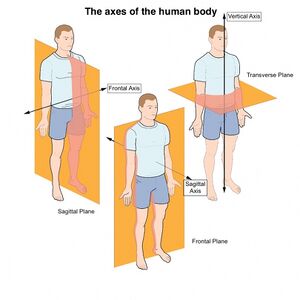
B. The Three Cardinal Planes:

1. Sagittal Plane

  • Definition: A vertical plane that divides the body or an organ into right and left parts.
  • Orientation: Runs vertically from front to back.
  • Key Divisions:
    • Midsagittal (Median) Plane: Lies exactly in the midline, dividing the body into equal right and left halves. Often used as a reference point.
    • Parasagittal Planes: All other sagittal planes offset from the midline, dividing the body into unequal right and left parts.
  • Movements Associated: Primarily flexion and extension. These involve anterior-posterior motion.
  • Analogy: Imagine a wall cutting through your body from your nose to your spine.

2. Frontal (Coronal) Plane

  • Definition: A vertical plane that divides the body or an organ into anterior (front) and posterior (back) parts.
  • Orientation: Runs vertically from side to side, perpendicular to the sagittal plane.
  • Movements Associated: Primarily abduction and adduction. These involve medial-lateral motion.
  • Analogy: Imagine a wall cutting through your body from one shoulder to the other.

3. Transverse (Horizontal) Plane

  • Definition: A horizontal plane that divides the body or an organ into superior (upper) and inferior (lower) parts.
  • Orientation: Runs horizontally, perpendicular to both sagittal and frontal planes.
  • Key Divisions: Often referred to as cross-sectional planes, especially in imaging (e.g., CT scans, MRIs).
  • Movements Associated: Primarily rotational movements (medial/internal and lateral/external rotation).
  • Analogy: Imagine a table slicing through your body at the waist.

C. Clinical Relevance of Planes:

  • Medical Imaging: Radiologists extensively use these planes to orient images (e.g., MRI, CT, ultrasound) and describe the location of pathologies.
  • Surgical Planning: Surgeons plan incisions and approaches based on anatomical planes.
  • Rehabilitation: Therapists describe exercises and patient movements in relation to these planes to ensure correct form and target specific muscle groups.
  • Biomechanics: Researchers analyze human movement by breaking it down into components occurring in specific planes.

II. Anatomical Axes of Rotation

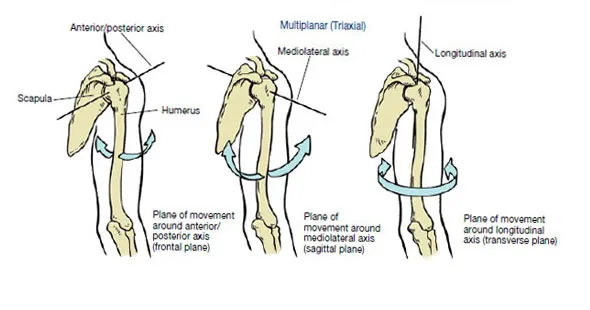
Movement at a joint occurs around an imaginary line called an axis of rotation. Each axis is perpendicular to the plane in which the movement occurs. Think of the axis as a pivot point around which the bone rotates.

A. The Three Major Axes:

  1. Mediolateral (Transverse) Axis:
    • Orientation: Runs horizontally from side to side (left to right or right to left).
    • Relationship to Planes: Perpendicular to the sagittal plane.
    • Movements Associated: Movements that occur in the sagittal plane, such as flexion and extension.
      • Example: Bending your elbow (flexion) or straightening it (extension) occurs around a mediolateral axis passing through the elbow joint.
  2. Anteroposterior (Sagittal) Axis:
    • Orientation: Runs horizontally from front to back (anterior to posterior or posterior to anterior).
    • Relationship to Planes: Perpendicular to the frontal (coronal) plane.
    • Movements Associated: Movements that occur in the frontal plane, such as abduction and adduction.
      • Example: Lifting your arm out to the side (abduction) or bringing it back to your body (adduction) occurs around an anteroposterior axis passing through the shoulder joint.
  3. Vertical (Longitudinal) Axis:
    • Orientation: Runs vertically from superior to inferior (up and down).
    • Relationship to Planes: Perpendicular to the transverse (horizontal) plane.
    • Movements Associated: Movements that occur in the transverse plane, primarily rotational movements (medial/internal rotation, lateral/external rotation).
      • Example: Turning your head left and right (rotation of the neck) occurs around a vertical axis passing through the cervical spine. Rotating your arm inward or outward at the shoulder also occurs around a vertical axis.

B. Summary Table:

Plane of Movement Axis of Rotation Primary Movements
Sagittal Mediolateral (Transverse) Flexion, Extension
Frontal (Coronal) Anteroposterior (Sagittal) Abduction, Adduction
Transverse (Horizontal) Vertical (Longitudinal) Rotation (Medial/Lateral)

C. Importance of Axes:

  • Biomechanics: Crucial for analyzing the mechanics of movement and understanding forces acting on joints.
  • Exercise Science: Helps in designing exercises that target specific planes of motion and strengthen muscles responsible for movements around particular axes.
  • Prosthetics and Orthotics: Design of artificial limbs and braces must consider the natural axes of human joint movement.
Activity for Students: To reinforce understanding, perform simple movements and identify the plane and axis for each:
  1. Nodding head "yes" (flexion/extension)
  2. Shaking head "no" (rotation)
  3. Jumping jacks (abduction/adduction of arms and legs)
  4. Bicep curl (flexion/extension of elbow)
  5. Trunk rotation

III. Classification of Anatomical Movements

Anatomical movements are typically described at synovial joints, which allow for a wide range of motion. Movements are often described in pairs, as they are opposing actions.

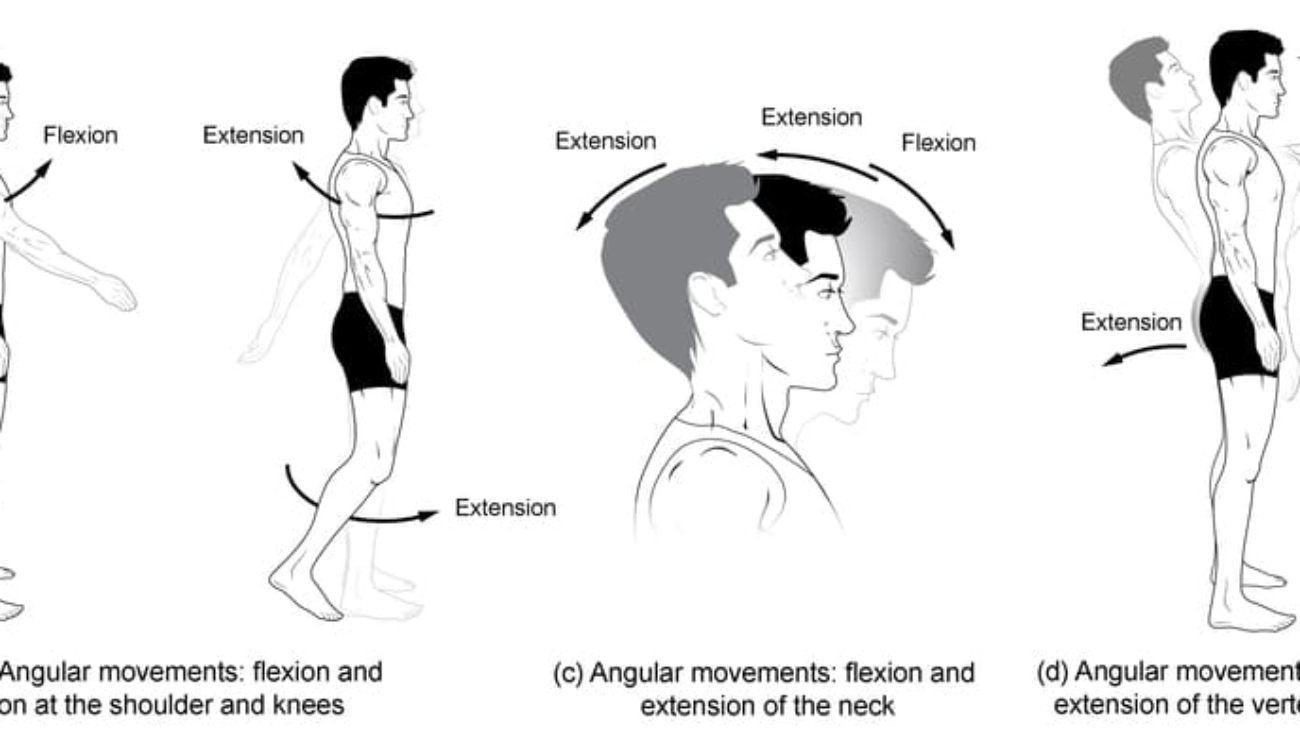
A. Movements in the Sagittal Plane (around a Mediolateral Axis):

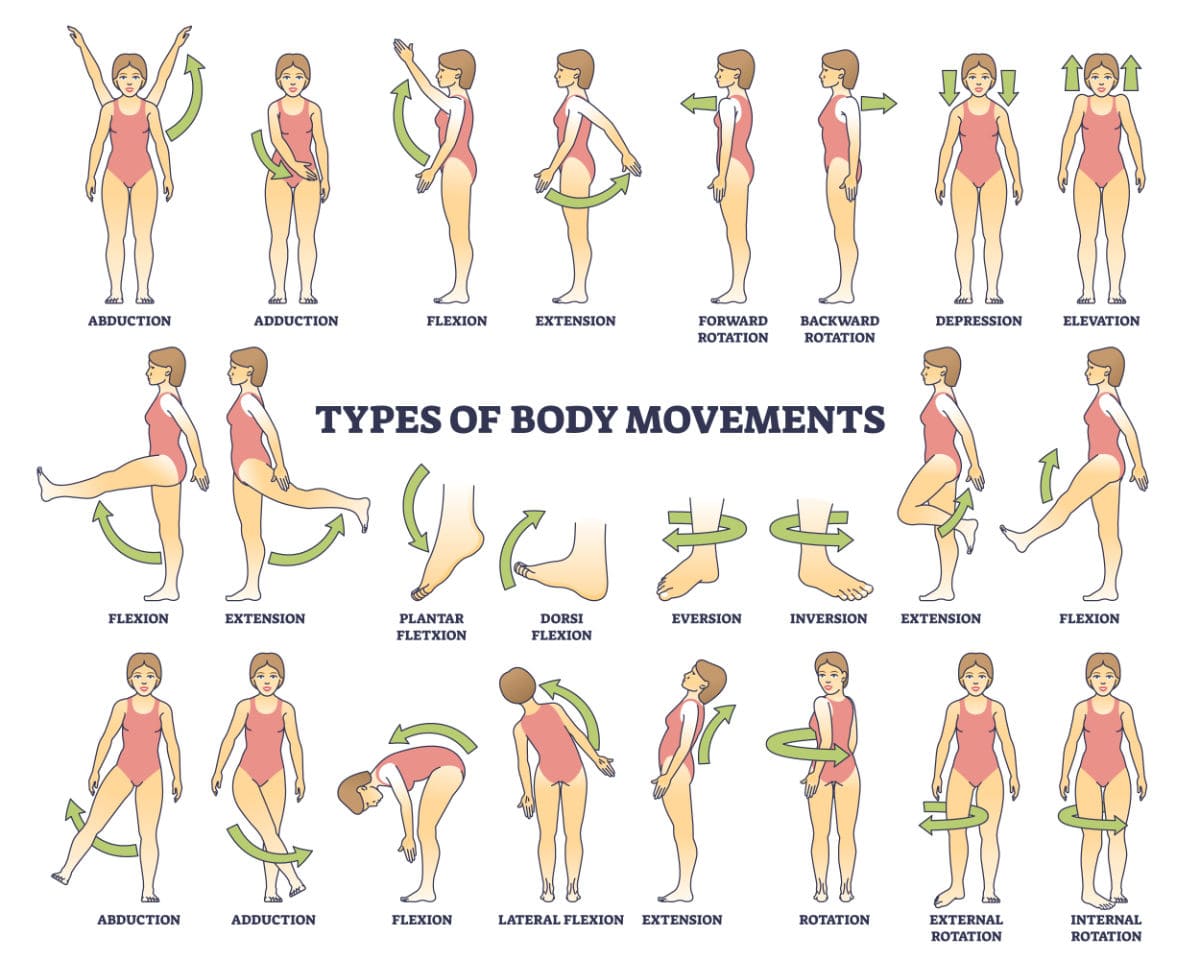
1. Flexion:

  • Definition: Movement that decreases the angle between two body parts. For most joints, this involves bringing the anterior surfaces closer together, or in the case of the knee and elbow, bringing posterior surfaces closer.
  • Examples:
    • Shoulder: Bringing the arm forward and upward.
    • Elbow: Bending the arm, bringing the forearm closer to the upper arm.
    • Wrist: Bending the hand anteriorly towards the forearm.
    • Hip: Bringing the thigh forward and upward.
    • Knee: Bending the leg, bringing the heel towards the buttocks.
    • Trunk/Spine: Bending forward at the waist.
    • Neck: Bending the head forward, chin towards the chest.
  • Key Muscles (Examples): Biceps brachii (elbow), Pectoralis major (shoulder), Iliopsoas (hip), Hamstrings (knee).

2. Extension:

  • Definition: Movement that increases the angle between two body parts, effectively straightening the joint. It is generally the reverse of flexion.
  • Hyperextension: Extension beyond the normal anatomical limit. This can indicate injury or hypermobility.
  • Examples:
    • Shoulder: Moving the arm backward from the anatomical position.
    • Elbow: Straightening the arm.
    • Wrist: Straightening the hand with the forearm (or moving it posteriorly).
    • Hip: Moving the thigh backward.
    • Knee: Straightening the leg.
    • Trunk/Spine: Bending backward at the waist.
    • Neck: Extending the head backward.
  • Key Muscles (Examples): Triceps brachii (elbow), Latissimus dorsi (shoulder), Gluteus maximus (hip), Quadriceps femoris (knee).

B. Movements in the Frontal (Coronal) Plane (around an Anteroposterior Axis):

1. Abduction:

  • Definition: Movement of a limb or body part away from the midline of the body.
  • Exceptions: Fingers/toes: away from the midline of the hand/foot.
  • Examples:
    • Shoulder: Lifting the arm out to the side.
    • Hip: Moving the leg out to the side.
    • Fingers/Toes: Spreading them apart.
  • Key Muscles (Examples): Deltoid (shoulder), Gluteus medius/minimus (hip).

2. Adduction:

  • Definition: Movement of a limb or body part towards the midline of the body.
  • Exceptions: Fingers/toes: towards the midline of the hand/foot.
  • Examples:
    • Shoulder: Bringing the arm back towards the body from an abducted position.
    • Hip: Bringing the leg back towards the other leg from an abducted position.
    • Fingers/Toes: Bringing them together.
  • Key Muscles (Examples): Pectoralis major, Latissimus dorsi (shoulder), Adductor group (thigh).

C. Movements in the Transverse (Horizontal) Plane (around a Vertical Axis):

1. Medial (Internal) Rotation:

  • Definition: Rotational movement of a limb towards the midline of the body (turning the anterior surface inward).
  • Examples:
    • Shoulder: Turning the arm inward so the palm faces posteriorly (if elbow bent to 90 degrees).
    • Hip: Turning the leg inward so the toes point medially.
  • Key Muscles (Examples): Subscapularis, Pectoralis major (shoulder), Gluteus medius/minimus (hip).

2. Lateral (External) Rotation:

  • Definition: Rotational movement of a limb away from the midline of the body (turning the anterior surface outward).
  • Examples:
    • Shoulder: Turning the arm outward so the palm faces anteriorly (if elbow bent to 90 degrees).
    • Hip: Turning the leg outward so the toes point laterally.
  • Key Muscles (Examples): Infraspinatus, Teres minor (shoulder), Obturator internus/externus (hip).

D. Combination Movement:

1. Circumduction:

  • Definition: A combination of flexion, extension, abduction, and adduction movements, resulting in a conical movement of the distal end of a limb while the proximal end remains relatively stable. It can be seen at ball-and-socket joints.
  • Examples:
    • Shoulder: Moving the arm in a circle (e.g., pitching a softball).
    • Hip: Moving the leg in a circle.
    • Wrist: Making circles with your hand.
  • Key Muscles: Involves sequential activation of muscles responsible for flexion, extension, abduction, and adduction at the joint.

E. Special Movements:

These movements are typically specific to certain joints or body regions.

1. Elevation & 2. Depression

Elevation: Movement in a superior (upward) direction.
Scapula: Shrugging. Mandible: Closing mouth.
Muscles: Trapezius, Temporalis, Masseter.

Depression: Movement in an inferior (downward) direction.
Scapula: Lowering shoulders. Mandible: Opening mouth.
Muscles: Trapezius, Pectoralis minor, Platysma.

3. Protraction & 4. Retraction

Protraction (Protrusion): Anteriorly (forward) in the transverse plane.
Scapula: Rounding forward. Mandible: Jutting jaw forward.
Muscles: Serratus anterior, Pectoralis minor.

Retraction (Retrusion): Posteriorly (backward) in the transverse plane.
Scapula: Pulling back. Mandible: Pulling jaw backward.
Muscles: Rhomboids, Trapezius.

5. Dorsiflexion & 6. Plantarflexion

Dorsiflexion: Ankle joint; decreases angle between top of foot and anterior tibia (toes up).
Muscles: Tibialis anterior.

Plantarflexion: Ankle joint; increases angle between top of foot and anterior tibia (toes down/tiptoes).
Muscles: Gastrocnemius, Soleus.

7. Inversion & 8. Eversion

Inversion: Sole turns medially (inward).
Muscles: Tibialis anterior/posterior.

Eversion: Sole turns laterally (outward).
Muscles: Fibularis longus/brevis.

9. Pronation & 10. Supination (Forearm)

Pronation: Palm faces posteriorly (or inferiorly). Radius crosses ulna.
Muscles: Pronator teres/quadratus.

Supination: Palm faces anteriorly (anatomical position). Radius and ulna are parallel.
Muscles: Supinator, Biceps brachii.

11. Opposition & 12. Reposition

Opposition: Thumb across palm to touch tips of other fingers. Essential for grasping.
Muscles: Opponens pollicis.

Reposition: Thumb back to anatomical position.

13. Radial & 14. Ulnar Deviation

Radial Deviation (Abduction): Hand moves laterally towards thumb side.
Muscles: Flexor/Extensor carpi radialis.

Ulnar Deviation (Adduction): Hand moves medially towards little finger side.
Muscles: Flexor/Extensor carpi ulnaris.

Clinical Correlation / Application:
  • Range of Motion (ROM) Assessment: Clinicians assess ROM in various planes to diagnose injuries and track rehab.
  • Gait Analysis: Understanding joint movements is crucial for analyzing walking patterns.
  • Neurological Examination: Assessing specific movements helps localize neurological lesions.

IV. Joint Structure and Its Influence on Movement

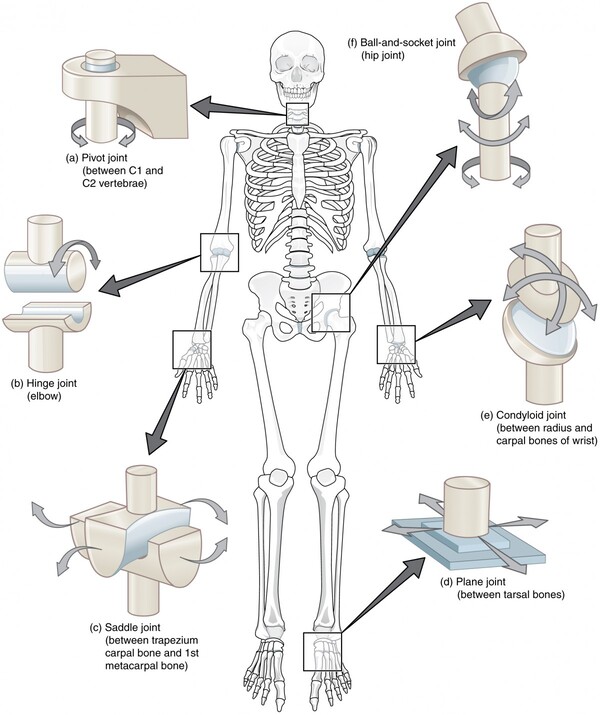
The design of a joint is the primary determinant of the range and types of motion. Synovial joint classification is based on the shape of articulating surfaces.

A. Functional Classification (Degrees of Freedom):

  • Uniaxial: Movement in one plane around one axis (e.g., hinge, pivot).
  • Biaxial: Movement in two planes around two axes (e.g., condyloid, saddle).
  • Multiaxial: Movement in three or more planes around three or more axes (e.g., ball-and-socket).

B. Types of Synovial Joints and Their Movements:

Joint Type Structure & Movement Examples
1. Plane (Gliding) Flat surfaces. Short, nonaxial gliding/slipping. Range: Very limited (stability). Intercarpal, intertarsal, facet joints of vertebrae.
2. Hinge Cylindrical end in trough. Uniaxial (Sagittal). Primarily Flexion/Extension. Elbow (humeroulnar), knee (modified), interphalangeal.
3. Pivot Rounded end in a sleeve/ring. Uniaxial (Vertical axis). Only Rotation. Atlantoaxial (C1-C2), proximal radioulnar.
4. Condyloid (Ellipsoidal) Oval surface in oval depression. Biaxial (Flex/Ext and Abd/Add). Circumduction possible. Radiocarpal (wrist), Metacarpophalangeal (2-5).
5. Saddle Complementary concave/convex areas. Biaxial. Allows opposition/reposition. Carpometacarpal of the thumb.
6. Ball-and-Socket Spherical head in cup-like socket. Multiaxial. Freest range of motion in all planes. Shoulder (glenohumeral), hip (acetabulofemoral).

C. Factors Affecting Joint Mobility:

  • Articular Cartilage: Smoothness reduces friction.
  • Ligaments: Connect bones; provide stability and limit excessive movement.
  • Joint Capsule: Encloses the joint, providing containment.
  • Muscles and Tendons: Cross the joint; provide dynamic stability.
  • Bony Anatomy: Shape can restrict movement (e.g., olecranon process limits elbow extension).
  • Soft Tissue Apposition: Contact of soft tissues (e.g., muscle bulk) can limit movement.
  • Genetics and Age: Individual variation and decreased elasticity impact flexibility.

V. Clinical Scenarios: Abnormal Movements and Range of Motion

Understanding normal movements is critical for identifying pathologies. Deviations from normal range or pain are significant indicators.

A. Limitations in Range of Motion (ROM):

1. Causes:

  • Injury: Fractures, dislocations, sprains, strains.
  • Inflammation: Arthritis (rheumatoid, osteoarthritis), bursitis, tendinitis.
  • Scar Tissue/Fibrosis: Restricts movement post-trauma/surgery.
  • Muscle Spasm/Tightness: Limits joint mobility.
  • Neurological Conditions: Spasticity, rigidity, paralysis (e.g., stroke, spinal cord injury).
  • Congenital Anomalies: Issues in joint formation.
  • Pain: Often the primary limiting factor.

2. Clinical Assessment:

  • Goniometry: Using a goniometer to objectively measure joint angles.
  • Active ROM (AROM): Patient moves joint independently. Assesses strength/coordination.
  • Passive ROM (PROM): Clinician moves the joint. Assesses integrity/restrictions.
  • End-Feels: Sensation at the end of PROM (soft, firm, hard, empty).

B. Abnormal Movement Patterns:

  1. Compensation: Using alternative muscles/body parts due to weakness (e.g., elevating shoulder to assist arm abduction).
  2. Ataxia: Incoordination; staggering gait (cerebellar dysfunction).
  3. Dyskinesia: Involuntary, repetitive, bizarre movements.
  4. Tremor: Rhythmic, oscillatory movement.
  5. Spasticity/Rigidity:
    • Spasticity: Velocity-dependent resistance ('clasp-knife').
    • Rigidity: Non-velocity-dependent ('lead-pipe' or 'cogwheel').
  6. Flaccidity: Absence of muscle tone; limp limb.

C. Pathologies and Their Impact on Movement:

  • Osteoarthritis: Degeneration leads to pain/stiffness (e.g., limited knee flexion).
  • Rotator Cuff Tear: Impairs abduction and rotation.
  • Ankle Sprain: Limits inversion/eversion; causes pain with weight-bearing.
  • Stroke: Can lead to hemiparesis or hemiplegia.
  • Scoliosis: Abnormal lateral curvature affecting trunk rotation.

VI. Utilizing Appropriate Anatomical Terminology

Accurate communication is paramount. Using precise terms avoids ambiguity.

A. Key Principles:

  • Standard Anatomical Position: All descriptions default to this.
  • Planes and Axes: Always specify both for complex motions.
  • Paired Terms: Use opposing terms (Flex/Ext) for clarity.
  • Specificity: Say "shoulder abduction" instead of "arm movement."
  • Context: Mind the context (e.g., forearm pronation vs. foot pronation).

B. Practice and Application:

  • Case Studies: Analyze scenarios and describe limitations.
  • Peer Discussion: Intentionally use anatomical terms.
  • Documentation: Use precise language in patient charts/reports.
Anatomy: Anatomical Movements Quiz
Logo

Anatomical Movements

Test your knowledge with these 20 questions.

ELECTROCARDIOGRAM INTERPRETATION

ELECTROCARDIOGRAM INTERPRETATION

ELECTROCARDIOGRAM INTERPRETATION

ELECTROCARDIOGRAM (ECG)

Electrocardiogram is a graphic record of algebraic summed potentials generated by the heart, recorded from the surface of the body using an electrocardiograph machine.

The magnitude, polarity, and configuration of the recorded electrocardiogram depends on the location of the recording leads placed on the body surface. The process of recording an electrocardiogram is called electrocardiography.

Aims and Objectives

  • Carry out electrocardiography correctly and successfully.
  • Interpret the electrocardiogram recorded.
  • Relate the interpretation with the heart status.
  • Assess the functional integrity of the heart.
  • Suggest the appropriate remedy if any that can improve the status detected.

Requirements

  • Functional Electrocardiograph machine & accessories
  • Volunteer subject
  • Volunteer ECG operator
  • Couch with linen
  • Screen (for privacy)
  • Cotton wool/tissue and spirit/alcohol

Procedure

  1. The lab technician/tutor will introduce the electrocardiograph machine in use with its operational procedures.
  2. The procedure of electrocardiography will be thoroughly explained to the volunteer subject by the volunteer operator.
  3. The subject will be screened off, asked to undress to expose the chest, both upper limbs and both legs.
  4. The subject then lies on his or her back on the couch, and relaxes while breathing quietly throughout the procedure.
  5. The rest of the body surface that is not to be used is covered with linen.
  6. The volunteer ECG operator prepares the surfaces for the leads electrodes attachment by clearing it with cotton wool soaked in alcohol or spirit.
  7. Thinly coat the surfaces prepared with salt enriched electrode jelly and proceed to strap electrodes appropriately.
  8. Record manually lead by lead till you get all the 12 leads designated, then proceed to record automatically all the 12 leads record as well.
  9. Label the electrocardiogram recorded with the volunteer's particulars namely: Name, Sex, Age, time of recording, any medicines taken, and finally any known medical condition the volunteer subject has.
  10. Switch off the electrocardiograph machine and disconnect off the subject.
  11. Clean off the jelly applied on the subject with water and dry with cotton wool or tissue.

Results

Analysis of Results

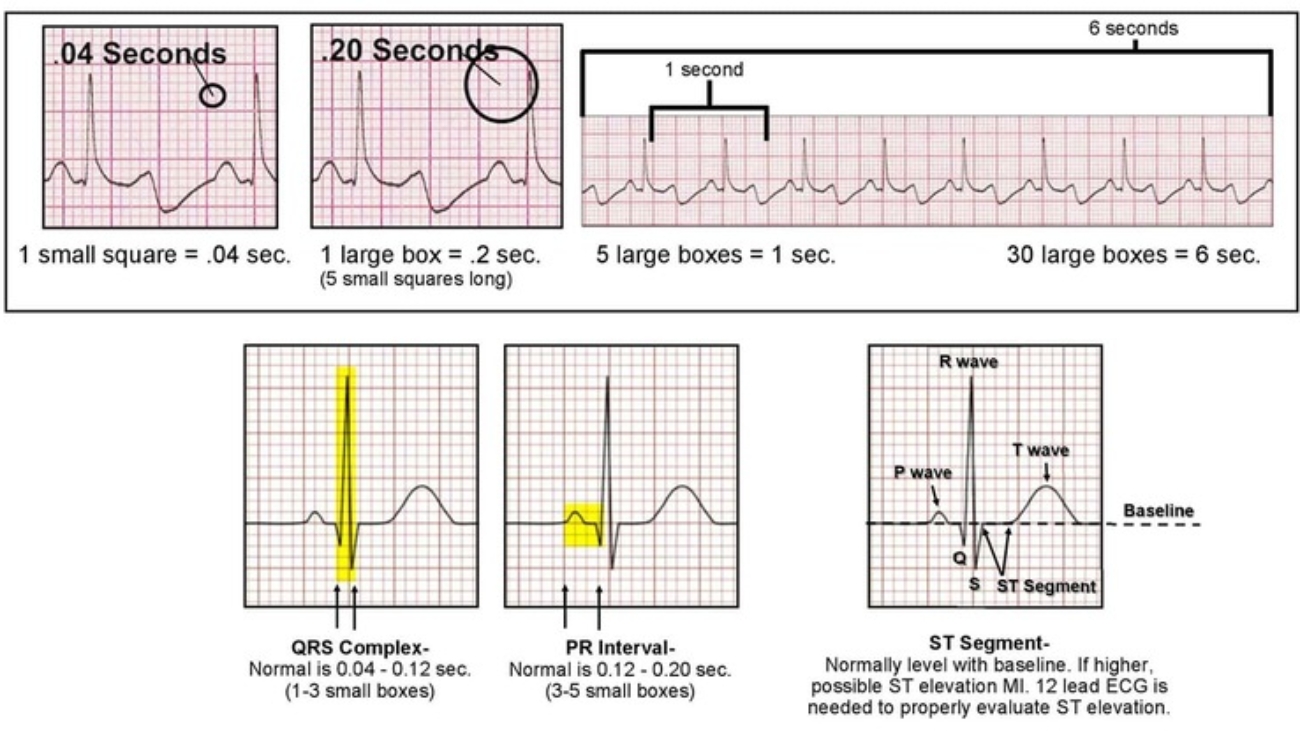
Note: Attached is a tracing of a normal 12 lead electrocardiogram (ECG) and the relationship of the events of the cardiac cycle to the waves and intervals of the normal left ventricular surfaces complex. Use these to help you analyze your recorded ECG.

Conclusion

Recommendation / Suggestions

Discussion Questions

1. What is the significance of:

  • i. P wave:
  • ii. QRS complex:
  • iii. T wave:

2. Why is P wave usually largest in standard lead II?

3. Why is T wave small or absent in lead aVL?

4. What is the significance of the interval between the end of P wave and the beginning of the QRS complex?

5. What factors influence the duration of the:

i. P-R interval:

ii. Q-T interval:

Reference: A Normal 12-Lead Electrocardiogram Layout

I
aVR
V1
V4
II
aVL
V2
V5
III
aVF
V3
V6
Physiology Steeplechase: ECG Interpretation

ECG Steeplechase

Experiment: Electrocardiography

Must Know:

  • Waves: P (Atrial), QRS (Ventricular), T (Repolarization).
  • Calculations: 300 / Big Squares = Rate.
  • Placement: V4 is at the Apex (5th ICS, Mid-Clavicular).
  • Pathology: ST Elevation = Infarction.
RED BLOOD CELL COUNT

RED BLOOD CELL COUNT

RED BLOOD CELL COUNT & WBC COUNT

DETERMINATION OF RED BLOOD CELL COUNT

Principle

The methods generally used are based on the estimation of the number of cells in a small volume of diluted blood. The counting is carried out in a glass counting chamber. The volume of the fluid over each square is calculated from the area of a square and the depth of the fluid layer over it.

Core Concept: The average number of cells lying on one square is found from the counts of a series of squares. The product of this average number by the dilution gives the average number of cells in the undiluted blood.

Aim: To enumerate the number of RBCs per cubic millimeter of blood.

Student Objectives

After completion of this experiment, you should be able to:

  • Describe the relevance determining the red cell count.
  • Identify the different equipment and reagents used in this experiment.
  • List the normal red cell count in different age groups.
  • Outline the common physiological and pathological conditions that cause an increase or decrease in the red cell count.

Materials and Apparatus

1. RBC Diluting Pipette

Specifications:
  • Bulb type.
  • Graduated to give a dilution of 1 in 100 or 1 in 200.
  • Stem Markings: 0.5 and 1.0.
  • Upper Line: 101 (immediately above the bulb).

Red Bead: Located in the bulb to facilitate mixing of the blood and diluting fluid.

2. Hayem’s Fluid (Diluting Fluid)

Properties:

Must be isotonic; causes neither hemolysis nor crenation. Contains a fixative to preserve shape and prevent autolysis. Prevents agglutination/rouleaux.

Composition (per 200ml)
  • NaCl (3.8%): 1.0 g
  • Sodium Sulfate (Na₂SO₄): 5.0 g
  • Mercuric Chloride (HgCl₂): 0.5 g
  • Distilled Water: 200 ml
Function of Ingredients
  • NaCl & Na₂SO₄: Provide isotonicity (prevents shape change) and anticoagulant properties (prevents rouleaux).
  • Mercuric Chloride: Fixative, antifungal, and antimicrobial agent.

3. Neubauer Haemocytometer

Consists of a thick glass slide with a central platform 0.1mm lower than the side platforms (Depth of chamber = 0.1mm).

The Ruled Area (Center):
  • Divided into 16 medium sized squares.
  • Each medium square is subdivided into 16 small squares.
  • Area of smallest square = 1/400 sq. mm.
  • Counting Area: The red cells lying in 5 of the medium squares (E1, E2, E3, E4, and E5) are counted.

NB: For use, the haemocytometer as well as the diluting pipette must be clean, dry and absolutely grease free.

Procedure

  1. Sampling: Fill the pipette up to mark 0.5 on the scale with blood from the finger tip.
  2. Diluting: Wipe the outside of the pipette. Draw Hayem's fluid up to mark 101. Close the tip, detach sucker, and mix well (shaking 3-4 mins).
  3. Chamber Prep: Place coverslip on counting chamber. Apply gentle pressure until Newton rings (rainbow colors) appear.
  4. Discarding: Discard the first few drops (they contain no cells).
  5. Charging: Fill the chamber by holding the pipette tip against the edge of the coverslip. Do not overfill into troughs.
  6. Settling: Allow several minutes for cells to settle.
  7. Counting: Count red cells in 80 small squares (5 groups of 16 squares: E1-E5).
    Rule: Include cells touching top and right border lines only.

CALCULATION

Dimensions

Area of 1 small square = 1/400 sq mm

Depth of chamber = 1/10 mm

Volume of 1 square = 1/4000 cu mm

Variables

N = Total cells counted in 80 squares

Dilution Factor = 200

Squares Counted = 80

Final Formula (Cells per cu mm):

Total = N × 10,000

Derivation: (N × 4000 × 200) / 80

QUESTIONS

  1. When blood is taken to the mark 0.5 and diluent to mark 101, why is the dilution 1 in 200 and not 1 in 202?
  2. Why is blood diluted 200 times for red cell count?
  3. What is the function of the bead in the bulb?
  4. If Hayem’s solution is not available, can you use any other?
  5. How will you differentiate red cells from dust particles?
  6. What is the fate of leukocytes in this experiment?
  7. Since the mature red cells do not contain ‘nuclei’, are they dead cells? Explain your answer.
  8. Explain the possible errors that could arise in obtaining and diluting blood, due to uneven distribution of cells in the counting chamber, due to mechanical causes and from other sources.

DETERMINATION OF THE DIFFERENTIAL WHITE BLOOD CELL COUNT

Student Objectives

At the end of this experiment, you should be able to:

  • Identify all equipment and reagents used in the determination of the differential WBC count.
  • Describe the relevance and importance of preparing and staining a blood smear and doing a differential leukocyte count.
  • Prepare satisfactory blood films, fix and stain them and describe the features of a well stained film.
  • Identify different blood cells in a film and indicate the identifying features of each type of leukocyte.
  • Differentiate between neutrophils, eosinophils, basophils, monocytes, and lymphocytes.
  • Describe the functions of each type of the different leukocytes.
  • Outline the conditions in which the leukocyte numbers increase or decrease.

Relevance & Principle

Relevance:

Many hematological and other disorders can be diagnosed by a careful examination of a stained blood film. A physician may order a differential leukocyte count (always along with the total leukocyte count) to differentiate between the different causes of infection (e.g. bacterial vs. viral causes) depending on which sub-category of leukocyte is greatly affected. The differential leukocyte count is also done to monitor blood diseases like leukemia, or to detect allergic or parasitic infection.

Principle:

A blood film is stained with Leishman’s stain and scanned under oil immersion, from one end to the other. As each WBC is encountered, it is identified until 100 leukocytes have been examined. The percentage distribution of each type of WBC is then calculated.

Procedure

  1. Wipe the punctured finger with a piece of cotton wool soaked in alcohol, and allow a fresh drop of blood to accumulate.
  2. Hold a clean, dry microscope slide between the thumb and forefinger of the left hand. The slide is held by the corners of its right hand end so that its length extends at an approximate angle of 45 degrees above the left thumb and forefinger.
  3. Rotate the left hand inward, and touch the former upper surface of the slide to the drop of blood on the subject’s finger. A small drop of blood should be deposited onto the center of the slide about 1/3 of the length from the end held by the fingers of the left hand.
  4. Rotate the left hand outward until the surface of the slide with the deposited blood is uppermost and horizontal.
  5. A second clean, dry slide is held near its right hand end by the thumb and forefinger of the right hand. The free end should extend downward and to the left (away from the thumb and forefinger of the right hand). The edge of the lower end of this slide is brought onto contact with the slide held by the left hand at an angle of 45 degrees. The site of contact should be just ahead of the blood drop.
  6. The right hand slide (the spreader) is pulled back so that the edge on the inner side of the angle formed between the two slides just touches the blood drop. Capillarity at the inner apex of this 45 degrees angle distributes blood evenly across the width of the slides.
  7. A smooth, fairly fast sliding motion of the spreader (maintaining the 45 degrees angle of contact) along the length of the horizontal slide, deposits a thin, uniform film of blood. Several trials should produce an acceptable blood smear for staining.
  8. The slides which are to be stained are then laid smear side up on a staining and allowed to air dry.
  9. When the thin film of blood has air dried, Wright’s or Leishman’s stain is dripped from a dropping bottle onto the slide. The entire surface is covered until the stain is standing up from the edges of the glass but not running off the sides.
  10. The stain is allowed to stand on the slide from 1 to 3 minutes. The actual period of time depends upon the properties of each different batch of stain. Next, an equal volume of buffer solution should be added to the dye on the slide. If the buffer is dripped onto the dye, the entire fluid volume stands up from the edge of the slide without spilling.
  11. The buffer and stain are mixed by blowing lightly on the slide. A glossy sheen soon appears on the surface of the mixed liquid, which is allowed to remain on the slide for 4 to 5 minutes.
  12. Then the slide is flushed by flooding with distilled water or by holding one end of the slide horizontally under a slow stream of tap water. After the slide is well washed, place it in a slightly inclined position to drain and air dry.
  13. When the slide is dry, examine it first under the 4mm objective of the microscope to note the distribution of leukocytes. Since the distribution is often quite uneven and large leukocytes are carried to the edges of the smear, the differential count should sample the entire smear.
  14. The oil immersion objective of the microscope is required to identify the white cell types. Each white cell, as it is identified, is entered by a tally mark in the appropriate space on the data sheet.
  15. Proceed till 100 cells are counted, no cell will be seen twice in this way.
  16. Record the percent contributed to the total by each of the white cell types.
  17. After completion of the white count, observe the red cells on the slide. Record their shapes, sizes and color.

Focusing under Oil-Immersion Lens

  1. Examine the appearance of the slide for the general quality of staining. A good smear is roughly rectangular with a rather dense and straight ‘head end’ and a thinner and convex ‘tail end’. It is light purplish in color and translucent.
  2. Focus under the lowest power in the microscope and inspect the slide quickly for the distribution and appearance of the cells.
  3. Focus under the high power (40) and inspect the different areas of the smear. First distinguish between the numerous pink-colored red blood cells and the fewer large blue stained white blood cells.
  4. Then observe the distribution and appearance of the cells in different parts of the slide. At the head end the red cells are crowded and the white cells are poorly stained. At the extreme tail the cells are wide apart and white cells are distorted. The cells are stained well and seen clearly in the body of the smear near the tail end. Identify the best area (the body of the smear) for further study.
  5. The detail structure of the individual cells can only be seen through the oil immersion objective (magnification 100). Utmost care is needed when focusing under this objective as the focal distance is less than 2mm. Lower the stage of the microscope further down and switch on (turn) the oil immersion objective to position while watching the stage and the slide to avoid any damage. If the objective lens is likely to touch the slide, lower the stage further down.
  6. Place a drop of immersion oil on the blood smear and move the slide so that the oil (immersion oil) on the blood smear is directly under the objective. While watching the slide and the objective from the side and NOT through the eye-piece of the microscope, raise the stage until the oil touches the objective.
  7. Now look through the eye-piece and adjust the illumination (bright light is needed for clear vision). Looking through the eye-piece, raise the stage slowly until suddenly the cells come under focus. If clear image has not appeared within two or three turns of the knob, lower the stage and start focusing once again after ensuring that the illumination is adequate and that the slide contains cells (sometimes if the fixation was not properly done or if the slide was washed vigorously, the cells may be washed away. The slide may also be upside down). The oil between the objective and the slide serves as a concave lens to increase magnification and reduces aberration of light and facilitates the entry of all light into the microscope.
  8. Keep the cells under focus (by constant adjustment of the knob because the slightest alteration in the depth can affect the image) and move the slide about and study the structure of various types of cells and their size in relation to red cells.
  9. The red cells can be easily identified because they are pink non-nucleated discs found all over the field.
  10. You have to search for the white cells which will be seen as distinct cells with nucleus stained purple with clear or granulated cytoplasm. Remember that the cells are spheres and at any time the microscope will be focused only in one plane of the cell. Therefore, it will be necessary to adjust the focus up and down to see the cell in full.

Identification of Leucocytes

Note the following points with regard to any leucocyte:

  • The size and shape of the nucleus.
  • Presence or absence of cytoplasmic granules.
  • When present- the size, number and staining reaction of the granules.

a) If the nucleus occupies only a small portion of the cell and it is lobulated, the cell is a polymorpho-nuclear leucocyte.

b) If there are three more clear lobes then the cell may be Neutrophil; if the lobes are clearly defined and arranged like spectacles then it is probably an eosinophil; but if the two lobes lie on top of each other because of the position of the cell, only one small lobe can be seen. The nucleus of the basophil is elongated and poorly divided into three lobes.

c) If the nucleus is not lobulated but spherical and fills almost all the cell then the cell is a lymphocyte.

d) If the cell has a large kidney shaped nucleus, it is a monocyte; the nucleus of the monocyte can appear circular or even oval shaped depending on the orientation of the cell on the slide.

e) If cytoplasm is clear and light purplish in color, the cell is an agranulocyte.

f) If there is only scanty cytoplasm then the cell is a lymphocyte. Lymphocytes can be found is sizes equal to red cells (small lymphocytes) or much larger than the red cells (large lymphocyte).

Table 1: Appearance of White Blood Corpuscles in a Stained Blood Film

Cell type Diameter (μm) Nucleus Cytoplasm Cytoplasmic granules
Granulocytes
Neutrophils
(40-70%)
10-14
(1.5-2X a RBC)
Blue-violet
2-5 lobes, connected by chromatin threads
Seen clearly through cytoplasm
Slate-blue in color Fine, closely-packed violet pink
Not seen separately
Give ground-glass appearance
Do not cover nucleus
Eosinophils
(1-6%)
10-15 Blue-violet
2-3 lobes, often bi-lobed, lobes connected by thick or thin chromatin band
Seen clearly through cytoplasm
Eosinophilic
Light pink-red
Granular
Large, coarse
Uniform-sized
Brick-red to orange
Seen separately
Do not cover nucleus
Basophils
(0-1%)
10-15 Blue-violet
Irregular shape, may be S-shaped, rarely bilobed
Not clearly seen, because overlaid with granules
Basophilic
Bluish
Granular
Large, very coarse
Variable-sized
Deep purple
Seen separately
Completely fill the cell, and cover the nucleus
Agranulocytes
Monocytes
(5-10%)
12-20
(1.5-3 X a RBC)
Pale blue-violet
Large single
May be indented horse-shoe, or kidney shaped (can appear oval or round, if seen from the side)
Abundant
‘Frosty’
Slate-blue
Amount may be larger than that of nucleus
No visible granules
Small Lymphocytes
(20-40%)
7-9 Deep blue-violet
Single, large, round, almost fills cell.
Condensed, lumpy chromatin, gives ‘ink-spot’ appearance
Hardly visible
Thin crescent of clear, light blue cytoplasm
No visible granules
Large Lymphocytes
(5-10%)
10-15 Deep blue-violet
Single, large, round or oval, almost fills cell
May be central or eccentric
Large, crescent of clear, light blue cytoplasm
Amount larger than in small lymphocyte
No visible granules

Exercise

Draw each type of the white blood cell as you see in the microscope and label them.

Neutrophil Drawing Area
Eosinophil Drawing Area
Basophil Drawing Area
Monocyte Drawing Area
Lymphocyte Drawing Area

RED BLOOD CELL MORPHOLOGY

Student Objectives

  • Identify various cell morphologies in relation to size, shape, and colour.
  • Identify normal RBCs and indicate their identifying features.
  • Identify abnormal RBCs and indicate the identifying features of each.
  • Discuss the conditions involved in each of RBC abnormalities.

Introduction

Usually, only normal, mature or nearly mature cells are released into the bloodstream, but certain circumstances can induce the bone marrow to release immature and/or abnormal cells into the circulation. When a significant number or type of abnormal cells are present, it can suggest a disease or condition and prompt a health practitioner to do further testing.

Characteristics of Normal RBCs (Normocytes):
  • Size: Uniform, 7 - 8 μm in diameter.
  • Nucleus: Absent (anucleated).
  • Shape: Round, biconcave discs (flattened like a donut with a depression in the middle).
  • Color: Pink to red with a pale center (central pallor).
  • Terminology: Often reported as normochromic and normocytic.

Aim: To study the colour and different morphologies of red blood cells in a stained film.

Procedure

Use a stained film (from the previous procedure) and study:

  • Shape and Size: Note the moderate variation in size around the diameter of about 7.5 μm.
  • Staining: Note the size of the central pallor (it normally occupies the central third) and compare the depth of colour in different cells. Look out for any granules in some cells.

Abnormal Red Blood Cells

1. Characteristics Related to Size

Term Morphology Description
Anisocytosis An increase in the variability of red cell size.
Microcytosis Decrease in the red cell size. Smaller than ± 7 μm.
Comparison: The nucleus of a small lymphocyte (± 8 μm) is a useful guide.
Macrocytosis Increase in the size of a red cell. Larger than 9 μm. May be round or oval.

2. Characteristics Related to Color

Term Morphology Description
Hypochromia Increase in the central pallor, occupying more than the normal third of the red cell diameter.
Hyperchromia Decrease in the central pallor and more dense staining.
Polychromasia Red cells stain shades of blue-gray. Due to uptake of both eosin (Hb) and basic dyes (residual ribosomal RNA). Often slightly larger (round macrocytosis).

3. Characteristics Related to Shape

Term Morphology Description
Poikilocytosis General term referring to an increase in abnormal red blood cells of any shape.
Acanthocytes Spherical cells with 2 - 20 spicules of unequal length, distributed unevenly over the surface.
Spherocytosis Red cells are more spherical. Lack the central area of pallor on a stained blood film.
Schistocytosis Fragmentation of the red cells.
Sickle Cells Sickle shaped (crescent) red cells.
Elliptocytosis Red cells are oval or elliptical. Long axis is twice the short axis.

EXERCISE

Draw the type of red blood cell as you see in the microscope and label them here.

DISCUSSION

1. Differential Count Analysis
  • Describe the possible errors in the determination of the differential count.
  • Describe the importance of total white cell count in interpreting the differential count.
  • Describe the importance of the Differential White cell count in clinical practice.
2. RBC Abnormalities

Discuss the different conditions related to the abnormalities of size, shape, and colour of red blood cells.

Physiology Steeplechase: Blood Cell Count

Blood Cell Steeplechase

Hemocytometry & WBC Differential

What to master:

  • Pipettes: RBC (Red bead) vs WBC (White bead).
  • The Grid: Where do you count RBCs vs WBCs?
  • WBC ID: Distinguish Eosinophils (Red granules) from Lymphocytes (Round nucleus).
  • Morphology: Sickle cells and Anisocytosis.
BLOOD TYPING

BLOOD TYPING & CROSSMATCHING

BLOOD TYPING & CROSSMATCHING

EXPERIMENT : BLOOD TYPING

This experiment is a collection of measurements routinely carried out in hospital laboratories. The method chosen in the hospital will be a compromise between available instruments and wanted accuracy. Here we want you to get familiar with some of the most commonly used methods in this country.

Student Objectives

At the end of the experiment, you should be able to:

  • Identify the different equipment and reagents used in this experiment stating the relevance of each.
  • Define the terms blood “groups” and “blood types”, and name the various blood grouping systems.
  • Describe the physiological basis of blood grouping and state its clinical significance.
  • Explain the basis of the terms “universal donor” and “universal recipient”.
  • Describe the significance of Rh factor determination.
  • Determine blood groups by using commercially available anti-sera, and precautions to be observed.
  • Explain how blood is screened and stored in blood banks, and outline the changes that occur when blood is stored.
  • List the indications for blood transfusion.
  • Explain the relevance of matching donor and recipient blood groups before transfusion.

Blood Groups / Types

The membrane of each red blood cell contains millions of antigens that are ignored by the immune system. However, when patients receive blood transfusions, their immune systems will attack any donor red blood cells that contain antigens that differ from their self-antigens. Therefore, ensuring that the antigens of transfused red blood cells match those of the patient’s red blood cells is essential for a safe blood transfusion.

The most common and relevant of these antigens are the 3 antigens that form the ABO blood group system and Rhesus antigens that make up the Rhesus blood group. The presence of the three ABO agglutinogens (determined by three allelic genes) residing on the surface of red blood cells and the presence in the serum of three specific antibodies (agglutinins) to these genetically determined antigens is responsible for the major blood group antigen-antibody reactions, which may occur as a result of blood transfusions.

Genotypes & Phenotypes

Six genotypes in the ABO blood grouping system may exist:

Genotype OO Group O
Genotype AA, AO Group A
Genotype BB, BO Group B
Genotype AB Group AB

Note: A and B are dominant over the gene O. Therefore, genotype BO cannot be serologically distinguished from BB, and AO cannot be serologically distinguished from AA.

In addition, there exists other less common blood grouping systems like: the Duffy, Kell, Diego, Kidd, and MNS blood groups among others. This practical session however will focus on the ABO and Rhesus blood grouping systems since they are the most assessed clinically in hospital, and contribute the major bulk of blood transfusion reactions.

Principle: Landsteiner’s Law

States that if a particular antigen is present in the red blood cells, the corresponding antibody must be absent in the serum. If the particular antigen is absent in the red blood cells the corresponding antibody must be present in the serum.

Blood typing is performed on the basis of agglutination. Agglutination occurs if an antigen is mixed with its corresponding antibody.

Instructions

The normal procedure is to mix the unknown cells with two known sera containing A or B agglutinogens. You are provided with unknown red blood cells and a series of known sera samples.

Later in the practical, you will be required to obtain samples of your own (or your friends) blood by cleaning the fourth fingertip with alcohol and puncturing it with a sterile blood lancet. This has a shoulder that prevents too deep entry; therefore a sharp stab with the lancet gives a better blood supply, than a tiny prick.

Group Tasks:
  1. Typing of unknown red blood cells.
  2. Typing of own blood both ABO and Rh.
  3. Cross-matching of incompatible bloods.

Procedures

1. ABO Blood Grouping

  1. Label a series of grooves on a tile: Anti A, Anti B, Anti AB, and Control. Divide it into two halves with a grease pencil for blood sample X (known) and Y (unknown).
  2. Place one drop of serum in each groove with a glass rod. Repeat for each sample, taking care to wash and dry the rod between samples.
  3. Prepare a control groove using 0.9% saline instead of serum.
  4. Using one end of the glass rod mix the blood in the sera in each trough thoroughly for 30 seconds.
  5. Stir for 2 minutes and observe for agglutination.
  6. Record your findings and determine the group of the unknown blood and own blood used.
Observation:

Agglutination may be visible to the naked eye as microscopic clumps like cayenne pepper grains or will be seen as smaller clumps under the microscope. The control will appear unaltered at the end of fifteen minutes when a final inspection should be made.

2. Rh Blood Grouping

  1. Follow steps 1-6 of the ABO system above using the Anti-D sera.
  2. Examine for evidence of agglutination.
  3. If agglutination did not occur within 2 minutes, record the blood as Rh negative.
  4. If agglutination occurred within 2 minutes, record the blood as Rh positive.

OBSERVATIONS

Name/ID Anti-A Anti-B Anti-AB Rh (Anti-D) Blood Group
Sample X
Sample Y
Own Blood

Note: Mark (+) for agglutination and (-) for no agglutination.

EXPERIMENT : CROSS-MATCHING

This experiment is designed to imitate the conditions appertaining to a transfusion of incompatible blood. Re-group partners so that incompatible bloods work together. Call one the ‘donor’ and the other the ‘recipient’.

Principle

The Reaction:

Place on a slide one drop of a 1/10 dilution of ‘donor’ blood in citrate-saline. Add 1 drop of undiluted ‘recipient’ blood and mix immediately.

Observation: The donor’s cells are outnumbered ten to one by the recipient’s but are observed clumped together in small groups. The recipient’s cells float freely in the plasma in which the donor’s agglutinins are diluted twenty times.

Universal Donor Concept:

That such a dilution of agglutinins fails to affect the recipient’s cells is the basis for the use of Group O blood for transfusion into any recipient in an emergency. Group O is thus sometimes called the ‘universal donor’.

Warning: The titer of A and B agglutinins may occasionally be sufficiently high to cause a reaction and the universal donor is never used if correct matching can be carried out.

Apparatus

  • Blood slide
  • Citrate saline (3.8%)
  • Watch glasses
  • White tile
  • White cell pipette
  • Cotton wool
  • Blood Samples (X & Y)

Procedure

  1. Preparation: Mark watch glasses X and another C for citrate saline.
  2. Dispense Fluids: Pipette blood from container X and put a drop on the watch glass marked X. Pour citrate saline in the watch glass marked C.
  3. Pipetting Blood: Using the white blood cell pipette, pipette blood up to the 1 mark from the watch glass (X).
  4. Dilution: Dilute it with citrate saline up to the 11 mark from the citrate saline watch glass and mix.
  5. Transfer Diluted Sample: Empty the diluted sample X from the white blood cell pipette into the trough of the white tile.
  6. Add Recipient Blood: Add one drop of blood sample from the container bottle marked Y using a glass rod into the trough containing the diluted blood X.
  7. Mixing: Wipe the glass rod and mix undiluted using a tooth pick for seconds.
  8. Observation: Observe the reactions and record your results.

DISCUSSION

1. Landsteiner's Law

What is Landsteiner’s law and what are the exceptions to this law?

2. Universal Donors/Recipients

What do you mean by a universal donor and a universal recipient?

3. Direct Testing

Explain the need for direct testing (cross-matching) before blood transfusion.

4. Storage Changes

What are the physiological changes that occur to RBC during storage?

5. Clinical Applications
  • Describe the importance of grouping the blood of pregnant women.
  • Describe the use of blood groups in medico-legal procedures.
Physiology Steeplechase: Blood Typing

Blood Group Steeplechase

ABO & Rhesus Grouping Experiment

Exam Strategy:

  • Clumps = Positive: If it clumps in 'A', it is 'A'.
  • No Clumps = O: If nothing clumps (except maybe Rh), it is 'O'.
  • Reagent Colors: Blue is A, Yellow is B.
  • Genetics: Know who can donate to whom.
HAEMATOLOGICAL INDICES

HAEMATOLOGICAL INDICES

HAEMATOLOGICAL INDICES - PCV, MCV, MCH

HAEMATOLOGICAL INDICES: PCV ESTIMATION

Student Objectives (PCV Experiment)

At the end of this experiment, you should be able to:

  • Identify all equipment and reagents used in the determination of PCV.
  • Define hematocrit, and explain its clinical significance.
  • Briefly describe physiological/pathological factors that cause decrease PCV.
  • List the possible sources of error in the determination of PCV.

Instruments & Reagents

For Venous Blood

  • Wintrobe tube
  • Pasteur pipette
  • Centrifuge
  • Anticoagulant: Potassium Oxalate crystals (EDTA can also be used)

For Capillary Blood

  • Heparinized capillary tubes
  • Micro-centrifuge

Procedure for Venous Blood PCV

Using Wintrobe Method

  1. Blood Collection: Perform venipuncture to collect blood into a tube with a pinch of oxalate crystals mixture.
  2. Mixing: Mix the blood with anticoagulant by rolling the tube between the palms of both hands.
  3. Transfer: Draw blood into a Pasteur pipette and introduce it into the Wintrobe tube.
  4. Wintrobe Tube Details:
    • Special centrifuge tube with uniform diameter throughout.
    • Holds about 1 ml of blood.
    • Graduations are scaled in reversed directions on each side so either plasma or cell volume can be read.
  5. Filling: Fill the Wintrobe tube with blood from a fine teat pipette up to the 100 mark (equivalent to 100%).
  6. Centrifugation: Centrifuge the tube.
  7. Reading: Read the PCV as a percentage of the total volume.

Procedure for Capillary Blood PCV

Using Microhematocrit Method

  1. Labeling: Using labeling paper, mark two micro capillary tubes as X and Y.
  2. Blood Sample: Place blood into watch glass X.
  3. Tube Filling:
    • Dip one end of tube X into the blood at an angle.
    • Allow tube to fill to 3/4 full by capillary attraction.
  4. Sealing:
    • Close the open end with index finger.
    • Lift tube off the blood and seal the end with plasticine wax.
    • Open the tip to remove excess wax.
  5. Centrifuge Setup:
    • Open micro centrifuge lid and unscrew top to expose segment carrier.
    • Fix micro capillary tubes (sealed end first) in segments X and Y.
  6. Centrifugation:
    • Close lid and start centrifuge.
    • Centrifuge for 5 minutes.
    • Gradually increase speed to 10,000 rpm.
  7. Reading:
    • Remove segments and place into micro hematocrit reader.
    • Position tube so total blood column reads from 0% to 100%.
    • Place movable arm so line cuts the interface between cells and plasma.
    • Record results in % volumes.

RESULTS

Measurements
PCV of Male:
PCV of Female:
Thickness of Buffy Coat:
Components Separated
Plasma (Top)
Buffy Coat (Middle)
Red Cells (Bottom)

DISCUSSION TOPICS

  • Comparison of both methods: Discuss the differences, advantages, and disadvantages between Venous (Wintrobe) vs Capillary (Microhematocrit) methods.
  • Clinical Application: Describe the use of PCV (Packed Cell Volume) in clinical practice.

CLINICAL SIGNIFICANCE OF ABSOLUTE CORPUSCULAR VALUES

Knowledge of hemoglobin level, RBC count, and PCV (Hematocrit) alone does not provide information about:

  • Average red blood cell volume.
  • Hb content per cell.
  • Percentage saturation with hemoglobin.

These parameters are crucial for diagnosing anemia types. While not obtainable directly through experimental methods, they can be calculated from three basic values: Hemoglobin (Hb), RBC count, and PCV.

Student Objectives (Corpuscular Values)

  • Explain the clinical significance of calculating absolute corpuscular values.
  • Describe the macro-corpuscular values and different formulas used in calculations.
  • Describe the classification of anemia based on hematological indices.

Calculations & Formulas

Required Basic Measurements: 1. Hb (g/100ml)
2. RBC count (×10⁶ cells/mm³)
3. PCV (% per 100ml blood)

1. Mean Corpuscular Volume (MCV)

Definition: Average volume of a single red blood cell, expressed in femtoliters (fl).

Formula:

MCV = (PCV × 10) / RBC count

OR: MCV = PCV per liter / RBC (10¹²/L)

Normal Range: 74 - 95 femtolitres

2. Mean Corpuscular Hemoglobin (MCH)

Definition: Average hemoglobin content (weight) in a single red blood cell, expressed in picograms (pg).

Clinical Use: Basis for classifying anemia into hypochromic, normochromic, and hyperchromic types.

Formula:

MCH = (Hb in g/100ml) / RBC count

(RBC count in million/mm³)

Normal Range: 27 - 32 pg

3. Mean Corpuscular Hemoglobin Concentration (MCHC)

Definition: Relationship between hemoglobin and volume in red blood cells, expressed as percentage saturation of cells with Hb (not whole blood).

Key Principle: RBCs cannot exceed ~36% Hb concentration due to limitations in Hb synthesizing machinery.
Formula:

MCHC = (Hb × 100) / PCV

Normal Range: 30 - 36%

Other Hematological Indices (for further reading):
  • Mean Corpuscular Diameter (MCD)
  • Color Index (CI)

QUESTIONS

1. Reliability

Giving a reason, state which of the corpuscular values (MCV, MCH or MCHC) is most reliable and useful clinically?

2. Physiological Limits

Why can't RBCs be filled beyond 36% with Hb?

3. Classification

How can you classify anemias on the basis of MCV and MCH?

Hematology Steeplechase: Hb, PCV & Indices

Hematology Steeplechase

Hb Estimation, PCV & Clinical Indices

Exam Focus:

  • Calculations: Know your formulas for MCV, MCH, and MCHC.
  • Equipment: Identify Sahli's vs. Wintrobe's tubes.
  • Layers: Locate the Buffy Coat.
  • Principles: Acid Hematin vs. Cyanmethemoglobin.
TOAD HEART IN SITU AND PROPERTIES OF CARDIAC MUSCLE

TOAD HEART IN SITU AND PROPERTIES OF CARDIAC MUSCLE

TOAD HEART IN SITU & PROPERTIES OF CARDIAC MUSCLE

EXPERIMENT 1: TOAD HEART IN SITU AND PROPERTIES OF CARDIAC MUSCLE

Objectives

  • Describe the method of isolation of the toad heart.
  • Determine the effect of temperature on cardiac muscle.
  • List the effect of different ions and drugs on the isolated heart muscle.
  • Explain the mechanism of action of drugs and ions on the cardiac muscle.
  • List the properties of the cardiac muscle.
  • Elaborate the physiological basis of different properties of the cardiac muscle.

Introduction

The naturally beating toad heart is first observed in situ with its apex connected to a writing lever for recording the sequence of events during contraction. The heart rate is altered by changing the temperature of the bathing fluid. Electrical stimuli are applied between beats to illustrate properties of the conducting system of the heart.

Once the conducting system has been inactivated by crushing, cardiac muscle can be studied as a muscle preparation. Cardiac muscle has a different stimulus-response relationship from skeletal muscle, and it shows refractoriness to a second stimulus at some stimulus intervals.

Apparatus

Kymograph

A motor-driven rotating drum that operates at four different speeds, equipped with a clutch mechanism.

The drum carries smoked paper that is written on by various levers.

Note: Traces must be fully labeled including student names before being shelled.

Induction Coil

Provides either single stimuli or repetitive stimuli.

Note: Relative stimulus strength must always be recorded as the distance in centimeters between primary and secondary coils.

Preparation


A. Dissection

  1. Use a pithed toad (brain and spinal cord destroyed) placed on its back on a cork board.
  2. Pin through the web of each foot and the lower jaw.
  3. Expose the xiphisternum (cartilaginous extension of the sternum).
  4. Make a transverse incision through the abdominal wall below the xiphisternum.
  5. Cut through both sides of the sternum and pectoral girdle.
  6. Remove anterior thoracic wall.
CRITICAL:

Frequently irrigate tissues with physiological saline to prevent dessication (drying out).

  1. Display thoracic contents by repinning front feet wider apart.
  2. Carefully incise the pericardium laterally and reflect it back.
  3. Observe heart action and identify successive contractions of the sinus venosus, atria, ventricles, and truncus arteriosus.

B. Mounting for Recording

  1. Tie silk thread to a fine hook and pass through the ventricle tip without puncturing tissue.
  2. Gently lift heart and cut the transverse pericardial ligament (between atria and venous side).
  3. Transfer toad to recording stand bath.
  4. Anchor heart base with pin through connective tissue near the aorta.
  5. Keep heart moist with Ringer's solution but do not fill the bath yet.
WARNING:

Skin secretions are toxic—prevent bath fluid contamination.

  1. Tie silk thread to the hole nearest the heart lever pivot (must be precisely vertical).
  2. Adjust lever vertically so it's horizontal when heart is relaxed and thread is just taut.
  3. Adjust kymograph for maximum friction.
  4. Adjust lever spring for 1-2 cm amplitude tracing.

EXPERIMENTAL PROCEDURES


A. Heart Beat & Temperature Effects

1. Baseline Recording
  • Speed: Moderate (25 mm/sec).
  • Observation: Make a short record. Relate lever movements to actual heart chambers—identify up to four contractile events.
2. Temperature Effects (General)
  • Speed: Slow (2.5 mm/sec).
  • Temps: Bathe heart with saline at approx 0°C, 10°C, and 20°C.
  • Note: Ensure pipette is cooled/heated by solution. Measure temperature accurately. Use signal marker and clock for time traces.

Alternate Temperature Procedure

  1. Label beakers: 0°C, 10°C, 20°C, 30°C, 40°C.
  2. Add 3 mL frog Ringer's to each.
  3. Immerse muscle at 0°C, record twitch.
  4. Replace with 20°C and 30°C, wait 30 seconds, record.
  5. Replace with 10°C, wait 1 minute, record.
  6. Replace with 40°C, record irregular twitches.
  7. Analysis: Draw lines from curve summits to baseline. Record graph heights (cm) and durations.

Data Table 1: Heart Rate vs Temperature

Temperature (°C) Heart Rate (beats/min) Observations
0
10
20
30
40

B. Refractory Period of Conducting System

  • 1 Place Electrodes: One against auricles, other against ventricle. Note: Must not impede movement.
  • 2 Settings: Set signal marker in primary circuit for single break stimuli. Run drum at moderate speed (25 mm/sec).
  • 3 Stimulus Strength: Move secondary coil to produce supra-maximal stimuli (8-10 cm on scale).
  • 4 Procedure: Apply single stimuli at various times during the cardiac cycle (systole and diastole).
  • Measurement Required:

    Determine refractory period duration and maximum "compensatory pause".

    C. Mechanical Block of Conduction (Stannius Ligatures)

    Preparation:

    Pass moistened silk thread between aortae and veins, tie loosely. Record at slow speed (2.5 mm/sec).

    First Ligature (Sinus-Atrial)

    Tighten ligature across the sinus venosus-atrial junction (white crescent).

    Effect: Crushes conducting tissues to auricles; sinus continues beating alone while the rest of the heart may stop temporarily.

    Second Ligature (Atrio-Ventricular)

    Tie between atrium and ventricle across the atrioventricular bundle.

    Effect: Isolates the ventricles from the atria.
    Measurement Required:

    Determine the inherent rates of the auricles and ventricles separately after isolation.

    D. PROPERTIES OF CARDIAC MUSCLE

    1. Stimulus-Response Relationship

    1. Set secondary coil at maximum distance from primary coil.
    2. Apply single break stimuli to ventricle (both electrodes) at ~15-second intervals.
    3. Between stimuli, turn drum ~1 cm by hand to separate traces.
    4. Successively increase stimulus strength (move coils closer) until ventricle responds.
    5. Record cm position of secondary coil for each response.
    6. Find sub-threshold stimulus, then switch to repetitive stimulation.
    7. Observe response to brief repetitive stimulation.

    2. Refractory Period of Directly Stimulated Muscle

    1. Reconnect for single stimuli. Set supra-threshold stimulus strength.
    2. Run drum at moderate speed (25 mm/sec).
    3. Apply paired stimuli by two quick taps of telegraph key (< 1 second intervals).
    4. Measurement: Determine the maximum interval without a second contraction. This represents the refractory period.
    5. Repeat with increased stimulus strength (refractory period should shorten).
    6. Apply brief repetitive supra-threshold stimuli—compare response to single stimulus.

    E. EFFECT OF IONS ON HEART IN SITU

    Ion Effects Overview:
    • Isotonic NaCl: Rhythm disappears, beating ceases.
    • CaCl₂: Heart beats briefly, then stops in systole (contraction).
    • KCl: Heart stops in diastole (relaxation).
    • Ringer's solution (all three ions): Beating continues indefinitely.
    Ringer's Solution Composition: NaCl: 0.9 g
    CaCl₂: 0.024 g
    KCl: 0.042 g
    NaHCO₃: 0.02 g
    Distilled water to 100 mL

    Procedure

    1. Bathe heart with Ringer's until baseline rate established.
    2. Prepare NaCl, KCl, CaCl₂ at 3× concentration.
    3. Apply 5 mL of each solution onto heart.
    4. Application Order: NaCl → CaCl₂ → KCl.
    Critical:

    Wash thoroughly with Ringer's between each application. Ensure heart returns to baseline rate and rhythm before adding the next solution.

    Data Table 2: Ion Effects

    Substance Heart Rate / Observation
    Ringer's Solution
    Sodium Chloride
    Calcium Chloride
    Potassium Chloride

    F. EFFECT OF DRUGS ON HEART IN SITU

    Apply adrenaline and acetylcholine using the same procedure as ions (apply, observe, wash, recover).

    Data Table 3: Drug Effects

    Drug Heart Rate / Observation
    Adrenaline
    Acetylcholine

    ANALYSIS OF RESULTS

    A. Data Tables

    • Temperature Effects: Columns for measured temperature, logarithm of temperature, and heart rate (beats/min).
    • Stimulus-Response: Columns for applied stimulus (secondary coil position in cm) and muscle contraction (mm deflection).

    B. Graphs to Plot

    • HR vs Log Temp: Heart rate (ordinate/y-axis) against log of temperature (abscissa/x-axis).
    • Contraction vs Stimulus: Contraction (mm, ordinate) against stimulus strength (cm, abscissa). Note: Weakest stimulus at origin; abscissa scale decreases left to right.

    C. Calculations (Q₁₀)

    Calculate the temperature coefficient (Q₁₀):

    Q₁₀ = (Heart rate at higher temp) ÷ (Heart rate at lower temp)

    (For a 10°C rise)

    Compare Q₁₀ values for different temperature ranges (e.g., 0-10°C vs 10-20°C) and explain similarities/differences.

    QUESTIONS

    1. Temperature Analysis

    How did temperature (heat and cold) change the heart rate from baseline? Explain the physiological mechanism.

    2. Chemical Mechanisms

    Describe the effect that you would expect each chemical (Ions & Drugs) used to have on heart rate and amplitude, and explain your reasoning based on cardiac physiology.

    Physiology Steeplechase: Toad Heart In Situ

    Physiology Steeplechase

    Toad Heart & Cardiac Muscle Properties

    What to identify:

    • Apparatus: Identify the Kymograph and setup.
    • Tracings: Interpret the effect of Temperature, Ions, and Drugs on the graph.
    • Mechanisms: Explain why the curve changed (e.g., Systolic vs Diastolic arrest).
    The-steeplechase-exam-in-Human-Anatomy-practical-1-2048

    Anatomy steeplechase questions pdf

    Anatomy Steeplechase

    Anatomy Steeplechase: Embryology, Histology & Limbs

    Anatomy Steeplechase

    Embryology, Histology, Upper & Lower Limb

    Exam Rules:

    • Be Specific: Don't just identify the bone; identify the landmark.
    • Side Matters: In a real exam, always specify Left/Right.
    • Clinical Correlation: Think about nerve supplies and injuries.
    Respiratory Function Tests

    Respiratory Function Tests

    Respiratory Function Tests

    Respiratory Function Tests

    Respiratory Function Tests (RFTs), or lung function tests, are painless breathing evaluations measuring how well your lungs take in air, move it in and out, and transfer oxygen to blood, using tools like spirometry (how fast you breathe out) and plethysmography (total lung capacity in a booth) to diagnose breathing issues, monitor lung diseases, and assess lung health before surgery. These tests provide crucial data for managing asthma, COPD, and other respiratory conditions.

    Overall Objective: To understand the principles, methodologies, and clinical significance of various tests used to assess pulmonary function, differentiate between obstructive and restrictive lung diseases, and monitor disease progression.

    Objective 1: Describe the principles and interpretation of spirometry, including FEV1, FVC, and FEV1/FVC ratio.

    Spirometry is the most common and fundamental pulmonary function test. It measures how much air a person can inhale and exhale, and how quickly they can exhale it. It's an indispensable tool for diagnosing and managing a wide range of respiratory conditions.

    A. Spirometry Basics

    Definition and Purpose

    Definition: Spirometry is a simple, non-invasive test that measures the volume and flow of air that can be inhaled and exhaled.

    Purpose:
    • Diagnose respiratory diseases (e.g., asthma, COPD).
    • Monitor disease progression and response to treatment.
    • Assess severity of lung impairment.
    • Evaluate disability for legal or insurance purposes.
    • Pre-operative assessment of respiratory risk.

    How Spirometry is Performed (Forced Exhalation Maneuver)

    1. The patient takes the deepest breath possible (maximal inspiration) to reach Total Lung Capacity (TLC).
    2. Then, they forcefully and rapidly exhale all the air they can, for as long as they can (at least 6 seconds, or until no more air can be exhaled) into a mouthpiece connected to a spirometer.
    3. It requires good patient cooperation and effort to obtain reliable and reproducible results.

    Parameters Measured

    Spirometry primarily measures two key volumes, from which a crucial ratio is derived:

    Forced Vital Capacity (FVC)

    Total Volume Exhaled

    Definition: The total volume of air exhaled during a maximal forced expiration, starting from a maximal inspiration.

    Represents: Total "usable" air. Reflects overall size/elasticity of lungs and chest wall.

    Normal Value: ~4-6 liters (varies by age/height).

    FEV1

    Volume in 1st Second

    Definition: The volume of air exhaled in the first second of the FVC maneuver.

    Represents: Speed/ease of expulsion. Indicator of airway patency/resistance.

    Normal Value: 75-85% of FVC.

    FEV1/FVC Ratio

    The Critical Ratio

    Definition: Ratio of FEV1 to FVC, expressed as percentage.

    Represents: Most important parameter for differentiating obstructive vs. restrictive disease.

    Normal Value: ≥ 70-75% (or ratio ≥ 0.70-0.75).

    Flow-Volume Loops

    Description: A graphical representation generated during spirometry that plots instantaneous expiratory flow rate (y-axis) against lung volume (x-axis).

    Normal Loop:

    A rapid rise to peak expiratory flow, followed by a linear decrease in flow as lung volume decreases, forming a triangular or "sail-like" shape. Inspiratory limb is a smooth, concave curve.

    Obstructive Pattern:

    Characterized by a "scooped-out" or concave shape of the expiratory limb, reflecting significant airflow limitation. Peak flow may be reduced.

    Restrictive Pattern:

    Characterized by a "witch's hat" appearance – smaller loop overall (reduced FVC) but with a relatively normal, preserved flow rate shape (proportional but scaled down).

    Fixed Airway Obstruction:

    Both inspiratory and expiratory limbs are flattened.

    B. Interpretation of Spirometry Results

    Interpretation involves comparing measured values to predicted normal values (based on age, sex, height, ethnicity).

    Normal

    • Ratio: ≥ 70-75%
    • FEV1: ≥ 80% predicted
    • FVC: ≥ 80% predicted

    Suggests healthy lung function.

    Obstructive

    Example: COPD, Asthma

    • Ratio: < 70-75% (KEY DIAGNOSTIC)
    • FEV1: Reduced (< 80%)
    • FVC: Normal or slightly reduced
    • Loop: "Scooped-out"

    Increased resistance makes exhalation difficult.

    Restrictive

    Example: Fibrosis, Scoliosis

    • Ratio: Normal/Increased (≥ 70%)
    • FEV1: Reduced (< 80%)
    • FVC: Reduced (< 80%)
    • Loop: "Witch's hat" (small)

    Reduced compliance/volume; both reduced proportionally.

    Severity Grading (e.g., COPD GOLD)

    Based on FEV1 % predicted:

    • Mild: ≥ 80%
    • Moderate: 50-79%
    • Severe: 30-49%
    • Very Severe: < 30%

    Bronchodilator Reversibility

    Purpose: Differentiate Asthma vs. COPD.

    Significant Reversibility: Increase in FEV1/FVC of >12% AND >200 mL.

    • Asthma: Typically significant reversibility.
    • COPD: Often less pronounced/consistent; obstruction is largely fixed.

    Objective 2: Understand additional lung volumes and capacities measured by methods other than spirometry, particularly Residual Volume (RV) and Total Lung Capacity (TLC).

    While spirometry is excellent for measuring dynamic lung function (how much air can be quickly moved), it has limitations. Specifically, it cannot measure volumes of air that cannot be exhaled from the lungs. This necessitates other techniques to determine the complete picture of lung volumes.

    A. Limitations of Spirometry

    Spirometry directly measures vital capacity (VC or FVC) and its components (IRV, TV, ERV). However, it cannot measure:

    Residual Volume (RV):

    The volume of air remaining in the lungs after a maximal forced expiration.

    Functional Residual Capacity (FRC):

    The volume of air remaining in the lungs after a normal tidal expiration (ERV + RV).

    Total Lung Capacity (TLC):

    The total volume of air in the lungs after a maximal inspiration (VC + RV, or FRC + IC).

    These volumes are essential for diagnosing and characterizing certain lung conditions, particularly restrictive lung diseases (where TLC is reduced) and obstructive diseases with air trapping (where RV and TLC might be increased).

    B. Methods for Measuring RV, FRC, and TLC

    Since RV, FRC, and TLC all include the residual volume, which cannot be exhaled, specialized techniques are required to measure them.

    1. Helium Dilution Method

    Principle:

    Inert gas dilution. If a known quantity of a tracer gas (helium, insoluble in blood) is introduced into a closed system, it distributes throughout the available lung volume until equilibrium is reached. The extent of dilution is used to calculate the unknown volume.

    Procedure:
    1. Patient connected to spirometer with known volume/concentration of helium (C1).
    2. Patient breathes normally (tidal breathing) from closed system. Exhales to FRC, then circuit opens.
    3. Helium mixes with air in lungs (FRC volume).
    4. Breathing continues until equilibrium is reached (C2). Usually 5-7 minutes.
    5. Patient performs maximal expiration (ERV) and maximal inspiration (VC).
    Calculation:
    (Vspirometer * C1) = (Vspirometer + FRC) * C2
    FRC = ( (Vspirometer * C1) / C2 ) - Vspirometer

    Once FRC is known: TLC = FRC + IC and RV = FRC - ERV.

    Limitations:

    Assumes free mixing. In severe obstruction/air trapping (e.g., emphysema), trapped air may not equilibrate, leading to underestimation of FRC and TLC.

    2. Nitrogen Washout Method

    Principle:

    Uses inert gas (nitrogen) but measures washout. Lungs are normally ~80% nitrogen. Breathing 100% O2 washes nitrogen out, which is collected.

    Procedure:
    1. Patient exhales to FRC.
    2. Breathes 100% oxygen from spirometer.
    3. Exhaled air (containing lung nitrogen) is collected and analyzed.
    4. Continues until exhaled nitrogen drops to < 1.5% (approx 7 mins).
    Calculation:
    FRC = (Total N2 exhaled) / (Initial alveolar N2 conc, ~0.80)
    Limitations:

    Similar to helium dilution, tends to underestimate FRC/TLC in severe obstruction due to poorly ventilated trapped air.

    3. Body Plethysmography (Body Box)

    Principle:

    Generally considered the most accurate method. Uses Boyle's Law (P1V1 = P2V2).

    Procedure:
    • Patient sits in airtight "body box".
    • Pants against a closed shutter at end of normal expiration (FRC).
    • Chest expansion decreases box volume -> increases box pressure.
    • Simultaneously lung volume increases -> lung pressure decreases.
    • Transducers measure mouth pressure and box pressure changes.
    Measurement & Advantages:

    Calculates thoracic gas volume (TGV). Unlike dilution methods, it measures all compressible gas within the thorax (including trapped air), making it more accurate for obstructive diseases.

    Limitations:

    Claustrophobia, equipment cost.

    C. Clinical Significance of RV and TLC

    Increased RV & TLC

    Indicates: Hyperinflation and air trapping.

    Clinical Relevance: Hallmark of Obstructive Lung Diseases (Emphysema, Asthma).

    • Emphysema: Loss of elastic recoil = difficult to exhale = increased RV/FRC.
    • Asthma/Bronchitis: Airway narrowing traps air.

    RV/TLC Ratio: An increased ratio (>30%) is a strong indicator of air trapping.

    Decreased RV & TLC

    Indicates: Reduced lung volumes.

    Clinical Relevance: Defining characteristic of Restrictive Lung Diseases.

    • Intrinsic: Fibrosis, Sarcoidosis (stiff tissue).
    • Extrinsic: Obesity, Neuromuscular disease, Scoliosis (restricted expansion).

    Differentiation: A reduced TLC (<80% predicted) is the definitive criterion for restrictive disease.

    Objective 3: Explain the principles and clinical utility of Diffusing Capacity of the Lung for Carbon Monoxide (DLCO/TLCO).

    The diffusing capacity of the lung (DLCO), also sometimes referred to as Transfer factor for Carbon Monoxide (TLCO), measures the efficiency of gas exchange across the alveolar-capillary membrane. It assesses the integrity and function of the primary site where oxygen enters the blood and carbon dioxide leaves it.

    A. DLCO Basics

    Definition:

    DLCO is the rate at which carbon monoxide (CO) is absorbed from the alveoli into the pulmonary capillary blood per unit of driving pressure (partial pressure gradient) for CO. Essentially, it quantifies the ability of the lungs to transfer gas from the inhaled air into the red blood cells.

    Principle:

    Tracer Gas (Carbon Monoxide):

    Used because of its very high affinity for hemoglobin (200-250x greater than oxygen). This ensures that almost all CO that diffuses into the blood binds to hemoglobin, maintaining a near-zero partial pressure in plasma. Thus, alveolar partial pressure (PACO) becomes the primary driving force.

    Test Gas Mixture:

    Inhaled mixture contains low concentration CO (0.3%), an inert tracer gas (helium/methane for measuring alveolar volume), oxygen (21%), and nitrogen.

    Measurement:

    Calculated by measuring how much CO disappears from the inhaled gas (after correcting for alveolar volume).

    Correcting Factors:

    • Hemoglobin Concentration: Since CO binds to Hb, the amount of available Hb directly affects uptake. DLCO is corrected (upwards for anemia, downwards for polycythemia) to reflect normal Hb levels.
    • Alveolar Volume (VA): Total surface area is proportional to lung volume. DLCO/VA (KCO) normalizes diffusing capacity to lung volume, differentiating reduced DLCO due to small lungs vs. actual membrane impairment.

    B. Factors Affecting DLCO

    The diffusing capacity is determined by properties of the alveolar-capillary membrane and the pulmonary circulation.

    1. Surface Area

    Increased: Exercise, Polycythemia.

    Decreased: Emphysema (destruction of alveolar walls), Pneumonectomy/Lobectomy.

    2. Membrane Thickness

    Decreased DLCO: Conditions increasing barrier thickness.

    • Pulmonary Fibrosis / ILD.
    • Pulmonary Edema (fluid accumulation).
    • Asbestosis, Sarcoidosis.
    3. Hemoglobin Concentration

    Decreased DLCO: Anemia (fewer binding sites).

    Increased DLCO: Polycythemia (increased RBC mass).

    4. Pulmonary Capillary Volume

    Decreased: Pulmonary Hypertension, Pulmonary Embolism.

    Increased: Congestive Heart Failure, Cardiac Shunts (L to R), Exercise.

    C. Interpretation of DLCO Results

    Results are compared to predicted values. < 80% predicted is typically considered reduced.

    Reduced DLCO

    Reduced Surface Area:
    • Emphysema: Key differentiator from asthma.
    • Pneumonectomy.
    Increased Thickness:
    • Fibrosis / ILDs: Correlates with severity.
    • Pulmonary Edema.
    Reduced Capillary Vol:
    • Pulmonary Hypertension: Early sign.
    • Pulmonary Embolism.
    Other:
    • Anemia (uncorrected).
    • Drug toxicity (Amiodarone).

    Normal DLCO

    • Asthma: Primarily airway obstruction, membrane intact. (Key vs Emphysema).
    • Chronic Bronchitis: Usually normal unless emphysema present.
    • Neuromuscular / Chest Wall: Membrane unaffected.

    Increased DLCO

    • Polycythemia: Increased Hb.
    • Congestive Heart Failure: Increased capillary volume.
    • Pulmonary Hemorrhage: CO binds to RBCs in alveoli.
    • Exercise: Capillary recruitment.

    D. Clinical Utility

    Differentiating Lung Diseases:
    • Obstructive: Distinguishes Emphysema (Low DLCO) vs. Asthma/Bronchitis (Normal DLCO).
    • Restrictive: Distinguishes ILD (Low DLCO) vs. Neuromuscular/Chest Wall (Normal DLCO).
    Other Uses:
    • Severity/Prognosis: Monitors progression in ILD/Emphysema.
    • Early Detection: Drug toxicity may show low DLCO before spirometry changes.
    • Pre-op: Surgical risk assessment.
    • Vascular Disease: Suggests PH or emboli if parenchyma is normal.

    Objective 4: Discuss the role of Arterial Blood Gas (ABG) analysis in assessing respiratory and acid-base status.

    Arterial Blood Gas (ABG) analysis is a vital diagnostic tool that measures the partial pressures of oxygen (PaO2) and carbon dioxide (PaCO2) in arterial blood, as well as blood pH and bicarbonate (HCO3-) concentration. It provides a real-time snapshot of the patient's oxygenation, ventilation, and acid-base balance.

    A. ABG Components

    The primary parameters measured or calculated from an ABG sample include:

    pH 7.35 - 7.45

    Definition: Measure of acidity/alkalinity (H+ concentration).

    Significance: Acid-base imbalance. Acidosis (< 7.35), Alkalosis (> 7.45).

    PaO2 80 - 100 mmHg

    Definition: Pressure of dissolved oxygen in arterial blood.

    Significance: Oxygenation status. < 80 mmHg = Hypoxemia.

    PaCO2 35 - 45 mmHg

    Definition: Pressure of dissolved CO2. Controlled by ventilation.

    Significance:
    • > 45 mmHg: Hypoventilation (Resp. Acidosis)
    • < 35 mmHg: Hyperventilation (Resp. Alkalosis)
    HCO3- 22 - 26 mEq/L

    Definition: Bicarbonate (Metabolic component).

    Significance:
    • < 22 mEq/L: Metabolic Acidosis
    • > 26 mEq/L: Metabolic Alkalosis
    SaO2 (Saturation): Normal: 95 - 100%. Percentage of hemoglobin binding sites saturated with oxygen.

    B. Interpretation of ABG Results

    Interpreting ABGs involves a systematic approach to identify the primary acid-base disturbance, assess for compensation, and evaluate oxygenation and ventilation.

    1. Acid-Base Disturbances

    Step Logic
    Step 1: pH Is it acidic (< 7.35), alkaline (> 7.45), or normal?
    Step 2: PaCO2 (Resp) Acidosis + High PaCO2 = Respiratory Acidosis
    Alkalosis + Low PaCO2 = Respiratory Alkalosis
    Step 3: HCO3- (Metabolic) Acidosis + Low HCO3- = Metabolic Acidosis
    Alkalosis + High HCO3- = Metabolic Alkalosis

    2. Compensation

    Respiratory Compensation

    Lungs adjust CO2 to correct metabolic issues.

    • Metabolic Acidosis: Hyperventilation (blow off CO2).
    • Metabolic Alkalosis: Hypoventilation (retain CO2).
    Metabolic Compensation

    Kidneys adjust HCO3- to correct respiratory issues.

    • Resp Acidosis: Retain HCO3-, excrete H+.
    • Resp Alkalosis: Excrete HCO3-, retain H+.

    Partial vs. Full: If pH is abnormal but moving towards normal = Partial. If pH is back in range = Full.

    3. Oxygenation & Ventilation Status

    Hypoxemia Grading (PaO2):
    • Mild: 60-79 mmHg
    • Moderate: 40-59 mmHg
    • Severe: < 40 mmHg
    Ventilatory Status:
    • Hypoventilation: PaCO2 > 45 mmHg (Acidosis). e.g., COPD, Opioids.
    • Hyperventilation: PaCO2 < 35 mmHg (Alkalosis). e.g., Anxiety, PE.

    C. Clinical Utility

    Diagnosing Respiratory Failure

    Type I (Hypoxemic)

    Oxygenation problem.

    • PaO2: Low
    • PaCO2: Normal/Low
    • Example: Pneumonia, ARDS, Pulmonary Edema.
    Type II (Hypercapnic)

    Ventilatory problem (CO2 retention).

    • PaO2: Low
    • PaCO2: High
    • Example: COPD exacerbation, Opioid overdose.

    Monitoring Critically Ill: Essential for sepsis, DKA, renal failure.

    Guiding Therapy: Determines oxygen needs and helps adjust mechanical ventilator settings (rate/tidal volume) to normalize PaCO2.

    Objective 5: Briefly mention other specialized respiratory function tests.

    Beyond the foundational tests we've discussed, several other specialized pulmonary function tests exist. These tests often target specific clinical questions or provide more nuanced information about lung mechanics, control of breathing, or airway responsiveness.

    A. Airway Responsiveness Testing (Bronchial Challenge Tests)

    Purpose & Method

    Purpose: To identify or confirm airway hyperresponsiveness, a hallmark feature of asthma, even when baseline spirometry is normal.

    Method: The patient inhales progressively increasing doses of a bronchoconstricting agent (most commonly methacholine, a cholinergic agonist) or undergoes physical challenges (e.g., exercise, hyperventilation of cold, dry air). Spirometry (FEV1) is measured after each dose.

    Interpretation:

    A significant drop in FEV1 (typically ≥20%) at a low dose of the provocative agent indicates airway hyperresponsiveness. The dose that causes a 20% drop (PC20) is inversely related to the degree of hyperresponsiveness.

    Clinical Utility
    • Diagnosis of asthma when routine tests are inconclusive.
    • Evaluating occupational asthma.
    • Monitoring treatment effectiveness.
    Contraindications
    • Severe airflow obstruction (FEV1 < 60-70% predicted).
    • Recent myocardial infarction or stroke.
    • Uncontrolled hypertension.
    • Aortic aneurysm.
    • Pregnancy.

    B & C. Exercise Testing

    Six-Minute Walk Test (6MWT)

    Functional Capacity

    Purpose: Submaximal test measuring distance walked in 6 minutes on a flat surface. Assesses integrated cardiorespiratory/musculoskeletal function.

    Method: Self-paced walking. SpO2 and heart rate monitored.

    Interpretation: Distance (6MWD) compared to predicted. Desaturation is highly significant.

    Utility: Prognosis in COPD/ILD/Heart Failure, monitoring rehab, assessing O2 needs.

    Cardiopulmonary Exercise Testing (CPET)

    Diagnostic / Maximal

    Purpose: Comprehensive evaluation of responses to increasing physical demand. Differentiates cardiac vs. pulmonary causes.

    Method: Treadmill/Cycle with continuous ECG, BP, SpO2, and exhaled gas analysis (VO2, VCO2).

    Interpretation: Analyzes Peak VO2 (VO2max), anaerobic threshold, ventilatory efficiency.

    Utility: Unexplained dyspnea, pre-op risk stratification, disability assessment.

    D. Inspiratory and Expiratory Muscle Strength (MIP/MEP)

    Purpose: To assess the strength of the respiratory muscles.

    • Maximal Inspiratory Pressure (MIP or PImax): Measured at residual volume (RV) by having the patient generate a maximal inspiratory effort against an occluded airway.
    • Maximal Expiratory Pressure (MEP or PEmax): Measured at total lung capacity (TLC) by having the patient generate a maximal expiratory effort against an occluded airway.
    Clinical Utility:
    • Diagnosing neuromuscular diseases (ALS, Myasthenia Gravis).
    • Assessing weaning from mechanical ventilation.
    • Evaluating unexplained dyspnea/hypoventilation.

    E. Functional Imaging (HRCT & V/Q)

    While not "pulmonary function tests" in the classical sense, these provide critical functional information:

    High-Resolution CT (HRCT)

    Provides detailed anatomical imaging. Used to visualize emphysema, fibrosis, bronchiectasis, and air trapping. Aids in correlating functional deficits (from PFTs) with structural changes.

    V/Q Scan

    Uses radioactive tracers to assess regional ventilation (air movement) and perfusion (blood flow). Primarily used for diagnosing Pulmonary Embolism (mismatch) and pre-op assessment for lung resections.

    These specialized tests, when used judiciously, complement the standard pulmonary function tests to provide a comprehensive evaluation of the respiratory system, leading to more accurate diagnoses and tailored management plans.

    Physiology: Respiratory Function Tests Exam
    Logo

    Respiratory Function Tests Exam

    Test your knowledge with these 32 questions.