Drug Interactions & Loss of Effect

Drug Interactions & Loss of Effect

Drug Interactions & Loss of Effect

Drug Interactions & Loss of Effect

Core Learning Objectives

By the time you finish studying this guide, you will be absolute masters of the following concepts:

  • Describing Drug Combinations: You will know exactly what happens when doctors prescribe two drugs at the same time. You will understand the mathematical and biological differences between additive, synergistic, potentiation, and antagonistic interactions.
  • Explaining the Loss of Drug Effect: You will understand the exact biological reasons why a drug might stop working in a patient over time. You will be able to clearly differentiate between tachyphylaxis, tolerance, refractoriness, and drug resistance.

Part 1: Combining Drugs with Similar or Related Effects

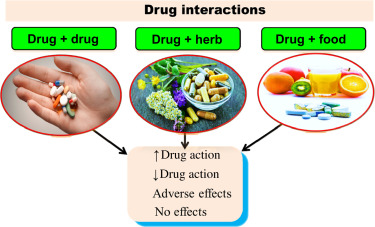
In clinical medicine, patients rarely take just one medication. When two or more drugs are given concurrently (at the same time), they interact. These interactions can be highly beneficial (helping the patient heal faster) or highly dangerous. We classify these outcomes into four specific mathematical categories based on how their dose-response curves interact.

1. The Additive Effect

Math Rule: 1 + 1 = 2

An additive effect occurs when the combined effect of two drugs equals the exact sum of their individual effects. Neither drug boosts the other; they just work side-by-side doing their own job, often acting on similar receptors or pathways.

  • Clinical Example: Aspirin + Paracetamol (Acetaminophen). Both of these medications relieve pain and reduce fever. If you take 50% of a full dose of Aspirin and 50% of a full dose of Paracetamol together, you get exactly 100% pain relief.
  • Expanded Mechanism: Aspirin works predominantly in the peripheral tissues by irreversibly inhibiting COX-1 and COX-2 enzymes. Paracetamol works more centrally in the brain (possibly via COX-3 or peroxidase sites). Their actions simply add up.
  • Clinical Knowledge: Why do doctors do this? By combining two drugs, the doctor can use a lower dose of each individual drug. This drastically reduces the risk of dose-dependent side effects (like severe stomach bleeding from too much Aspirin, or fatal liver toxicity from too much Paracetamol) while still achieving perfect pain relief.
2. Potentiation

Math Rule: ½ + 1 = 2 (or 0 + 1 = 2)

Potentiation happens when you mix a drug that has an active therapeutic effect with a substance that has little to zero therapeutic effect on its own. However, this seemingly useless second substance massively amplifies the power of the first drug.

  • Clinical Example: Amoxicillin + Clavulanic Acid (sold together as Augmentin).
  • The Problem: Many bacteria have evolved a defense shield—an enzyme called beta-lactamase, which chemically breaks open and destroys the antibiotic Amoxicillin before it can kill the bacteria.
  • The Solution: Clavulanic acid has almost zero ability to kill bacteria on its own. However, it is an expert "suicide inhibitor" that irreversibly binds to and destroys the bacteria's beta-lactamase shield.
  • The Result: By giving Clavulanic acid (which does nothing alone), it completely opens the door for Amoxicillin to rush in, bind to penicillin-binding proteins (PBPs), and kill the bacteria. The antibiotic activity is highly potentiated.
3. Synergism

Math Rule: 1 + 1 = 3 (or more)

Synergism is a stronger, more powerful interaction than potentiation. The total effect produced by combining two active drugs is much greater than the simple sum of their individual effects. They team up to create a massive, multiplied response, often by blocking sequential steps in a single metabolic pathway.

  • Clinical Example: Sulfamethoxazole + Trimethoprim (sold as Co-trimoxazole).
  • Expanded Mechanism: Bacteria must synthesize their own folic acid from scratch to create DNA and survive. This requires a multi-step assembly line.

    Step 1: Sulfamethoxazole acts as a competitive inhibitor of the enzyme dihydropteroate synthase.
    Step 2: Trimethoprim blocks the very next enzyme in the chain, dihydrofolate reductase (DHFR).
  • The Result: Used alone, each drug merely slows the bacteria down (they are bacteriostatic). But used together, they completely and sequentially shut down the folic acid factory, turning a weak antibacterial effect into a highly lethal, synergistic bacterial wipeout (bactericidal effect).
4. Antagonism

Math Rule: 1 + 1 < 2 (or 1 + 1 = 0)

Antagonism occurs when one drug actively opposes, reduces, or completely blocks the effect of another drug. The combined effect is actually less than expected.

  • Clinical Example: Opioids (Morphine/Heroin) + Naloxone.
  • Expanded Mechanism: If a patient takes an opioid, it powerfully binds to mu-opioid receptors in the brain to slow breathing, induce euphoria, and stop pain. If the dose is too high, breathing stops entirely (fatal overdose).
  • The Result: If you give Naloxone intravenously, it acts as a perfect competitive antagonist with a much higher affinity for the receptor than the opioid. It aggressively rips the opioid off the receptor and blocks it without activating it. The effect of the opioid drops to zero instantly, waking the patient up and saving them from an overdose.

Part 2: The Five Mechanisms of Drug Antagonism

When one drug blocks another (Antagonism), it can happen in five entirely different biological ways. Understanding exactly how the blockade happens—whether in the blood, in the liver, or at the receptor level—is critical for pharmacology exams.

1. Chemical Antagonism

This is the most basic physical interaction. Chemical antagonism occurs when two substances react directly with each other in the body fluids (like the blood, the stomach, or the gut lumen) before they even reach a cell receptor. They physically bind together to form an inactive complex, leading to the inactivation of one or both substances.

Real-World Examples of Chemical Antagonism

  • Chelating Agents (e.g., Dimercaprol or EDTA): If a patient has heavy metal poisoning (like swallowing lead, arsenic, or mercury), doctors inject a chelating agent. This drug acts like a chemical claw, physically grabbing the heavy metal molecules floating in the blood and forming highly stable, inactive pairings (chelates) that are water-soluble and safely peed out by the kidneys.
  • Antacids (e.g., Aluminium hydroxide): If a patient has severe heartburn or a peptic ulcer, they take an antacid. The basic aluminium hydroxide directly collides with the acidic gastric hydrochloric acid (HCl) in the stomach. They undergo a simple acid-base chemical neutralization reaction, turning into harmless salt and water, instantly neutralizing the stomach acidity.
  • Heparin + Protamine Sulfate (Extra Example): Heparin is a highly negatively charged blood thinner. If a patient is bleeding out from too much Heparin, doctors give Protamine Sulfate, a highly positively charged molecule. The positive and negative charges instantly bind together chemically, neutralizing the blood thinner.

2. Pharmacokinetic Antagonism

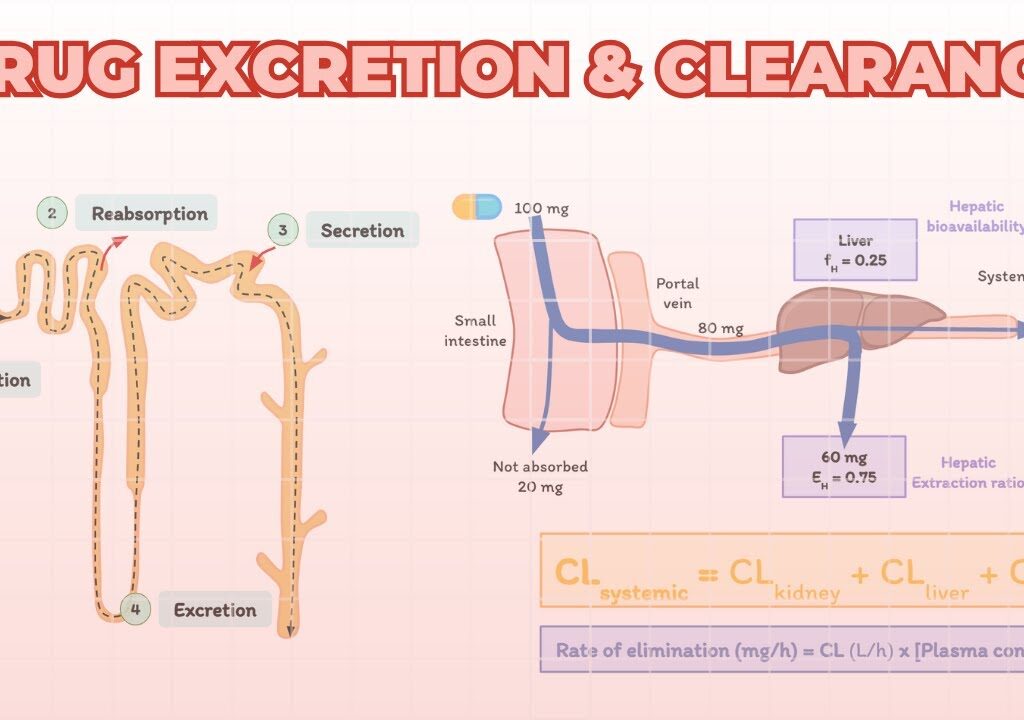
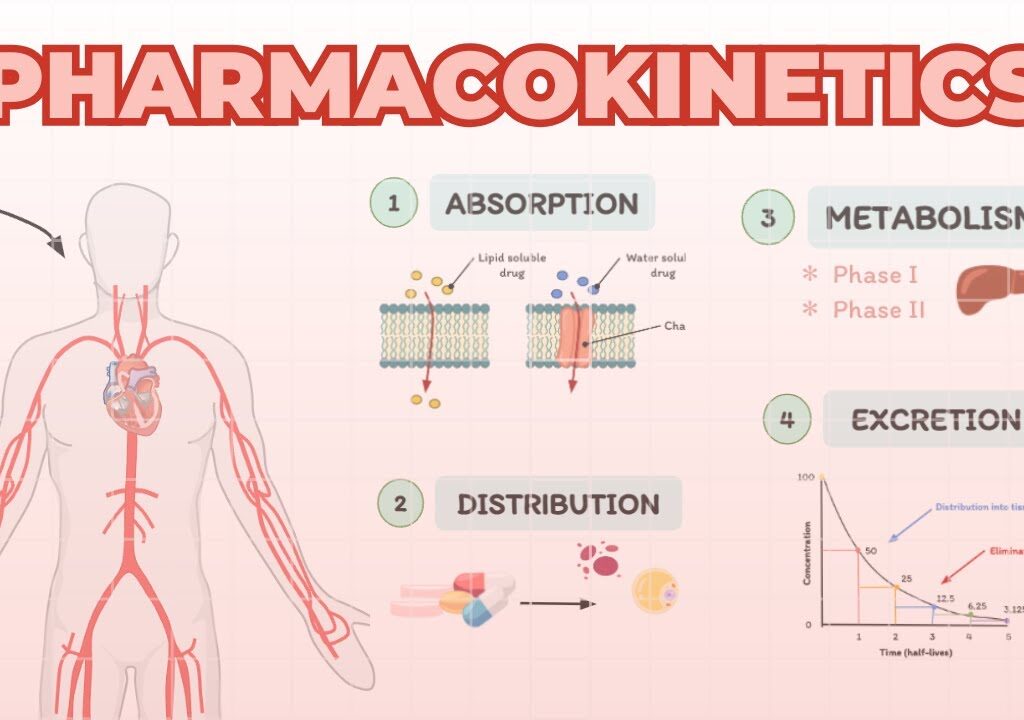
Pharmacokinetics is the study of how the body handles a drug (Absorption, Distribution, Metabolism, Excretion - ADME). Pharmacokinetic antagonism occurs when one substance physically reduces the effective concentration of another drug by messing with its journey through the body.

This happens in three main ways:

  • Reduced Absorption:
    • Example: Tetracyclines (an antibiotic) + Iron salts (or milk/calcium).
    • Mechanism: If a patient takes iron or calcium supplements at the same time as their tetracycline pill, the heavy metals physically bind to the antibiotic in the stomach and intestines to form an insoluble chelate. This makes the antibiotic molecule too heavy, rigid, and bulky to pass through the lipid gut wall into the blood. It totally prevents absorption, and the life-saving drug is lost in the feces.
  • Enhanced Elimination via Increased Metabolism:
    • Example: Phenobarbitone + Warfarin.
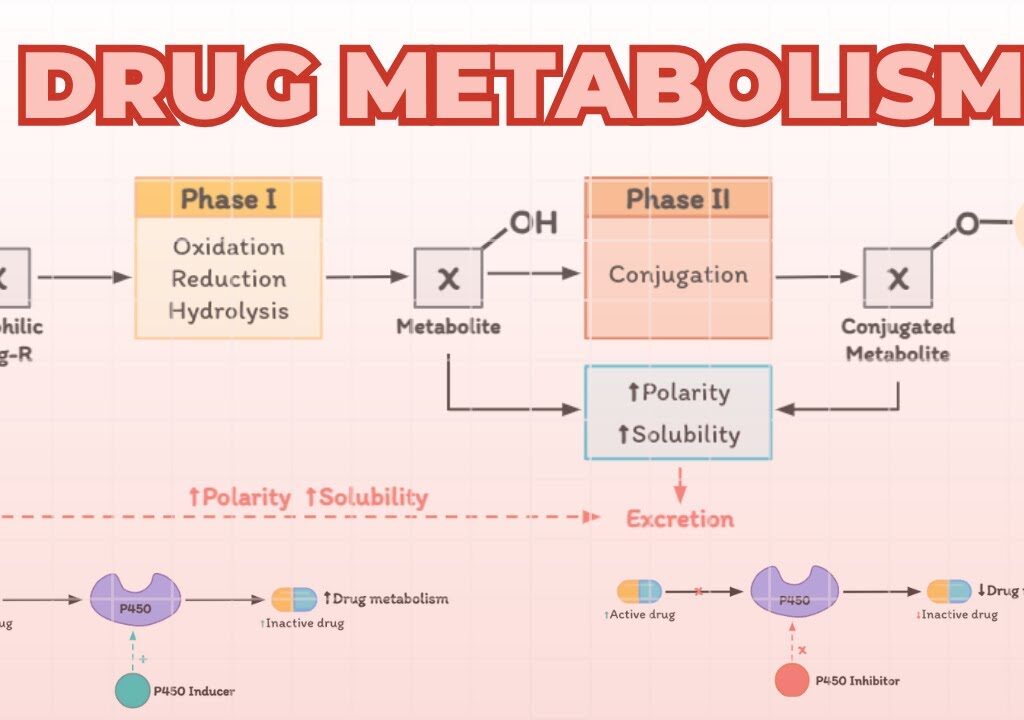
    • Mechanism: Warfarin is a dangerous blood thinner metabolized by the liver's Cytochrome P450 (CYP450) enzyme system. Phenobarbitone is a drug that causes "enzyme induction"—it forces the liver's DNA to build massive amounts of brand new CYP450 drug-destroying enzymes. If you take them together, the newly boosted liver chews up and destroys the Warfarin far too quickly, severely lowering its concentration in the blood and putting the patient at severe risk for fatal blood clots.
  • Enhanced Elimination via Increased Excretion (Ion Trapping):
    • Example: Sodium bicarbonate + Weak acids (like Aspirin/Salicylates).
    • Mechanism: In cases of an Aspirin overdose, the drug freely passes back from the kidney tubules into the blood. To stop this, doctors give IV sodium bicarbonate. This alkalinizes the urine (makes it basic, pH > 7.5). Because Aspirin is a weak acid, it donates a proton in the basic urine and becomes ionized (electrically charged). Charged molecules cannot cross lipid cell membranes. Therefore, the Aspirin gets chemically "trapped" in the basic urine and cannot be reabsorbed by the kidneys. The body excretes it incredibly fast.

3. Competitive Antagonism (Receptor Blockade)

In this scenario, we enter the microscopic world of cellular receptors. Competitive antagonism means the antagonist and the agonist are fighting for the exact same seat (the active receptor binding site) on the cell. By physically occupying the receptor, the antagonist blocks the agonist from sitting down and producing its effect.

There are two types of competitive antagonism based on how strongly they hold onto the receptor:

A. Reversible (Surmountable) Competitive Antagonism

  • Mechanism: The antagonist binds to the receptor using weak, non-covalent bonds (like hydrogen, van der Waals, or ionic bonds). Because the grip is weak, it frequently lets go and readily dissociates from the receptor.
  • The Key Feature: It is surmountable. This means if you flood the area with a massive concentration of the agonist, the agonist will mathematically outnumber the antagonist and win the game of musical chairs, displacing the antagonist and completely overcoming the blockade. (On a graph, this causes a parallel shift of the dose-response curve to the right).
  • Clinical Example: Propranolol. This is a reversible beta-blocker drug. It competitively sits on the beta-receptors of the heart, temporarily blocking the body's natural catecholamines (adrenaline and noradrenaline) from speeding up the heart rate. A massive surge of adrenaline can overcome it.

B. Irreversible (Non-surmountable) Competitive Antagonism

  • Mechanism: The antagonist binds to the receptor using incredibly strong covalent bonds, or with extremely high affinity that essentially never lets go. It is like using industrial superglue. It permanently inactivates that specific receptor.
  • The Key Feature: It is non-surmountable. Because the receptor is permanently broken and occupied, increasing the agonist concentration does absolutely nothing. The maximum possible response of the tissue is severely reduced. The response cannot be fully restored until the cell takes days to manufacture brand new receptors from scratch via DNA transcription. (On a graph, this causes a downward shift of the maximum efficacy curve).
  • Clinical Example: Phenoxybenzamine. This is an alpha-adrenergic blocker used in tumors like pheochromocytoma. It irreversibly binds to alpha-receptors on blood vessels, permanently preventing noradrenaline from causing deadly vasoconstriction.

4. Non-Competitive Antagonism (Allosteric Blockade)

This is a highly clever form of antagonism. The antagonist does not fight for the same front-row seat. Instead, a non-competitive antagonist binds to a completely different, separate location on the receptor called an allosteric site.

  • Mechanism: By sitting on this separate allosteric site, the antagonist forces the entire 3-dimensional protein structure of the receptor to change its physical shape (conformational change). Because the overall shape is changed, the main active binding site is ruined, and the agonist can no longer fit into it, or if it does fit, it can no longer trigger a signal.
  • The Key Feature: It is entirely insurmountable. You can add a million molecules of the agonist, but it won't matter because the main doorway is physically deformed and non-functional. (Note: The antagonist itself can be held by reversible or irreversible bonds to the allosteric site, but the effect on the agonist is always insurmountable).
  • Clinical Example 1: Ketamine. Acts as a non-competitive antagonist at NMDA receptors in the brain, changing their shape and completely blocking excitatory glutamate neurotransmission (creating profound dissociative anesthesia).
  • Clinical Example 2: Maraviroc. A powerful anti-HIV drug. It binds to a side-site on human white blood cell CCR5 receptors. This alters the shape of the main receptor so severely that the HIV virus cannot attach its gp120 protein to the cell to enter it.

5. Physiological Antagonism

This is a biological tug-of-war at the organ level. Physiological antagonism occurs when two completely different drugs (or natural hormones) act on completely different receptors and utilize entirely different intracellular pathways to produce exact opposite physiological effects. There is absolutely no direct competition at the same receptor.

Clinical Scenarios of Physiological Antagonism

  • Insulin vs. Glucagon (Blood Sugar Control):
    • Insulin binds to tyrosine-kinase insulin receptors, commanding the body to lower blood glucose by promoting cellular sugar uptake, glycolysis, and glycogen storage.
    • Glucagon binds to G-protein coupled glucagon receptors, commanding the body to raise blood glucose by stimulating the liver to break down glycogen and create new sugar (gluconeogenesis). They fight each other constantly via separate pathways to maintain perfect homeostasis.
  • Histamine vs. Adrenaline (The EpiPen Mechanism for Anaphylaxis):
    • If you are allergic to a bee sting, your mast cells release massive amounts of Histamine. Histamine binds to H1 receptors, causing deadly bronchospasm (throat closing via smooth muscle contraction) and severe vasodilation/hypotension (crashing blood pressure).
    • To save your life, you inject Adrenaline (Epinephrine). Adrenaline ignores the H1 receptors entirely. Instead, it binds to Beta-2 adrenergic receptors in the lungs (causing powerful bronchodilation/opening the throat) and Alpha-1 adrenergic receptors in the vessels (causing severe vasoconstriction/raising blood pressure). It directly and physiologically counteracts the deadly effects of histamine to save the patient.

Part 3: Loss of Drug Effect over Time

A major challenge in clinical medicine is that the therapeutic effect of a drug may diminish with continuous or repeated administration. The body learns to adapt to the drug, making it weaker. We use four distinct terms to describe this phenomenon based on how fast it happens and what is causing it.

  1. Tachyphylaxis (Desensitization): This is incredibly fast and rate-dependent. It is a rapid, acute loss of drug effect that occurs within mere minutes or hours of administration. Crucially, simply increasing the dose will NOT restore the effect.
    • Example: Repeated doses of ephedrine or amphetamines (drugs that act indirectly by squeezing nerve terminals to release stored noradrenaline). If you give it continuously, you squeeze the nerve entirely dry. The noradrenaline stores are depleted, and subsequent doses produce progressively smaller, useless responses until the nerve has time to manufacture more neurotransmitter.
  2. Tolerance: This is much slower and dose-dependent. It is a gradual decrease in physiological responsiveness developing over days, weeks, or months of taking a medication. The effect can usually be restored by giving a larger dose.
    • Example: Chronic use of powerful painkillers like opioids (morphine). Over weeks of use, the patient's body adapts (often by uncoupling the opioid receptors from their internal G-proteins), meaning they require higher and higher doses just to achieve the exact same baseline analgesic (pain-relieving) effect.
  3. Refractoriness: A stubborn, absolute state where a drug that was previously highly effective simply no longer produces any therapeutic response at all, regardless of massive dose increases.
    • Example: Patients taking Nitrates for chest pain (angina). After prolonged continuous use without a break, the blood vessels deplete critical sulfhydryl (-SH) groups needed to process the drug, and refuse to respond to the nitrates entirely. (Doctors solve this by enforcing an 8-to-12-hour "nitrate-free" period every night to let the body regenerate its enzymes and reset).
  4. Drug Resistance: This strictly refers to the loss of effectiveness of antimicrobial (antibiotic), antiviral, or anticancer drugs. It is not the human body adapting; it is due to rapid genetic, adaptive changes (mutations or horizontal gene transfer) in the target foreign organism or the mutated tumor itself.
    • Example: Bacterial resistance to antibiotics. A classic threat is MRSA (methicillin-resistant Staphylococcus aureus), a bacterium that mutated to build armor (altering its penicillin-binding proteins) against penicillin-style drugs, making standard antibiotics useless.

Part 4: The 6 Biological Mechanisms Causing Loss of Drug Effect

Why does tolerance or tachyphylaxis happen at the microscopic cellular level? The body treats drugs as foreign disruptions and employs six distinct defense mechanisms to fight off constant drug exposure and return to homeostasis.

1. Change in Receptors

Receptor Desensitization / Uncoupling

The physical receptor on the cell undergoes rapid functional modifications (often via phosphorylation by specialized kinases). The drug can still successfully bind to the receptor's surface, but the internal wiring is unplugged—signal transduction to the G-protein is completely impaired.

  • Example: Beta-adrenergic receptor desensitization. If an asthmatic patient overuses their salbutamol inhaler (a beta-agonist), the lung receptors become exhausted and structurally uncoupled. They stop sending the internal cAMP signal to open the airways, making the inhaler useless during an acute attack.
2. Loss of Receptors

Receptor Downregulation

The cell realizes it is being dangerously overstimulated. To protect itself from burnout, prolonged drug exposure causes the cell to actively pull receptors inside the cell membrane (endocytosis) and destroy them in lysosomes, massively reducing the total number of receptors available on the cell surface.

  • Example: Continuous exposure to high blood insulin (as seen in obesity and early Type 2 Diabetes). The cells downregulate their insulin receptors to avoid absorbing toxic levels of sugar. Once the drug/hormone is withdrawn, recovery to baseline receptor levels is very slow because the cell must synthesize new proteins.
3. Exhaustion of Mediators

Depletion of Endogenous Chemicals

Some drugs do not act directly on end-organ receptors; they act indirectly by forcing the body to dump a stored chemical mediator. Repeated, rapid drug stimulation completely depletes these essential pre-packaged mediators required for the effect.

  • Example: Indirect sympathomimetics like ephedrine or amphetamines lose effectiveness rapidly (tachyphylaxis) after repeated dosing strictly due to the total depletion of the body's synaptic noradrenaline vesicles.
4. Increased Metabolic Degradation

Pharmacokinetic Tolerance (Auto-Induction)

The liver treats drugs like poisons. Repeated drug exposure can actively induce (ramp up the DNA transcription of) liver metabolic enzymes like the Cytochrome P450 system. This leads to vastly accelerated drug breakdown, heavily reducing the drug's half-life and clinical effectiveness.

  • Example: Tolerance to ethanol (alcohol) or barbiturates. A heavy drinker's liver builds massive amounts of hepatic alcohol dehydrogenase and microsomal CYP enzymes. They process the alcohol so fast that the individual requires huge amounts of liquor to feel intoxicated compared to a novice.
5. Physiological Adaptation

Homeostatic Compensation

The body constantly wants to remain at its programmed baseline (homeostasis). If a drug shifts the baseline (e.g., dropping blood pressure), the body activates robust, entirely separate counter-regulatory mechanisms to aggressively oppose the drug’s intended effect.

  • Example: A patient takes long-term thiazide diuretics to lower their blood pressure by urinating out excess fluid. The kidneys panic at the loss of blood volume and stimulate the Renin-Angiotensin-Aldosterone System (RAAS), a physiological pathway designed to violently retain salt and water, actively reducing and opposing the diuretic's efficacy over time.
6. Active Removal of the Drug

Efflux Pumps

The cells build biological "sump pumps" to actively spit the drug back out into the blood or gut. Cells may massively increase the genetic expression of efflux pumps or transporters to physically remove the drug, fatally reducing intracellular drug concentrations.

  • Example: Chemotherapy resistance. Cancer cells are notoriously highly adaptable. They overexpress P-glycoprotein (MDR1 - Multi-Drug Resistance Protein), a heavy-duty, ATP-powered pump that actively captures toxic anticancer drugs that enter the cell and violently pumps them back out into the blood before they can reach the nucleus to kill the tumor.

Part 5: Master Glossary of Receptor Interactions

To ensure perfect clarity for your exams, here is a definitive breakdown of exactly how substances are defined based on how they interact with cellular receptors and other drugs:

Type of Substance Effect / Definition
Agonist A key that perfectly fits the lock. It binds to a receptor, possesses high affinity, and actively turns the receptor "on" (high intrinsic activity) to produce a full physiological response. (e.g., natural Adrenaline or Morphine).
Antagonist A key that fits into the lock, but cannot turn it. It binds to a receptor site (has affinity) strictly to block other agonists from entering and causing effects. It has absolutely zero intrinsic activity of its own.
Inverse Agonist A highly unique substance that binds to the exact same site as the agonist, but forces the receptor to produce an effect that is the exact mathematical opposite to that of a normal agonist. (It actively lowers the baseline, constitutive activity of the receptor below normal).
Superagonist A synthetic laboratory substance that produces a much greater, exaggerated maximum response from a receptor than the natural, endogenous (body-made) substance ever could (Efficacy > 100%).
Partial Agonist A weak key. A substance that binds to the receptor but has only partial efficacy (intrinsic activity between 0 and 1). Even if it completely saturates and fills 100% of the receptors, it can never produce the maximum full response that a full agonist can. (It can actually act as an antagonist if a full agonist is present!).
Additive Interaction Occurs when the effects of two drugs simply summate without enhancing each other. It is a straight, basic algebraic addition of effects (1 + 1 = 2).
Potentiation / Synergism Exposure to one drug produces an amplified, multiplied effect on a second drug, pushing the total therapeutic power far beyond simple addition (1 + 1 = 3 or more).

Quick Quiz

Drug Interactions & Loss of Effect

Pharmacology - mobile-friendly and focused practice.

Privacy: Your details are used only for quiz tracking and certificates.

signaling

Signaling Mechanisms

Signaling Mechanisms

Signaling Mechanisms


How to Approach This Topic

Pharmacodynamics (how drugs act on the body) is all about communication. Cells are blind and deaf; they rely entirely on chemical messages. When you take a drug, it acts as a messenger. This entire lecture focuses on how the message gets from the outside of the cell to the inside, forcing the cell to change its behavior. We will break down every single pathway so you can easily understand


Introduction to Drug-Responsive Signaling Mechanisms

Before we examine the specific pathways, we must understand the basic sequence of events:

  1. An agonist drug (the messenger or "key") binds to its specific receptor (the "lock").
  2. This binding event directly activates an effector or signaling mechanism.
  3. The effector causes a biological change inside the cell.

There are several different categories of these signaling mechanisms known in pharmacology. We classify them based on where the receptor is located and how it translates the message.

The Major Categories of Signaling Mechanisms:

  • Intracellular receptors: The receptor is hidden deep inside the cell (in the cytoplasm or nucleus).
  • Membrane receptors directly coupled to ion channels: The receptor is on the surface and acts as a direct physical gate for ions.
  • Receptors linked via coupling proteins to intracellular effectors: The receptor is on the surface and uses a middleman (like a G-protein) to send a message inside.
  • Receptors that function as enzymes or transporters: The receptor itself performs a chemical reaction or moves molecules.

Intracellular Receptors

Most drugs stop at the cell surface. However, some drugs are highly lipid-soluble (fat-soluble), allowing them to melt right through the cell membrane and enter the interior of the cell. Once inside, they find intracellular receptors.

The Process Step-by-Step:

  1. The hormone or drug crosses the cell membrane.
  2. It binds to the intracellular receptor.
  3. This binding releases regulatory proteins (which were holding the receptor in an inactive state).
  4. The receptor is now activated. In many cases, two activated receptors will pair up and join together (a process called dimerization).
  5. This new hormone-receptor complex travels (translocates) directly into the cell's nucleus.
  6. Inside the nucleus, the complex physically attaches to specific regions of DNA called response elements in spacer DNA.
  7. This interaction forces the DNA to either increase or decrease gene expression (the manufacturing of new proteins).
The Analogy

Think of the cell like a factory. Most drugs are delivery drivers who drop a package at the front desk (membrane receptors). But intracellular drugs are like VIP executives. They walk right past the front door, go straight into the manager's office (the nucleus), and rewrite the factory's rulebook (DNA) to change what the factory produces.

Key Characteristics and Examples

Because these drugs require the cell to read DNA and build entirely new proteins from scratch, the pharmacologic responses elicited via modification of gene expression have two absolute rules:

  • They are slower in onset (it takes hours to days to build new proteins).
  • They are longer in duration than many other drugs (even after the drug leaves the body, the newly built proteins stick around and keep working for days).

Examples of ligands that use Intracellular Receptors:

  • Steroids (Glucocorticoids): Drugs interacting with glucocorticoid receptors lead to the gene expression of proteins that heavily inhibit the production of inflammatory mediators.
  • Thyroid hormones.
  • Gonadal steroids (Estrogen, Testosterone).
  • Vitamin D.

Clinical Scenario: Asthma Attack

If a patient arrives at the hospital having a severe asthma attack, giving them an inhaled steroid (an intracellular drug) will not save them immediately because steroids take hours to change gene expression and reduce inflammation. Instead, you must give them Albuterol (a fast-acting membrane receptor drug) to open the airways instantly. The steroid is given to prevent attacks over the next few days.


Membrane Receptors Directly Coupled to Ion Channels

These are the fastest receptors in the human body. They work in milliseconds. The receptor and the effector are the exact same physical structure.

Mechanism: Endogenous ligands (the body's natural chemicals) regulate the flow of ions through excitable membranes by activating receptors that are directly coupled to ion channels. There are no second messengers involved. It is a simple gate. Many drugs act by either mimicking (agonist) or antagonizing (blocker) the actions of these natural ligands.

Example 1

The Nicotinic Receptor

  • Ligand: Acetylcholine (ACh).
  • Ion Channel: Coupled directly to a Sodium/Potassium (Na+/K+) ion channel.
  • Locations: Present in the Autonomic Nervous System (ANS) ganglia, the skeletal myoneural junction (where nerves tell muscles to move), and the Central Nervous System (CNS).
  • Pharmacology: This receptor is a prime target for many drugs, including:
    • Nicotine (acts as an agonist).
    • Choline esters.
    • Ganglion blockers.
    • Skeletal muscle relaxants (used during surgery to paralyze muscles by blocking this receptor).
Example 2

The GABA-A Receptor

  • Ligand: Gamma-aminobutyric acid (GABA).
  • Ion Channel: Coupled directly to a Chloride (Cl-) ion channel. When chloride flows into a nerve cell, it makes the cell highly negative and puts it to sleep (inhibition).
  • Locations: Central Nervous System (CNS).
  • Pharmacology: This receptor can be heavily modulated (enhanced) by drugs that calm the brain down:
    • Anticonvulsants (anti-seizure medications).
    • Benzodiazepines (anti-anxiety medications like Valium or Xanax).
    • Barbiturates (heavy sedatives).

Receptors Linked Via Coupling Proteins (G-Proteins)

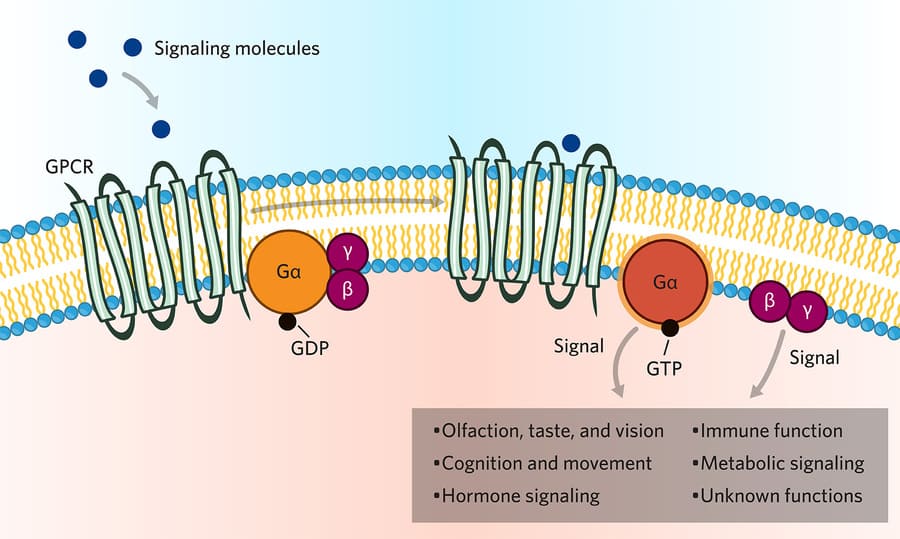
This is the largest and most famous family of receptors in pharmacology. They are often called "serpentine" receptors because they are made of a single protein chain that snakes back and forth across the cell membrane exactly seven times (seven transmembrane spanning domains).

The third loop on the inside of the cell is physically coupled to the G-protein effector mechanism. The G-protein is a middleman. It binds GTP (Guanosine Triphosphate) to become active.

The Relay Race Analogy:

  1. The Drug (Runner 1) passes the baton to the Receptor on the outside.
  2. The Receptor passes the baton to the G-Protein (Runner 2) on the inside.
  3. The G-Protein passes the baton to an Enzyme (Runner 3).
  4. The Enzyme creates Second Messengers (Runner 4) which flood the cell and finish the race.

There are three main types of G-proteins you must memorize: Gs, Gi, and Gq.

A. The Gs Pathway (Stimulatory)

Mechanism: Agonists binding to Gs proteins turn ON an enzyme called Adenylyl Cyclase. This enzyme takes ATP and converts it into a massive amount of the second messenger cAMP (cyclic AMP). The cAMP then activates Protein Kinase A (PKA). PKA serves to phosphorylate (add energetic phosphate groups to) tissue-specific substrate enzymes or transcription factors like CREB, profoundly affecting their cellular activity.

Receptors linked to Gs (Increases cAMP):

  • Beta receptors (catecholamines like epinephrine).
  • Dopamine (D1).
  • Glucagon.
  • Histamine (H2) (found in the stomach, controls stomach acid).
  • Prostacyclin.
  • Some serotonin subtypes.

B. The Gi Pathway (Inhibitory)

Mechanism: Agonists binding to Gi proteins do the exact opposite. They inhibit Adenylyl Cyclase, which severely decreases cAMP production, calming the cell down.

Receptors linked to Gi (Decreases cAMP):

  • Alpha-2 adrenoreceptors.
  • ACh (M2) (Muscarinic 2 receptors, found on the heart to slow heart rate).
  • Dopamine (D2 subtypes).
  • Several opioid receptors (this is how morphine stops pain signaling).
  • Several serotonin subtypes.

C. The Gq Pathway (The Calcium Pathway)

Mechanism: This pathway uses entirely different enzymes and messengers. Other receptor systems are coupled via Gq proteins, which activate an enzyme called Phospholipase C (PLC).

  1. PLC chops up a membrane phospholipid called PIP2 (phosphatidylinositol bisphosphate).
  2. This chopping releases TWO distinct second messengers: IP3 (inositol triphosphate) and DAG (diacylglycerol).
  3. IP3 travels deep into the cell and induces the massive release of stored Calcium (Ca2+) from the Sarcoplasmic Reticulum (SR).
  4. The newly released Calcium, working closely together with the DAG, activates an entirely different kinase: Protein Kinase C (PKC).
  5. Protein Kinase C serves to phosphorylate a unique set of tissue-specific substrate enzymes that are normally not phosphorylated by Protein Kinase A.

Receptors linked to Gq (Increases Calcium):

  • ACh (M1 and M3) (Muscarinic receptors that make glands secrete and gut muscles contract).
  • Norepinephrine (Alpha-1) (Causes blood vessels to severely constrict).
  • Angiotensin II.
  • Several serotonin subtypes.

Summary Rule to Memorize for Exams: "In A Nutshell"

  • Gq Activation (Phospholipase C): M1, M3, Alpha-1
  • Gi Inhibition (Adenylyl Cyclase): M2, Alpha-2, D2
  • Gs Activation (Adenylyl Cyclase): Beta-1, Beta-2, D1

Cyclic GMP and Nitric Oxide Signaling

This is a very unique signaling mechanism that relies on a gas: Nitric Oxide (NO).

The Mechanism Step-by-Step:

  1. Nitric oxide (NO) is naturally synthesized inside the endothelial cells (the inner lining of your blood vessels).
  2. Because NO is a gas, it easily diffuses right out of the endothelial cell and straight into the neighboring vascular smooth muscle cell.
  3. Inside the smooth muscle, NO directly activates an enzyme called Guanylyl Cyclase.
  4. This heavily increases the production of the second messenger cGMP (cyclic GMP) inside the smooth muscle.
  5. cGMP facilitates the dephosphorylation of myosin light chains.
  6. By removing the phosphate from myosin, it prevents the myosin from interacting with actin. Without actin-myosin interaction, the muscle cannot contract.
  7. The ultimate result is intense vasodilation (widening and relaxation of the blood vessels).

Clinical Correlate: Vasodilators

Any drug that acts as a vasodilator works by increasing the synthesis of NO by endothelial cells or providing NO directly.

Drugs acting via NO include:

  • Nitrates (e.g., nitroglycerin): Used by heart patients. It breaks down directly into NO gas in the blood, causing instant vasodilation to relieve chest pain (angina).
  • M-receptor agonists (e.g., bethanechol): Stimulate the endothelium to produce more NO.

Endogenous body compounds acting via NO include:

  • Bradykinin.
  • Histamine.

Receptors That Function as Enzymes or Transporters

Not all receptors are communication dishes; some are hardworking machineries. Many drugs act simply by inhibiting these natural enzymes or transport pumps.

A. Enzyme Inhibitors

There are multiple examples of drug action that depend directly on enzyme inhibition. If you block the enzyme, you stop its chemical reaction. Key enzymes targeted by drugs include:

  • Acetylcholinesterase (blocking this leaves more ACh in the brain).
  • Angiotensin Converting Enzyme (ACE) (ACE inhibitors lower blood pressure).
  • Aspartate protease (targeted by HIV medications).
  • Carbonic anhydrase (diuretics for the kidney).
  • Cyclooxygenases (COX) (Aspirin and Ibuprofen block COX to stop pain and inflammation).
  • Dihydrofolate reductase (Chemotherapy targets this to stop cell division).
  • DNA/RNA polymerases (Antiviral and cancer drugs).
  • Monoamine oxidases (MAO) (MAO inhibitors are powerful antidepressants).
  • Na/K-ATPase (Targeted by digoxin for heart failure).
  • Neuraminidase (Targeted by Tamiflu to stop the flu virus).
  • Reverse transcriptase (Targeted by HIV medications).
Clinical Correlate

Tyrosine Kinase (TK) Inhibitors for Cancer

Many cancers are driven by overactive Tyrosine Kinase enzymes. We treat them with specific inhibitors:

  • Imatinib: This is a highly specific tyrosine kinase inhibitor (it acts like a sniper, hitting only the mutated enzyme in chronic myeloid leukemia).
  • Sorafenib: This is a non-specific TK inhibitor (it acts more broadly, hitting multiple pathways in kidney and liver cancers).

B. Transporter Inhibitors

Nerve cells communicate by releasing neurotransmitters into a gap, and then using "transporter pumps" to vacuum them back up (reuptake). Drugs can block these pumps to keep the neurotransmitter active longer in the gap.

Examples of drug action on transporter systems include the inhibitors of reuptake for several neurotransmitters, including:

  • Dopamine (Cocaine blocks this pump).
  • GABA.
  • Norepinephrine.
  • And serotonin (SSRIs like Prozac block serotonin reuptake to treat depression).

Receptors That Function as Transmembrane Enzymes

These are large proteins where the outside part is a receptor, and the inside part is literally an enzyme. They mediate the highly important first steps in signaling by insulin and growth factors.

Examples include:

  • Epidermal growth factor (EGF).
  • Platelet-derived growth factor (PDGF).

The Mechanism Step-by-Step:

  1. These are membrane-spanning macromolecules.
  2. They have a recognition site for the binding of insulin or growth factors located externally on the cell surface.
  3. They have a cytoplasmic domain located internally that normally functions as a tyrosine kinase.
  4. Binding of the ligand on the outside causes massive conformational (shape) changes in the protein.
  5. This causes two receptors to slide together and pair up (dimerization).
  6. Dimerization causes the internal tyrosine kinase domains to officially become activated.
  7. Ultimately, this leads to the phosphorylation of tissue-specific substrate proteins, forcing the cell to grow, divide, or absorb glucose (in the case of insulin).

Variation: Guanylyl Cyclase-Associated Receptors

Similar to the transmembrane enzymes above, some membrane receptors do not have a tyrosine kinase inside, but rather a Guanylyl Cyclase enzyme attached to them.

For example, stimulation of receptors by Atrial Natriuretic Peptide (ANP) directly activates the attached guanylyl cyclase, which causes an immediate increase in intracellular cyclic GMP (cGMP). This causes the kidneys to excrete sodium and water, lowering blood pressure.


Receptors for Cytokines (The JAK-STAT Pathway)

Cytokines are immune system messengers and growth modulators. They require their own special receptor family.

Ligands that use this system include:

  • Erythropoietin (tells the bone marrow to make red blood cells).
  • Somatotropin (Growth Hormone).
  • Interferons (powerful immune chemicals).

The Mechanism Step-by-Step:

  1. Their receptors are membrane-spanning. Unlike the receptors above, they do not have built-in enzyme activity.
  2. Upon activation by a cytokine, they physically attach to and activate a distinctive set of completely separate cytoplasmic tyrosine kinases known as Janus kinases (JAKs).
  3. The activated JAKs act quickly to phosphorylate special molecules called Signal Transducers and Activators of Transcription (STAT) molecules.
  4. Once phosphorylated, two STATs will pair up (dimerize).
  5. The dimerized STATs then dissociate from the receptor complex.
  6. They physically cross the nuclear membrane to enter the nucleus.
  7. Inside the nucleus, they modulate gene transcription (changing protein production).
The Tag Team Analogy

The cytokine receptor is a coach who tags in a wrestler (JAK). The wrestler (JAK) beats up and tags a runner (STAT). The runner pairs up with his partner and runs straight into the boss's office (the nucleus) to hand in the final paperwork.

Quick Quiz

Signaling Mechanism Exam

Pharmacology - mobile-friendly and focused practice.

Privacy: Your details are used only for quiz tracking and certificates.

Classification and Nomenclature of Drugs

Classification and Nomenclature of Drugs

Classification & Nomenclature of Drugs

Classification and Nomenclature of Drugs


Introduction: Why do we classify drugs?

With tens of thousands of individual drugs existing in modern medicine, studying them one by one is impossible. Drug classification refers to the systematic grouping of drugs based on shared characteristics. By grouping drugs logically, pharmacologists, physicians, and pharmacists can:

  • Understand general drug actions and behaviors without memorizing every single drug.
  • Predict therapeutic effects, potential side effects, and drug interactions.
  • Guide rational, evidence-based drug therapy.
  • Organize pharmacy inventories and hospital formularies efficiently.

Part I: The Systems of Drug Classification

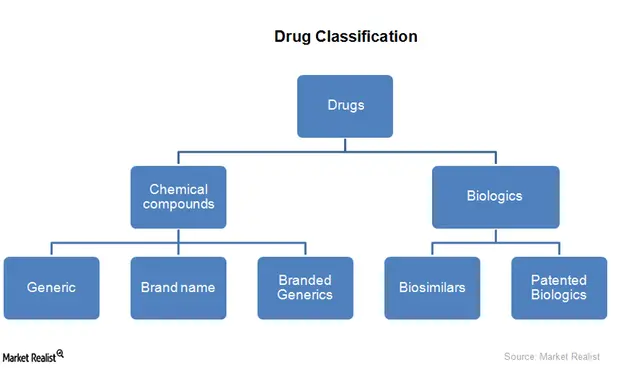
There is no single "perfect" way to classify a drug. A single drug can fall into multiple categories depending on the system used. Below are the primary methods of classification used in pharmacology, including several advanced clinical classifications.

A. Classification Based on Therapeutic Use (Clinical Indication)

This is the most intuitive and user-friendly system, especially for clinicians and patients. It groups drugs strictly according to the disease, symptom, or condition they are intended to treat, regardless of their chemistry or how they work.

Therapeutic Class Examples Indication (What it treats)
Analgesics Paracetamol, Morphine, Ibuprofen Pain relief
Antihypertensives Enalapril, Amlodipine, Losartan Hypertension (High Blood Pressure)
Antidiabetics Metformin, Insulin, Glipizide Diabetes mellitus
Antibiotics / Antimicrobials Amoxicillin, Ciprofloxacin, Azithromycin Bacterial infections
Antimalarials Artemether, Quinine, Chloroquine Malaria
Antipyretics Paracetamol, Aspirin Fever reduction

Advantages and Limitations of Therapeutic Classification

  • Advantage: It is highly practical in clinical practice. If a doctor diagnoses a patient with Malaria, they simply look at the "Antimalarial" group to choose a treatment.
  • Limitation: It is scientifically imprecise because many drugs have multiple therapeutic uses, making strict classification difficult. Furthermore, two drugs in the same class (like Enalapril and Amlodipine for hypertension) work in entirely different ways.
The Aspirin Conundrum

Aspirin is a classic example of this limitation. It can be classified as an Analgesic (treats headache), an Antipyretic (treats fever), an Anti-inflammatory (treats arthritis), and an Antiplatelet (prevents heart attacks). Classifying it under just one therapeutic use ignores its other vital roles.

B. Classification Based on Pharmacological Effect

This system groups drugs according to their broad physiological or biochemical effects on the body's systems. It bridges the gap between what the drug treats (therapeutic use) and exactly how it works at the molecular level (mechanism of action).

Pharmacological Class Examples Physiological Effect
Diuretics Furosemide, Hydrochlorothiazide Increase urine output (removes excess fluid)
Sedatives / Hypnotics Diazepam, Phenobarbital Induce calmness, reduce anxiety, or induce sleep (CNS Depression)
Vasodilators Nitroglycerin, Hydralazine Relax and dilate smooth muscle in blood vessels
Bronchodilators Salbutamol, Albuterol Relax and dilate the bronchi/airways in the lungs
CNS Stimulants Caffeine, Amphetamines Increase brain activity and alertness

C. Classification Based on Mechanism of Action (MOA)

This is the most specific and scientifically rigorous classification. It groups drugs according to how they produce their pharmacological effect at the molecular or cellular level. It looks at the specific receptors, enzymes, or ion channels the drug targets.

Mechanism of Action Class Drug Example Specific Molecular Action
ACE Inhibitors Enalapril, Lisinopril Blocks the Angiotensin-Converting Enzyme, preventing the formation of Angiotensin II.
Beta-blockers (β-adrenergic antagonists) Propranolol, Atenolol Bind to and block β-adrenergic receptors in the heart, preventing adrenaline from binding.
Proton Pump Inhibitors (PPIs) Omeprazole, Pantoprazole Irreversibly inhibit the gastric H⁺/K⁺ ATPase pump in the stomach lining, stopping acid secretion.
DNA Gyrase Inhibitors Ciprofloxacin, Levofloxacin Inhibit bacterial DNA gyrase (topoisomerase II), physically halting bacterial DNA replication.
Calcium Channel Blockers Amlodipine, Nifedipine Block voltage-gated calcium channels in blood vessels, preventing calcium influx and causing relaxation.

Note: This classification is critical in modern pharmacology and rational drug design, as it allows scientists to predict exact drug-drug interactions and side effects based on molecular targets.

D. Classification Based on Chemical Structure

Drugs are grouped based on their chemical composition, molecular skeleton, or structural similarity. Drugs that share a chemical structure usually share similar pharmacological activities, mechanisms, and side-effect profiles.

Chemical Class Examples Structural Characteristic
Penicillins (Beta-Lactams) Penicillin G, Amoxicillin, Ampicillin Contain a four-membered Beta-Lactam ring essential for antibacterial activity.
Benzodiazepines Diazepam, Lorazepam, Clonazepam Contain a benzene ring fused to a diazepine ring.
Sulfonamides Sulfamethoxazole, Sulfasalazine Contain a sulfonamide (-SO2NH2) chemical group.
Barbiturates Phenobarbital, Thiopental Derivatives of barbituric acid.
Steroids Cortisol, Testosterone, Dexamethasone Contain a core of four fused carbon rings (cyclopentanoperhydrophenanthrene).
Deep Dive

Structure-Activity Relationship (SAR)

Why do we care about chemical structure? Because of SAR. By understanding the chemical backbone of a drug, chemists can make tiny structural changes to improve the drug. For example, natural Penicillin G is destroyed by stomach acid and must be injected. By simply adding an amino (-NH2) group to its chemical structure, chemists created Amoxicillin, which survives stomach acid and can be taken as an oral pill.

E. Classification Based on Source of Origin

Historically, all drugs came from nature. Today, we classify them by where the raw materials originate.

1. Plant Sources (Natural)

Many of our oldest and most powerful drugs are extracted directly from the leaves, roots, or sap of plants.

  • Morphine: A potent painkiller extracted from the seed pods of the opium poppy (Papaver somniferum).
  • Quinine: An antimalarial from the bark of the Cinchona tree.
  • Digoxin: A heart failure medication from the Foxglove plant (Digitalis species).
  • Atropine: From the Deadly Nightshade plant (Atropa belladonna).
2. Animal Sources (Natural)

Extracts from animal tissues and glands.

  • Insulin: Historically extracted from the pancreas of pigs (porcine) and cows (bovine).
  • Heparin: A blood thinner extracted from porcine (pig) intestinal mucosa or bovine lungs.
  • Premarin: Estrogen hormone replacements originally extracted from the urine of pregnant mares (horses).
3. Mineral Sources (Natural)

Inorganic elements used therapeutically.

  • Ferrous sulfate: Iron supplement for anemia.
  • Magnesium sulfate: Used for eclampsia in pregnancy or as a laxative.
  • Lithium: Used for bipolar disorder.
  • Iodine: Used as an antiseptic and for thyroid function.
4. Microbial Sources (Natural)

Drugs extracted from fungi or bacteria (often used to kill other competing bacteria).

  • Penicillin: Discovered from the Penicillium mold/fungus.
  • Streptomycin / Chloramphenicol: Extracted from soil bacteria of the Streptomyces species.
5. Synthetic and Semisynthetic Drugs

The vast majority of modern drugs.

  • Synthetic: Created entirely from scratch in a laboratory using chemical reactions. They do not exist in nature. Example: Paracetamol, Diazepam.
  • Semisynthetic: A natural molecule is extracted from a plant or microbe, and then chemically modified in the lab to improve it (make it safer, more potent, or longer-lasting). Example: Amoxicillin (modified from natural penicillin), Heroin (synthesized from natural morphine).
6. Biologics / Recombinant DNA Technology

Modern Addition: Drugs created by inserting human genes into bacteria or yeast, turning the microbes into tiny factories that produce human proteins.

  • Human Regular Insulin: Replaced pig insulin.
  • Monoclonal Antibodies: Modern cancer and autoimmune therapies (drugs ending in "-mab", like Infliximab).

Important Additions to Drug Classification

While the above 5 are the classical methods, two other systems are vital in modern medicine:

1. Classification by Legal/Prescription Status:

  • Over-the-Counter (OTC): Safe enough for patients to buy without a doctor's supervision (e.g., Paracetamol, mild antacids).
  • Prescription-Only Medicines (POM): Require a valid prescription from a licensed practitioner due to potential risks (e.g., Antibiotics, Antihypertensives).
  • Controlled Substances: Drugs with a high potential for abuse and addiction (e.g., Opioids, Amphetamines). They are strictly scheduled (Schedule I to V) by law enforcement.

2. The ATC System (Anatomical Therapeutic Chemical):

Developed by the World Health Organization (WHO), this is the global gold standard. It classifies drugs at 5 different levels combining anatomy, therapeutic use, and chemistry. For example, Metformin is classified as A10BA02:

  • A: Alimentary tract and metabolism (Anatomy)
  • 10: Drugs used in diabetes (Therapeutic use)
  • B: Blood glucose lowering drugs, oral (Pharmacological)
  • A: Biguanides (Chemical group)
  • 02: Metformin (Specific drug)

Part II: Nomenclature of Drugs

Drug nomenclature refers to the systematic process of naming drugs. From the moment a new drug is discovered in a lab to the moment a patient buys it in a pharmacy, it will be assigned several different names. A single drug molecule typically has at least three or four distinct names.

A. Chemical Name

This is the systematic, highly precise scientific name that describes the exact atomic and molecular structure of the compound. It is dictated by the rules of IUPAC (International Union of Pure and Applied Chemistry).

  • Characteristics: It is completely precise, allowing a chemist to draw the exact molecule just by reading the name. However, it is usually extremely long, complex, and impossible for doctors or patients to remember or pronounce.
  • Usage: Mainly used only by medicinal chemists and in strict scientific literature or patent filings.
  • Examples:
    • Paracetamol: N-(4-hydroxyphenyl)acetamide (or N-acetyl-p-aminophenol, which is where the abbreviation APAP comes from).
    • Diazepam: 7-chloro-1-methyl-5-phenyl-3H-1,4-benzodiazepin-2-one.

B. Code Name (Developmental / Research Name)

When a pharmaceutical company first synthesizes a promising chemical, it does not yet have a generic or brand name. During early lab testing and clinical trials, it is assigned a short code name, usually consisting of letters (representing the company) and numbers.

  • Characteristics: Short, temporary, and used internally during R&D.
  • Examples:
    • UK-92480: The code name used by Pfizer during the development of Sildenafil (Viagra).
    • RU-486: The code name for Mifepristone (the abortion pill) developed by Roussel Uclaf.

C. Generic Name (Non-proprietary Name / Official Name)

Once a drug proves safe and effective, it is given an official, universally recognized name. This name represents the active pharmaceutical ingredient. These names are assigned by official national/international bodies, primarily the World Health Organization (WHO) through their International Nonproprietary Name (INN) system, or the USAN in America.

  • Characteristics:
    • Universal: The generic name is the same in every country, every hospital, and every textbook around the world.
    • Non-proprietary: It is not owned by any pharmaceutical company. It belongs to the public domain.
    • Lower-case: By convention, generic names are written starting with a lower-case letter (e.g., paracetamol).
    • Standardized Suffixes/Stems: Generic names use standard endings so healthcare workers can instantly recognize the drug class. For example:
      • Drugs ending in -olol (propranolol, atenolol) are Beta-blockers.
      • Drugs ending in -pril (enalapril, lisinopril) are ACE inhibitors.
      • Drugs ending in -cillin (amoxicillin, penicillin) are antibiotics.
  • Usage: Used in official medical prescriptions, medical school education, and scientific publications. Promotes clear, unambiguous communication.
  • Examples: paracetamol, metformin, amoxicillin, diclofenac, propranolol.

D. Brand Name (Trade Name / Proprietary Name)

This is the commercial, marketing name given to the drug by the specific pharmaceutical company that manufactures and sells it.

  • Characteristics:
    • Proprietary: It is a registered trademark owned exclusively by the manufacturer. No other company can use that exact name.
    • Capitalized: Always written with a capital first letter, often accompanied by a ® or ™ symbol.
    • Designed for Marketing: Brand names are intentionally made short, catchy, and easy for patients to remember (e.g., "Flonase" for fluticasone, implying it clears the nose).
    • Multiple Names: Because the patent for a generic drug eventually expires, multiple different companies can make the exact same drug, each giving it their own unique Brand Name. Therefore, one generic drug can have dozens of brand names.

Examples illustrating Generic vs. Brand:

Generic Name (The actual drug) Brand Names (Different companies' versions)
paracetamol Panadol®, Calpol®, Tylenol®
amoxicillin Amoxil®, Trimox®, Moxatag®
metformin Glucophage®, Fortamet®
diclofenac Voltaren®, Cataflam®
sildenafil Viagra® (for erectile dysfunction), Revatio® (for pulmonary hypertension)

Summary Checklist

Key Takeaways

Drug classification can be based on:

  • Therapeutic use (What disease it treats)
  • Pharmacological effect (What it does to the body physiologically)
  • Mechanism of action (What molecular target it hits)
  • Chemical structure (What its molecule looks like)
  • Source (Where we found it: plant, animal, microbe, lab)
  • Plus: Legal status and ATC classification.

Drug nomenclature includes the progression of:

  • Chemical name (Complex chemistry)
  • Code name (Lab research)
  • Generic (non-proprietary) name (Universal medical name)
  • Brand (trade) name (Commercial pharmacy name)

Quick Quiz

Drug Elimination & Clearance Quiz

Pharmacology - mobile-friendly and focused practice.

Privacy: Your details are used only for quiz tracking and certificates.

mechanism of action

Mechanism of Drug Action

Pharmacodynamics: Mechanism of Drug Action

Mechanism of Drug Action (Pharmacodynamics)

Learning Objectives for this Exam

Pharmacodynamics is the study of how drugs interact with the body at a molecular level. By the end of this guide, you will master:

  • The four primary protein targets for drugs: Receptors, Ion Channels, Enzymes, and Transporters.
  • The specific properties of receptors, including affinity, intrinsic activity, potency, and efficacy.
  • The exact definitions of agonists (full, partial, inverse) and antagonists.
  • The four major families of receptors and their specific operating speeds and mechanisms.
  • A detailed understanding of G-Protein-Coupled Receptors (GPCRs) and their internal signaling pathways (cAMP and IP3/DAG).

Introduction to Pharmacodynamics

Pharmacodynamics is the branch of pharmacology concerned exclusively with the actions, interactions, and the specific mechanism (or mode) of action of drugs within the body. In simple terms, it studies exactly what the drug does to the body to produce a biological effect.

When a drug enters the body, it must interact with something to cause a change. These interactions fall into two broad categories:

  • Highly Specific Interactions: The drug precisely binds to a specific biological target (most commonly a pharmacological receptor) to exert its effect.
  • Non-Specific Interactions: The drug produces an effect without binding to a specific receptor. For example, an antacid (like calcium carbonate) simply neutralizes stomach acid through basic chemistry, without needing a receptor.

Molecular & Biochemical Mechanisms of Drug Action

For drugs that act specifically, they must bind to certain proteins on or inside mammalian cells. These protein targets can be broadly divided into four fundamental categories:

  1. Receptors
  2. Ion Channels
  3. Enzymes
  4. Carrier Molecules (Transporters)

Let us examine each of these four targets in deep detail, including the exact drugs that target them.

Target I: Receptors

Receptors are highly specialized protein structures located either on the surface of the mammalian cell membrane or entirely within the cell.

They act as the sensing elements in the chemical communication system that coordinates the functions of all the different cells in the body. Natural chemical messengers (endogenous ligands) bind to these receptors to tell the cell what to do. These natural messengers include:

  • Hormones (e.g., insulin, estrogen).
  • Neurotransmitters (e.g., acetylcholine, dopamine).
  • Other local mediators / Autocoids (e.g., Histamine, Serotonin / 5-HT).

Many therapeutically useful drugs work by hijacking this system. They act either as agonists (mimicking the natural messenger) or antagonists (blocking the natural messenger) on these known endogenous receptors.

Key Characteristics of Drugs Acting via Receptors

  • Low Concentrations: Because receptors are highly sensitive, drugs targeting them can act effectively at very low concentrations in the blood.
  • Structure–Activity Relationship (SAR): Receptors are extremely picky about shape. Very small modifications to a drug's functional chemical groups, stereochemistry (3D arrangement), or molecular shape can significantly impact how tightly the drug binds (binding affinity) and how well it works (pharmacological activity).
  • Specific Antagonism: Their effects can be precisely blocked by specific antagonists.

Examples:

  • Acetylcholine receptors can be blocked.
  • Adrenaline receptors can be blocked.
  • Histamine acts on specific H1, H2, H3, and H4 receptors (allergy medicines block H1).
  • Dopamine acts on D1–D5 receptors (antipsychotic drugs block these).
  • Morphine acts on specific opioid receptors named μ (mu), κ (kappa), and δ (delta).

Target II: Ion Channels

Cells use electrical charges to communicate, especially nerves and muscles. They do this by moving ions (like Sodium, Calcium, Potassium, and Chloride) in and out of the cell through specialized protein gates called Ion Channels.

There are two main types of ion channels:

  • Ligand-gated (ionotropic) channels: These are locked gates that only open when a specific chemical key (an agonist) binds directly to the receptor on the gate.
  • Voltage-gated channels: These gates do not need a chemical key. Instead, they sense the electrical charge of the cell. They open or close in response to changes in the membrane potential (electrical voltage).

How Drugs Act on Ion Channels:

  • Direct Action: The drug physically binds directly to the channel protein itself, acting like a plug to block it, or locking it in an open position.
  • Indirect Action: The drug binds to a separate receptor nearby, which then uses a messenger (like a G-protein) to tell the ion channel to open or close.

Examples of Drugs Acting on Ion Channels:

  • Voltage-gated sodium channels: These are blocked by local anesthetics (e.g., lidocaine). By blocking sodium from entering the nerve, the nerve cannot send a pain signal to the brain.
  • L-type calcium channels: These are inhibited by dihydropyridines (a class of vasodilators, e.g., nifedipine). By blocking calcium from entering blood vessel muscles, the vessels relax, heavily lowering blood pressure.
  • GABA receptor–chloride channel system: This is modulated by benzodiazepines (tranquillizers, e.g., diazepam). Diazepam binds to the channel, helping it open wider to let negatively charged chloride ions into the brain cell, severely calming and slowing down brain activity.
  • ATP-sensitive potassium channels (KATP): Located in the pancreatic β-cells. These are blocked by sulfonylureas (diabetes medications). Blocking potassium from leaving the cell forces the pancreas to release stored insulin into the blood.

Target III: Enzymes

Enzymes are biological catalysts that speed up chemical reactions in the body (building things up or breaking them down). Many drugs act specifically as enzyme inhibitors.

  • I. Competitive, Reversible Inhibition: The drug temporarily fights the natural substance for the active spot on the enzyme. If the drug wins, the enzyme halts. Because it is reversible, the effect wears off as the drug leaves the body.
    • Example: Neostigmine. It reversibly inhibits the enzyme acetylcholinesterase (the enzyme that destroys acetylcholine). This allows acetylcholine to build up and help patients with severe muscle weakness.
  • II. Irreversible, Non-Competitive Inhibition: The drug permanently binds to the enzyme, destroying its ability to function forever. The body must physically build entirely new enzymes to recover.
    • Example: Aspirin. It permanently inhibits the cyclo-oxygenase (COX) enzyme, permanently stopping the production of chemicals that cause pain and inflammation.
  • III. False Substrates: The drug tricks the enzyme. The enzyme thinks the drug is a normal building block and tries to process it, producing abnormal, broken metabolites that disrupt cell pathways.
    • Example: Fluorouracil. This is an anticancer drug. Cancer cells take it up thinking it is a building block for DNA, but it ruins their DNA production, killing the cancer cell.

Target IV: Carrier Molecules (Transporters)

Many essential molecules in the body are polar ions or small organic molecules. Because they are polar, they cannot diffuse freely through the fatty cell membrane. They require special "taxi cabs" called carrier molecules or transporters to carry them across the membrane.

Natural examples of these transporters include Glucose and amino acid transporters, Ion transporters, and Neurotransmitter transporters (which vacuum up used neurotransmitters like choline, noradrenaline, serotonin, and glutamate from the brain synapses to be recycled).

Amine Transporters (Distinct from Receptors)

These belong to a separate structural family from receptors. Carrier proteins have highly specific recognition sites for their substrates. Drugs can target these exact sites to block transport.

Crucial Examples of Drugs Targeting Carriers/Transporters:

Tricyclic antidepressants (TCAs)

Block the reuptake transporters for noradrenaline and serotonin, leaving more of these mood-boosting chemicals in the brain.

Cocaine

Blocks the reuptake transporters for dopamine, noradrenaline, and serotonin, causing a massive, temporary high.

Selective Serotonin Reuptake Inhibitors (SSRIs)

(e.g., Fluoxetine). Specifically inhibit the serotonin transporter (SERT), leading to increased serotonin at synapses to treat depression.

Omeprazole

Inhibits the H⁺/K⁺-ATPase proton pump (a specific transporter) in the stomach's parietal cells, stopping severe acid reflux.

Cardiac glycosides

(e.g., digoxin): Inhibit the Na⁺/K⁺-ATPase pump in heart cells. This indirect action forces intracellular calcium levels to rise, causing the heart to pump with much greater force.

Loop Diuretics

(e.g., Furosemide): Inhibit the Na⁺-K⁺-2Cl⁻ cotransporter (NKCC2) in the renal tubules of the kidneys, causing massive water loss (urine).

Thiazide Diuretics

(e.g., Hydrochlorothiazide): Block the Na⁺-Cl⁻ cotransporter (NCC) in the distal tubule of the kidney.

SGLT2 inhibitors

(e.g., Dapagliflozin): Block the sodium-glucose cotransporter-2 in the kidney. This prevents the kidney from reabsorbing sugar, leading to increased glucose excretion in the urine to treat diabetes.


The Four Main Types of Receptors

Receptors are not all built the same. They differ heavily in their physical structure, their internal signaling mechanism, and their speed of response. They are divided into four main classes:

Type 1: Ligand-Gated Ion Channels (Ionotropic Receptors)

  • Structure: Membrane proteins containing an extracellular ligand-binding site physically attached to an ion channel pore.
  • Function: Mediate incredibly fast synaptic transmission between nerves.
  • Operating time: Milliseconds (the fastest receptor type).
  • Examples:
    • The Nicotinic Acetylcholine Receptor (nAChR): Composed of exactly five protein subunits forming a ring structure. These subunits are of four different types: α (alpha), β (beta), γ (gamma), and δ (delta). Each subunit is embedded in the cell membrane, forming a central pore. Mechanism: The receptor has exactly two binding sites for acetylcholine (ACh). The channel opens only when both binding sites are occupied by ACh molecules.
    • GABAA receptor
    • Glutamate (NMDA) receptor

Type 2: G-Protein–Coupled Receptors (GPCRs) / Metabotropic Receptors

  • Structure: A single polypeptide chain winding through the cell membrane exactly seven times (seven transmembrane domains). A large loop on the inside of the cell interacts with a G-protein.
  • Function: These are membrane receptors linked to intracellular effector systems (enzymes inside the cell) through intermediary G-proteins. They form the largest receptor family in the human body.
  • Operating time: Seconds.
  • Effectors: They mediate the actions of many hormones, peptides, catecholamines, and slow neurotransmitters.
  • Examples: Muscarinic acetylcholine receptors, adrenoceptors, and chemokine receptors. While multiple subtypes exist, they all share the exact same basic structural 7-transmembrane framework.

Type 3: Kinase-Linked and Related Receptors

  • Structure: A large and extremely heterogeneous group. They consist of an extracellular ligand-binding domain, a single transmembrane helix, and an intracellular domain that acts directly as an enzyme.
  • Function: The inside of the receptor has enzymatic activity (e.g., protein kinase or guanylyl cyclase activity) or is tightly coupled to intracellular enzymes.
  • Operating time: Hours.
  • Effectors: They mainly respond to protein mediators like peptide hormones and growth factors.
  • Subclasses and Examples:
    • Receptor Tyrosine Kinases (RTKs): e.g., the Insulin receptor, Epidermal Growth Factor (EGF) receptor.
    • Receptor Serine/Threonine Kinases: e.g., receptors for Transforming Growth Factor-β (TGF-β).
    • Cytokine Receptors: e.g., receptors for interleukins, growth hormone, erythropoietin. These are strongly associated with Janus kinases (JAKs).
    • Receptor Guanylyl Cyclases: e.g., atrial natriuretic peptide (ANP) receptor.

Type 4: Nuclear (Intracellular) Receptors

  • Structure & Location: Unlike the other three, these are not stuck in the cell membrane. Although termed "nuclear" receptors, some float freely in the cytosol (the cell fluid) and only translocate (move) into the nucleus after the ligand binds to them.
  • Function: They strictly regulate gene transcription. They act as transcription factors, physically binding to specific DNA sequences to turn gene expression on or off.
  • Operating time: Hours to days (This is a very long-term process because building new proteins from DNA takes significant time).
  • Examples: Receptors for steroid hormones (glucocorticoids, mineralocorticoids, androgens, estrogens), thyroid hormones, retinoic acid, and vitamin D.

The Receptor Concept and Drug Interactions


History of the Receptor Concept

  • The initial idea of drugs acting on invisible specific targets (receptors) is credited to John Langley (1878) while he was studying the antagonism between two plant chemicals, atropine and pilocarpine, and how they induced or blocked salivation.
  • The actual term receptor was introduced in 1909 by Paul Ehrlich. He proposed a famous rule: drugs exert therapeutic effects only if they possess the "right sort of affinity."
  • Ehrlich defined a receptor as: “that combining group of the protoplasmic molecule to which the introduced group is anchored.”
  • Today, we know that from a numerical standpoint, proteins are the most important class of drug receptors. This encompasses hormone receptors, growth factor receptors, transcription factors, neurotransmitter receptors, and cellular enzymes.

Drug–Receptor Interaction and Bonding

When a drug finds its receptor, it must stick to it. Drug binding to receptors can involve various chemical forces:

  • Noncovalent bonds: Ionic bonds, hydrogen bonding, hydrophobic interactions, and van der Waals forces. Most drug–receptor interactions involve multiple types of these weak, temporary bonds.
  • Covalent bonds: These are incredibly strong, permanent chemical bonds. Covalent binding usually results in prolonged, irreversible drug action (like Aspirin permanently breaking COX enzymes). *Note: Extremely high-affinity noncovalent interactions can sometimes behave as if they are irreversible because they hold on so tightly.*

Affinity vs. Intrinsic Activity (The Key and Lock Analogy)

Drug-receptor interaction occurs in two distinct steps:

  1. Binding (Affinity): This is the ability of the drug to locate, physically bind to, and maintain a connection with the receptor. It is determined by the chemical shape and forces. Analogy: Affinity is how well the key fits into the lock.
  2. Generation of a Response (Intrinsic Activity): This reflects the ability of the drug-receptor structure to actually produce a biological pharmacological effect once connected. Analogy: Intrinsic activity is whether or not the key can actually turn and open the door.

Potency and Efficacy

These two terms are strictly different and frequently tested:

  • Potency: Refers to the amount (dose/weight) of drug strictly required to produce a given effect. A drug is considered highly potent if it produces a significant response at a very low dose (e.g., 1 milligram). Potency is important for doctors when determining the appropriate dosage to prescribe.
  • Efficacy: Refers to the maximum or peak response a drug can physically produce, regardless of how high you push the dose. It is a critical factor in drug selection. If a patient is in severe pain, you need a drug with high efficacy (like morphine), not just a highly potent drug that has a low ceiling of effect.

Theories Explaining the Intensity of Drug Response

When a drug binds, how does the body decide how intense the reaction should be? Three main theories attempt to explain this mathematical relationship:

  • Rate Theory: The response depends solely on the speed (rate) at which the drug associates with and dissociates from the receptor, rather than how many receptors are occupied at a given time.
    • Drug activity depends on k₁ (the rate of association/binding) and k₂ (the rate of dissociation/breaking apart).
    • Agonists have high association and high dissociation rates, leading to a rapid turnover of binding events, which creates a strong response.
  • Drug-Induced Protein Change Theories: The drug induces a physical conformational (shape) change in the receptor protein upon binding. This physical structural alteration initiates the biological response.
    • Agonists cause temporary structural changes that alter cell membrane permeability to produce a response. Antagonists cause changes that block further binding.
  • Receptor Occupation Theory: The simplest theory. The response is strictly, directly proportional to the physical number of receptors occupied by the drug. A maximal effect occurs when 100% of all available receptors are occupied.
Importance of the Receptor Concept

Receptors are central to pharmacology. They mediate most drug actions, determine the selectivity of both therapeutic and toxic effects, and dictate the exact mathematical quantitative relationship between the drug dose and the pharmacologic response.


Types of Drugs Based on Receptor Interaction

Agonist

A drug, hormone, or neurotransmitter that binds to its specific receptor, successfully activates it, and initiates a full response. It has both high affinity and high intrinsic activity.

Examples: Acetylcholine, noradrenaline.

Antagonist

A drug that binds firmly to a receptor but does not activate it. Instead, it acts as a shield, preventing the action of a natural agonist by blocking receptor access. A pure competitive antagonist has high affinity but absolutely zero intrinsic activity of its own.

Examples: Atropine, Naloxone.

Partial Agonist

A drug that binds to a receptor and activates it, but mathematically produces a weaker (submaximal) response compared to a full agonist. Its intrinsic activity is greater than 0 but less than 1.

Unique feature: Under certain conditions, if a full agonist is already present, adding a partial agonist will actually act as an antagonist because it steals the receptor seat from the full agonist, resulting in a lower overall response.

Example: Aripiprazole (an atypical antipsychotic). It acts as a partial agonist at dopamine receptors—it inhibits severely overactive dopaminergic pathways (calming the brain) while gently stimulating underactive ones.

Inverse Agonist

A drug that produces an effect physically opposite to that of an agonist.

Crucial Clarification: An inverse agonist does not simply produce an effect "opposite to the agonist" in a general behavioral sense. Instead, it produces an effect opposite to the receptor's constitutive (basal/resting) activity. While a normal antagonist just sits there and blocks, an inverse agonist actively shuts down the receptor's baseline hum.

Example: Benzodiazepines (agonists) on GABA receptors cause severe sedation and anxiolysis. Inverse agonists (like β-carbolines) bind to the exact same receptor but actively cause extreme stimulation, anxiety, and convulsions.

Mixed Agonist–Antagonist

A drug that acts as a full agonist at one specific receptor subtype, but simultaneously acts as an antagonist at a different related subtype.

Example: Some opioids, such as pentazocine and nalorphine. They can produce bizarre psychotomimetic (hallucinatory) effects that are uniquely not reversed by naloxone, and they may instantly precipitate withdrawal symptoms in opioid-dependent patients, heavily limiting their clinical use.


Mechanism of Signal Transduction: GPCRs in Detail

Let us take a deeper look at the Type 2 receptors: G-protein–coupled receptors (GPCRs), also known as metabotropic receptors.

GPCRs regulate cellular functions by activating intracellular signaling pathways. The physical connection between the receptor on the outside of the cell and the signaling enzymes on the inside of the cell is mediated by a middle-man known as a G-protein.

Facts about G-Proteins:

  • They act as physical intermediaries between the receptor and the effector targets (enzymes or ion channels).
  • They are named "G-proteins" because of their interaction with guanine nucleotides (GTP and GDP).
  • They are heterotrimeric proteins, meaning they are built from three different subunits named α (alpha), β (beta), and γ (gamma).
  • The α-subunit possesses GTPase activity, which acts as a timer to regulate and eventually shut off the signaling.

The Three Main Classes of G-Proteins

Depending on which specific G-protein the receptor is attached to, the cell will do entirely different things:

  • Gs (Stimulatory): Stimulates the enzyme Adenylyl Cyclase → Increases cAMP levels in the cell.
  • Gi (Inhibitory): Inhibits the enzyme Adenylyl Cyclase → Decreases cAMP levels in the cell.
  • Gq: Activates the enzyme Phospholipase C (PLC) → Increases IP₃ and DAG → Increases Calcium (Ca²⁺) levels.
  • (Minor class) G12/13: Activates RhoGEFs (RhoA) to regulate the cellular cytoskeleton, cell shape, and migration. It does not use classical second messengers.

Target 1: The Adenylyl Cyclase / cAMP System (Gs and Gi)

Many drugs regulate the activity of the membrane-bound enzyme adenylyl cyclase. Here is the step-by-step pathway:

  1. A drug binds to a Gs-coupled receptor.
  2. The Gs protein is activated and turns on the enzyme Adenylyl Cyclase.
  3. Adenylyl Cyclase rapidly converts regular ATP energy molecules into a second messenger called cAMP.
  4. Rising cAMP levels activate Protein Kinase A (PKA).
  5. PKA goes on to phosphorylate proteins, increasing heart rate, increasing lipolysis (fat breakdown), and changing gene expression.

To stop the signal: cAMP is continuously degraded and destroyed by maintenance enzymes called phosphodiesterases (PDEs), which turn it into inactive 5′-AMP.

Conversely, if a drug binds to a Gi-coupled receptor, the exact opposite happens. Adenylyl cyclase is blocked, cAMP drops, PKA activity drops, and protein phosphorylation decreases.

Target 2: The Phospholipase C / IP₃–DAG System (Gq)

If a drug binds to a Gq-coupled receptor, a completely different signaling pathway occurs:

  1. A drug binds to a Gq-coupled receptor.
  2. The Gq protein activates a different membrane enzyme called Phospholipase C (PLC-β).
  3. PLC acts like a pair of scissors. It cuts a fat molecule in the membrane called PIP₂ into two distinct second messengers: IP₃ and DAG.
  4. IP₃ (Inositol trisphosphate): Diffuses deep into the cytoplasm and triggers massive Calcium (Ca²⁺) release from the cell's storage unit (the endoplasmic reticulum).
  5. DAG (Diacylglycerol): Remains stuck in the cell membrane and activates Protein Kinase C (PKC).

The combined action of skyrocketing Calcium and PKC activation causes intense cellular effects, primarily smooth muscle contraction and glandular secretion.

Target 3: Direct Ion Channel Regulation by GPCRs

Sometimes GPCRs do not use complex enzymes. Certain GPCRs directly regulate ion channels using the G-protein's leftover βγ (beta-gamma) subunits.

  • Potassium (K⁺) channels: These are often physically opened by Gi-coupled receptors. This causes potassium to flood out, leading to hyperpolarization and deeply lowered excitability. (Example: Muscarinic M₂ receptors doing this in the heart causes the heart rate to slow down).
  • Calcium (Ca²⁺) channels: These are often physically inhibited (closed) by Gi-coupled receptors. This reduces calcium entry, which instantly stops the nerve from releasing neurotransmitters. (Example: Presynaptic autoreceptors shutting down the nerve terminal).

Through these intricate systems, GPCRs seamlessly control membrane potential, neuronal firing, massive muscle contractions, and cellular secretion.

Quick Quiz

Mechanism of Drug Action

Pharmacology - mobile-friendly and focused practice.

Privacy: Your details are used only for quiz tracking and certificates.

drug elimination

Elimination & Clearance of Drugs

Pharmacokinetics: Drug Elimination & Clearance

Pharmacokinetics of Elimination


Module Overview

This module covers the final stages of a drug's journey through the body: Elimination and Excretion. You will learn not only how the body gets rid of drugs, but the mathematical principles (kinetics) that govern this removal. Mastering these concepts is crucial for determining how much of a drug to give (dosing) and how often to give it (dosing intervals) to maintain safe, steady, and therapeutic levels in a patient.


The Fundamentals: Elimination vs. Excretion

While often used interchangeably in casual conversation, in pharmacology, these two terms have different meanings:

Elimination

Elimination is the broad, overarching term. It concerns all the processes involved in the removal of active drugs from the body (and/or plasma) and their kinetic characteristics. If a drug is no longer active in the body, it has been eliminated. The major modes of drug elimination are:

  • Biotransformation (Metabolism): The liver chemically alters the active drug into inactive metabolites. Even though the physical atoms of the drug are still in the body, the active drug has been eliminated.
  • Excretion: The physical removal of the drug from the body.

Excretion

Excretion is a specific sub-process of elimination. It is the process by which drugs or their metabolites are irreversibly transferred from the internal environment to the external environment (i.e., passed out of the systemically absorbed body).

Drugs and their metabolites can be excreted via several routes:

  • Urine: The primary route (Renal Excretion).
  • Feces: Biliary excretion via the bile duct into the intestines.
  • Exhaled Air: Important for volatile anesthetics and alcohol.
  • Saliva and Sweat: Minor routes.
  • Breast Milk: Clinically crucial because excreted drugs can be unintentionally passed to a nursing infant.

Renal Excretion: The Kidney's Role

The kidneys are the principal organs of excretion. For a drug to be efficiently excreted in the urine (renal excretion), it ideally needs to possess certain physical characteristics:

  • Water-soluble (Hydrophilic): So it dissolves in urine.
  • Small in molecular size: So it can be filtered.
  • Slowly metabolized: If it is rapidly metabolized by the liver, the kidney only excretes the metabolites, not the parent drug.
  • Non-volatile: Volatile gases are excreted by the lungs, not the kidneys.
Net Renal Excretion = (Glomerular Filtration + Tubular Secretion) - Tubular Reabsorption

To understand the equation above, we must break down the three distinct processes that occur inside the nephron (the functional unit of the kidney):

A. Glomerular Filtration

Blood enters the kidney's glomerulus under high pressure. Glomerular filtration is a non-selective, unidirectional process. It acts like a simple sieve.

  • What gets filtered? Water, small molecules, and unbound (free) drugs.
  • What does NOT get filtered? Large proteins (like albumin) and any drug bound to those plasma proteins. Protein-bound drugs are simply too large to pass through the glomerular filter.
  • Normal Rate: The normal Glomerular Filtration Rate (GFR) is approximately 120 ml/min.
Clinical Note: GFR declines progressively after the age of 50 and drops drastically in patients with renal failure, requiring doctors to lower drug doses.

B. Tubular Reabsorption

As the filtered fluid travels down the renal tubules to become urine, the body realizes it has accidentally filtered out things it wants to keep. It reabsorbs them back into the blood. For drugs, this occurs mostly by passive diffusion.

  • Lipid Soluble Drugs: If a drug is highly lipid-soluble, it will easily diffuse across the tubule walls back into the blood. In fact, 99% of the glomerular filtrate (mostly water) is reabsorbed, and lipid-soluble drugs follow this water back into the body.
  • Non-Lipid Soluble & Ionized Drugs: These cannot cross the tubule membranes. They remain trapped in the urine and are excreted.
Clinical Application

The Role of Urinary pH (Ion Trapping)

The pH of human urine can vary significantly (from 4.5 to 7.5). Because most drugs are weak acids or weak bases, the pH of the urine determines whether the drug becomes ionized (charged) or unionized (uncharged).

Rule of thumb: Drugs become highly ionized in opposite-pH environments.

  • Weak Bases: Ionize more in an acidic medium. If urine is acidic, basic drugs become ionized, cannot be reabsorbed, and are excreted.
  • Weak Acids: Ionize more in a basic (alkaline) medium. If urine is alkaline, acidic drugs become ionized, are trapped in the tubule, and are excreted.

Clinical Application: In an aspirin (weak acid) overdose, doctors administer sodium bicarbonate to alkalize the urine. This ionizes the aspirin in the kidney tubules, preventing its reabsorption and rapidly flushing it out of the body.

C. Tubular Secretion

This is the active transfer of organic acids and bases directly from the blood into the renal tubule, bypassing the glomerulus entirely.

  • It is a carrier-mediated process that requires cellular energy because it pumps compounds against their concentration gradient.
  • OATP (Organic Anion Transporting Polypeptide): Transports acidic drugs (anions). Examples include Penicillin, probenecid, uric acid, salicylates (aspirin), and furosemide.
  • OCT (Organic Cation Transporter): Transports basic drugs (cations). Examples include Amiloride, quinine, procainamide, choline, and cimetidine.
  • Competitive Inhibition: Because these transporters are limited in number, two drugs can compete for the same pump. For example, Probenecid competes with Penicillin for the OATP pump. Giving them together blocks Penicillin from being secreted, keeping it in the blood longer (historically used to prolong the effects of scarce penicillin).

Elimination Kinetics: The Half-Life (t1/2)

To mathematically model how fast a drug leaves the body, pharmacologists rely heavily on the concept of half-life.

Definition: The Elimination Half-Life (t1/2) is the time required to eliminate 50% of a given amount of drug from the body, or specifically, the time it takes for the plasma concentration of a drug to fall to exactly half of its initial concentration.

  • Plasma half-life: Time for plasma levels to drop by 50%.
  • Whole body half-life: Time to eliminate 50% of the total drug content from the entire body.

Why is Half-Life Important?

  • It tells us the rate of decline of drug concentrations (though it does not necessarily dictate the duration of the biological effect).
  • Most drugs are dosed according to their half-life. A drug with a 4-hour half-life might be taken every 6 hours, whereas a drug with a 24-hour half-life is taken once daily.
  • It determines the time it takes to reach a Steady State (which we will cover below).
  • Drug accumulation in the body is directly related to the drug's half-life and the dosing intervals.

Factors Affecting Half-Life:

Half-life is not always a static number; it changes based on physiological conditions. Major factors include:

  • Age: Elderly patients often have slower metabolisms and reduced kidney function, significantly extending a drug's half-life.
  • Renal Excretion: Kidney disease severely prolongs the half-life of renally excreted drugs.
  • Liver Metabolism: Liver disease (cirrhosis) prolongs the half-life of hepatically metabolized drugs.
  • Protein Binding: Highly bound drugs stay in the blood longer, extending their half-life.

First-Order vs. Zero-Order Kinetics

How a drug's concentration declines over time falls into two distinct mathematical categories.

Feature First-Order Kinetics (Linear Kinetics) Zero-Order Kinetics (Saturation Kinetics)
Core Principle A constant FRACTION (percentage) of the drug is eliminated per unit of time (e.g., 50% every hour). A constant AMOUNT of the drug is eliminated per unit of time (e.g., exactly 10 mg every hour).
Dependence on Concentration Rate of elimination is directly proportional to drug concentration. (More drug in the body = faster elimination rate). Rate of elimination is independent of plasma concentration. The elimination mechanisms (enzymes) are saturated and working at max capacity.
Half-Life (t1/2) Constant. It always takes the same amount of time to cut the concentration in half. No fixed half-life. It is highly variable and depends entirely on how much drug is currently in the body.
Graphical Plot Plotting Concentration vs. Time yields an exponential (curved) graph. Plotting Log[Drug] vs. Time yields a straight, linear line. Plotting Concentration vs. Time yields a straight, linear line descending directly downwards.
Clinical Examples Applies to the vast majority of drugs within their normal therapeutic dosage range. Applies to drugs that easily saturate liver enzymes: Ethanol (Alcohol), Phenytoin (seizure drug), and Aspirin/Salicylates (at high/toxic doses).
Simplification / Analogy

Imagine emptying a swimming pool:

First-Order: You have a magic drain that always empties exactly half of whatever water is left in the pool every hour. Hour 1: 1000L to 500L (drained 500L). Hour 2: 500L to 250L (drained 250L). The amount drained changes, but the fraction (50%) is constant.

Zero-Order: You are using a bucket that can only hold 10 Liters, and you can only throw out one bucket per minute. It doesn't matter if the pool has 10,000 Liters or 50 Liters; your rate is maxed out at exactly 10 Liters per minute. The amount is constant.


The Concept of Clearance (Cl)

Clearance is a vital concept, yet frequently misunderstood. It does not refer to an amount of drug.

Definition: Clearance is the theoretical VOLUME of plasma from which a drug is completely removed (freed) in a unit of time. It provides an estimate of the functional capacity of the organs of elimination. It is expressed in volume/time (e.g., ml/min or Liters/hour).

Clearance (Cl) = Elimination Rate (mg/hr) / Plasma Drug Concentration (mg/L)

In First-Order kinetics, Clearance is a constant proportionality factor used to determine the rate of elimination.

Types of Clearance

  • Total Body Clearance: The plasma volume cleared of the drug per unit time via all elimination mechanisms combined (liver metabolism + kidney excretion + sweat, etc.).
  • Renal Clearance: Specifically, the volume of plasma cleared of the non-metabolized (unchanged) drug strictly via excretion by the kidneys per minute.

The Mathematical Relationship: Clearance, Volume of Distribution, and Half-Life

There is a holy trinity of pharmacokinetic variables that dictate a drug's behavior:

t1/2 = (0.693 × Vd) / Cl

How to interpret this:

  • Elimination half-life is inversely proportional to clearance. If your kidneys are highly efficient and clear the drug rapidly (high Cl), the drug's half-life will be very short.
  • Elimination half-life is directly proportional to Volume of Distribution (Vd). If a drug has a massive Vd, it means it is hiding deep inside fat or tissue cells, far away from the blood plasma. Because the kidneys and liver can only clear drugs that are in the blood, a high Vd protects the drug from elimination, resulting in a very long half-life.

Factors Affecting Renal Clearance

  • Glomerular Filtration Rate (GFR): High GFR = higher clearance.
  • Plasma Protein Binding: Only the free fraction of a drug can be filtered. Protein-bound drug is not cleared. Therefore, Cl = Free Fraction × GFR.
  • Tubular Reabsorption: Reabsorption pulls drug back into the blood, decreasing clearance.
  • Tubular Secretion: Secretion pumps extra drug into the urine, dramatically increasing clearance.

Interpreting Specific Renal Clearance Values

By measuring a drug's renal clearance against known standards, scientists can deduce exactly how the kidney is handling it:

Renal Clearance Value Mechanism in the Kidney Classic Examples
0 ml/min (Lowest) Drug is filtered, but then 100% is actively reabsorbed back into the body. Glucose (In a healthy person, you shouldn't pee out sugar).
< 130 ml/min Drug is filtered, and partially reabsorbed passively. Most highly lipophilic drugs.
Exactly 130 ml/min (Equal to GFR) Drug is filtered ONLY. It is neither reabsorbed nor secreted. (This makes it the perfect marker to measure a patient's GFR). Creatinine, Inulin.
> 130 ml/min Drug is filtered AND actively secreted into the tubule by pumps. Polar/ionic drugs (e.g., Penicillin).
~ 650 ml/min (Highest) Clearance is equal to the total Renal Plasma Flow Rate. Almost all drug arriving at the kidney is ripped from the blood and secreted. PAH (Para-aminohippurate).

The Steady State (Css) and Drug Accumulation

Successful drug therapy for chronic illnesses usually requires keeping the drug concentration at a stable, continuous, effective level in the blood. This plateau is called the Steady State (Css).

The Water Tank Analogy

Imagine a sink with the tap turned on (Rate of Administration/Rate In) and the drain left open (Clearance/Rate Out). When you first turn on the tap, water accumulates in the sink because the water entering is faster than the water draining. However, as the water level rises, the weight (pressure) of the water pushes it down the drain faster. Eventually, the rate of water entering exactly matches the rate of water leaving. The water level stops rising and stays perfectly flat. This is the Steady State.

Mathematical Definition: Steady State is reached when Rate In = Rate Out.

The Plateau Principle

How long does it take for a patient taking regular pills to reach this flat steady state? This is governed by the Plateau Principle:

  • The time to reach steady state is dependent ONLY on the elimination half-life of the drug.
  • It is completely independent of the dose size or how frequently the doses are administered. Taking double the dose doesn't get you to steady state faster; it just results in a higher final plateau.
  • As a mathematical rule of thumb, it takes approximately 4 to 5 half-lives to reach a clinical steady state.
Number of Half-Lives Elapsed Percentage of Steady State Reached
1 Half-Life 50%
2 Half-Lives 75% (50 + 25)
3 Half-Lives 87.5% (75 + 12.5)
4 to 5 Half-Lives ~ 95% (Clinical Steady State)
> 7 Half-Lives 100% (Mathematical Steady State)

Plasma Level Fluctuations

The way a drug is administered determines how smooth that steady state is:

  • Continuous IV Infusion: Provides a perfectly flat, smooth steady state line.
  • Intermittent Dosing (e.g., Oral pills every 8 hours): Creates oscillations. The plasma level spikes after taking the pill (Peak/C-max) and drops right before the next pill (Trough/C-min). The average between these peaks and troughs is the steady-state concentration.

To minimize severe fluctuations (which could cause toxicity at the peak, or loss of effect at the trough), doctors prefer to divide the total daily dose into smaller, more frequent doses, or use sustained-release drug formulations. However, patient compliance drops if they have to take pills too frequently.


Clinical Significance: Dosing Equations

Using these pharmacokinetic principles, doctors can precisely calculate how to dose a patient.

1. Maintenance Dose (MD)

Once steady state is reached, you only need to administer enough drug to replace what the body cleared. Since Rate In = Rate Out, the Maintenance Dose rate must equal the Elimination Rate.

MD = (Clearance × Target Css × τ) / F

Where τ (tau) = dosing interval (e.g., every 8 hours), and F = Bioavailability fraction (For IV drugs, F = 1).

2. Infusion Rate (k0)

If giving a continuous IV drip, you want to set the machine's rate to exactly match clearance.

If the rate of infusion is doubled, the resulting steady-state plasma level will exactly double (linear kinetics).

k0 = Clearance × Target Css

3. Loading Dose (LD)

The Problem: For drugs with very long half-lives (e.g., Digitoxin, Methadone), waiting 4 to 5 half-lives to reach steady state could mean waiting weeks for the drug to start working effectively. In emergencies, this is unacceptable.

The Solution: Give a large, one-time Loading Dose to instantly fill the body's Volume of Distribution (Vd) up to the target steady-state concentration.

LD = (Vd × Target Css) / F
Important Note: The loading dose depends only on the Volume of Distribution (Vd), whereas the maintenance dose depends only on Clearance (Cl).

If a drug is given exactly every half-life, the mathematically calculated Loading Dose will be exactly twice the Maintenance Dose.

Change in Elimination Characteristics During Therapy

Steady state calculations assume the body's physiology remains constant. In the real world, patients change:

  • Acceleration of Elimination (Enzyme Induction): Some drugs force the liver to produce more metabolic enzymes. This clears drugs faster. Consequently, the steady-state plasma level will steadily decline, and the drug effect may diminish or disappear completely unless the dose is increased.
  • Changes in Urinary pH: Diet or concurrent medications can alter urine pH, increasing the excretion of certain drugs (as discussed in Ion Trapping).
  • Inhibition or Impairment of Elimination: If a patient develops progressive renal insufficiency (kidney failure) or liver disease, the body's clearance plummets. If the doctor does not adjust the dose, the steady-state level will aggressively rise, potentially entering the toxic concentration range.


Detailed Pharmacokinetics: Clearance & Dosing Mathematics

An exhaustive, elaborated continuation focusing strictly on Clearance, Mathematical Relationships, and Clinical Dosing (Excluding basic Steady State definitions).

1. The Fundamental Concept of Clearance (Cl)

To safely dose a patient, a physician must know exactly how efficiently the patient's body removes the drug. This is quantified by Clearance (Cl).

Definition & Simplification

Clearance of a drug is the theoretical VOLUME of plasma from which a drug is completely removed (freed) in a unit of time.

Simplification: Do not think of clearance as an "amount" of drug (like 10 mg/hour). Think of it strictly as a volume of blood being purified. If a drug's clearance is 50 ml/min, it means the kidneys/liver act like a filter that completely scrubs all drug molecules out of 50 milliliters of blood every single minute.

  • It is expressed in units of volume per time, typically ml/min or Liters/hour.
  • For any drug following first-order kinetics, clearance is a constant for any given plasma drug concentration.
  • It serves as the ultimate estimate of the function of the organs of elimination (kidneys, liver, etc.) and the rate of removal of the drug from the body.
Clearance (Cl) = Rate of Elimination (mg/hr) / Plasma Drug Concentration (mg/L)

Mathematically, Clearance is the proportionality factor used to determine the exact rate of elimination. If you know the clearance and the concentration in the blood, you can calculate exactly how many milligrams are leaving the body per hour.

Conditions for Clearance

  • First-Order Kinetics: Cl remains absolutely constant.
  • Relation to GFR: Cl is exactly equal to the Glomerular Filtration Rate (GFR) only when there is no tubular reabsorption, no active tubular secretion, and no plasma protein binding.
  • Protein Binding Limitation: Protein-bound drug is not cleared by glomerular filtration because the proteins are too large to pass through the kidney's filter.

Therefore, the true clearance of a filtered drug is dictated by its free fraction:
Cl = Free Fraction × GFR


Types of Clearance & Affecting Factors


A. Total Body Clearance

This is the big picture. It is the total plasma volume cleared of the drug per unit of time via the elimination of the drug from all biotransformation (liver) and excretion (kidneys, lungs, bile) mechanisms combined in the entire body.

B. Renal Clearance

This is organ-specific. It is described strictly as the rate of the excretion of a drug specifically from the kidneys. In other words, it is the volume of plasma cleared from the non-metabolized (unchanged) drug via excretion by the kidneys per minute.

Four Important Factors Affecting Renal Clearance

Because renal clearance is a physical process happening in the kidney tubules, it is directly influenced by four biological factors:

  1. Plasma protein binding of the drug: High binding drastically reduces clearance because the drug cannot be filtered at the glomerulus.
  2. Tubular reabsorption ratio of the drug: High reabsorption (drug moving from urine back into blood) reduces net clearance.
  3. Tubular secretion ratio of the drug: High active secretion (pumping drug directly from blood into urine) drastically increases clearance.
  4. Glomerular filtration ratio (GFR) of the drug: A higher GFR (healthy kidneys) means more plasma is filtered, increasing clearance.

The Mathematical Relationship: Clearance, Elimination & Half-Life

The speed at which a drug leaves the body is a delicate balance between how efficiently the body clears it (Cl) and how deeply the drug is hiding in the body's tissues (Volume of Distribution, Vd).

  • Core Principle: The faster the clearance, the better (more rapid) the elimination.
  • Clearance (Cl) is directly proportional to the elimination rate constant (k). Written as: Cl ∝ k.

Deriving the Ultimate Half-Life Equation

Let's trace the logic step-by-step from the lecture slides to see how we calculate half-life (T1/2):

  1. We know the unit for Clearance (Cl) is Volume / Time.
  2. Therefore, we can express it as: Cl = Vd × (1/t) (where Vd is Volume of Distribution).
  3. The elimination rate constant (k) represents 1/t. Therefore: Cl = Vd × k.
  4. Rearranging to solve for k, we get: k = Cl / Vd.
  5. The formula for half-life in first-order kinetics is: T1/2 = 0.693 / k (often rounded to 0.7 for simplicity).
  6. By substituting our k value into the half-life formula, we get the master equation:
T1/2 = (0.693 × Vd) / Clearance (Cl)

Important Points to Remember About This Half-Life Equation:

  • Inverse Proportion to Clearance: Elimination half-life is inversely (negatively) proportional to clearance. If a patient has highly efficient kidneys (large Cl), the denominator is large, making the half-life (T1/2) very short.
  • Direct Proportion to Volume of Distribution (Vd): Elimination half-life is directly proportional to the volume of distribution. Why? The higher the duration of stay of that drug in the body, the more it becomes distributed to peripheral tissues (hence, a higher volume of distribution). Because the drug is hiding in the fat and tissues, it is not in the blood, meaning the kidneys cannot clear it. Therefore, a massive Vd results in a massive (long) half-life.
  • Metabolism: The plasma concentration of the drug is directly proportional to the rate of metabolism.
  • Clinical Importance: Half-life and drug clearance are practically used to predict how long it takes for a periodic dosing regimen to achieve steady-state concentrations. Half-life establishes how often the drug must be administered (the dosing interval) to prevent dangerous drug accumulation, especially for drugs with a very long t1/2.

Calculating Renal Elimination & The Role of Inulin

The total rate of renal elimination can be summarized as:

Rate of Elimination = Glomerular Filtration Rate (GFR) + Active Secretion - Reabsorption (active or passive)

Remember, filtration is a non-saturable linear function. Both ionized and non-ionized forms of drugs are filtered freely, but protein-bound drug molecules are absolutely not.

The Marker for GFR: Inulin

To measure a patient's exact GFR, doctors use a substance called Inulin (not to be confused with insulin). Inulin clearance is the perfect estimate for GFR because it possesses unique properties: it is 100% filtered, and it is strictly NOT reabsorbed AND NOT secreted. Whatever amount is filtered is exactly the amount that ends up in the urine.

A normal, healthy GFR measured by inulin clearance is close to 120 ml/min.

Renal Clearance (CLR) = (V × CU) / (t × CP)
  • V = Collected urine volume (amount of urine the patient produced).
  • t = Duration to collect the urine (time).
  • CP = Plasma concentration of the drug.
  • CU = Urine concentration of the drug.

Relationship Between Renal Clearance Values & Mechanism

By calculating the Renal Clearance of an unknown drug and comparing it to the standard GFR (120-130 ml/min), pharmacologists can instantly deduce exactly how the kidney is handling that specific drug.

Renal Clearance Value (ml/min) Renal Clearance Ratio (Drug Cl / GFR) Mechanism of Renal Clearance inside the Kidney Classic Examples
0 (Least Value) 0 Drug is filtered at the glomerulus, but then 100% is reabsorbed completely back into the bloodstream. Glucose. (Healthy kidneys reabsorb all sugar; none should appear in urine).
< 130 Above 0, Below 1 Drug is filtered, and then partially reabsorbed. Lipophilic drugs. (Fat-soluble drugs passively diffuse back into the blood).
Exactly 130 (Equal to GFR) 1 Drug is filtered only. Zero reabsorption, zero active secretion. Creatinine, Inulin.
> 130 > 1 Drug is filtered, AND it is actively secreted into the urine via transport pumps. Polar, ionic drugs. (e.g., Penicillin is actively pumped out).
~ 650 (Highest Value) 5 Clearance is equal to the total Renal Plasma Flow Rate. 100% of the drug that arrives at the kidney is immediately ripped from the blood and dumped into the urine. Iodopyracet, PAH (Para-aminohippurate).

Changes in Elimination Characteristics During Therapy

When a patient takes a drug regularly, the goal is to accumulate the drug to a desired, steady plasma level. However, a clinician must remember that conditions for biotransformation (liver) and excretion (kidney) do not necessarily remain constant over time.

  • Acceleration of Elimination: Elimination may suddenly be hastened due to enzyme induction (the liver produces more metabolic enzymes due to repeated exposure to the drug) or due to a change in urinary pH (which causes ion trapping in the urine).
    • Consequence: The steady-state plasma level declines to a new, lower value corresponding to the faster rate of elimination. The drug effect may dangerously diminish or disappear entirely.
  • Inhibition / Impairment of Elimination: Conversely, elimination can be impaired (e.g., a patient developing progressive renal insufficiency/kidney failure, or taking a second drug that inhibits liver enzymes).
    • Consequence: Because the drug cannot leave the body, the mean plasma level of renally eliminated drugs rapidly rises and may enter a toxic concentration range, leading to overdose symptoms despite taking a "normal" dose.

Clinical Dosing: Rate of Infusion (ko) and Loading Dose (LD)

Rate of Infusion (ko)

When giving a drug via an IV drip, the rate of infusion directly determines the final plasma level at steady state. Because this operates on linear (first-order) kinetics:

  • If the rate of infusion is doubled, then the plasma level of the drug at steady state is exactly doubled.
  • A similar relationship exists for oral administration: doubling the oral dose will double the average plasma levels of a drug.
  • Plotting dose against plasma concentration yields a perfect straight line.
Crucial Note: Regardless of the rate of infusion, it takes the exact same amount of time (4-5 half-lives) to reach the steady state. Pumping the drug in faster does NOT get you to a steady state faster; it just means the final steady state plateau will be much higher.

The Loading Dose (LD)

We know it takes 4 to 5 half-lives to achieve a steady state. For drugs that are eliminated very slowly (e.g., phenprocoumon, digitoxin, methadone), the optimal, effective plasma level would only be attained after a very long period (sometimes weeks).

To solve this, doctors use a Loading Dose. This is an initial, abnormally high dose given to rapidly bypass the waiting period and instantly achieve effective blood levels.

  • Loading doses are often a one-time only administration.
  • They are mathematically estimated to put into the body the exact total amount of drug that should be there once a steady state is naturally reached.
  • Example Rule: If doses are to be administered at an interval exactly equal to the half-life of the drug, then the loading dose is exactly twice the amount of the dose used for maintenance (assuming normal clearance and identical bioavailability).
LD = (Volume of Distribution (Vd) × Target Plasma Concentration (Css)) / Bioavailability (F)

Notice that the Loading Dose equation relies on the Volume of Distribution (Vd) to know how much fluid needs to be "filled up" with the drug.


Maintenance Dose (MD) & Master Equation Summary

Once the Loading Dose has forced the patient's blood up to the target concentration, the doctor switches to a Maintenance Dose. The goal of the maintenance dose is simply to replace exactly what the body is eliminating.

Deriving the Maintenance Dose:

  1. At steady state, the system is perfectly balanced: Rate In = Rate Out.
  2. The "Rate Out" is determined by Clearance. Therefore, Rate Out = Css × Cl.
  3. The "Rate In" is your dosing. If you give a Maintenance Dose (MD) every dosing interval (τ), the Rate In = MD / τ.
  4. Setting them equal: MD / τ = Css × Cl.
  5. Solving for MD gives the final formula: MD = Css × Cl × τ.
MD = (Clearance (Cl) × Target Plasma Concentration (Css) × Dosing Interval (τ)) / Bioavailability (F)

Notice that the Maintenance Dose relies strictly on Clearance (Cl), because you only need to replace what the body clears.

Comprehensive Master List of Pharmacokinetic Equations

The following relationships are critical for clinical calculations:

Legend of Variables

C0 = Concentration at time zero Cl = Clearance
Cp = Concentration in plasma Css = Steady state concentration
D = Dose F = Bioavailability (Fraction reaching systemic circulation)
ko = Infusion rate LD = Loading dose
MD = Maintenance dose τ (tau) = Dosing interval (e.g., every 8 hours)
Vd = Volume of distribution t1/2 = Half-life

1. Single-Dose Equations

  • Volume of Distribution: Vd = D / C0
  • Half-Life: t1/2 = (0.7 × Vd) / Cl

2. Multiple Doses or Infusion Rate Equations

  • Infusion Rate (ko): ko = Cl × Css
  • Loading Dose (LD): LD = Vd × Css
  • Maintenance Dose (MD): MD = Cl × Css × τ

*Note: For oral dosing, always divide the final LD or MD calculation by the bioavailability fraction (F) to account for drug lost to first-pass metabolism or poor absorption.

Quick Quiz

Drug Elimination & Clearance Quiz

Pharmacology - mobile-friendly and focused practice.

Privacy: Your details are used only for quiz tracking and certificates.

Metabolism of Drugs

Metabolism of Drugs

Pharmacodynamics: Mechanism of Action

Drug Metabolism (Biotransformation)

How to Approach This Topic

Many students fear "Drug Metabolism" because of the heavy biochemistry and enzyme names. Do not panic. Think of drug metabolism simply as the body's waste management system. The body wants to get rid of foreign chemicals (drugs). To do this, it must change their shape and properties so they can be flushed down the drain (kidneys). This guide will break down every mechanism, enzyme, and clinical scenario so you understand the "why" behind the science.


Drug Metabolism

Drug metabolism, also known as Biotransformation, is a core pillar of Pharmacokinetics. Remember the acronym ADME: Absorption, Distribution, Metabolism, and Excretion. Metabolism bridges the gap between a drug moving through your tissues and a drug leaving your body.

The Journey of a Drug:

  • Dose → Absorption → Blood Plasma (Free vs. Protein-Bound) → Distribution to Tissues/Receptors (Effect) → METABOLISM → Elimination (Renal Excretion).

Why is Metabolism Absolutely Necessary?

  • The Fundamental Problem: Most drugs that enter the body are designed to be lipophilic (fat-soluble). They need to be lipophilic so they can easily diffuse through the lipophilic cell membranes in your gut to be absorbed, and cross into tissues (like the brain) to exert their effects.
  • The Catch-22: The kidneys (the body's main filter) cannot efficiently excrete lipophilic drugs. When blood is filtered through the renal glomerulus, lipid-soluble drugs simply slide right back through the renal tubule membranes and are reabsorbed back into the systemic circulation. If we couldn't metabolize them, lipophilic drugs would stay in the body forever, leading to massive accumulation and fatal toxicity.

The Solution: The Definition of Metabolism

Metabolism is the process where a drug is structurally altered (biotransformed) to become more polar and hydrophilic (water-soluble) so that it can be trapped in the urine and excreted.

Analogy: Imagine trying to wash engine grease (a lipophilic drug) off your hands using only water (urine). It doesn't work; the grease clings to your skin. You need soap (metabolism) to chemically alter the grease, making it mix with water so it can be rinsed down the drain.


The Four Consequences of Drug Alteration

When the body chemically alters a drug, four different clinical outcomes can occur. Metabolism doesn't just mean destroying a drug; it means changing its pharmacological activity.

1. Most Common

Active Drug → Inactive Metabolite

The standard detoxifying process. The drug does its job, and the liver shuts it off.

  • Examples: Paracetamol, Ibuprofen, Chloramphenicol.
2. Unpredictable

Active Drug → Active or Toxic Metabolite

Sometimes, the body's attempt to alter a drug creates a byproduct that still has a therapeutic effect, or worse, is highly toxic.

3. Metabolic Activation

Inactive Prodrug → Active Drug

A Prodrug is a drug administered in an inactive form. It relies entirely on the body's metabolism to activate it. We use prodrugs to improve absorption or bypass harsh stomach acid.

4. Clearance

Unexcretable (Lipophilic) → Excretable (Hydrophilic)

The structural conversion that allows final renal clearance and removal from the body.

Consequence Tables

Original Active Drug Active/Toxic Metabolite Formed (Outcome 2)
Allopurinol (Gout medication) Alloxanthine (Also lowers uric acid)
Digitoxin Digoxin (Active heart medication)
Morphine Morphine-6-glucuronide (Highly active painkiller)
Chloral hydrate Trichloroethanol
Inactive Prodrug Active Metabolite (The functional drug) (Outcome 3)
Levodopa (Crosses Blood-Brain Barrier) Dopamine (Treats Parkinson's Disease)
Sulindac Sulfide metabolite
Prednisone Prednisolone (Active anti-inflammatory)

Where Does Drug Metabolism Occur?

While enzymes capable of biotransformation exist in almost every tissue (gut, lung, kidney, skin, placenta), the LIVER is the undisputed chief organ for drug metabolism. Nearly 90% of all drug metabolism happens here.

Why the Liver?

  • Blood Supply: The liver receives massive blood flow, specifically from the portal vein, which brings blood directly from the digestive tract.
  • Enzyme Concentration: Liver cells (Hepatocytes) contain the body's full complement of metabolizing enzymes in their smooth endoplasmic reticulum (ER), cytosol, and mitochondria.
Crucial Concept

The First-Pass Effect

When you swallow a pill (PO - Per Os), it is absorbed in the intestines and goes into the portal vein. The portal vein goes straight to the liver before the drug reaches the rest of the body. The liver enzymes immediately metabolize a large portion of the drug. This "first-pass" can drastically reduce the amount of active drug that makes it to systemic circulation (bioavailability). If a drug has massive first-pass metabolism, it must be given via IV, sublingually, or transdermally to bypass the liver initially.

Levels of Metabolism by Organ:

  • High: Liver
  • Medium: Lung, Kidney, Intestine
  • Low: Skin, Testes, Placenta, Adrenals
  • Very Low: Nervous System

Reactions of Drug Metabolism: Phase I & Phase II

To turn a stubborn, lipophilic drug into a water-soluble waste product, the liver uses a two-step process: Phase I and Phase II. (Note: Not all drugs go through both; some skip Phase I, some skip Phase II, and some go in reverse, but the standard sequence is I → II).

Phase I Reactions: Modification (Functionalization)

Goal: To modify the drug by unmasking or adding a small, polar "chemical hook" (like an -OH, -NH2, or -COOH group). This makes the drug slightly more water-soluble, but more importantly, it provides a handle for Phase II enzymes to grab onto.

Types of Phase I Reactions:

  • Oxidation: The most common. Involves the addition of oxygen or removal of hydrogen (e.g., converting a C-H bond to a C-OH bond: Hydroxylation, Dealkylation).
  • Reduction: Addition of hydrogen.
  • Hydrolysis: Breaking bonds using water.

The Enzymes of Phase I

Phase 1 is dominated by the Cytochrome P450 (CYP450) superfamily of enzymes, responsible for >95% of oxidative metabolism. They are located in the microsomes of the smooth endoplasmic reticulum (hence called microsomal monooxygenase enzymes).

Understanding CYP450 Nomenclature:
There are at least 18 different forms in humans. Take the most important one: CYP3A4 (which metabolizes ~50% of all drugs alone).

  • CYP = Cytochrome P450
  • 3 = Family (Families 1, 2, and 3 handle most drug metabolism)
  • A = Subfamily
  • 4 = Specific individual enzyme gene

Overall, 60% of all drugs are metabolized primarily by the CYP450 family.

Non-CYP Enzymes in Phase I (<5% of metabolism):

  • Monoamine Oxidase (MAO): Found in mitochondria. Oxidizes endogenous neurotransmitters (dopamine, serotonin, epinephrine) and drugs related to them.
  • Alcohol & Aldehyde Dehydrogenase: Found in liver cytosol. Responsible for breaking down ethanol (alcohol).
  • Xanthine Oxidase (XO): Converts hypoxanthine to xanthine, and then to uric acid. Target for gout drugs (Theophylline, 6-mercaptopurine).
  • Esterases: Hydrolyze endogenous substances (e.g., Acetylcholinesterase breaks down acetylcholine).

Phase II Reactions: Conjugation

Goal: If Phase I added a "hitch" to the drug, Phase II attaches a massive, heavy, highly polar "trailer" to that hitch. This process is called Conjugation.

Phase II enzymes attach large, endogenous, water-soluble molecules to the -OH, -NH2, or -SH functional groups created in Phase I. This effectively inactivates the drug and makes it highly lipid-insoluble, guaranteeing its rapid excretion in urine or bile.

The 6 Types of Phase II Conjugation Reactions

These require specific transferase enzymes to link the endogenous compound to the drug.

1. Glucuronidation (Addition of Glucuronate)
  • Enzyme: UDP-glucuronosyltransferase.
  • Details: The most common Phase II reaction. It is highly inducible.
  • Examples: Digoxin, Morphine, Paracetamol, Bilirubin.
  • Clinical Scenario (Neonates): Newborns have very low activity of UDP-glucuronosyltransferase. Bilirubin accumulation causes Neonatal Jaundice. Lack of conjugation of chloramphenicol causes the fatal "Gray Baby Syndrome."
2. Acetylation (Addition of Acetate)
  • Enzyme: Acetyltransferase.
  • Examples: Isoniazid (Anti-TB drug), Dapsone, Hydralazine, Procainamide.
  • Clinical Scenario (Genetics): Humans are genetically divided into "Fast" and "Slow" acetylators. Slow acetylators taking Hydralazine or Procainamide can develop Drug-Induced Systemic Lupus Erythematosus (SLE).
3. Glutathione Conjugation (Addition of Glutathione)
  • Enzyme: Glutathione transferase.
  • Details: Glutathione is the body's primary antioxidant. This pathway neutralizes free radicals and highly reactive, toxic metabolites.
  • Examples: Methyldopa, Paracetamol.
4. Methylation (Addition of a Methyl Group)
  • Enzyme: Methyltransferase.
  • Example: Inactivation of Histamine.
5. Sulfation (Addition of Sulphate)
  • Enzyme: Sulphate transferase.
  • Examples: Almost all steroid hormones, Salbutamol (asthma inhaler), Paracetamol.
6. Addition of Glycine
  • Details: Less common, generally pairs with benzoic acid derivatives.
Deeper

Paracetamol (Acetaminophen) Toxicity Pathway

This is a classic, heavily tested scenario that proves why Phase I and Phase II balance is critical for survival.

  • Normal Doses: ~95% of paracetamol skips Phase I entirely. It goes straight to Phase II, where it safely undergoes Glucuronidation and Sulfation to form non-toxic metabolites excreted in urine.
  • The Danger (Phase I): The remaining ~5% goes through Phase I via CYP450 2E1. This oxidation creates a highly reactive, highly toxic free radical metabolite called NAPQI (N-acetyl-p-benzo-quinone imine).
  • The Savior (Phase II): Normally, Phase II Glutathione conjugation immediately binds to NAPQI, neutralizing it into harmless mercapturic acid.
  • The Overdose Scenario: In an overdose, the glucuronidation and sulfation pathways get saturated (full). The body pushes the massive excess of paracetamol down the CYP450 2E1 pathway, generating massive amounts of toxic NAPQI. The liver's supply of Glutathione is rapidly depleted. Unbound NAPQI begins binding covalently to hepatic cell proteins, causing severe Hepatotoxicity (liver death).
  • The Antidote: We administer NAC (N-acetylcysteine), which acts as a substitute for depleted glutathione to bind and neutralize the toxic NAPQI.

Factors Affecting Drug Metabolism

Drug metabolism is an enzymatic process. Therefore, anything that affects enzymes affects metabolism. This leads to massive inter-individual variability (why a dose that cures one patient might poison another).

A. Environmental Factors: Enzyme Induction vs. Inhibition

Exposure to certain exogenous compounds (other drugs, food, environmental pollutants, smoke) can modulate enzyme activity.

1. Enzyme Induction (Speeding up)

  • Mechanism: Exposure to an inducer stimulates the DNA to synthesize more CYP450 enzymes. The metabolic capacity increases, so the drug is metabolized and cleared much faster.
  • Consequences of Induction:
    • Increased rate of metabolism.
    • Decreased plasma concentration of the drug.
    • Reduced bioavailability and Reduced efficacy (the drug stops working).
    • Exception: If the drug is a prodrug or has a toxic metabolite, induction leads to increased toxicity.
  • Therapeutic Implication: Dosing rates must be increased to maintain effective blood levels. Be careful: it takes days to weeks for induction to fully occur and wear off.
  • Classic General Inducers: Anticonvulsants (Phenobarbital, Phenytoin, Carbamazepine), Antibiotics (Rifampin), Chronic Alcohol use, St. John's Wort. Cigarette smoking specifically induces CYP1A2 (smokers require higher doses of Theophylline).

2. Enzyme Inhibition (Slowing down)

  • Mechanism: Inhibitors block the enzyme from working. This can occur rapidly with no warning. Types of inhibition include:
    • Competition: A high-affinity drug hogs the active site, slowing metabolism of a lower-affinity drug.
    • Irreversible Inactivation: The drug forms a complex with the heme iron of CYP450 (e.g., Cimetidine, Ketoconazole) or destroys the heme group entirely (Secobarbital).
    • Depletion of Cofactors: E.g., running out of NADH2 for Phase II.
  • Consequences of Inhibition:
    • Increase in plasma concentration of the parent drug.
    • Reduction in metabolite concentration.
    • Exaggerated, prolonged pharmacological effects.
    • High likelihood of drug-induced toxicity.
  • Classic General Inhibitors: Anti-ulcer meds (Cimetidine, Omeprazole), Antimicrobials (Chloramphenicol, Macrolides, Ritonavir, Ketoconazole, Quinolones/Ciprofloxacin), Acute Alcohol ingestion, Grapefruit Juice (potent inhibitor of CYP3A4).

B. Disease Factors

Since the liver is the primary metabolic factory, Liver Disease (Cirrhosis, Alcoholic liver disease, Jaundice, Hepatic Carcinoma) severely impairs metabolism. There is less functional liver mass and decreased enzyme activity. This reduces the first-pass effect, potentially increasing bioavailability by 2-4x, leading to exaggerated responses and severe adverse effects unless drug doses are heavily reduced.

C. Age and Sex

  • Newborns and Infants: Metabolize drugs slowly because their liver enzyme systems are immature and underdeveloped.
  • Adolescents/Adults: Full metabolic maturity appears in the second decade of life.
  • Elderly: Experience a slow decline in metabolic function associated with aging (decreased liver mass and hepatic blood flow).

D. Genetic Variation (Polymorphism)

Genetic Polymorphism refers to the existence of multiple forms of a DNA sequence at a specific locus within a population. It creates distinct subgroups of people who differ drastically in their ability to perform biotransformation.

Changes in a single allele (Single Nucleotide Polymorphisms or SNPs) dictate the phenotype (observable physical/biochemical function) of the enzyme. Mutations can cause decreased, increased, or completely absent enzyme activity.

The Four Metabolic Phenotypes:

1. Poor Metabolizers (PMs)
  • Carry 2 defective alleles (e.g., gene deletions or mutations resulting in no functional enzyme).
  • Result: Active drugs build up (high toxicity risk). Prodrugs fail to activate (zero efficacy).
2. Intermediate Metabolizers (IMs)
  • Heterozygous (carry one normal wild-type allele and one defective allele).
  • Slower metabolism than normal, but not absent.
3. Normal / Extensive Metabolizers (EMs)
  • Carry wild-type (normal) alleles.
  • They encode normal enzyme function. This is the baseline population.
4. Ultra-Rapid Metabolizers (UMs)
  • Carry genetic duplications (two or more copies of an amplified gene).
  • Result: Unusually high enzyme activity. Active drugs are cleared so fast they have no therapeutic effect. Prodrugs are activated so fast they can cause sudden toxicity.
Important Note

Genetics vs. Drug Interactions

The Codeine Scenario: Codeine is an inactive prodrug. It must be metabolized (oxidized) by the enzyme CYP2D6 into Morphine to relieve pain.

  • In Poor Metabolizers (PMs), codeine is never converted to morphine. They receive no pain relief.
  • In Ultra-Rapid Metabolizers (UMs), codeine turns into morphine instantly, risking fatal respiratory depression.

Interplay of Genetics and Inducers/Inhibitors:

  • Inhibitors affect EMs more than PMs: If you give an inhibitor to an Extensive (Normal) Metabolizer, their metabolism crashes, and you see a huge change. If you give an inhibitor to a Poor Metabolizer, they already had zero enzyme activity, so nothing changes.
  • Inducers affect PMs more than EMs: Inducing an enzyme in someone who naturally metabolizes poorly causes a massive, highly noticeable relative jump in enzyme activity compared to inducing someone already functioning at maximum normal capacity.

Quick Quiz

Drug Metabolism Quiz

Pharmacology - mobile-friendly and focused practice.

Privacy: Your details are used only for quiz tracking and certificates.

Drug Absorption & Distribution

Drug Absorption & Distribution

Pharmacokinetics: Drug Absorption & Distribution

Learning Objectives

By the end of this comprehensive lecture guide, you will be deeply conversant with:

  • Fundamental definitions: What is a drug, and what is pharmacology?
  • The subdivisions of pharmacology, focusing heavily on Pharmacokinetics.
  • The mechanisms, factors, and clinical importance of drug Absorption and Bioavailability.
  • The concept of Drug Distribution across various body fluid compartments.
  • How to define, calculate, and interpret the Volume of Distribution (Vd).
  • The critical role of Plasma Protein Binding and the dangers of drug displacement.
  • Physiological factors affecting distribution (Blood Brain Barrier, tissue binding, pathology).

What is a Drug?

In pharmacology, a drug is defined as any chemical agent which affects any biological process. This is a very broad definition intentionally. It does not just mean medicine prescribed by a doctor; it includes naturally occurring substances, synthetic laboratory chemicals, recreational substances, and even everyday items like caffeine or alcohol, provided they cause a change in biological function when introduced to the body.

What is Pharmacology?

Pharmacology is the overarching scientific study of how drugs affect biological systems. To make this massive field manageable, it is divided into several specific sub-disciplines:

Pharmacokinetics

Simply put, this is what the body does to the drug. It covers how the drug moves through the body over time.

Pharmacodynamics

This is what the drug does to the body. It involves the molecular mechanisms, receptor binding, and physiological effects (e.g., lowering blood pressure).

Pharmacotherapeutics

The clinical study of the practical use of drugs to prevent, treat, or diagnose disease.

Pharmacocognosy

The highly specialized branch dealing with the identification of crude materials (like medicinal plants, herbs, or animal extracts) as potential drugs.

Toxicology

The study of the poisonous, adverse, or toxic effects of chemicals on living organisms.


Introduction to Pharmacokinetics

Pharmacokinetics is the journey of the drug through the body. It dictates how much of a dose actually reaches the target organ and how long it stays there. It is defined by four core processes (remembered by the acronym ADME):

  • Absorption: The drug entering the blood.
  • Distribution: The drug traveling via the blood to tissues.
  • Metabolism (Biotransformation): The body (usually the liver) chemically altering the drug.
  • Excretion: The body (usually the kidneys) removing the drug.

Absorption of the Drug

Absorption is the crucial first stage. It is defined as the process that involves the movement (transportation or passage) of a drug from its site or route of administration (e.g., the gut for an oral pill, the muscle for an injection) across biological membranes into the systemic blood stream.


Mechanisms Used by Drugs to Cross Membranes

Cell membranes are essentially biological barriers made of a lipid (fat) bilayer. Drugs must navigate this barrier using one of four primary mechanisms:

1. Simple (Passive) Diffusion

This is the most common way drugs are absorbed. "Passive" means it happens naturally without the body spending any energy.

  • Mechanism: Drugs move down a concentration gradient (from an area of high concentration, like the stomach, to an area of low concentration, like the blood).
  • Energy: No energy (ATP) is required.
  • Carriers: There is no use of special transport (carrier) proteins.
  • Saturation: Because there are no carriers to get "full," there is no saturation gradient required; as long as there is a concentration difference, diffusion continues.

Types of Passive Diffusion:

  • Via Aqueous Pores: Highly water-soluble (ionized or polar) drugs slip through tiny water-filled channels or pores in the membrane. Examples: Caffeine, ascorbic acid (Vitamin C), acetylsalicylic acid (Aspirin), nicotinamide. However, because these pores are very small, they play a limited role overall.
  • Via the Lipid Layer: Highly lipid-soluble (non-ionized or non-polar) drugs dissolve directly into and pass through the fat of the cell membrane itself. Examples: Artemisinin, lumefantrine (antimalarials). The lipid layer plays the major role in simple diffusion.

2. Facilitated Diffusion

While still a passive process (no energy used), this mechanism requires a "helper."

  • Mechanism: It occurs by the use of carrier proteins located within the cell membrane. The drug binds to the protein, the protein changes shape, and releases the drug on the other side.
  • Gradient: The net flux is still from high concentration to low concentration.
  • Energy: No energy is required.
  • Saturation: Unlike simple diffusion, this requires a saturable gradient. Since there is a limited number of carrier proteins, if there is too much drug, all carriers become busy (saturated), and absorption maxes out.
  • Examples: It is used for essential molecules that are too large or too polar for simple diffusion, such as amino acids, glucose, and folic acid.

3. Active Transport

This mechanism forces drugs to move where they naturally wouldn't go.

  • Mechanism: Transportation acts against a concentration gradient or an electrochemical gradient (moving from low to high concentration).
  • Energy: It strictly requires cellular energy (ATP) to pump the drug across.
  • Carriers: It requires special transporter (carrier) proteins.
  • Saturation: There is a "transport maximum" (T-max) for the substances; once all pumps are working, rate cannot increase.
  • Rate: The rate of active transport heavily depends on the drug concentration in the environment competing for these pumps.

4. Pinocytosis

Also known as "cell drinking," this is reserved for massive molecules.

  • Mechanism: Drugs with a Molecular Weight (MW) over 900 are transported this way. The drug molecule adheres to the cell membrane. The membrane then invaginates (folds inward), surrounds the drug, and pinches off to form a small intracellular vesicle.
  • Energy: This is a highly active process and requires energy.

Factors Affecting Drug Absorption

Drug absorption is not uniform; it varies wildly based on the nature of the drug and the body itself. These factors are split into two categories.

A. Drug-Related Factors

  1. Dosage Form: Solid drugs (like tablets) must break down before they can be absorbed.
    • Disintegration: Breaking up of the large tablet into smaller granules/pieces after administration.
    • Dissolution: The solid drug entering into a solvent (stomach fluid) to form a completely dissolved liquid solution.
    • Rule of thumb: Solution forms (liquids, syrups) are absorbed much faster than unsolved (solid) forms because they skip the disintegration and dissolution steps.
  2. Chemical Nature: The physical chemistry of the drug matters.
    • Salt Formations: Drugs are often formulated as salts to improve absorption. Salt forms of weak acids (e.g., Sodium, Potassium, Calcium compounds) and weak bases (e.g., HCl, HBr compounds) are much more easily absorbed compared to their original, pure "free" forms.
    • Crystal Forms: An amorphous (unstructured, random) structure of a drug has a higher dissolution rate compared to a tightly packed, rigid crystalline structure.
    • Solvate Form: Drugs can bind to solvent molecules. Hydrates (drugs bound to water molecules) are generally more soluble in water compared to other solvates.
  3. Particle Size: Decreasing the particle size (making the powder finer) drastically increases the total surface area exposed to stomach fluids. This fastens its dissolution, thereby increasing the absorption rate.
  4. Complex Formation: The solubility of poorly soluble drugs can sometimes be increased by forcing them to form a chemical complex with another, highly soluble molecule.
  5. Concentration of the Drug: The higher the concentration of the drug at the administration site, the steeper the concentration gradient, resulting in a higher absorption rate.
  6. Molecular Size: There is a negative relationship between molecular size and absorption rate. As molecular size increases, the ability of the drug to cross membranes decreases, lowering the absorption rate.
  7. Lipid Solubility: Cell membranes are made of lipids. Therefore, the more lipid-soluble a drug is, the easier it crosses the membrane. This is measured by the lipid-water partition coefficient (K). A high coefficient means high lipid solubility, resulting in excellent absorption.
Deeper

Degree of Ionization and the Henderson-Hasselbalch Equation

Most drugs are either weak acids or weak bases. When placed in bodily fluids, they exist in an equilibrium of two forms:

  • Ionized form: Carries an electrical charge. It is water-soluble (hydrophilic) and repelled by cell membranes. (Poorly absorbed).
  • Non-ionized (unionized) form: Carries no charge. It is lipid-soluble (lipophilic) and easily crosses cell membranes. (Highly absorbed).

The ratio of ionized to non-ionized drug is determined by the environmental pH (acidity of the fluid, variable) and the drug's pKa (a constant property of the drug). This relationship is defined by the Henderson-Hasselbalch equation.

The Golden Rule of Ionization:
"Like dissolves like, but like is unionized in like."

  • A weak acid placed in an acidic medium (like the stomach) will remain mostly unionized, meaning it is highly absorbed there.
  • A weak base placed in a basic medium (like the intestines) will remain mostly unionized, meaning it is highly absorbed there.
Clinical Application

Local Anesthetics (LAs)

Local anesthetics (e.g., lidocaine) are weak bases. To work, the uncharged (unionized, RN) form must penetrate the nerve cell membrane. Once inside, the cationic (ionized, RNH+) form binds to the receptor to block pain.

In a healthy tissue, the pH is normal (~7.4). A good anesthetic has a pKa close to this, allowing enough unionized drug to cross the membrane.

What happens in an infected tissue or abscess?
Infected tissues have an acidic pH. Because LAs are weak bases, placing them in an acidic environment forces them to become highly ionized (BH+). This ionized form is hydrophilic and cannot cross the nerve membrane. Therefore, acidic tissues are notoriously difficult to anesthetize, as the acidic pH decreases the potency, speed of onset, and duration of the anesthetic.

Clinical Application

Renal Clearance and Ion Trapping

Ionization isn't just for absorption; it dictates excretion in the kidneys. In the kidney glomerulus, free drugs are filtered into the urine. If the drug is lipid-soluble (unionized), it will simply be reabsorbed back into the blood passively. If the drug is ionized, it gets "trapped" in the filtrate and is excreted in the urine.

Doctors use this to treat drug overdoses:

  • Alkalinization of urine: Giving a patient sodium bicarbonate makes their urine basic. This forces weak acids (like an aspirin overdose) to become ionized in the urine, trapping them there and increasing their renal elimination.
  • Acidification of urine: Giving ammonium chloride makes the urine acidic. This forces weak bases (like an amphetamine overdose) to become ionized, increasing their renal elimination.

B. Site of Application Related Factors

  • Blood Flow: If the blood flow is high at the site of application (e.g., a well-perfused muscle vs. subcutaneous fat), the absorbed drug is quickly swept away. This maintains a steep concentration gradient, causing a rapid increase in absorption rate.
  • Area of Absorption: The wider the surface area, the higher the absorption rate. This is why the small intestine (which has massive surface area due to microvilli) absorbs far more drug than the stomach.

Drug Absorption Vs Drug Bioavailability

Absorption is the act of moving into the blood. Bioavailability is a strict measurement of the result.

Definition: Bioavailability is the fraction (or percentage) of the administered dose of a drug that successfully reaches the systemic circulation in an unchanged, active form.

  • By definition, the bioavailability of a drug injected directly into the vein (Intravenously / IV) is exactly 100%, because none of the drug is lost; it goes straight into the blood.
  • Bioavailability of an oral drug is calculated by plotting a graph of Plasma Concentration over Time, and comparing the Area Under the Curve (AUC) of the oral dose to the AUC of an IV dose.
Bioavailability = (AUC oral / AUC injected) x 100

Measuring Bioavailability Indicators

When looking at a plasma concentration-time graph, two key metrics indicate bioavailability:

  • Rate of Absorption (T-max): The time it takes for the drug to reach its maximum peak concentration in the blood. A short T-max means rapid absorption.
  • Extent of Absorption (C-max): The maximum concentration (height of the peak) achieved in the blood. This indicates exactly how much of the dose actually entered circulation.

Factors Influencing Bioavailability

Why isn't an oral pill 100% bioavailable? Several hurdles exist:

  • First Pass Hepatic Metabolism: When a drug is swallowed, it is absorbed from the gut into the portal vein, which goes straight to the liver before reaching the rest of the body. The liver's job is to destroy toxins. If the liver aggressively metabolizes the drug on this "first pass," very little unchanged drug makes it to systemic circulation, severely dropping bioavailability.
  • Solubility of the drug: If it won't dissolve, it won't absorb.
  • Chemical instability: Some drugs are destroyed by the harsh stomach acid (e.g., Penicillin G) or digestive enzymes (e.g., Insulin) before they can be absorbed.
  • Nature of drug formulation: The excipients, binders, and coatings used by the manufacturer affect dissolution. Bioavailability is vital for comparing two different brands of the same drug to ensure they are Bioequivalent (e.g., ensuring generic brand X acts exactly like name brand Y).

Drug Distribution and Fluid Compartments

Once the drug is safely absorbed into the bloodstream, it must travel to its site of action. Drug Distribution is the process by which drugs leave the blood circulation and enter the interstitial fluids (fluid between cells) and/or the intracellular fluids (inside the cells of tissues).

The sequence is: Drug Administration → Absorption → Blood (Plasma) → Extracellular Fluid → Intracellular Fluid.

The Body Fluid Compartments

To understand distribution, we must divide the body's water (which makes up roughly 60% of total body mass, or ~42 Liters in an average adult) into theoretical compartments:

  • Extracellular Fluids (22% of body weight): Fluid outside the cells. Comprised of two sub-compartments:
    • Plasma Fluid: The fluid part of the blood. Represents 5% of body weight, or roughly 4 Liters.
    • Interstitial Fluid: The fluid bathing the tissues outside the blood vessels. Represents 16% of body weight, or roughly 10 Liters.
  • Intracellular Fluids (35% of body weight): The fluid trapped inside all the billions of cells in the body. Roughly 28 Liters.

Volume of Distribution (Vd)

Volume of Distribution (Vd) is a deeply important, yet highly theoretical concept. It answers the question: How much of the drug is distributed into the different body compartments?

It is defined as a hypothetical volume of fluid into which a drug is distributed to produce the concentration observed in the blood plasma. It is the ratio of the drug amount in the entire body (the dose) to the concentration of the drug in the blood.

Vd (Liters) = Dose administered (mg) / Plasma concentration (mg/L)

Why is Vd Important?

Vd is clinically vital for calculating the Loading Dose (a large initial dose given to quickly achieve therapeutic blood levels). Furthermore, a large Vd generally means the drug is hidden deep in the tissues, away from the liver and kidneys, resulting in a long duration of action.

Distribution Scenarios Based on Vd

  1. Drugs restricted to the Plasma Compartment Vd ≈ 4 Liters
    • Characteristics: These drugs have a very large molecular weight, or they bind extensively to plasma proteins. They become physically too large to squeeze out through the endothelial slit junctions of the blood capillaries.
    • Result: They are trapped in the blood vascular compartment, meaning they have a low volume of distribution.
    • Examples: Warfarin (binds heavily to proteins), Heparin (massive molecule).
  2. Drugs distributed into the Extracellular Compartment Vd ≈ 14 Liters
    • Characteristics: These drugs have a low molecular weight, allowing them to pass through the endothelial capillary slits into the interstitial fluid. However, they are highly hydrophilic (water-soluble/lipid-insoluble).
    • Result: Because they are not lipid-soluble, they cannot cross the lipid cell membrane to enter the cells. They are distributed in Plasma (4L) + Interstitial fluid (10L) = 14 Liters. They still have a relatively low Vd.
    • Examples: Mannitol, Gentamycin, Atracurium, Insulin.
  3. Drugs distributed into Total Body Water Vd ≈ 42 Liters
    • Characteristics: These drugs have a low molecular weight and are hydrophobic (lipid-soluble).
    • Result: They easily move out of the capillaries, through the interstitial fluid, and effortlessly cross cell membranes to enter the intracellular fluid. They distribute into the total 42 Liters of body water.
    • Examples: Ethanol (Alcohol) has a Vd equal to total body water (approx 38L, ranging 34-41L).
  4. Drugs heavily distributed intracellularly Very High Vd, often > 42L
    • Characteristics: These are highly lipid-soluble drugs that actively bind to tissues outside of the plasma.
    • Result: Because they hide inside tissues, the concentration remaining in the plasma is very low. Mathematically, dividing the dose by a tiny plasma concentration yields a massive Vd. They have higher concentrations in tissues than in plasma.
    • Examples: Digoxin, Phenytoin, Morphine.

Plasma Protein Binding

After absorption, a drug circulates in the blood in two forms: Free form or Bound to plasma proteins. This binding is dynamic and reversible.

The plasma constitutes several important binding proteins:

  • Albumin: The most abundant protein. Acidic drugs primarily bind to albumin.
  • α1-acid glycoprotein: Basic drugs primarily bind here.
  • Lipoproteins and others.

The Golden Rules of Protein Binding:

  • Bound drugs are kept pharmacologically inactive (only the free fraction can bind to receptors to exert an effect).
  • Bound drugs are physical complexes that are too large, so they are prevented from crossing membranes to leave the blood.
  • Bound drugs are prevented from being metabolized by the liver.
  • Bound drugs are prevented from being excreted by the kidneys.
  • Protein-binding capacity is usually much larger than drug concentration, meaning the fraction of drug that remains free is generally constant under normal conditions.

The Danger of Drug Displacement

Because protein binding sites are finite, drugs can compete for them. If two drugs with high affinity for plasma proteins are given together, one drug may competitively displace the other.

Example 1: Warfarin and Aspirin
Imagine Warfarin is given alone. It is highly protein-bound (e.g., 75% bound, 25% free). Only the 25% free Warfarin is actively thinning the blood. If the patient then takes Aspirin (which also binds strongly to albumin), the Aspirin knocks the Warfarin off the proteins. Suddenly, the amount of free, active Warfarin in the blood might double. This rapid increase in free drug concentration can lead to severe toxicity (in Warfarin's case, dangerous internal bleeding).

Example 2: Tolbutamide and Sulfonamide
A diabetic patient takes Tolbutamide (normally 95% bound, 5% free active). The patient is then prescribed a Sulfonamide antibiotic. The Sulfonamide has a higher affinity and entirely displaces the Tolbutamide. The free Tolbutamide shoots from 5% to 100%, causing a massive, potentially fatal drop in blood sugar (hypoglycemia).


Factors Affecting Drug Distribution

Beyond protein binding, several physiological factors dictate where a drug goes:

  • Organ Size: Organs with a large physical size (like skeletal muscle) can take up a large overall amount of drug simply driven by the concentration gradient. Conversely, distributing even a small amount of drug into a tiny organ will drastically raise the tissue concentration there.
  • Blood Flow: The greater the blood flow (perfusion) to a tissue, the faster the distribution occurs from plasma to interstitium. Drugs distribute very rapidly to highly perfused organs like the brain, liver, and kidneys, much faster than to poorly perfused tissues like resting skeletal muscle and fat.
  • Membrane Permeability:
    • Capillary Permeability: In most tissues (like the liver), endothelial cells of capillaries have large fenestrations (wide slit junctions) allowing easy movement and exchange of both lipid and water-soluble drugs.
    • Blood Brain Barrier (BBB): The brain is heavily protected. Brain capillaries lack slits; instead, they have tight junctions and are covered by astrocyte foot processes. Only strictly lipid-soluble drugs or those with active transport carriers can cross the BBB. Hydrophilic (ionized/polar) drugs cannot. Clinical Note: Inflammation, such as in meningitis, damages these tight junctions, increasing permeability and allowing hydrophilic drugs like penicillin and gentamycin to enter the brain to treat the infection.
    • Placental Barrier: Lipid-soluble drugs can easily cross the placental barrier and enter fetal blood, potentially causing harm.
  • Tissue Binding: Some drugs have a very specific chemical affinity for macromolecules in certain tissues, accumulating there in high concentrations:
    • Tetracycline binds to calcium in bone and developing teeth.
    • Phenobarbitone accumulates in the brain.
    • Chlorpromazine binds to melanin in the eye.
    • Chloroquine accumulates in the kidneys and liver.
  • Other Factors:
    • Fat to Lean Body Mass Ratio: Highly lipid-soluble drugs distribute heavily into fat. Individuals with high body fat percentages will trap more of the drug in fat tissue, slightly decreasing the active concentration available to other organs.
    • Pregnancy: The fetus acts as an additional fluid compartment and tissue mass, increasing the overall distribution volume of the drug.
  • Pathological States: Disease alters physiology.
    • Congestive Heart Failure: Alters total body water and reduces blood flow to organs, impairing distribution.
    • Cirrhosis of the Liver: The liver produces albumin. Cirrhosis leads to decreased synthesis of plasma proteins. Less albumin = less protein binding = more dangerous free drug in circulation.
    • Uremia (Kidney Failure): Leads to an accumulation of toxic metabolic waste products in the blood. These wastes compete with drugs for protein binding sites, displacing the drugs and increasing toxicity.

Redistribution

For highly lipid-soluble drugs acting on the Central Nervous System (CNS), the termination of their effect is often not due to metabolism or excretion, but due to a phenomenon called Redistribution.

  • Mechanism: When an IV dose is given, the drug rushes first to the most highly perfused organs (the brain). The patient falls asleep instantly. However, within minutes, the drug follows the concentration gradient back out of the brain, back into the blood, and redistributes into less-perfused but larger fat tissues. As the drug leaves the brain, the patient wakes up. Therefore, the short duration of action of the initial dose depends almost entirely on the rapid redistribution rate, not the drug's half-life.

Warning: If a second dose (or continuous infusion) is given, the fat stores eventually fill up. The blood/fat gradient diminishes, the rate of redistribution slows to a halt, and the second dose will cause a massively prolonged duration of action because the body must now rely on slow liver metabolism to remove the drug.

Quick Quiz

Absorption & Distribution Quiz

Pharmacology - mobile-friendly and focused practice.

Privacy: Your details are used only for quiz tracking and certificates.