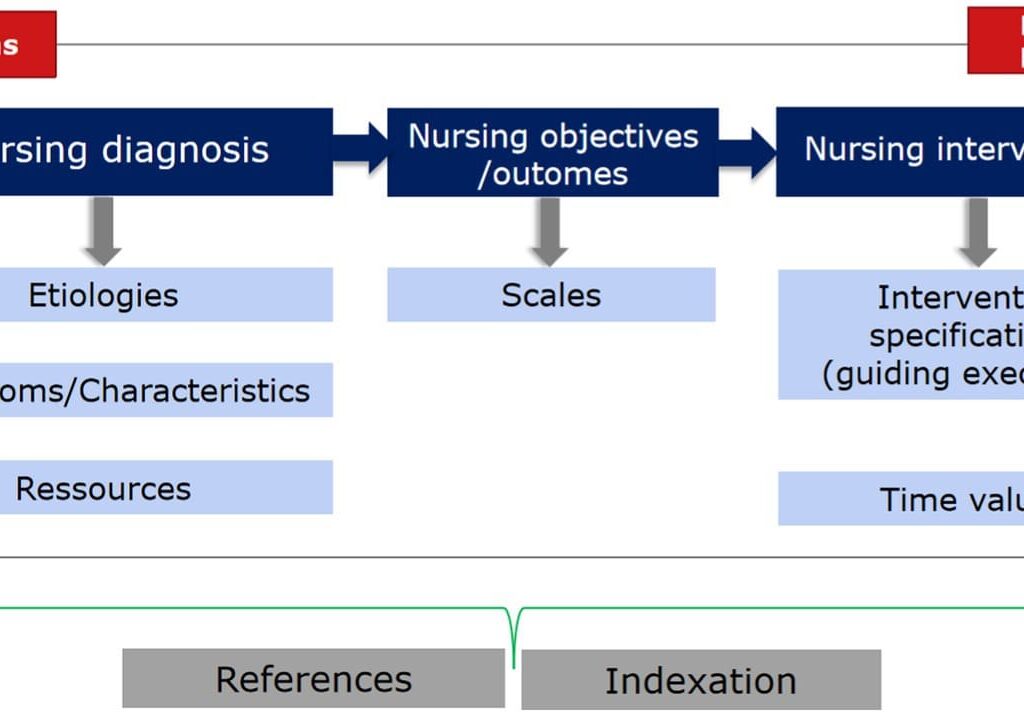
DOCUMENTATION AND THE NURSING LANGUAGE : NANDA, NIC, NOC Documentation and the Nursing Language Nursing documentation is the systematic, accurate, and comprehensive recording of all aspects of the nursing process – from initial patient assessments and diagnoses to the planning and implementation of interventions and the evaluation of outcomes. This encompasses both written and, increasingly, electronic formats within an Electronic Health Record (EHR) system. In contemporary healthcare, the EHR is the primary, legally binding repository for nursing documentation. Importances of Nursing Documentation While often perceived as a legal safeguard, accurate and thorough nursing documentation is the bedrock of professional nursing practice and the engine driving modern healthcare. Evidence of Care & Legal Protection It is irrefutable proof that care was delivered. In legal disputes, “if it wasn’t documented, it wasn’t done.” Continuity & Coordination of Care Serves as the primary communication conduit among the multidisciplinary team, ensuring seamless care transitions. Accountability & Professional Practice Demonstrates the nurse’s clinical judgment, decision-making, and professional accountability for their actions. Billing, Reimbursement & Resource Justification Justifies the services rendered, which is essential for accurate billing and impacts the financial sustainability of health institutions. Auditing & Quality Improvement Patient records are audited to ensure compliance with standards, identify deviations, and pinpoint areas for systemic improvement. Research & EBP Advancement Aggregated, de-identified nursing data from EHRs is an invaluable asset for research, helping to evaluate interventions and develop new evidence-based practices. Nursing Language A nursing language, or standardized nursing terminology, is a structured vocabulary specifically developed by nurses for nurses. Its purpose is to accurately describe, communicate, and quantify the unique contributions of nursing practice – patient problems (diagnoses), interventions, and outcomes. The Necessity of Standardized Nursing Language: Enhancing Communication: Provides a common language for nurses globally, reducing ambiguity. Making Nursing Work Visible: Quantifies the intellectual work and impact of nursing. Facilitating Data Aggregation and Analysis: Enables researchers to extract and analyze nursing data across different settings. Supporting Clinical Decision Support: Allows EHRs to integrate nursing knowledge and provide intelligent prompts or alerts. Driving Evidence-Based Practice: Provides the structured data necessary to evaluate the effectiveness of nursing interventions. Key Standardized Languages: NANDA-I (NANDA International) – Nursing Diagnoses Focus: Clinical judgments about patient responses to health problems. It helps nurses systematically identify and articulate problems within the nursing scope. Example: Acute Pain related to surgical incision as evidenced by patient verbalizing pain score of 8/10. NIC (Nursing Interventions Classification) – Nursing Interventions Focus: A comprehensive classification of treatments that nurses perform. It provides a clear, consistent way to describe what nurses do. Example: Pain Management, with activities like “Administer prescribed analgesia” and “Provide non-pharmacological comfort measures.” NOC (Nursing Outcomes Classification) – Nursing Outcomes Focus: A standardized classification of patient states or behaviors that are influenced by nursing interventions. It allows nurses to objectively measure the effectiveness of their care. Example: Pain Level, with indicators like “Patient reports pain score less than 3/10.” Omaha System Focus: A comprehensive practice and documentation standard for community, public health, and home care settings. It is highly valuable in the Ugandan context for community health nurses and VHTs. ICNP (International Classification for Nursing Practice) – The Global Standard Focus: A unified, global nursing terminology developed by the ICN to represent nursing practice worldwide. It promotes data interoperability and strengthens nursing’s voice on the global stage. Data Needs in Nursing Documentation Nurses are the largest and most consistent generators of patient data. They are at the bedside 24/7, and their constant interaction yields a wealth of information that, when systematically documented, forms the holistic narrative of a patient’s health journey. Key Data Categories Generated and Utilized by Nurses: Patient Demographics Content: Name, age, sex, contact details, next of kin, and unique identifiers. In Uganda, this may include tribe and district of origin for cultural context and public health tracking. Relevance: Crucial for accurate patient identification, contextualizing care, and forming the foundational layer for all other health data. Vital Signs Content: Blood pressure, temperature, pulse, respiratory rate, oxygen saturation, and pain level. Relevance: Provide immediate, critical insights into a patient’s physiological status. Trends in vital signs are primary triggers for nursing interventions. Clinical Assessments Content: Detailed evaluations of all body systems, including pain, wound, neurological, nutritional, respiratory, and psychosocial assessments. Relevance: Form the basis for nursing diagnoses, provide a baseline for evaluating changes, and guide the development of individualized care plans. Nursing Interventions Content: All actions performed by the nurse, including medication administration, patient and family education, wound care, therapeutic communication, monitoring, and ADL assistance. Relevance: Demonstrates the direct impact of nursing care and provides data for evaluating the effectiveness of specific interventions. Patient Outcomes Content: The patient’s measurable response to nursing interventions, including improvement in symptoms, functional gains, stabilization, and discharge readiness. Relevance: Essential for evaluating the effectiveness of the care plan, modifying interventions, and demonstrating the value of nursing care. The Professional Nurse and The Power of Data Nursing is a dynamic profession with a distinct set of attributes. Understanding these characteristics is crucial to appreciating the profound impact of nursing informatics on professional practice. Defining Characteristics of the Nursing Profession: A Unique Body of Knowledge: Grounded in its own scientific discipline and evidence base. A Defined Language: Standardized terminologies to articulate practice with precision. A Specific Discipline: A legally defined scope of practice and professional standards. A Code of Ethics: A robust ethical framework guiding moral decision-making. Three Main Types of Nursing Activities: Managerial Activities: Leadership, coordination, delegation, and resource management. Dependent (Physician-Directed) Activities: Actions performed under medical orders (e.g., administering prescribed medications). Independent (Autonomous) Activities: Unique nursing functions initiated based on a nurse’s independent assessment and judgment (e.g., patient education, developing care plans, comfort measures). The Challenge: The Historical Invisibility of Independent Nursing Work Historically, health information systems have been effective at capturing managerial and dependent activities. However, the crucial independent work of nurses—the clinical observations, critical thinking, patient education, and compassionate care—has too often been buried in unstructured narrative notes, remaining largely “invisible” within healthcare data systems. Consequences