
Other Antiviral Agents: Herpesviruses, Influenza and Hepatitis
On this page
Overview
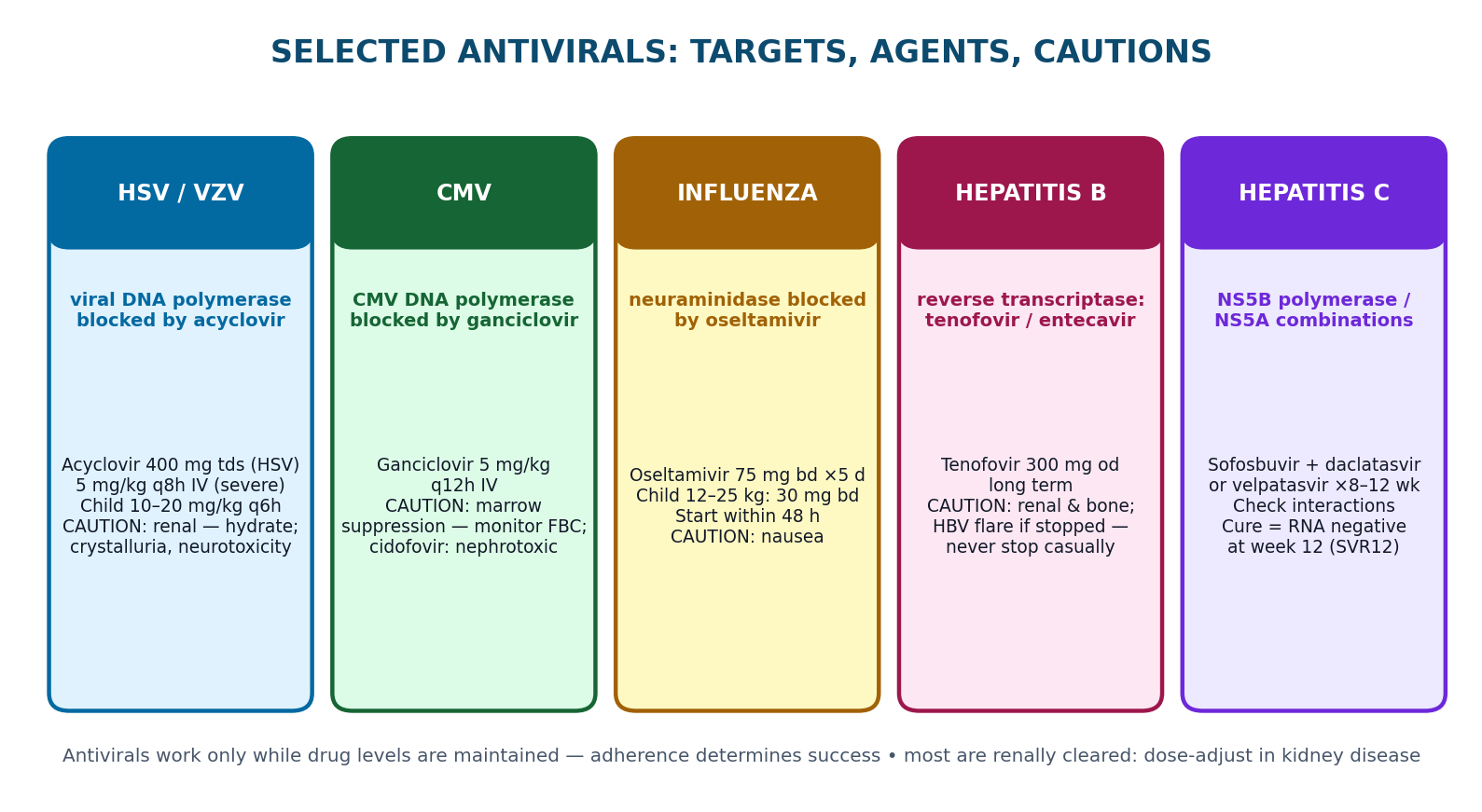
HSV and VZV: acyclovir and relatives
Acyclovir is a guanosine analogue activated by viral thymidine kinase (selective!), then triphosphorylated by host enzymes. Acyclovir-triphosphate inhibits viral DNA polymerase and terminates the growing DNA chain. The same TK-dependence explains HSV resistance (TK-deficient mutants, seen in immunocompromised patients on repeated courses).
Scroll the table sideways on a smaller screen.
| Drug | Adult dose | Paediatric dose | Main indications | Adverse effects & cautions | Counselling |
|---|---|---|---|---|---|
| Acyclovir (oral/IV) | Genital/labial HSV: 400 mg 8-hourly ×5–10 d (or 200 mg 5×/d). Herpes zoster: 800 mg 5×/d ×7 d. Severe/disseminated/VZV in immunocompromised: 5–10 mg/kg IV 8-hourly | HSV: 10–20 mg/kg (max 400) 6-hourly; neonatal HSV: 20 mg/kg IV 8-hourly ×14–21 d; chickenpox: 20 mg/kg/dose 6-hourly (max 800) | Genital herpes (first and recurrent episodes, suppressive therapy), herpes labialis, herpes zoster (shingles), chickenpox (if severe/adolescent/immunocompromised), HSV encephalitis, neonatal HSV, HSV keratitis (topical) | Renal: crystalluria → acute kidney injury (maintain hydration, renal dose-adjust); nausea, headache; neurotoxicity (confusion, hallucinations) with high levels in renal failure; injection-site phlebitis | Drink plenty of water; start at first tingle for recurrences; complete the course; safe in pregnancy when indicated (suppress near term to prevent neonatal HSV) |
| Valacyclovir (prodrug) | HSV: 500 mg 12-hourly; zoster: 1 g 8-hourly ×7 d | Weight-band (zoster 20 mg/kg 8-hourly) | Same spectrum as acyclovir with better oral bioavailability (3–5×), fewer daily doses | Same as acyclovir; thrombotic microangiopathy at very high doses in immunocompromised (rare) | Take with food or water; hydration |
| Famciclovir (prodrug of penciclovir) | HSV: 250 mg 12-hourly; zoster: 500 mg 8-hourly ×7 d | >12 y only | Alternative for HSV and zoster | Headache, nausea | As valacyclovir |
Cytomegalovirus: ganciclovir
CMV disease (retinitis, colitis, pneumonitis, encephalitis) occurs almost exclusively in advanced immunosuppression — untreated AIDS with low CD4, transplant recipients. Ganciclovir is a guanosine analogue activated by viral UL97 kinase, then inhibiting CMV DNA polymerase (UL54).
Scroll the table sideways on a smaller screen.
| Drug | Dose (adult) | Indications | Key adverse effects / cautions |
|---|---|---|---|
| Ganciclovir IV | 5 mg/kg 12-hourly (induction 14–21 d), then 5 mg/kg daily (maintenance) per ophthalmology/HIV programme | CMV retinitis and other end-organ CMV disease (with ART initiation) | Myelosuppression — neutropenia, anaemia, thrombocytopenia (monitor FBC 2×/week during induction); renal dose-adjust; teratogenic/carcinogenic handling precautions; infertility |
| Valganciclovir (oral prodrug) | 900 mg 12-hourly induction, then 900 mg daily maintenance | Oral step-down/maintenance, less severe disease | Same marrow toxicity (almost as potent); GI upset |
| Cidofovir / foscarnet | Specialist protocols | Ganciclovir-resistant CMV (UL97/UL54 mutants) | Cidofovir: nephrotoxicity (give probenecid + hydration); foscarnet: nephrotoxicity, electrolyte wasting (Ca²⁺, Mg²⁺, K⁺), genital ulceration |
Influenza: oseltamivir
Oseltamivir is a neuraminidase inhibitor — it blocks the viral enzyme that releases new virions from infected cells. It is most effective started within 48 hours of symptom onset (earlier is better), and is also used for post-exposure prophylaxis in high-risk contacts during outbreaks.
Scroll the table sideways on a smaller screen.
| Group | Treatment dose (×5 days) | Prophylaxis dose (×10 days) |
|---|---|---|
| Adult | 75 mg 12-hourly | 75 mg once daily |
| Child >40 kg / adult dose | 75 mg 12-hourly | 75 mg once daily |
| Child 23–40 kg | 60 mg 12-hourly | 60 mg once daily |
| Child 15–23 kg | 45 mg 12-hourly | 45 mg once daily |
| Child ≤15 kg | 30 mg 12-hourly | 30 mg once daily |
- Adverse effects: nausea, vomiting (take with food), headache, rare neuropsychiatric events in children (Japan data — monitor).
- Renal dose-adjust; inactivated (killed) influenza vaccine is unaffected, but oseltamivir can interfere with intranasal live vaccine replication.
- It shortens illness by ~1 day and reduces complications in high-risk patients (pregnancy, chronic lung/heart disease, diabetes, immunosuppression, elderly) — prioritise these groups.
Hepatitis B: tenofovir and entecavir
Chronic HBV suppresses viral replication but rarely eradicates cccDNA from hepatocytes — hence long-term (often lifelong) therapy in active disease. The two workhorse agents:
Scroll the table sideways on a smaller screen.
| Drug | Dose | Notes |
|---|---|---|
| Tenofovir (TDF or TAF) | 300 mg once daily (TDF) | Also the HIV drug — one drug covers both (do not give as HBV monotherapy if HIV co-infected). Renal/bone toxicity (TDF); TAF has less renal/bone effect |
| Entecavir | 0.5 mg once daily (1 mg if lamivudine-refractory), empty stomach | Potent, high barrier; no HIV cover — avoid as sole agent in undiagnosed HIV (selects HIV resistance) |
| Lamivudine / adefovir | — | Largely historical for HBV: resistance emerges rapidly (YMDD motif); not preferred monotherapy |
Hepatitis C: sofosbuvir combinations
Direct-acting antivirals (DAAs) cure >95% of hepatitis C in 8–12 weeks. The backbone is sofosbuvir (NS5B polymerase inhibitor), combined with an NS5A inhibitor (daclatasvir, ledipasvir, velpatasvir) ± ribavirin, without interferon in modern regimens.
Scroll the table sideways on a smaller screen.
| Regimen | Duration | Notes |
|---|---|---|
| Sofosbuvir + daclatasvir | 12 weeks (8 in some non-cirrhotic genotypes) | Pangenotypic, low cost, common in public programmes |
| Sofosbuvir/velpatasvir (single tablet) | 12 weeks | Pangenotypic; check drug–transporter interactions |
| Glecaprevir/pibrentasvir | 8 weeks (most) | Pangenotypic protease/NS5A combo; avoid in decompensated cirrhosis |
- Interactions: sofosbuvir with amiodarone → severe bradycardia; rifampicin, carbamazepine, St John's Wort ↓ levels (avoid); acid-reducing drugs ↓ ledipasvir/velpatasvir (separate).
- Cure assessment: SVR12 — HCV RNA undetectable 12 weeks after completing therapy equals cure.
- Ribavirin (if used): haemolytic anaemia, teratogenic — strict contraception during and 6 months after.
- Treat everyone: cure reduces transmission and liver-cancer risk. Screen for HBV/HIV co-infection first (regimens change).
General antiviral principles
- Virustatic, not virucidal: drugs slow replication while immunity clears — immunocompromised hosts need longer courses and higher vigilance.
- Timing matters: oseltamivir within 48 h; acyclovir for encephalitis immediately; HSV recurrences at first symptoms.
- Renal clearance dominates dosing: acyclovir, ganciclovir, oseltamivir, tenofovir — check eGFR and adjust intervals.
- Resistance is selected by under-exposure: complete courses; never use one anti-herpetic intermittently in immunocompromised patients without specialist input.
- Interactions and food: check each drug (DTG–cation chelation, ledipasvir–antacids, EFV–CYP induction).
Clinical scenarios
Scenario 1 — Confused farmer with fever
A 55-year-old farmer from western Uganda presents with 4 days of fever, headache and now confusion, with dysphasia. MRI shows temporal-lobe signal change; CSF: lymphocytes 180/mm³, protein high, glucose normal. You start IV acyclovir 10 mg/kg q8h on suspicion of HSV encephalitis (the commonest sporadic viral encephalitis here — and VZV/HSV PCR will follow). You ensure hydration, check renal function daily, and add ceftriaxone until bacterial meningitis is excluded. Early acyclovir is the single factor that changes outcome.
Scenario 2 — Painful shingles in a clinic attendee
A 47-year-old HIV-positive man (CD4 80, not yet on ART) has a vesicular rash in the V1 ophthalmic distribution — herpes zoster ophthalmicus. You start oral valacyclovir 1 g 8-hourly (or acyclovir 800 mg 5×/d), admit if eye involvement is active (refer same day to ophthalmology), start cotrimoxazole prophylaxis and expedite ART (within 2 weeks, watching for IRIS), and check for disseminated disease. You counsel on neuralgia management and strict hygiene around the eye.
Scenario 3 — Flu outbreak on the medical ward
During an influenza outbreak, two elderly diabetic patients present with <24 h of fever, myalgia and cough; one has saturations of 91%. You start oseltamivir 75 mg 12-hourly ×5 days (within the 48-hour window) plus supportive care, admit the hypoxic patient, and offer prophylaxis (75 mg once daily ×10 days) to the immunocompromised patient in the next bed. You remind staff that antibiotics do nothing for influenza — but bacterial superinfection (pneumococcus, S. aureus) is the complication to watch for.
Key points
References
- Katzung's Basic & Clinical Pharmacology — antiviral agents chapter (Library reference.)
- Goodman & Gilman's The Pharmacological Basis of Therapeutics (Library reference.)
- WHO Hepatitis B and C treatment guidelines; Uganda National Viral Hepatitis programme guidance (Library reference.)
- WHO influenza (seasonal) fact sheet and antiviral guidance (Library reference.)
- Uganda Clinical Guidelines 2023: herpes zoster, encephalitis and influenza sections (Library reference.)
Further reading
For deeper study, compare this lesson with current guidance and standard references from recognised medical and pharmaceutical organisations.
- WHO: Hepatitis
- WHO: Influenza (seasonal)
- WHO: Hepatitis C treatment guidelines
- DCM Year One Semester Two curriculum
For education only. Antiviral dosing must be verified against the current Uganda Clinical Guidelines, national programmes and renal function in each patient.