Relevant Theories of Medical Psychology
Detailed notes covering Idealistic Theory, Structuralism, and Functionalism. This compilation presents a systematic study of these three foundational frameworks, including core concepts, historical background, and clinical applications.
Chapter 1: Idealistic Theory
1.1 Definition
Idealistic Theory (also known as Platonic Idealism) is a philosophical doctrine, originating with the ancient Greek philosopher Plato (c. 427–347 BCE), which posits that reality resides not in the physical world perceived by the senses, but in a higher, eternal, and unchanging realm of abstract entities called Forms or Ideas. The physical world is regarded merely as an imperfect copy or shadow of this true reality.
Idealistic theory forms one of the foundational pillars of Western thought. In the context of medical psychology, understanding idealism is essential because it shaped early conceptions of the mind, knowledge, and human nature. Plato’s ideas influenced how later psychologists conceptualized mental structures, the nature of consciousness, and the relationship between the mind and the external world.
1.2 Historical Background
Plato was a student of Socrates and the teacher of Aristotle. He founded the Academy in Athens, one of the earliest institutions of higher learning in the Western world. His philosophy was developed in response to the relativism of the Sophists, who argued that truth was subjective and dependent on individual perception. Plato sought to establish objective, universal truths that existed independently of human opinion.
Plato’s idealism emerged from his teacher Socrates’ method of questioning and the Pythagorean emphasis on mathematical and abstract truths. Plato synthesized these influences into a comprehensive metaphysical and epistemological system.
1.3 Core Concepts
1.3.1 The Realm of Forms (Ideas)
According to Plato, there exists a transcendent Realm of Forms where perfect, immutable, and eternal archetypes of all things reside. These Forms are not physical objects but abstract entities that represent the true essence of concepts such as justice, beauty, goodness, and even mathematical objects like triangles and circles. Everything in the physical world is an imperfect imitation of its corresponding Form.
For example, all circular objects in the physical world are imperfect representations of the perfect Form of "Circularity" that exists in the Realm of Forms. No physical circle is perfectly round, yet humans recognize the concept of a perfect circle through reason rather than sensory experience.
1.3.2 The Allegory of the Cave
Plato’s most famous illustration of idealism is the Allegory of the Cave, presented in his work The Republic (Book VII). In this allegory:
- Prisoners are chained inside a dark cave, facing a wall. Behind them burns a fire, and between the fire and the prisoners is a raised walkway along which puppeteers carry objects.
- The prisoners see only the shadows cast by these objects on the cave wall. They mistake these shadows for reality.
- If a prisoner is freed and turned toward the fire, the light initially causes pain and disorientation. The prisoner must gradually adapt to see the objects themselves.
- If the prisoner is led out of the cave into the sunlight, the process of adjustment is even more difficult. Eventually, the prisoner can look directly at the sun and understand it as the source of all light and truth.
- The prisoner who has seen the true reality feels compelled to return to the cave to enlighten the other prisoners, but they may resist and even threaten him.

In this allegory, the cave represents the physical world of sensory experience; the shadows represent the illusions and opinions derived from the senses; the fire represents the sun (source of physical light); the outside world represents the Realm of Forms; and the sun itself represents the Form of the Good — the highest and most fundamental reality.
1.3.3 The Theory of Knowledge
Plato distinguished between two levels of awareness:
- Opinion (doxa): Knowledge derived from sensory experience of the physical world. This is unreliable because the physical world is constantly changing.
- Knowledge (episteme): True understanding achieved through reason and intellectual contemplation of the Forms. This is reliable because the Forms are eternal and unchanging.
Plato believed that the soul existed before birth in the Realm of Forms and possessed innate knowledge of the Forms. Learning, therefore, is not the acquisition of new information but the recollection (anamnesis) of knowledge the soul already possesses.
1.3.4 The Tripartite Soul
Plato also proposed a tripartite (three-part) model of the soul:
- The Rational Soul (Logistikon): Located in the head; concerned with reason, wisdom, and the pursuit of truth. It seeks to understand the Forms.
- The Spirited Soul (Thymoeides): Located in the chest; concerned with emotion, honor, and courage. It supports the rational soul when properly trained.
- The Appetitive Soul (Epithymetikon): Located in the abdomen; concerned with basic desires, pleasures, and physical needs. It must be controlled by the rational soul.
Psychological health, in Plato’s view, depends on the harmony of these three parts, with reason ruling over spirit and appetite. This concept prefigures later psychological theories about the structure of the psyche, including Freud’s id, ego, and superego.
1.4 Influence on Psychology
Although idealism is primarily a philosophical theory, its influence on psychology is significant:
- Cognitive Psychology: Plato’s emphasis on innate ideas and mental structures influenced later cognitive theorists who study mental representations and schemas.
- Developmental Psychology: The concept of stages of understanding (from shadows to reality) prefigures theories of cognitive development.
- Humanistic Psychology: The notion of striving toward higher truths and self-realization resonates with humanistic concepts of self-actualization.
- Psychotherapy: The idea that surface appearances mask deeper truths underlies many therapeutic approaches that seek to uncover hidden meanings.
In clinical practice, the idealistic perspective reminds healthcare providers that patients' descriptions of their symptoms (the "shadows") may not fully represent the underlying pathology (the "reality"). A clinician must look beyond surface complaints to understand the deeper biological, psychological, and social factors affecting the patient. The concept of innate knowledge also supports the idea that patients possess inner resources for healing that can be activated through appropriate therapeutic intervention.
Chapter 2: Structuralism
2.1 Definition
Structuralism is the first major school of thought in psychology, founded by Wilhelm Wundt and popularized by Edward B. Titchener. It aims to understand the structure of the human mind by breaking down conscious experiences into their most basic components through the method of introspection.
2.2 Historical Background
Structuralism emerged in the late 19th century, primarily in Germany and later in the United States. It represented psychology’s attempt to establish itself as an independent scientific discipline, separate from philosophy and physiology.
2.2.1 Wilhelm Wundt (1832–1920)
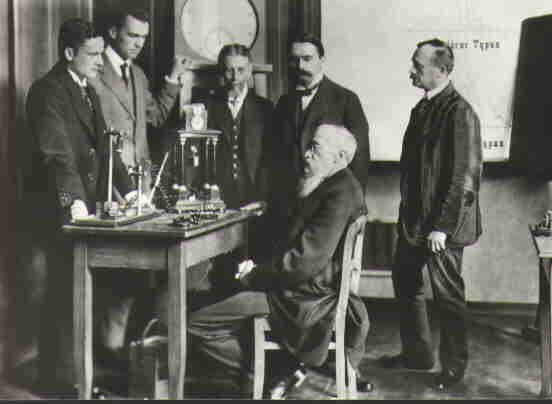
Wundt is widely regarded as the "father of modern psychology." In 1879, he established the first experimental psychology laboratory at the University of Leipzig, Germany. This event is often cited as the birth of psychology as a science. Wundt’s approach, which he called "voluntarism," sought to study conscious experience through controlled experimental methods.
Wundt believed that the mind could be analyzed by classifying conscious experiences into basic elements, similar to how chemistry classifies matter into elements. He used a modified form of introspection in his laboratory, training observers to report their conscious experiences in response to specific stimuli.
2.2.2 Edward B. Titchener (1867–1927)
Titchener, a student of Wundt, brought Wundt’s ideas to America and coined the term "structuralism." He established a prominent psychology laboratory at Cornell University. Titchener modified Wundt’s approach, placing greater emphasis on pure introspection and the analysis of conscious elements.
Titchener dominated American psychology for approximately 20 years. He was extremely prolific, publishing 216 books and papers and supervising nearly 60 doctoral students. However, his influence declined rapidly after his death, and structuralism as a school of thought essentially ended.
2.3 Core Concepts
2.3.1 The Elements of Consciousness
Titchener identified three basic elements of conscious experience:
- Sensations: The basic elements of perception, including sights, sounds, tastes, smells, and tactile experiences. Sensations have qualities (such as color or pitch) and intensities.
- Images: The basic elements of ideas and mental representations. Images are the mental counterparts of sensations, occurring in the absence of external stimuli.
- Affections: The basic elements of emotions. Titchener believed emotions could be broken down into specific affective qualities, such as pleasantness or unpleasantness.
2.3.2 Introspection
Introspection is the primary method of structuralism. It involves the systematic observation and reporting of one’s own conscious experiences. Titchener trained his observers rigorously to analyze their feelings and sensations when presented with simple stimuli. The goal was to describe experiences in terms of the basic elements without interpretation or reference to external objects.
For example, when shown an apple, a trained introspectionist would report: "I experience a red sensation, a round shape sensation, a sweet taste sensation, and a pleasant affection" — rather than saying "I see an apple."
2.3.3 Titchener’s Three Tasks
Titchener’s structuralism stressed three important tasks in the study of the human mind:
- To discover how many mental processes exist, identify the elements of these processes, and explain how they work together.
- To analyze the laws governing the connections between the elements of the mind.
- To evaluate the connections between the mind and the nervous system.
2.4 Criticisms and Limitations
Structuralism faced several significant criticisms:
- Subjectivity: Introspection is inherently subjective and cannot be verified by independent observers.
- Artificiality: The laboratory setting and the demand to analyze experiences into elements distorted natural conscious experience.
- Limited Scope: Structuralism could not study unconscious processes, animal behavior, children, or complex mental phenomena such as learning and memory.
- Reliability: The method of introspection lacked the reliability and objectivity required of a scientific method.
2.5 Impact on Psychology
Despite its decline, structuralism made important contributions:
- It established psychology as an experimental science with rigorous methodology.
- It developed systematic approaches to studying sensation and perception.
- It trained a generation of psychologists who went on to develop other schools of thought.
- It directly led to the development of functionalism, behaviorism, and Gestalt psychology as reactions against its limitations.
Structuralism’s emphasis on breaking down complex experiences into basic components influenced the development of symptom analysis in clinical medicine. The systematic examination of individual symptoms (pain quality, intensity, location) mirrors the structuralist approach of analyzing conscious experience into elements. However, modern clinical practice recognizes that symptoms must also be understood in their holistic context — a lesson learned from structuralism’s limitations.
Chapter 3: Functionalism
3.1 Definition
Functionalism is a school of psychology that focuses on the purpose and function of mental processes and behaviors, rather than their structure. It examines how consciousness and behavior help individuals adapt to their environments. Functionalism was heavily influenced by Charles Darwin’s theory of evolution by natural selection.
3.2 Historical Background
Functionalism emerged in the United States in the late 19th and early 20th centuries as a direct reaction against structuralism. While structuralists asked "What are the elements of consciousness?" functionalists asked "What is consciousness for?" and "How does it help the organism survive?"
3.2.1 William James (1842–1910)
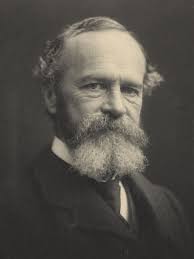
William James is considered the "father of American psychology." His landmark book, The Principles of Psychology (1890), introduced functionalist concepts to a broad audience. James was deeply influenced by Darwin’s theory of evolution and sought to understand the adaptive purpose of mental processes.
James promoted introspection not as a means to analyze elements, but as a way to understand the continually changing "stream of consciousness." He argued that consciousness is not a static structure but a continuous flow of thoughts, feelings, and perceptions.
3.2.2 Other Key Figures
- John Dewey (1859–1952): Criticized the reflex arc concept and emphasized the continuity of the organism’s interaction with its environment. His 1896 paper "The Reflex Arc Concept in Psychology" is a foundational functionalist text.
- Charles Sanders Peirce (1839–1914): A philosopher and logician who contributed to the philosophical foundations of functionalism.
- James Rowland Angell (1869–1949): A student of John Dewey who systematized functionalist psychology at the University of Chicago.
- Harvey Carr (1873–1954): Extended functionalism to include the study of motivation and learning.
3.3 Core Concepts
3.3.1 Adaptation
At the heart of functionalism is the concept of adaptation — the process by which organisms adjust to their environments to enhance survival and reproduction. Functionalists viewed mental processes as adaptive tools that help organisms solve problems, avoid dangers, and satisfy needs. Drawing from Darwin, they argued that psychological traits evolved because they conferred survival advantages.
3.3.2 The Stream of Consciousness
James described consciousness as a "stream" that is:
- Continuous: Consciousness flows without interruption; there are no gaps.
- Changing: It is constantly in flux; no state of consciousness is ever exactly repeated.
- Selective: It focuses on some aspects of experience while ignoring others.
- Personal: Each individual’s stream of consciousness is unique.
This concept contrasted sharply with structuralism’s view of consciousness as a collection of discrete, static elements.
3.3.3 Habits
James devoted significant attention to the study of habits — learned patterns of behavior that become automatic through repetition. He argued that habits are physiologically based, involving the formation of neural pathways in the brain. Once established, habits are difficult to break because they follow the path of least resistance in the nervous system. James’s analysis of habits laid groundwork for later behavioral theories of learning and conditioning.
3.3.4 The Self
James proposed a distinction between:
- The "I" (the knowing self): The active, subjective aspect of self that experiences and acts.
- The "Me" (the known self): The objective aspects of self that can be observed and described, including the material self (body), the social self (relationships), and the spiritual self (faculties).
3.4 Comparison with Structuralism
| Feature | Structuralism | Functionalism |
|---|---|---|
| Primary Question | What is the structure of the mind? | What is the function of the mind? |
| Key Method | Introspection (element analysis) | Introspection (stream of consciousness), observation |
| Focus | Basic elements of consciousness | Purpose and adaptation of mental processes |
| Influence | Chemistry (element analysis) | Biology (Darwin’s evolution) |
| Scope | Limited to conscious experience | Broad: includes behavior, learning, individual differences |
| Key Figures | Wundt, Titchener | James, Dewey, Angell |
| Geographic Center | Germany, then USA | USA |
3.5 Impact on Psychology
Functionalism had a profound and lasting influence:
- Applied Psychology: Functionalism’s practical orientation led directly to the development of applied fields such as educational, industrial, and clinical psychology.
- Behaviorism: The functionalist emphasis on observable behavior influenced John B. Watson’s development of behaviorism.
- Evolutionary Psychology: The application of Darwinian principles to mental processes prefigured modern evolutionary psychology.
- Pragmatism: Functionalism was closely allied with American philosophical pragmatism, which emphasized practical consequences.
Functionalism’s emphasis on adaptation is directly relevant to understanding illness and health. From a functionalist perspective, symptoms may represent the organism’s attempt to adapt to pathological conditions (e.g., fever as an adaptive response to infection). Functionalism also supports the development of rehabilitation programs that help patients adapt to disabilities and chronic conditions. The focus on practical outcomes aligns with modern evidence-based medicine and patient-centered care.
Summary Tables and Key Points
Comparative Summary of the Three Theories
| Aspect | Idealistic Theory | Structuralism | Functionalism |
|---|---|---|---|
| Founder | Plato (c. 427–347 BCE) | Wilhelm Wundt; Edward Titchener | William James; John Dewey |
| Core Focus | Realm of eternal Forms; true reality beyond senses | Basic elements of conscious experience | Purpose and function of mental processes |
| Key Method | Philosophical reasoning; dialectic | Controlled introspection | Introspection of stream of consciousness; observation |
| View of Mind | Tripartite soul (rational, spirited, appetitive) | Structure of conscious elements | Continuous stream; adaptive tool |
| Primary Influence | Philosophy; metaphysics | Chemistry; physiology | Darwinian evolution; biology |
| Historical Period | Ancient Greece (4th century BCE) | Late 19th century | Late 19th to early 20th century |
| Main Contribution | Concept of innate ideas; mind-body relationship | Established psychology as experimental science | Broadened psychology to include behavior and application |
- Idealistic Theory (Plato) proposes that true reality exists in an eternal Realm of Forms, and the physical world is merely an imperfect copy. The Allegory of the Cave illustrates the journey from sensory illusion to intellectual truth. Plato’s tripartite soul prefigures later psychological models.
- Structuralism (Wundt, Titchener) was the first school of psychology, using introspection to analyze conscious experience into basic elements: sensations, images, and affections. It established psychology as an experimental science but was limited by subjectivity.
- Functionalism (James, Dewey) shifted focus from structure to function, asking how mental processes help organisms adapt to their environment. It was influenced by Darwin and introduced concepts like the stream of consciousness and habits. It contributed directly to applied clinical fields.
References
- Plato. The Republic. Translated by Benjamin Jowett. Oxford: Clarendon Press, 1888.
- EBSCO Research. "Plato's Theory of Ideas." Religion and Philosophy. Accessed 2026.
- Cherry, K. "The Origins of Structuralism in Psychology." Verywell Mind, January 13, 2014.
- JOVE. "Functionalism in Introduction to Psychology." JOVE Science Education, October 24, 2024.
- James, W. The Principles of Psychology. New York: Henry Holt and Company, 1890.
- Titchener, E. B. An Outline of Psychology. New York: Macmillan, 1896.
- Wundt, W. Principles of Physiological Psychology. Leipzig: Wilhelm Engelmann, 1874.