Bone Disorders: Arthritis, Osteomyelitis, and Related Conditions
A comprehensive medical reference detailing the anatomy, pathophysiology, and clinical management of inflammatory, degenerative, and infectious bone and joint diseases.
1. Introduction to Bone Disorders
Bone disorders encompass a wide spectrum of conditions affecting the skeletal system. These result from a variety of etiologies, including infection, inflammation, degenerative processes, autoimmune responses, trauma, or metabolic disturbances. Understanding the micro-anatomy of the healthy joint is crucial for identifying pathological deviations.
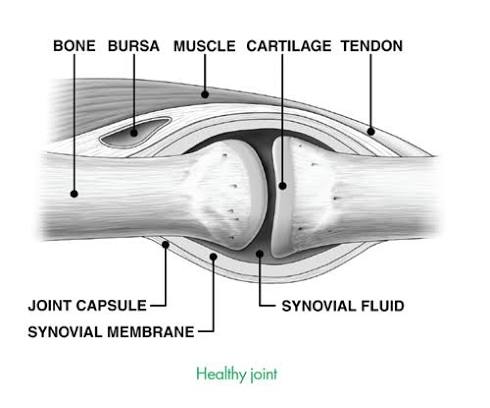
This guide focuses on two major clinical categories:
1. Arthritis: Inflammatory and degenerative joint diseases.
2. Osteomyelitis: Infectious bone disease.
2. Arthritis
Arthritis is a general term referring to joint inflammation, encompassing more than 100 specific types. The two most clinically prevalent forms are Osteoarthritis (OA) and Rheumatoid Arthritis (RA).
2.1 Osteoarthritis (OA)
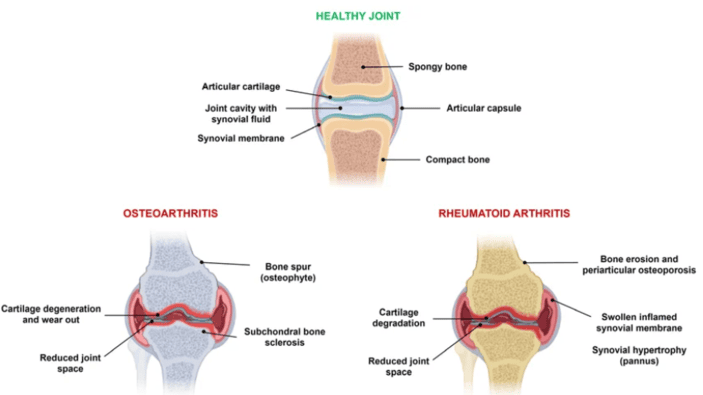
Osteoarthritis is the most common form of arthritis globally. It is fundamentally a degenerative joint disease caused by mechanical wear and tear.
Key Characteristics:
- Primarily affects the articular cartilage (the cushioning tissue at bone ends).
- Onset is usually asymmetrical (initially affecting one side).
- Commonly involves the hands and weight-bearing joints: hips, knees, and spine.
- Develops slowly over many years.
- Morning stiffness typically resolves within less than 1 hour.
In OA, the cartilage gradually breaks down, eventually causing bone-on-bone friction. This leads to the formation of osteophytes (bone spurs) at the joint margins, resulting in pain, crepitus, and limited range of motion.
2.2 Rheumatoid Arthritis (RA)
Rheumatoid arthritis is a chronic autoimmune disease. Unlike OA, RA is a systemic condition, meaning it can affect the entire body and various organ systems.
Key Characteristics:
- Characterized by symmetrical joint involvement (the same joints on both sides).
- Causes localized redness, warmth, and significant swelling.
- Systemic symptoms include fatigue, fever, and weight loss.
- Onset can be rapid (weeks or months).
- Morning stiffness is prolonged, usually lasting longer than 1 hour.
The immune system specifically targets the synovial membrane (the lining of the joint capsule). Chronic inflammation leads to a thickened membrane (pannus) that invades and eventually destroys the underlying cartilage and bone.
2.3 Comparison: OA vs. RA
| Characteristic | Osteoarthritis (OA) | Rheumatoid Arthritis (RA) |
|---|---|---|
| Primary Cause | Mechanical wear and tear | Autoimmune response |
| Age of Onset | Usually later in life | Any age (peak 25–50) |
| Symmetry | Often asymmetric | Symmetrical |
| Morning Stiffness | < 1 hour | > 1 hour |
| Cartilage Status | Gradual breakdown | Destroyed by inflammation |
| Bone Changes | Osteophytes (spurs) | Marginal erosions |
2.4 Other Arthritic and Related Conditions
- Gout: A metabolic disorder caused by the deposition of uric acid crystals in joints (most common in the first metatarsophalangeal joint/big toe).
- Systemic Lupus Erythematosus (SLE): An autoimmune disease that damages joints, skin, kidneys, heart, and lungs.
- Juvenile Rheumatoid Arthritis: The most common form of arthritis in children, affecting bone development.
- Fibromyalgia: A chronic disorder of widespread musculoskeletal pain and fatigue (not primary joint inflammation).
- Bursitis: Inflammation of a bursa (fluid-filled sac) that reduces friction between joint structures.
3. Osteomyelitis (Bone Infection)
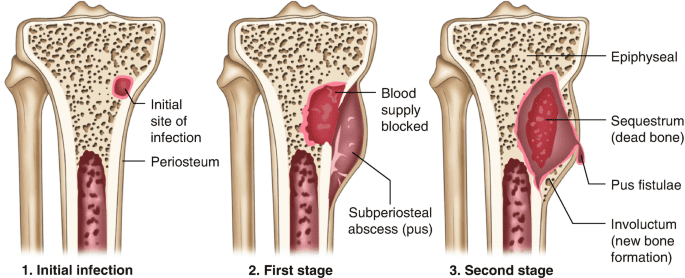
Osteomyelitis is a severe bone infection that can result in permanent bone damage or death (necrosis) if not treated promptly.
3.1 Causes and Risk Factors
Causative Agent: The Staphylococcus aureus bacteria ("staph") is the most frequent pathogen, although fungi and other bacteria can also be responsible.
Routes of Infection:
- Hematogenous spread: Microorganisms travel via the bloodstream from a distant site (e.g., UTI or pneumonia).
- Direct inoculation: Pathogens enter via puncture wounds, open fractures, or orthopedic surgery.
- Contiguous spread: Infection spreads from adjacent soft tissue (common in diabetic foot ulcers).
3.3 Diagnosis and Treatment
Diagnosis: Relies on a combination of blood tests (ESR, CRP, blood cultures), imaging (X-ray, MRI, bone scans), and potentially a bone biopsy to identify the pathogen.
Management Steps:
- Antibiotics: Aggressive IV therapy for several weeks, followed by oral courses (often months).
- Debridement (Surgery): Required to remove sequestrum (dead bone tissue) and drain abscesses.
- Hyperbaric Oxygen: Used as adjunctive therapy for chronic, non-healing cases.
If untreated, osteomyelitis leads to:
— Osteonecrosis: Bone death due to loss of blood supply.
— Septicemia: Life-threatening systemic blood poisoning.
— Impaired Growth: In children, epiphyseal plate involvement can stunt development.
4. Other Bone Disorders
- Osteoporosis: A metabolic condition where bone density is lost, making bones brittle. Highest risk in postmenopausal women.
- Paget's Disease: Abnormal bone remodeling resulting in enlarged, misshapen, and weak bones (commonly skull and pelvis).
- Osteogenesis Imperfecta: A genetic "brittle bone disease" caused by defective collagen production.
- Rickets / Osteomalacia: Softening of bones due to Vitamin D deficiency. (Rickets in children; Osteomalacia in adults).
- Bone Cancer: Can be primary (e.g., Osteosarcoma) or, more commonly, metastatic from the breast, prostate, or lungs.
5. Summary Table of Bone Disorders
| Disorder | Type | Key Pathological Feature | Common Treatment |
|---|---|---|---|
| Osteoarthritis | Degenerative | Cartilage breakdown / Bone spurs | NSAIDs, Joint replacement |
| Rheumatoid Arthritis | Autoimmune | Synovial inflammation / Pannus | DMARDs, Biologics |
| Osteomyelitis | Infectious | Bacterial invasion / Sequestrum | Long-term antibiotics, Surgery |
| Osteoporosis | Metabolic | Reduced bone density | Bisphosphonates, Calcium/Vit D |
| Gout | Metabolic | Uric acid crystals | Allopurinol, Diet |
