Physical Stages of Growth
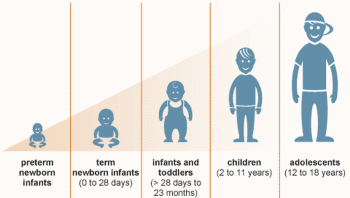
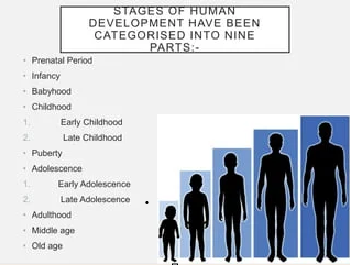
Human physical growth proceeds through a series of distinct, predictable stages from conception to maturity. Each stage is characterised by specific anatomical, physiological, and behavioural features. Recognition of these stages enables clinicians to anticipate normal developmental changes, identify deviations, and provide age-appropriate health guidance to caregivers.
1. Prenatal Period (Conception to Birth)
The prenatal period encompasses the 40 weeks of gestation and is divided into three trimesters. This is the most rapid period of growth in the human lifespan.
1.1 First Trimester (0–12 Weeks)
The fertilised ovum undergoes rapid cell division and differentiation. By the end of the first trimester, all major organ systems have begun formation.
The embryo is particularly vulnerable to teratogens—agents that cause congenital malformations. These include alcohol, certain medications, radiation, and infections such as rubella, toxoplasmosis, and syphilis.
- 22 Days: The heart begins beating.
- 4 Weeks: Limb buds appear.
1.2 Second Trimester (13–27 Weeks)
The fetus grows from approximately 7.5 cm to 35 cm in length. Weight increases from 30 g to about 1,000 g.
- Lanugo: Fine hair covers the body.
- Vernix caseosa: A waxy coating protects the skin.
- Quickening: The mother begins to feel fetal movements at 18–20 weeks.
- Viability: By 24 weeks, the fetus reaches the threshold of viability, though survival requires intensive neonatal care.
1.3 Third Trimester (28–40 Weeks)
The fetus gains approximately 200 g per week. Subcutaneous fat is deposited, and organ systems mature in preparation for extrauterine life. The brain undergoes rapid development, with gyri and sulci becoming more defined. Lung surfactant production increases, reducing the risk of respiratory distress syndrome. By 37 weeks, the fetus is considered term.
2. Infancy (Birth to 12 Months)
Infancy is characterised by the most rapid postnatal growth rate. Birth weight typically doubles by 6 months and triples by 12 months. Length increases by 50% during the first year.
2.1 Neonatal Period (0–28 Days)
This period represents the transition from intrauterine to extrauterine life. Physiological adaptations include closure of the ductus arteriosus and foramen ovale, expansion of the lungs, and establishment of independent temperature regulation.
Newborns lose 5–10% of birth weight in the first week due to fluid loss, then regain it by 10–14 days.
Anterior Fontanelle: Measures 1.5–3 cm and pulsates with the heartbeat.
2.2 Physical Growth Patterns in Infancy
- Weight: Average birth weight is 2.5–4.0 kg. Gain is 20–30 g/day in the first 3 months, then 15–20 g/day until 6 months.
- Length: Increases by 25 cm in the first year (50 cm at birth to 75 cm at 12 months).
- Head Circumference (HC): Increases by 12 cm in the first year, reflecting rapid brain growth.
- Chest Circumference (CC): Equals head circumference by 6–12 months.
2.3 Motor Milestones
- 2 Months: Head lag disappears when pulled to sit; lifts head when prone.
- 4 Months: Rolls from prone to supine; brings hands to midline.
- 6 Months: Sits with support; transfers objects between hands.
- 9 Months: Sits independently; crawls; pulls to stand.
- 12 Months: Walks with support (cruising); may take first independent steps.
3. Toddlerhood (1–3 Years)
Toddlerhood is marked by increasing independence, exploration, and the development of locomotion. Growth rate slows compared to infancy but remains steady.
3.1 Physical Growth
- Weight: Gains approximately 2 kg per year. Birth weight quadruples by 2 years (~12 kg).
- Height: Gains approx. 10–12 cm/year. Height at 2 years is approximately 85 cm.
- Head Circumference: Increases by 2 cm in the second year.
- Fontanelle Closure: Posterior by 2–3 months; anterior by 12–18 months.
- Dentition: Primary (deciduous) teeth erupt; 20 teeth are present by 30 months.
3.2 Motor Development
- 15 Months: Walks independently; stoops to pick up objects.
- 18 Months: Runs stiffly; climbs stairs with assistance; builds tower of 3–4 blocks.
- 24 Months: Runs well; kicks ball; climbs furniture; builds tower of 6–7 blocks.
- 36 Months: Rides tricycle; stands on one foot briefly; alternates feet on stairs.
4. Early Childhood / Preschool (3–6 Years)
Early childhood is a period of steady growth and refinement of motor skills. Children become more coordinated and begin to engage in structured play.
4.1 Physical Growth & Proportions
- Growth Rate: Weight gains ~2 kg/year; Height gains ~6–8 cm/year.
- Body Proportions: The trunk lengthens; legs become proportionally longer. The characteristic "toddler pot belly" diminishes as abdominal muscles strengthen.
- Dentition: Primary dentition is complete; first permanent molars erupt around 6 years.
4.2 Motor Development
- 4 Years: Hops on one foot; catches ball with body; draws a person with 2–4 parts.
- 5 Years: Skips; catches ball with hands; draws a person with 6–8 parts; prints some letters.
- 6 Years: Rides bicycle with training wheels; ties shoelaces; copies a triangle.
5. Middle Childhood / School Age (6–12 Years)
Characterised by slow, steady growth and the development of physical stamina and coordination. This is the period of the "latent phase" (Freud) and "industry versus inferiority" (Erikson).
5.1 Physical Growth
- Growth Rate: Weight gains ~2–3 kg/year; Height gains ~5–6 cm/year.
- Body Proportions: Approach adult proportions. The trunk and limbs elongate; the head appears smaller relative to the body.
- Dentition: Loss of primary teeth and eruption of permanent teeth begins. By 12 years, most permanent teeth except third molars have erupted.
- Muscle Mass: Increases gradually; boys develop more muscle mass than girls.
5.2 Motor Development
- Fine Motor: Writing, drawing detailed pictures, and playing musical instruments.
- Gross Motor: Running, jumping, swimming, and team sports.
- Handedness: Right or left dominance is firmly established.
6. Adolescence (12–18 Years)
Transition from childhood to adulthood, marked by the pubertal growth spurt and sexual maturation. Divided into early (12–14), middle (14–16), and late (16–18) adolescence.
6.1 The Pubertal Growth Spurt
The second most rapid period of growth after infancy, driven by growth hormone and sex steroids (oestrogen and testosterone). Girls typically enter the spurt 1–2 years earlier than boys.
- Girls: Peak height velocity at approx. 12 years (range 10–14). Average gain: 8–10 cm/year. Total gain: ~25 cm.
- Boys: Peak height velocity at approx. 14 years (range 12–16). Average gain: 10–12 cm/year. Total gain: ~28 cm.
6.2 Sexual Maturation (Tanner Staging)
| Stage | Characteristics |
|---|---|
| Stage 1 | Pre-pubertal; no secondary sexual characteristics. |
| Stage 2 | Breast bud in girls; testicular enlargement in boys; sparse pubic hair. |
| Stage 3 | Breast enlargement; penile growth; darker, curlier pubic hair. |
| Stage 4 | Areola and papilla form secondary mound; penis/testes near adult size; adult-type pubic hair. |
| Stage 5 | Adult breast contour; adult genitalia; pubic hair extends to medial thighs. |
6.3 Key Landmarks
- Menarche: First menstrual period occurs at Tanner stage 3–4, typically at 12–13 years.
- Spermarche: First ejaculation occurs at approximately 13–14 years.
- Growth Completion: These events signal fertility but not the end of growth; epiphyseal plates remain open for 1–2 years thereafter.
7. Summary Table: Physical Stages of Growth
| Stage | Age Range | Weight Gain | Height Gain | Key Features |
|---|---|---|---|---|
| Prenatal | Conception–Birth | 3,500 g (term) | 50 cm | Organogenesis; rapid cell division |
| Infancy | 0–12 months | Triples birth weight | +25 cm | Rapid brain growth; motor milestones |
| Toddlerhood | 1–3 years | +2 kg/year | +10–12 cm/year | Locomotion; language explosion |
| Early Childhood | 3–6 years | +2 kg/year | +6–8 cm/year | Refined motor skills; social play |
| Middle Childhood | 6–12 years | +2–3 kg/year | +5–6 cm/year | Steady growth; permanent teeth |
| Adolescence | 12–18 years | Variable | +25–28 cm total | Pubertal spurt; sexual maturation |
8. Clinical Relevance
Knowledge of normal stages enables early detection of disorders. failure to thrive, short stature, and pubertal timing issues are common paediatric complaints. Growth charts must be used at every encounter to plot measurements and identify crossing of percentile lines. In the Ugandan context, regular monitoring is critical due to the prevalence of infectious diseases and malnutrition.
9. Key Points
- The prenatal period is the most rapid growth phase.
- Infancy weight triples and length increases 50% by 12 months.
- Toddlerhood is defined by the slowing of growth velocity and independent locomotion.
- Adolescence involves the pubertal spurt and Tanner stage transitions.
- Clinical tools: Growth charts and Tanner staging are essential for identifying pathology.
