Factors Influencing Growth and Development
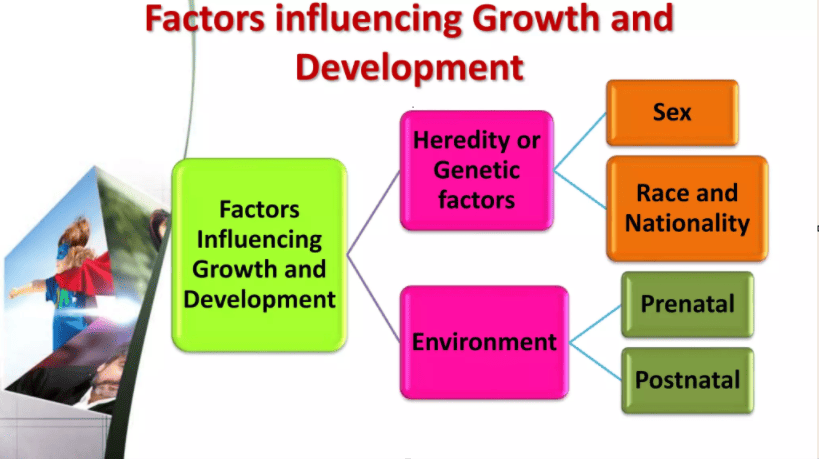
Growth and development result from the complex interaction of multiple intrinsic and extrinsic influences. Understanding these factors is essential for clinicians to target modifiable risks through public health interventions and provide accurate prognostic counseling for non-modifiable risks.
1. Genetic Factors
Genetic factors establish the potential or upper limit of growth and development. The inherited genetic blueprint determines final adult height, body proportions, metabolic rate, and susceptibility to specific conditions.
1.1 Mechanisms of Genetic Influence
- Chromosomal Inheritance: Genes on the 23 pairs of chromosomes code for growth hormone (GH), insulin-like growth factor-1 (IGF-1), and regulatory proteins. Mutations in these genes lead to primary growth disorders.
- Sex Chromosomes: Females (XX) typically mature earlier than males (XY). They exhibit an earlier pubertal onset and earlier closure of the epiphyseal plates.
- Polygenic Inheritance: Most growth traits are determined by multiple genes, each contributing a small effect, explaining the wide variation in height within populations.
- Genetic Disorders: Specific conditions directly impair growth through chromosomal or gene mutations, such as Down syndrome (trisomy 21), Turner syndrome (monosomy X), and achondroplasia.
Target Height Calculation
Clinicians estimate genetic potential using parental heights:
- For Boys: (Father's height + Mother's height + 13 cm) ÷ 2
- For Girls: (Father's height + Mother's height − 13 cm) ÷ 2
The target range is ± 8.5 cm. Significant deviation warrants investigation for pathology.
2. Environmental Factors
Environmental factors determine whether genetic potential is fully realized. In resource-limited settings like Uganda, these factors account for a substantial burden of growth faltering.
2.1 Nutrition
Adequate nutrition is the most critical environmental determinant. Macronutrients provide building blocks for tissue, while micronutrients act as essential cofactors.
- Protein-Energy Malnutrition (PEM): Causes Marasmus (severe wasting) and Kwashiorkor (edematous malnutrition). Both lead to growth retardation and increased mortality.
- Iron Deficiency: Leads to anemia, reducing oxygen delivery to tissues and impairing cognitive development.
- Vitamin D Deficiency: Causes Rickets, characterized by bone deformities and delayed fontanelle closure.
- Iodine Deficiency: Causes hypothyroidism and cretinism, resulting in severe mental retardation.
- Zinc Deficiency: Impairs cell division and immune function, contributing to growth retardation.
2.2 Infections and Disease
Recurrent infections divert nutritional resources toward immune responses. In Uganda, major contributors include:
- Malaria: Causes anemia and reduced appetite.
- Chronic Diarrhea: Leads to malabsorption of nutrients and dehydration.
- HIV/AIDS: Causes chronic inflammation and metabolic derangements.
- Intestinal Parasites: Hookworm, roundworm, and whipworm cause blood loss and nutrient competition.
2.3 Climate, Sanitation, and Water
- Climate: Extreme temperatures and high altitudes (reducing oxygen saturation) affect growth. Tropical climates increase the infectious disease burden.
- WASH: Improved water, sanitation, and hygiene (WASH) practices can prevent a significant proportion of under-five stunting globally.
3. Psychological Factors
Emotional well-being is directly linked to physical growth. Stress activates the hypothalamic-pituitary-adrenal (HPA) axis, increasing cortisol levels.
Psychosocial Short Stature
Also known as psychosocial dwarfism, this occurs in environments of severe neglect or abuse. Chronic elevation of cortisol suppresses growth hormone secretion. This failure is often reversible once the child is placed in a nurturing environment.
- Maternal Mental Health: Depression and anxiety impair caregiving, responsive feeding, and emotional attunement.
- Stress and Trauma: Exposure to conflict or displacement (noted extensively in Northern Uganda) disrupts eating and sleep patterns through elevated stress hormones.
4. Socio-Economic Factors
Socio-economic status (SES) influences growth through nutrition, healthcare access, and living conditions.
- Poverty: Limits access to nutrient-dense foods. Families may rely on carbohydrate-heavy staples low in protein and micronutrients, perpetuating the cycle of stunting.
- Maternal Education: One of the strongest predictors of child health. Educated mothers are more likely to practice exclusive breastfeeding and seek timely immunization.
- Family Size and Birth Order: Large families dilute household resources. Birth spacing of less than 24 months increases the risk of low birth weight and growth faltering.
- Urban-Rural Disparities: In Uganda, rural children have higher stunting rates due to food insecurity. Urban slum dwellers face overcrowding and pollution.
5. Summary Table: Factors Influencing Growth
| Category | Mechanism of Effect | Clinical Relevance |
|---|---|---|
| Genetic | Determines growth potential and endocrine regulation. | Target height calculation; genetic counseling. |
| Nutritional | Provides substrates and cofactors for tissue synthesis. | Nutritional rehabilitation; supplementation. |
| Infectious | Increases metabolic demand; causes malabsorption. | Immunization; deworming; prompt treatment. |
| Psychological | Elevates cortisol; suppresses GH secretion. | Psychosocial support; family counseling. |
| Socio-economic | Affects access to food, healthcare, and sanitation. | Social protection; WASH programs. |
| Environmental | Influences disease burden and nutrient availability. | Public health infrastructure; housing. |
6. Key Points
- Potential vs. Achievement: Genetic factors set the upper limit, while environmental factors determine if it is reached.
- Modifiability: Nutrition is the most modifiable factor. PEM and micronutrient deficiencies are primary causes of faltering in Uganda.
- Resource Diversion: Infectious diseases, specifically malaria and parasites, divert resources away from growth.
- Endocrine Impact: Psychological stress can suppress GH, leading to reversible short stature.
- Caregiving: Maternal education and family size significantly impact growth through resource availability.