Genetic Disorders
Genetics can feel overwhelming because it deals with the invisible instruction manuals of our bodies. We will break this down step-by-step so that by the end of this guide, you will be able to:
- Understand the general classification of genetic disorders and how they arise.
- Master the principal aspects of Mendelian disorders (the rules of inheritance).
- Confidently identify examples of different Mendelian disorders, as well as recognize the physical signs (phenotype) and genetic blueprints (genotype) needed to make a diagnosis.
Impact of Genetic Disorders
Genetic disorders are far more common than is widely appreciated by the general public. They are not rare anomalies; they are a fundamental part of human medicine.
- Lifetime Prevalence: The estimated lifetime prevalence of genetic diseases is 670 per 1000 individuals. This means that over the course of a lifetime, more than half the population will experience a disease that has a genetic component.
- Early Gestation: It is estimated that 50% of spontaneous abortions (miscarriages) during the early months of pregnancy occur because the embryo has a demonstrable chromosomal abnormality incompatible with life.
- Newborns and Youth: About 1% of all newborn infants possess a gross (large-scale, easily visible) chromosomal abnormality. Furthermore, approximately 5% of individuals under age 25 develop a serious disease with a significant genetic component.
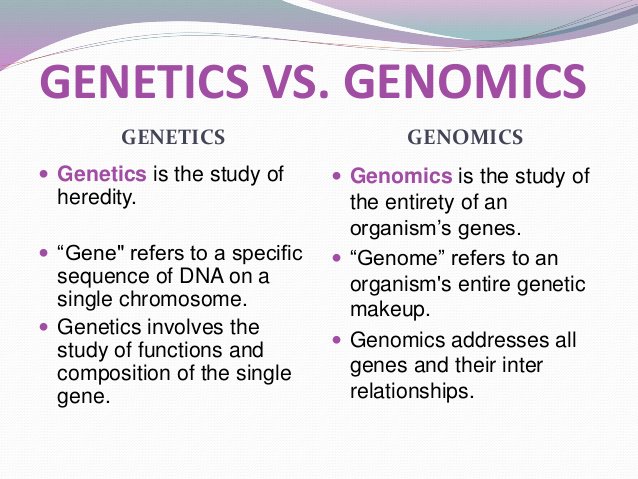
Genetics versus Genomics
While these terms sound similar, they represent different scales of study:
- Genetics: The study of single genes or a few specific genes and their phenotypic effects (the physical traits they produce). Example: Studying the single mutated gene that causes Cystic Fibrosis.
- Genomics: The comprehensive study of all the genes in the entire genome and how they interact with each other. Example: DNA microarray analysis of tumors is an excellent example of genomics in current clinical use. It looks at thousands of genes at once to understand a cancer's behavior.
The Spectrum of Human Diseases
Every human disease falls somewhere on a spectrum based on what causes it:
- Environmentally determined: Caused purely by outside factors (e.g., getting a sunburn or breaking a bone in a car accident).
- Genetically determined: Caused purely by DNA (e.g., Sickle cell anemia).
- Environmentally AND Genetically determined: A mixture of both. Someone might have a genetic predisposition to lung cancer, but smoking (environment) triggers it.
Some Definitions
Before looking at the specific diseases, we must clearly define the terminology used in medical genetics.
- Genetic Disorders: A heterogeneous (diverse) group of disorders caused by abnormalities in genes or whole chromosomes.
- Hereditary Disorders: These are derived from one’s parents and are transmitted through the germ line (sperm and egg cells) across generations. Therefore, these conditions are familial (they run in families).
- Congenital: Simply means "born with." It is crucial to note that not all congenital diseases are genetic (e.g., a baby born with syphilis acquired it from the mother during birth, which is environmental), and not all genetic diseases are congenital (e.g., Huntington's disease is genetic but symptoms don't appear until age 40).
- Mutations: A permanent change in the DNA sequence.
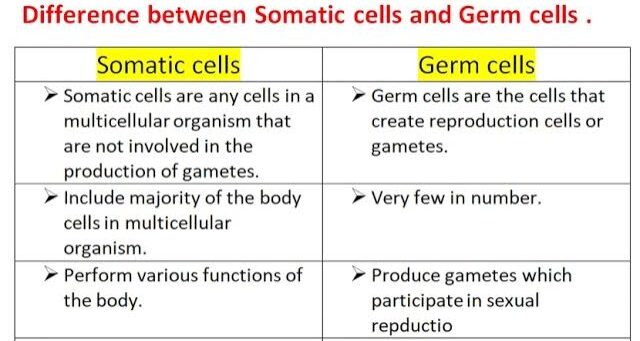
Germ Cells versus Somatic Cells
Where a mutation happens dictates whether it can be passed on to children:
- Germ Cell Mutations: Mutations that affect sperm or egg cells. These are transmitted to the progeny (offspring) and give rise to inherited diseases.
- Somatic Cell Mutations: Mutations that arise in the regular cells of the body (like skin, liver, or lung cells) after birth. Understandably, these do not cause hereditary diseases because they are not in the sperm or egg. However, they are immensely important in the genesis of cancers and some congenital malformations.
Classification of Mutations
Mutations are classified by the "size" of the DNA mistake:
- Genome mutations: The largest errors. The loss or gain of whole chromosomes. This gives rise to monosomy (missing a chromosome) or trisomy (having an extra one, like Trisomy 21 causing Down Syndrome).
- Chromosome mutations: The rearrangement of genetic material. A whole chunk of a chromosome might break off and attach somewhere else. These give rise to visible structural changes in the chromosome under a microscope. Most of these are highly destructive and incompatible with survival.
- Gene mutations: The smallest, but most common, errors. These may result in partial or complete deletion of a specific gene, or more often, affect just a single base (a single "letter" in the DNA code).
General Classification of Genetic Disorders
Genetic disorders are grouped into three massive categories:
- Disorders related to mutant genes of large effect (Mendelian disorders).
- Diseases with multifactorial inheritance.
- Chromosomal disorders.
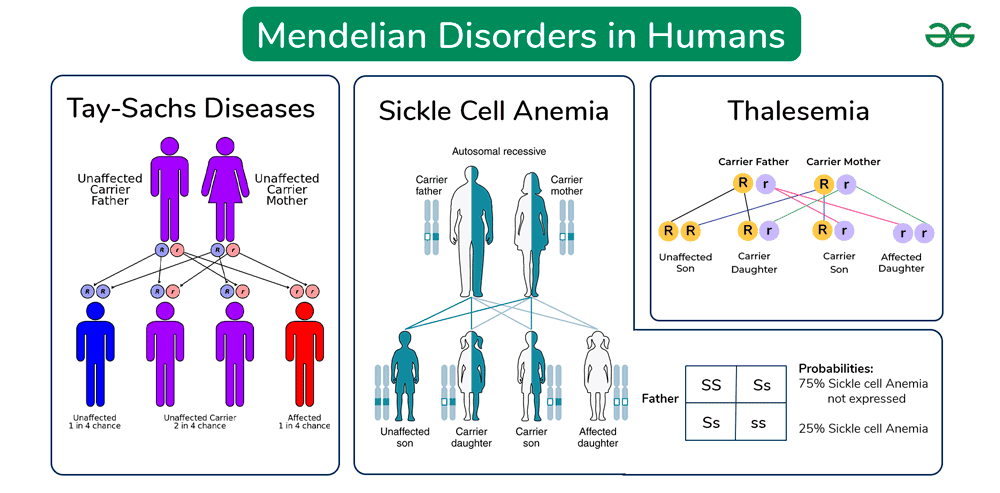
Mendelian Disorders (Mutant Genes of Large Effect)
Named after Gregor Mendel (the father of genetics), these disorders are the result of expressed mutations in single genes that have a very large, obvious effect on the body. An estimated 80% to 85% of these mutations are familial (inherited from parents).
Most of these diseases are recessive, meaning a person needs two bad copies of the gene to show symptoms. Because of this, many people carry these mutations without having any serious phenotypic effect themselves.
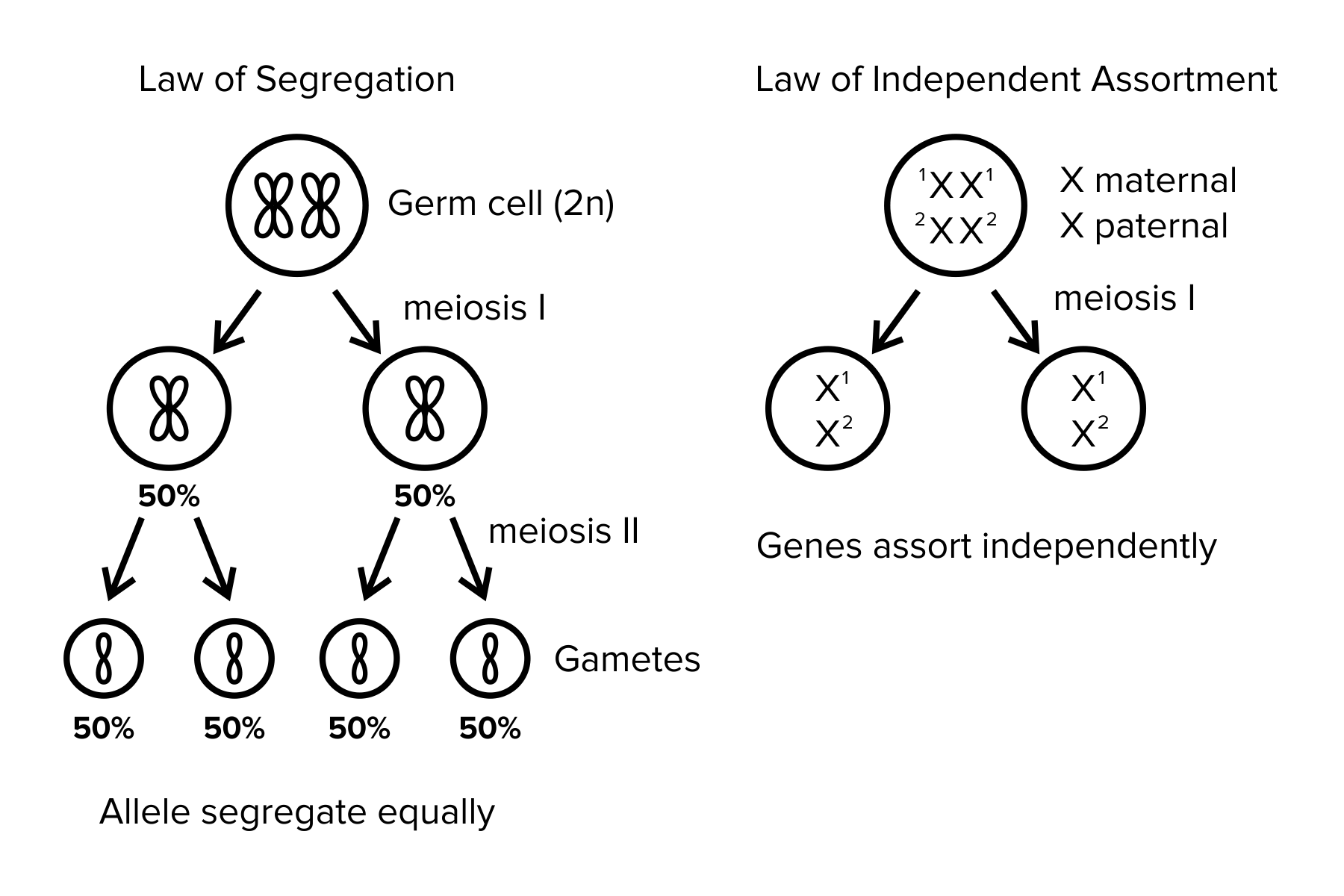
The Laws Governing Mendelian Inheritance
To understand how these traits are passed down, we rely on Mendel's fundamental laws, which were later proven by the discovery of meiosis (the cell division process that creates sperm and eggs).
- Law of Segregation (The "First Law"): States that when any individual produces gametes (sperm/eggs), the two copies of a gene separate, so that each gamete receives only one copy. A gamete will receive one allele or the other. In meiosis, the paternal and maternal chromosomes get physically separated, segregating the characters into two different gametes.
- Law of Independent Assortment (The "Second Law"): Also known as the "Inheritance Law," it states that alleles of different genes assort independently of one another during gamete formation. Mendel concluded that different traits are inherited independently of each other. Example: The gene for hair color is passed down completely independently from the gene for blood type. There is no relation between them.
Important Concept: Codominance and Partial Expression
Although gene expression is often described as strictly "dominant" or "recessive," genetics is not always black and white.
- Codominance: In some cases, both of the alleles of a gene pair may be fully expressed in the heterozygote. A perfect example is blood group antigens (If you inherit an 'A' allele from mom and a 'B' allele from dad, you have AB blood—both are fully expressed) and Histocompatibility antigens (immune system markers).
- Partial Expression (Sickle Cell Anemia): Sickle cell anemia is caused by the substitution of normal hemoglobin (HbA) with mutant hemoglobin S (HbS).
- If a person is homozygous (has two mutant HbS genes), all their hemoglobin is abnormal. With normal saturation of oxygen, the disorder is fully expressed, causing severe anemia and pain crises.
- If a person is heterozygous (has one normal HbA and one mutant HbS gene), they have the "Sickle Cell Trait." Only a proportion of their hemoglobin is HbS. They are largely healthy, and possibly hemolysis (red blood cell destruction) occurs only when there is exposure to severely lowered oxygen tension (like climbing a high mountain).
Transmission Patterns of Single-Gene Disorders
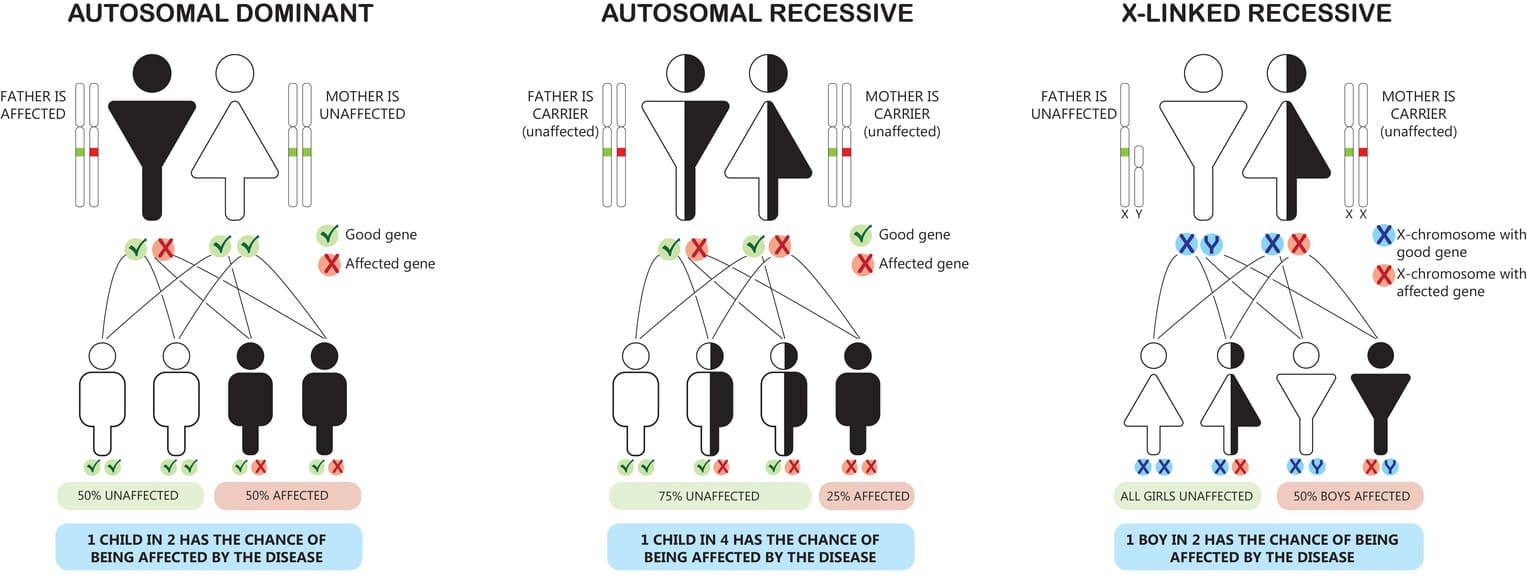
Mendelian disorders follow three main transmission patterns: Autosomal Dominant, Autosomal Recessive, and X-Linked.
A. Autosomal Dominant Disorders
These disorders occur when you only need one mutant copy of a gene to show the disease. The abnormal gene is located on one of a pair of autosomes (the non-sex chromosomes, pairs 1-22).
- They are manifested in the heterozygous state.
- At least one parent of an index case (the patient) is usually affected.
- Both males and females are affected equally, and both can transmit the condition.
- New Mutations: Some patients do not have affected parents. Such patients owe their disorder to brand new (de novo) mutations in either the egg or sperm from which they were derived.
- Delayed Onset: In many autosomal dominant conditions, the age at onset is delayed. Symptoms and signs do not appear until adulthood (a prime example is Huntington disease, which often strikes in a person's 40s).
Modifying Factors in Autosomal Dominant Diseases:
The clinical features can be altered by two major phenomena:
- Reduced Penetrance: Think of this as an "on/off" switch that fails. Some individuals inherit the mutant gene but are phenotypically completely normal. The gene is there, but it fails to penetrate and cause the disease.
- Variable Expressivity: Think of this as a "volume dial." The trait is observed in all individuals carrying the mutant gene, but it is expressed very differently among individuals. One person might have a severe form, while their sibling has a very mild form.
Examples of Autosomal Dominant Disorders:
- Brachydactyly: Characterized by unusually short fingers and toes due to abnormal bone growth.
- Huntington’s chorea: A devastating neurodegenerative disease causing uncontrollable movements and cognitive decline in adulthood.
- Marfan’s syndrome: A connective tissue disorder resulting in a tall stature, long limbs, and dangerous cardiovascular issues.
- Familial polyposis: A condition where hundreds of polyps form in the colon, inevitably leading to colon cancer if untreated.
- Multiple neurofibromatosis: Causes tumors to grow on nerves throughout the body.
B. Autosomal Recessive Disorders
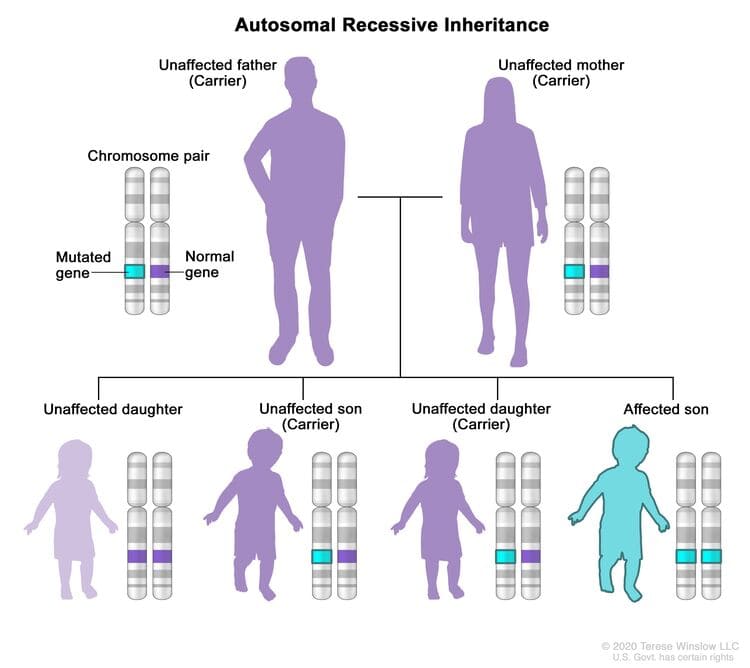
These disorders result only when both alleles at a given gene locus are mutants (homozygous state). If you have one good copy, it produces enough protein to keep you healthy.
- The trait does not usually affect the parents (they are just healthy carriers). However, siblings may show the disease.
- The condition appears in one-quarter (25%) of the brothers and sisters of an affected individual.
- Parents of the affected individual are often consanguineous (blood relatives, like first cousins). This increases the chance that both parents carry the exact same rare mutant recessive gene.
- The expression of the defect tends to be much more uniform than in autosomal dominant disorders (less variable expressivity).
- Complete penetrance is common (if you have two bad copies, you *will* get the disease).
- Onset is frequently very early in life (often seen in infants or toddlers).
Examples of Autosomal Recessive Disorders:
- Cystic fibrosis: Causes thick, sticky mucus to build up in the lungs and digestive tract. Often leads to physical signs like clubbed fingers (swollen, rounded fingertips due to chronic low oxygen).
- Phenylketonuria (PKU): An inability to break down the amino acid phenylalanine. This builds up in the brain and causes severe mental retardation. Elaboration: This is why newborns routinely receive a "heel prick" blood test shortly after birth; catching PKU early allows it to be treated completely with a strict diet.
- Galactosemia: An inability to process galactose (a sugar found in milk), also tested for via the newborn heel prick.
- Wilson disease: A failure of copper metabolism. Copper accumulates in the liver (causing a bumpy, cirrhotic liver) and in the eyes (creating a visible brown/golden ring around the cornea called a Kayser-Fleischer ring).
- Sickle cell anemia: Causes red blood cells to deform into a sickle shape, blocking blood vessels.
- Spinal muscular atrophy: Causes severe muscle wasting and weakness in infants.
C. X-Linked Disorders
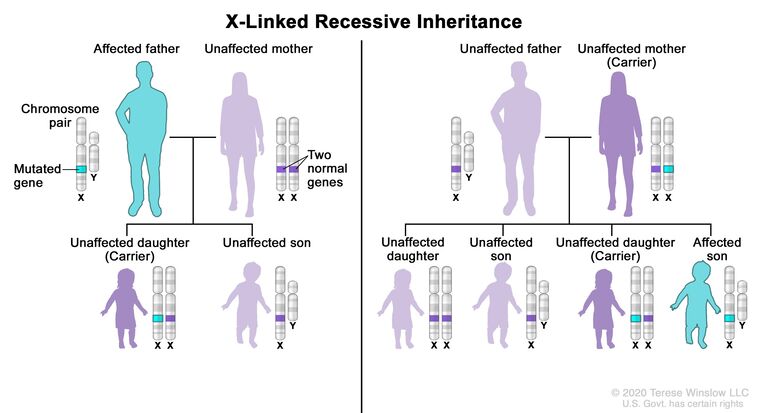
These are mutations on the sex chromosomes. Females are XX, males are XY.
- Almost all of these disorders are X-linked recessive.
- The Y Chromosome: Several genes are encoded in the male-specific region of the Y chromosome; all these are related to spermatogenesis. Males with Y-chromosome mutations are usually infertile.
Transmission Rules:
- An affected male does not transmit the disorder to his sons (because he gives his sons his Y chromosome, not his X).
- However, an affected male transmits the mutant X to all his daughters, making them all carriers.
- Sons of heterozygous carrier women have a 1:2 (50%) chance of inheriting the mutant gene and getting the disease.
- Female Protection: The heterozygous female usually does not express the full phenotypic change because she has a paired, normal allele on her other X chromosome to compensate. Males have no backup, which is why X-linked disorders predominantly affect males.
Examples of X-Linked Disorders:
- Hemophilia A and B: Severe bleeding disorders where the blood fails to clot.
- Glucose-6-phosphate dehydrogenase (G6PD) deficiency: Causes red blood cells to break down in response to certain medications, infections, or foods (like fava beans).
- Diabetes insipidus: Causes extreme thirst and heavy urination (kidneys cannot conserve water).
- Fragile X syndrome: A major cause of inherited intellectual disability.
Biochemical and Molecular Basis of Single-Gene Disorders
To truly understand Mendelian disorders, we must look at what the mutated gene actually failed to build. Genes are instructions for proteins. The defects fall into four main categories:
Defects in Receptors and Transport Systems
Example: Familial Hypercholesterolemia. This is possibly the most frequent Mendelian disorder. It is the direct consequence of a mutation in the gene encoding the receptor for low-density lipoprotein (LDL). Without this receptor, the liver cannot remove cholesterol from the blood, leading to massive, early-onset cardiovascular disease.
Disorders associated with Defects in Structural Proteins
Example: Marfan Syndrome. An autosomal dominant disorder of the connective tissue. It results from an inherited defect in an extracellular glycoprotein called fibrillin-1. Without strong fibrillin, the body's scaffolding is weak. It is manifested principally by changes in the skeleton (long, thin fingers and tall stature), eyes (lens dislocation), and the cardiovascular system (deadly aortic aneurysms). 70% to 85% of cases are familial.
Enzyme Defects and their consequences
Enzymes act as biological scissors. If an enzyme is broken, waste products build up in the cells.
Examples: Gaucher disease and Niemann-Pick disease (both involve toxic accumulation of fatty substances in organs like the spleen and brain).
Defects in Proteins that Regulate Cell Growth
Example: Neurofibromatosis (Types 1 and 2). These comprise two autosomal dominant disorders where cells grow without proper braking.
- Type 1 (previously called von Recklinghausen disease): Characterized by multiple neurofibromas (bumpy tumors growing on nerves under the skin), numerous pigmented skin lesions (flat brown spots called café-au-lait macules), and pigmented iris hamartomas inside the eye (called Lisch nodules).
- Type 2 (acoustic neurofibromatosis): Tumors grow specifically on the acoustic nerve, leading to deafness.
Genetically determined adverse reactions to drugs
An example includes G6PD deficiency reacting poorly to anti-malarial drugs, causing hemolysis.
Disorders with Multifactorial Inheritance
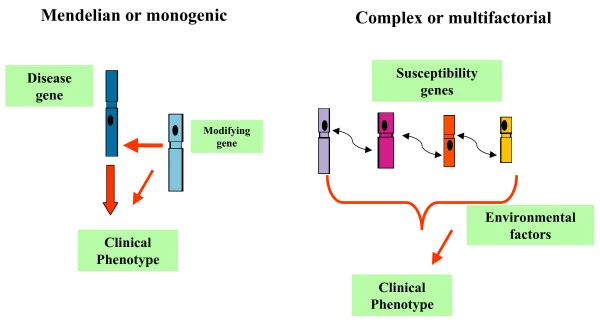
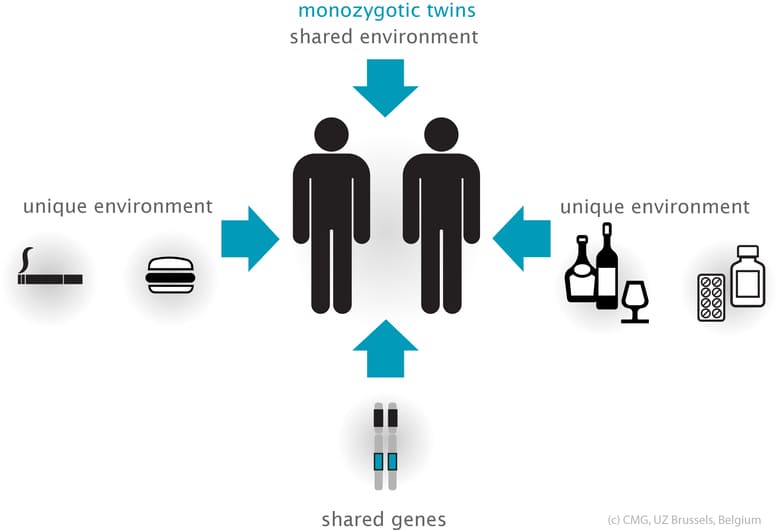
These disorders do not follow simple Mendelian rules. Instead, they result from the combined actions of environmental influences AND two or more mutant genes having additive effects. No single gene is fully responsible.
- Interestingly, a massive number of normal phenotypic characteristics are governed by multifactorial inheritance, such as hair color, eye color, skin color, height, and intelligence. They exist on a spectrum because many genes are adding up together.
- The risk of expressing a multifactorial disorder is conditioned strictly by the number of mutant genes inherited. The more "bad" genes you inherit, the closer you get to the threshold of disease.
- The rate of recurrence of the disorder for all first-degree relatives of an affected individual is 2% to 7%. This means if a couple has a child with a multifactorial heart defect, the chance their next child has it is about 2-7% (much lower than the 25% or 50% seen in Mendelian disorders).
Examples of Multifactorial Disorders:
These are the most common diseases seen in modern hospitals:
- Cleft lip or cleft palate: A birth defect where the lip or roof of the mouth does not form properly.
- Congenital heart disease: Structural heart defects present at birth.
- Coronary heart disease: Plaque buildup in the heart arteries (driven by genes regulating cholesterol + diet/smoking).
- Hypertension: High blood pressure.
- Gout: Painful joint inflammation due to uric acid buildup.
- Diabetes mellitus: Particularly Type 2, driven heavily by genetic predisposition interacting with dietary and lifestyle environments.
- Pyloric stenosis: A narrowing of the opening from the stomach to the intestines in infants.